The best sandals for first walkers offer soft support, wide toes, secure fit, and grippy soles for steady summer steps.
Your baby is ready to explore, but the ground is not always soft, clean, or warm. A good first-walker sandal acts like a small shield without feeling stiff or heavy. I look for flexible soles, roomy toe space, covered toes, easy closures, and materials that dry fast. The right pair should bend near the toes, stay on during play, and let little feet move as naturally as possible. This guide reviews nine popular options and explains which pair fits home use, beach days, daycare, and early outdoor walks best.
BARERUN Quick-Dry Water Sandals
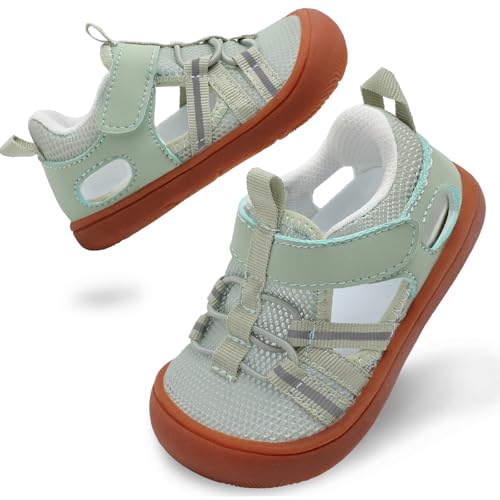
The BARERUN water sandal is built for busy summer play. Its quick-dry design suits splash pads, pools, beaches, and wet grass. The light build can feel less tiring for a baby who is still learning to lift each foot. A closed shape also gives more coverage than an open flip-flop style.
I like this type of shoe for families who need one pair for both water and short walks. The non-slip bottom can help with traction on common wet surfaces, though no sole can prevent every slip. The cyan color is bright and easy to spot in a busy play area. Check the fit often, since wet material and growing feet can change how the shoe feels.
Pros:
- Quick-dry design for water play
- Light feel for new walkers
- Breathable upper helps reduce heat
- Non-slip sole supports outdoor traction
- Closed shape offers useful foot coverage
- Works for beach, pool, and summer play
Cons:
- Water shoes may not replace a structured walking shoe
- Wet surfaces can still be slippery
- Fit may vary by foot width
My Recommendation: I recommend the BARERUN water sandal for parents who want a flexible summer shoe for splash play and casual steps. It is especially useful for trips where packing one water-friendly pair saves room. Among the best sandals for first walkers, this model stands out for quick drying and broad summer use. It offers good value when water play is part of your child’s normal routine.
E-FAK Closed-Toe Toddler Sandals

The E-FAK closed-toe sandal takes a classic approach to early walking. A covered front helps protect small toes from bumps, pebbles, and rough edges. The rubber sole adds a layer between the foot and the ground. For a 12–18-month child, that coverage can bring extra comfort during first outdoor trips.
Closed-toe sandals can feel more secure than very open designs, but they still need room at the front. I suggest checking for space near the longest toe and making sure the heel does not lift with each step. The khaki color hides small marks well and works with many outfits. This pair makes the most sense for dry walks, errands, and warm daycare days.
Pros:
- Closed toe helps guard against minor bumps
- Rubber sole adds ground protection
- Suitable for warm-weather daily wear
- Neutral khaki color hides dirt well
- Useful for toddlers learning outdoor balance
- More coverage than an open sandal
Cons:
- May feel warm in very humid weather
- Not the best choice for long water play
- Parents must check the toe room as feet grow
My Recommendation: I would choose this E-FAK pair for a toddler who needs simple closed-toe protection during daily walks. It suits parents who value coverage over a very open sandal design. It earns a place among the best sandals for first walkers because it balances a summer shape with a protective front. Its value is strongest for regular dry-weather use.
BARERUN Infant Water and First Walker Shoes

This pink BARERUN model targets younger infants in the 6–12-month range. It works more like a soft summer shoe or crib shoe than a heavy outdoor sandal. The lightweight design can cover the foot during stroller rides, crawling, and early supported steps. Its water-shoe styling also makes it a practical choice for warm family outings.
I would not treat a soft infant shoe as a replacement for a properly fitted walking shoe once a baby walks often outdoors. Still, it can keep feet clean and comfortable during short trips. The slipper-like feel may appeal to babies who resist stiff footwear. Always watch for rubbing around the ankle and remove the shoe if the foot looks red.
Pros:
- Designed for younger infant sizes
- Soft, light feel for early movement
- Useful for stroller and crawling time
- Pink style suits summer outfits
- Can cover feet during warm outings
- Less bulky than many outdoor shoes
Cons:
- May offer less protection than a firm closed-toe shoe
- Not ideal for rough outdoor terrain
- Infant sizes can be outgrown quickly
My Recommendation: This BARERUN pair is best for infants who are pulling up, cruising, or taking only a few assisted steps. It can also work as a light summer cover for stroller use. For parents searching for the best sandals for first walkers before full walking begins, this is a gentle entry option. Expect the best value from short, light-duty wear rather than hard daily use.
Vecull Protective Toe First Walker Sandals

The Vecull sandal focuses on one feature many parents want: toe protection. A protective front helps shield little toes when a new walker meets furniture, sidewalk edges, or playground parts. The soft sole aims to keep the shoe flexible while still adding a barrier underfoot. Its 6–24-month size range may suit several stages of early movement.
This style is a good middle ground between a bare soft shoe and a bulky sneaker. I look for a sole that bends at the ball of the foot, not in the middle, because that supports a more natural step. The broad age range is helpful, but parents should not assume one size works across all stages. Measure both feet and use the larger measurement before ordering.
Pros:
- Protective toe design adds useful coverage
- Soft sole supports flexible movement
- Suitable for a broad infant and toddler range
- Helpful for early outdoor walks
- Balances coverage with a light feel
- Can protect toes from common bumps
Cons:
- Size range does not guarantee a perfect fit
- Soft soles may wear faster on rough pavement
- Less suitable for cold-weather use
My Recommendation: I recommend Vecull for babies who need more front coverage but dislike rigid footwear. It is a practical pick for supervised walks, patios, and smooth playground paths. In my view, it belongs on a shortlist of the best sandals for first walkers because toe safety and flexibility work together here. It offers solid value when measured carefully and used in warm weather.
FEETCITY Infant First Walker Sandals

FEETCITY offers a simple infant sandal for summer use. Its crib-shoe format feels suited to babies who spend time crawling, cruising, or riding in a stroller. The lighter profile does not overwhelm small feet. It can also serve as a first pair for short, supervised steps on clean, smooth ground.
Parents often want a shoe that looks neat but does not cost too much during a fast growth stage. This model fits that role well, as long as expectations stay realistic. It is not the pair I would pick for rocky trails or long walks. For indoor events, family visits, and warm days, its simple design can be convenient.
Pros:
- Light design suits infant feet
- Useful for crawling and cruising stages
- Easy summer style for daily outfits
- Suitable for short supervised walks
- Less bulky than many toddler shoes
- Practical during a fast growth stage
Cons:
- Limited protection for rough surfaces
- May not suit confident outdoor walkers
- Parents should inspect the closure for a secure fit
My Recommendation: FEETCITY is best for infants who need a light shoe for early practice and casual summer wear. I would choose it for indoor floors, smooth patios, and stroller days. It can be one of the best sandals for first walkers when the main goal is gentle coverage at a modest cost. Move to a more protective pair as outdoor walking becomes frequent.
E-FAK Black Infant Closed-Toe Sandals

This black E-FAK sandal shares the closed-toe idea with the khaki version but targets the smaller 6–12-month infant range. The covered front helps protect toes during crawling, cruising, and supported walking. A rubber sole gives the foot a layer of protection from warm pavement and minor debris. The black finish is easy to pair with nearly any outfit.
I find dark shoes useful for babies who spend time on the floor because they hide everyday marks. Still, color should come after fit, flexibility, and comfort. Check that the heel stays in place without pressing into the ankle. For babies who are not yet walking alone, this sandal works best for short sessions rather than all-day wear.
Pros:
- Closed toe protects small toes
- Rubber sole adds a ground barrier
- Black color is easy to match
- Designed for smaller infant sizes
- Useful for crawling and supported steps
- Suitable for warm-weather casual wear
Cons:
- May be too warm in high heat
- Not intended for demanding terrain
- Small sizes may have a short useful life
My Recommendation: I would pick the black E-FAK for a young infant who needs a covered sandal for short summer outings. It gives more protection than a thin sock-style shoe while staying simple. For families comparing the best sandals for first walkers, this is a sensible choice for early stages and daily errands. Its overall value depends on accurate sizing and moderate use.
Wide Toe Box Zero-Drop Baby Sandals

The WIDE TOE BOX sandal takes a foot-shaped approach to first walking. Its roomy front gives the toes space to spread instead of pressing them into a narrow point. The soft zero-drop build keeps the heel and forefoot at a similar height. That design may appeal to parents who want a more natural-feeling platform for early steps.
A wide toe box only helps when the rest of the shoe fits well. I still check the heel, instep, and side walls before making a choice. The brown color has a classic look and may hide marks from outdoor play. Because this is a newer style in the group, I would read the current size chart and customer fit notes with care before ordering.
Pros:
- Roomy toe box allows toe movement
- Zero-drop design gives a level platform
- Soft construction suits early walkers
- Brown color looks practical and classic
- May help avoid a cramped toe area
- Good option for naturally broad feet
Cons:
- Wide shape may feel loose on narrow feet
- Zero-drop shoes may not suit every child
- Requires careful measuring before purchase
My Recommendation: This sandal is best for parents who place toe room at the top of their list. I would consider it for a child with broad feet or a child who dislikes tight shoes. It is a strong contender among the best sandals for first walkers because it supports space and simple ground feel. Its value is highest when the shape matches the child’s foot.
E-FAK Pink Infant First Walker Sandals
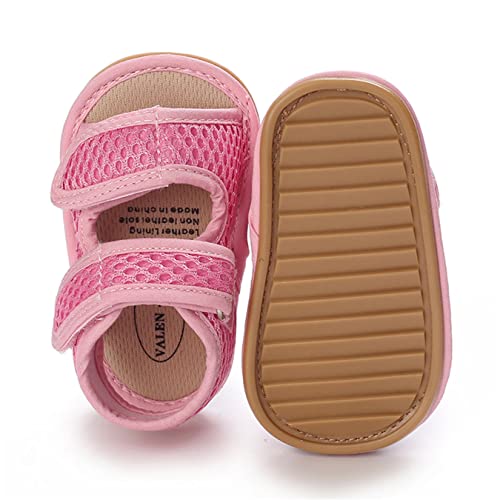
The pink E-FAK model offers the same useful closed-toe format in a bright infant-friendly color. It is made for small feet in the 6–12-month range. The covered front can help during crawling and early standing, while the rubber sole separates the foot from rough or warm ground. It is a straightforward option for babies who are just beginning to explore.
This sandal may be a good match for parents who want a little more coverage than a soft open shoe. I would use it for short walks, family gatherings, and sunny days rather than long hikes. The pink finish gives it a playful look, but the fit remains the key factor. Leave enough room for natural toe movement without allowing the shoe to slide.
Pros:
- Closed toe offers extra front coverage
- Rubber sole helps protect from the ground
- Bright pink color is easy to notice
- Designed for small infant feet
- Useful for early standing and cruising
- Simple summer style is easy to use
Cons:
- May not be as breathable as open sandals
- Limited fit life as infants grow fast
- Not suited to rough or wet terrain
My Recommendation: I recommend the pink E-FAK for families who want a covered first sandal with a cheerful look. It works best for infants at the crawling, cruising, and supported-walking stage. When shoppers compare the best sandals for first walkers, this model offers a practical mix of toe coverage and easy summer wear. It is a good budget-minded choice when used for light activity.
BARERUN Zero-Drop Close-Toe Water Shoes

This BARERUN model combines a close-toe shape with a barefoot-style, zero-drop profile. The design aims to keep the shoe light, flat, and flexible for little walkers. Its breathable build suits warm days, while the water-shoe format gives it extra use at the beach or splash area. The green color adds a clear, sporty look.
I like the idea of a multi-use sandal when a child needs one pair for several summer settings. The close toe can help reduce contact with small stones, but parents should still remove sand and check for rubbing after water play. A zero-drop shoe is not a magic fix; fit and flexibility matter more than labels. Use the current size guide, especially if your child has a narrow or high-volume foot.
Pros:
- Zero-drop profile supports a level feel
- Close toe gives useful outdoor coverage
- Breathable design suits warm weather
- Non-slip sole helps with everyday traction
- Works for water play and casual walks
- Lightweight shape may feel natural to new walkers
Cons:
- Water shoes may need extra drying after use
- Wide or flat designs may not fit every foot
- May offer less cushioning for hard ground
My Recommendation: I would choose this BARERUN pair for an active toddler who moves between sidewalk, grass, and water play. It is especially useful for parents who prefer a flat, flexible shoe with toe coverage. It deserves attention among the best sandals for first walkers because it blends barefoot-style movement with summer protection. The value is strong for families who need one versatile warm-weather pair.
My Recommendation
After comparing all nine options, I would make the Vecull Protective Toe Sandals my first choice for many new walkers. They offer a useful balance of toe coverage, flexible movement, and warm-weather comfort. For water play, I would choose the BARERUN Quick-Dry model. For a child with broad feet, the WIDE TOE BOX sandal is the more thoughtful choice because toe room comes first.
The best sandals for first walkers should never be chosen by color or price alone. I would measure both feet, check the brand chart, and inspect the shoe after the first few minutes of wear. A good pair should stay secure, bend easily, and leave room for the toes. These options are widely available online, but stock, sizes, and prices can change.
| Best for | Why |
|---|---|
| Best overall balance | Vecull offers protective toes, a soft sole, and useful coverage for early outdoor steps. |
| Best for water play | BARERUN Quick-Dry sandals suit beaches, pools, splash pads, and wet summer play. |
| Best for broad feet | WIDE TOE BOX sandals give growing toes more room with a soft zero-drop shape. |
How I Choose Sandals for First Walkers
First walking is a major change for a child. At home, bare feet often let babies feel the floor and practice balance. Outside, shoes protect against heat, sharp bits, rough pavement, and dirty surfaces. I therefore look for protection that does not turn the shoe into a stiff boot.
Flexibility is one of my first checks. Hold the sandal and bend it near the toe area. It should flex without a great deal of force, but it should not fold into a flat twist. A sole that bends in the wrong place can make each step feel awkward.
Toe space matters just as much. The front should not taper sharply or press the toes together. A small amount of extra length helps account for growth, but too much space can make a child trip. I prefer a secure heel and a broad front over a long, loose shoe.
Closures also deserve attention. Hook-and-loop straps are easy for parents and can provide a snug fit as the foot changes during the day. Elastic may feel soft, but it should not squeeze the ankle. After a walk, I check for red marks, blisters, trapped sand, or damp spots.
What Features Matter Most?
Flexible sole: A flexible sole helps a new walker feel the ground. It should offer protection without acting like a hard platform. This matters most during short outdoor walks, when children are still learning to place the foot.
Protective toe: Closed toes help guard against bumps and loose stones. They can also reduce scraped toes during crawling and playground play. Still, covered toes may feel warmer, so airflow and fit matter in hot weather.
Roomy toe box: Little toes need room to move. A wide front can help prevent pressure on the toes, especially for broad feet. The shoe should remain secure around the heel and middle of the foot.
Grip: A textured sole can improve traction on common surfaces. It cannot make a wet tile floor safe, so adult supervision remains essential. Look for a sole that feels flexible rather than thick and clumsy.
Breathable material: Summer sandals should let heat and moisture escape. Breathable material may help reduce dampness during active play. Water shoes should dry fully between uses to keep the inside fresh.
Easy fit: A sandal that takes too long to put on may become a daily struggle. Simple straps help parents get a good fit before leaving home. I prefer closures that stay closed during crawling, walking, and car-seat time.
How to Get the Right First Walker Shoe Size
Start by measuring both feet at the end of the day. Feet can swell slightly after activity, so this gives a more realistic result. Place the child on paper, mark the heel and longest toe, and compare the larger foot with the product chart.
Do not rely only on age. Some babies have short, wide feet, while others have long, narrow feet. The listed 6–12-month or 12–18-month range is only a starting point. Foot shape and actual measurements should guide the final choice.
After the sandal arrives, check it with the child standing. The heel should sit inside the back without slipping. The toes should not touch the front, and the straps should hold the foot without leaving deep marks.
Let the child wear the sandal indoors for a short time first. Watch the walk, not just the smile. If the child trips more, removes the shoe often, or develops red areas, stop and reassess the size and shape.
Open-Toe or Closed-Toe Sandals?
Open-toe sandals allow more airflow and can feel cool on hot days. They work well for clean, smooth areas when a child already walks with confidence. Their main weakness is less protection from bumps, stones, and toe dragging.
Closed-toe sandals offer more coverage. I often prefer them for a new walker on sidewalks, patios, and playground paths. They can feel warmer, so I check for breathable material and avoid leaving them on for too long in extreme heat.
Neither style is right for every child or setting. The best sandals for first walkers should match the ground, the weather, and the child’s walking stage. A water shoe may be ideal at a splash pad but less comfortable for a long dry walk.
Common Buying Mistakes to Avoid
One common mistake is buying a shoe with too much extra room. Parents want the sandal to last, but a loose shoe can slide and affect balance. A little growth space is wise; a floating foot is not.
Another mistake is choosing a thick sole because it looks more protective. Thick does not always mean better. New walkers often benefit from a sole that protects the foot while still bending with the step.
Some shoppers also confuse soft infant shoes with true outdoor walking sandals. A crib shoe may be perfect for crawling but may not give enough grip or coverage outside. Match the product to the child’s actual activity.
Finally, avoid judging comfort by one quick try-on. Let the child move, stand, and walk for several minutes. Look inside the shoe after use. Small seams, damp fabric, or tight straps can cause trouble before a child can explain it.
Care Tips for Baby Sandals
Shake out sand and dirt after every beach or playground trip. Small grains can rub the skin and wear down the inside. Rinse water shoes with clean water when the product care directions allow it.
Let sandals air-dry fully before storing them. Avoid strong direct heat, such as a hot dryer or heater, because heat can damage glue and change the shape. Keep both shoes together in a cool, dry spot.
Inspect the sole often. If the tread becomes smooth, the shoe may no longer grip well. Also check straps, seams, and the toe area for damage.
Replace the pair when the toes reach the front, the heel slips, or the child walks differently. Babies grow quickly, so a sandal that fit last month may now feel tight. A fresh fit is more important than finishing the season with an old pair.
FAQs Of Best Sandals for First Walkers
When should a baby start wearing sandals?
Most babies do not need shoes indoors. Sandals become useful when they walk outside and need protection from heat, rough ground, or sharp debris. Choose a flexible pair that fits well and use it for short periods at first.
Should first walker sandals have a hard sole?
No. A protective sole should still bend near the toes. Very stiff soles can make early steps harder, while an extremely thin sole may not protect enough outdoors.
Are closed-toe sandals safer for new walkers?
Closed toes offer more protection from bumps and small stones. They may be a good choice for sidewalks and playgrounds. Open toes can work in safe areas, but adults should watch for toe scrapes and hot surfaces.
How much room should be in a first walker sandal?
Leave a small amount of space in front of the longest toe, but do not buy a loose shoe. The heel should stay secure, and the child should walk without dragging the sandal. Always compare the child’s measurement with the brand’s chart.
Can babies wear water sandals for daily walking?
Some water sandals work for short daily walks, especially when they have a flexible sole and secure fit. Others focus on quick drying and may offer less support or cushioning. Check the sole, watch the child walk, and choose a dry everyday pair for longer outings when needed.
Final Verdict: Which Should You Buy?
For most families, I would buy the Vecull Protective Toe Sandals. They give new walkers toe coverage, flexible movement, and useful summer protection. Choose BARERUN for water play or WIDE TOE BOX for broad feet.
The best sandals for first walkers should fit the child, not just the season. Measure carefully, start with short wear, and replace the pair when growth or damage changes the fit.
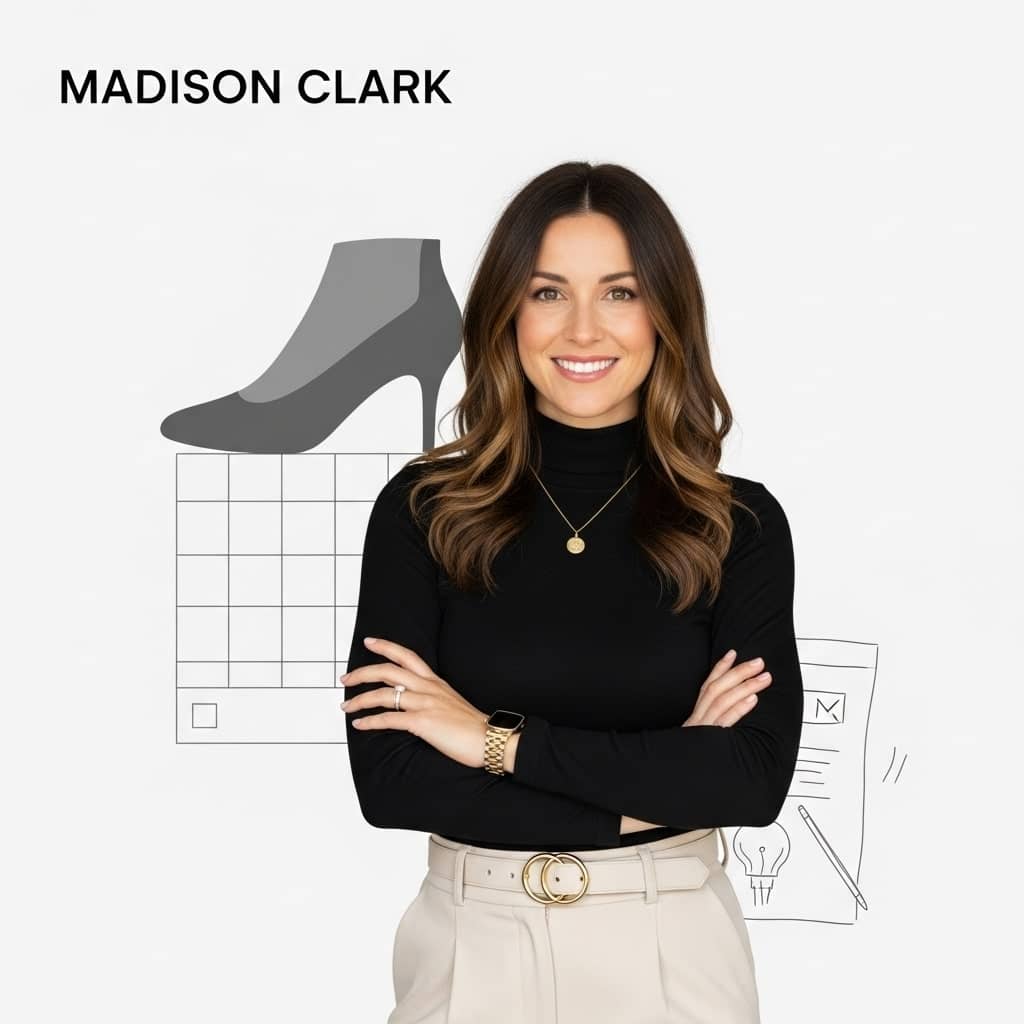
Madison Clark is a footwear expert and the voice behind MyStyleGrid.com. She specializes in honest shoe reviews, style tips, and practical guides to help readers find the perfect pair for any occasion. With years of experience in blogging and content creation, Madison makes footwear knowledge simple, stylish, and easy to follow.