The best ski boots for intermediate to advanced skiers balance strong control, comfort, fit, and all-day warmth.
You may have outgrown soft beginner boots, yet a race-stiff shell can leave your feet sore before lunch. The right ski boot should feel like a steady handshake with your ski: firm, close, and never painful. I compared flex, fit, walk comfort, liner feel, and value across these models for the 2026 season. A few listed items are bindings, not boots, so I explain their role clearly for skiers building a complete setup.
Nordica Sportmachine 3 85 W Ski Boots

The Nordica Sportmachine 3 85 W is a strong match for progressing women skiers who want support without a harsh race-boot feel. Its moderate 85 flex gives the boot enough backbone for carved turns and mixed snow. The shell uses a roomier, comfort-focused shape than many narrow performance boots. I see it as a smart bridge between a forgiving recreational boot and a demanding expert model.
This boot also makes sense for skiers who spend long days on groomers, trees, and light powder. The four-buckle design helps spread pressure across the foot and lower leg. Its women-specific shape aims to support a lower calf and a more natural stance, though every foot is different. A proper shell check and professional fitting still matter more than the label on the box.
Pros:
- Balanced 85 flex supports confident intermediate turns
- Comfort-focused fit suits many medium-volume feet
- Four buckles provide even, secure closure
- Good blend of control and all-day comfort
- Women-specific shape can improve calf and heel comfort
- Useful choice for groomers, trees, and varied resort snow
Cons:
- May feel too soft for very aggressive, heavy skiers
- Roomier fit may not suit very narrow feet
- Stock liners may need heat molding for an exact fit
K2 Recon 100 MV Ski Boots, 28.5
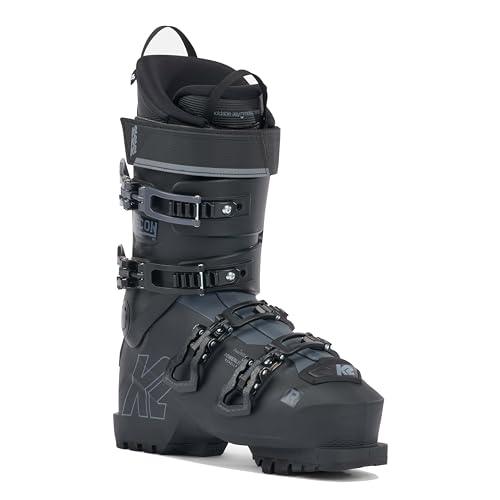
The K2 Recon 100 MV is one of the most versatile options in this group. Its 100 flex gives an intermediate or advanced skier clear support when pressure builds on the front of the boot. The medium-volume fit can work well for feet that need some space across the forefoot and instep. It feels more athletic than a basic comfort boot but does not demand race-level technique.
K2’s Recon line is known for a practical resort design, and this model follows that idea. I like a 100 flex for skiers who want to improve edge control without giving up too much comfort. The boot can suit long groomer days, bumps, and moderate off-piste runs. Before buying, confirm the shell length, last, and mondo size with a boot fitter because a loose ski boot can reduce control and create cold spots.
Pros:
- Versatile 100 flex suits many intermediate and advanced skiers
- Medium-volume shape offers useful forefoot space
- Strong front-of-boot support improves edge response
- Good all-mountain balance for resort skiing
- Four-buckle closure allows detailed fit adjustment
- Available in a broad range of sizes
Cons:
- May feel too firm for lighter or less powerful skiers
- Medium-volume fit may not lock down narrow heels
- Walk comfort is not its main strength
K2 Recon 100 MV Ski Boots, 25.5

This size 25.5 version of the K2 Recon 100 MV offers the same performance idea in a smaller shell size. That detail matters because ski boots should match the skier’s foot length, not simply feel roomy in a store. The 100 flex gives a solid platform for stronger turns and quicker edge changes. It is a good candidate for an intermediate skier who wants one boot for most resort terrain.
I would pay close attention to heel hold when trying this model. A medium-volume boot can feel comfortable at first, but excess space can let the heel lift during a turn. A fitter can adjust the liner, footbed, or shell if needed. When the size and shape match correctly, the Recon 100 MV can deliver a useful mix of power, warmth, and value.
Pros:
- Appropriate 100 flex for growing ski skills
- Medium-volume fit can feel less cramped than low-volume boots
- Strong buckle system supports precise closure
- Stable feel at speed on firm snow
- Versatile enough for groomers and light off-piste use
- Smaller 25.5 option helps fit more skiers correctly
Cons:
- Not ideal for very wide or very narrow feet
- Can feel demanding for beginners or lighter skiers
- Requires careful sizing to prevent heel movement
Atomic Hawx Prime 110 S BOA Ski Boots

The Atomic Hawx Prime 110 S BOA is the most performance-minded ski boot in this boot group. Its 110 flex favors advanced skiers who drive the ski hard and want fast power transfer. The Prime fit sits in the medium-volume category, while the BOA closure system helps spread pressure around the lower shell. I would place this model near the top for strong resort skiers who value a precise, modern fit.
The BOA dial is not a magic fix for poor sizing, but it can make lower-shell tension easier to fine-tune. That can help reduce pressure points and improve heel security when the shell shape matches your foot. The 110 flex may feel excellent in cold, firm snow, yet it can feel stiff to a relaxed skier. Choose it for control first, then use a boot fitter to tune comfort and alignment.
Pros:
- Powerful 110 flex suits advanced and aggressive skiers
- BOA closure allows quick, even lower-shell adjustment
- Precise feel supports strong carving and edge pressure
- Medium-volume Prime shape fits many average-width feet
- Excellent choice for fast resort skiing
- Modern design offers a secure, close fit
Cons:
- Too stiff for many casual intermediate skiers
- BOA parts may cost more to repair than a basic buckle
- Still needs professional fitting and shell work
- May feel tight during the first few ski days
Marker Griffon X 13 MWERKS Bindings

The Marker Griffon X 13 MWERKS is a ski binding rather than a ski boot, so it cannot replace the boot choices above. I included it because many intermediate and advanced skiers shop for boots while also rebuilding a ski setup. A binding with a broad adjustment range and a maximum DIN near 13 can suit many strong resort skiers. Its 105 mm brake width should match a ski waist close to that measurement.
Binding fit and boot compatibility deserve careful attention. Alpine bindings and GripWalk bindings are not interchangeable in every case, and the binding must be installed and tested by a qualified technician. I would choose this model only after checking the ski, boot sole, brake width, and skier-release settings. As a setup add-on, it may pair well with a performance boot, but it is not part of the best ski boots for intermediate to advanced skiers shortlist itself.
Pros:
- Useful DIN range for many intermediate and advanced resort skiers
- 105 mm brake suits many all-mountain skis
- Strong platform supports confident power transfer
- Can be a practical upgrade for a new ski setup
- Marker designs are familiar to many ski technicians
- Good option when boot and ski compatibility are confirmed
Cons:
- It is a binding, not a ski boot
- Requires professional mounting and release testing
- 105 mm brake may not fit narrower skis well
- DIN range is not suitable for every skier
K2 Recon 100 MV Ski Boots, 30.5
The 30.5 K2 Recon 100 MV gives larger-footed skiers access to the same balanced performance as the smaller sizes. That is important because many large-footed skiers must choose between too little support and an overly wide comfort boot. The 100 flex offers useful power for advanced resort laps and steady control for improving intermediates. Its medium-volume shape gives the forefoot some breathing room without turning the boot into a loose shell.
Large sizes can sometimes feel bulky, so I would focus on stance, heel lift, and buckle pressure during fitting. The correct size should feel snug when standing and slightly more secure when flexed forward. Do not size up just to gain toe room; toes often pull back once the knee bends. With the right footbed and liner fit, this Recon can serve as a dependable daily boot for a tall or larger skier.
Pros:
- Provides a strong option for larger feet
- 100 flex supports powerful all-mountain skiing
- Medium-volume shape avoids an overly tight forefoot
- Stable feel helps at speed and on firm runs
- Good one-boot choice for varied resort terrain
- Four-buckle design allows useful fit control
Cons:
- Large shell may feel heavy to smaller skiers
- Not a match for low-volume feet without customization
- Firm flex may tire relaxed or light skiers
Nordica Sportmachine 3 85 W Ski Boots, 23.5
This 23.5 Nordica Sportmachine 3 85 W is aimed at women with a smaller mondo foot size who want comfort and growing control. The 85 flex is firm enough for clean turns but forgiving enough for long days. It can be a smart step up from an entry-level boot that feels loose or folds too easily. The shape also leaves room for a personalized footbed if the skier needs more support.
I especially like this type of boot for skiers who are still building confidence on steeper blue runs and easy black terrain. It does not force the skier to fight the boot at every turn. At the same time, it gives the ankle and lower leg a more stable platform than a soft beginner model. Fit remains the deciding factor, so check toe length, heel hold, calf pressure, and shell volume before making a final choice.
Pros:
- Comfortable 85 flex for progressing women skiers
- Small 23.5 size serves shorter-footed users
- Supportive design improves confidence on steeper runs
- Roomy feel can help reduce forefoot pressure
- Four buckles offer secure closure and adjustment
- Good value for resort-focused all-mountain skiing
Cons:
- May lack support for very aggressive skiers
- Roomier shell may need heel-hold adjustments
- Not designed for touring or long uphill travel
Look Pivot 14 GW Ski Bindings

The Look Pivot 14 GW is another binding included as a setup option, not a boot. Its compact heel design and strong retention make it popular with advanced resort skiers and park users. The 95 mm brake width is intended for skis near that waist size, so measure before ordering. The “GW” label indicates compatibility with GripWalk boot soles when the binding is correctly certified and adjusted.
I would not buy this binding based on appearance alone. A qualified shop must check boot sole length, toe height, forward pressure, release settings, and brake clearance. The binding cannot make a poorly fitting boot perform well, but a correct boot-and-binding match can improve the feel of the whole ski. It is a sensible add-on for a precise resort setup when the specifications line up.
Pros:
- High DIN range suits many advanced resort skiers
- Compact heel design can provide a direct ski feel
- 95 mm brake fits many narrow all-mountain skis
- GripWalk compatibility broadens boot pairing options
- Strong retention appeals to aggressive skiers
- Well suited to resort and park-focused setups
Cons:
- It is not a ski boot
- 95 mm brake may be too narrow for wide skis
- Professional installation and testing are essential
- Higher settings can be unsafe if chosen without expert advice
My Recommendation
After comparing these models, I would start with fit rather than brand, flex number, or sale price. A ski boot should hold the heel without crushing the toes. It should let you bend the ankle while keeping the shin supported. Ski boot flex ratings are not perfectly standardized, so a 100 from one brand may not feel exactly like a 100 from another.
For most intermediate skiers, the Nordica Sportmachine 3 85 W offers the friendliest mix of comfort and support. It gives developing skiers room to improve without making every mistake feel severe. The K2 Recon 100 MV is the better step-up choice for a stronger skier who wants more response. It has a useful all-mountain feel and comes in several sizes, including 25.5, 28.5, and 30.5 in this selection.
For advanced skiers who drive the front of the ski, the Atomic Hawx Prime 110 S BOA is the performance pick. Its firmer flex and BOA lower-shell closure can provide a more exact feel, but only when the fit is correct. I would not recommend it to someone who values a soft, relaxed ride or who rarely skis hard snow. Stiff boots are tools, not trophies.
The two bindings deserve a separate note. The Marker Griffon X 13 MWERKS may suit a broad range of resort setups with skis near a 105 mm brake width. The Look Pivot 14 GW is more appealing for a precise, advanced setup with skis near 95 mm. Neither product should be ordered without checking boot sole compatibility and having a qualified technician mount and test it.
| Best for | Why |
|---|---|
| Progressing women skiers | Nordica Sportmachine 3 85 W offers support with a forgiving, comfort-focused flex. |
| All-mountain intermediate and advanced skiers | K2 Recon 100 MV balances power, fit space, and daily resort versatility. |
| Aggressive advanced skiers | Atomic Hawx Prime 110 S BOA gives a precise feel and strong forward support. |
When I judge the best ski boots for intermediate to advanced skiers, I use five main checks: shell fit, flex, volume, liner support, and intended terrain. The boot should match the skier’s foot and strength, not the other way around. A boot that feels slightly snug in the shop may become more comfortable after the liner packs out, while a shell that is too big usually stays too big. That is why a professional shell check is worth the time.
How I Evaluate the Best Ski Boots for Intermediate to Advanced Skiers
I begin with the shell because the shell controls the fit. Ski boots do not work like casual shoes. The liner will compress, but the plastic shell sets the basic length and width. I look for a close heel, light toe contact when standing upright, and enough ankle room to flex forward without pain.
Next, I consider flex. A softer 80-to-90 range can suit many intermediate skiers, especially lighter users or those who prefer comfort. A 100-to-110 boot can help a stronger skier pressure the ski with more force. Very stiff boots can punish poor stance, so I would not choose a high flex only because it sounds more advanced.
Last, I look at the full day. A boot can feel excellent for one run and miserable after six hours. Warmth, buckle access, liner padding, walk mode, and cuff shape all affect the experience. This method helps separate a real performance gain from a feature that only looks good on a product page.
What Flex Should Intermediate and Advanced Skiers Choose?
Flex describes how much force the boot needs before it bends forward. It is helpful, but it is not a universal lab score. Brands use different tests, and cold weather can make plastic feel firmer. Body weight, height, technique, snow type, and personal taste also change how a boot feels.
Many intermediate skiers do well with a flex near 85 to 100. This range gives support while allowing the skier to move the ankle and stay balanced. Advanced skiers who ski fast or use strong front pressure may prefer 100 to 120 or more. I still favor the lowest flex that gives enough control for the skier’s real habits.
A simple test helps. With the boot buckled, stand in a ski stance and push the knees forward. The boot should bend in a smooth way. If the cuff does not move at all, it may be too stiff. If the shin dives forward with little support, it may be too soft or too loose.
How Should Ski Boots Fit?
Fit is the most important part of any ski boot review. Start with a thin ski sock and remove the liner if a fitter is checking the shell. Place the foot inside the empty shell and slide the toes forward. A small, even space behind the heel often indicates a performance fit, while a larger space may create poor control.
With the liner in place, the toes may touch lightly when standing tall. Once you bend the knees, the toes should pull back. The heel should stay down when you flex. If the heel rises, do not solve the problem by overtightening every buckle; the shell may have the wrong shape or size.
Do not ignore width and instep height. A boot can have the correct length yet still squeeze the forefoot or press on the top of the foot. A qualified boot fitter can use heat molding, punches, grinds, pads, or a custom footbed. These changes often matter more than choosing between two similar flex ratings.
Medium-Volume Versus Low-Volume Ski Boots
Medium-volume boots, such as many versions of the K2 Recon and Atomic Hawx Prime, offer a balanced internal shape. They can work well for average-width feet with a moderate instep. Low-volume boots hold a slimmer foot more tightly and may give better response when a medium boot feels loose.
Neither volume is automatically better. A wide foot may need a high-volume model, while a narrow heel may need a low-volume shell. Some skiers mistake pressure for support and choose a boot that is simply too small. I recommend judging the entire foot, not one tight spot.
BOA Ski Boots Versus Traditional Buckles
BOA systems use a dial and cable to adjust the boot. They can spread pressure in a more even way across the lower shell. The Atomic Hawx Prime 110 S BOA uses this style, which may help skiers who dislike a sharp pressure point from a standard buckle.
Traditional buckles remain easy to understand and quick to replace. They also let many skiers adjust the upper and lower parts of the boot in a familiar way. BOA is useful, but it does not remove the need for correct sizing. A dial cannot make a shell that is too large hold the heel properly.
Comfort, Warmth, and Long Ski Days
Cold feet can ruin a great day on the mountain. Many skiers wear socks that are too thick, but thick socks can restrict blood flow and create pressure. I prefer one thin, dry ski sock and a boot that holds the foot without crushing it. Keep the liners dry overnight, and avoid placing hot boots directly against a heater.
Comfort should not mean a loose fit. A loose boot allows the foot to move, which makes the skier tighten the buckles. That pressure can reduce circulation and still fail to create control. The best ski boots for intermediate to advanced skiers feel snug, stable, and calm rather than soft and sloppy.
Are These Boots Good for Powder and Trees?
All of the actual boots in this review are mainly resort boots. They can handle groomers, bumps, trees, and normal resort powder when the skier has the right technique. They are not dedicated touring boots, and they may feel heavy during long uphill climbs.
For deep snow, a supportive boot helps the skier stay centered and steer the ski. A softer boot can feel comfortable but may fold when the skier lands hard or drives the ski through heavy snow. The K2 Recon 100 MV and Atomic Hawx Prime 110 S BOA offer more support for stronger skiers, while the Nordica 85 W favors comfort and easy control.
Boot and Binding Compatibility
Boots and bindings must work together as a safety system. Alpine soles, GripWalk soles, and touring soles can have different shapes and heights. A binding must be approved for the boot sole type, then adjusted for sole length and forward pressure. The release setting must also match the skier and be tested.
The Marker Griffon X 13 MWERKS and Look Pivot 14 GW are not universal parts. Brake width must match the ski, and the boot must fit the binding toe and heel pieces. I strongly recommend a qualified shop for mounting and testing. This is one area where saving a fitting fee is not worth the risk.
Care Tips to Make Ski Boots Last
Dry the liners after every ski day. Remove them if needed and place them in a warm, ventilated room. Do not use extreme heat, as it can damage liners, plastic, and adhesives. Brush snow from the soles before stepping into bindings.
Store the boots buckled lightly in their normal shape. Keeping every buckle fully open can allow the cuff to spread over time. Do not walk long distances on sharp pavement if the soles are not made for it. Check buckles, screws, soles, and liners before each trip.
At the end of the season, inspect the shells for cracks and look at the sole lugs. If the boot sole is badly worn, the binding may not hold or release as designed. Replace worn parts through the brand or an authorized shop. Basic care can preserve fit and save money over several seasons.
FAQs Of Best Ski Boots for Intermediate to Advanced Skiers
What flex is best for an intermediate skier?
Many intermediate skiers do well with an 85-to-100 flex. Lighter skiers may prefer the softer end, while stronger or faster skiers may prefer 100. Fit, technique, and comfort matter more than the number alone.
Are stiff ski boots better for advanced skiers?
Not always. A stiff boot can improve power transfer, but it may reduce balance and comfort if the skier cannot flex it. Choose a firm boot only when it matches your strength, stance, and normal speed.
Should my toes touch the front of the ski boot?
Light toe contact while standing upright is normal in a performance fit. Your toes should pull away from the front when you bend your knees. Strong pain, numbness, or curled toes means the fit needs attention.
Is BOA better than traditional ski boot buckles?
BOA can provide smooth, even lower-shell tension and easy adjustments. Traditional buckles are simple, proven, and easy to service. The better system is the one attached to a shell that fits your foot correctly.
Can I use any ski boot with GripWalk bindings?
No. The boot sole and binding must be certified as compatible. Check the markings and ask a qualified technician to inspect, mount, and test the setup before skiing.
Final Verdict: Which Should You Buy?
For most progressing women, the Nordica Sportmachine 3 85 W is the comfort pick. For stronger all-mountain skiers, I prefer the K2 Recon 100 MV. Advanced skiers seeking firm control should consider the Atomic Hawx Prime 110 S BOA.
The best ski boots for intermediate to advanced skiers are the ones that fit closely and match your flex needs. Confirm size, sole type, and availability before ordering, then have the boots professionally fitted.

Madison Clark is a footwear expert and the voice behind MyStyleGrid.com. She specializes in honest shoe reviews, style tips, and practical guides to help readers find the perfect pair for any occasion. With years of experience in blogging and content creation, Madison makes footwear knowledge simple, stylish, and easy to follow.