Most shoe glues feel dry in 5–30 minutes, but full strength usually takes 24–48 hours.
I’ve spent years fixing boots, sneakers, and work shoes, so I know how confusing glue times can be. This article explains how long does shoe glue take to dry, why times vary, and what you can do to get a strong, long-lasting repair. Read on for clear, practical steps, brand examples, and hands-on tips to avoid common mistakes.

How shoe glue works and common types
Shoe glue bonds by two main actions: wetting surfaces and then turning from liquid to solid. Different chemistries do that in different ways. Knowing the type helps you predict how long does shoe glue take to dry and how strong the repair will be.
Common types of shoe glue
- Cyanoacrylate (super glue): Fast set, best for small tears and non-flexing parts.
- Contact adhesives (neoprene, polychloroprene): Used for sole re-gluing; apply to both surfaces, let become tacky, press together.
- Polyurethane (expanding glue): Strong bond for many materials; needs moisture to cure.
- Epoxy: Two-part, high strength, good for structural fixes.
- Rubberized adhesives (shoe-specific compounds): Made to flex with shoes; used for sole and upper repairs.
- Hot melt (hot glue): Quick hold, not ideal for flexible, high-stress areas.
How chemistry affects drying
- Solvent-based glues dry as solvents evaporate. They feel dry sooner but need longer to cure.
- Reactive glues (epoxy, polyurethane) chemically cure over time and reach full strength later.
- Cyanoacrylates polymerize quickly when exposed to moisture, so they set fast but may need time to reach full bond strength.
Knowing the glue type answers many questions about how long does shoe glue take to dry and which product fits your repair needs.

Drying vs curing — what people mean and why it matters
Drying often refers to when the glue is no longer wet to the touch. Curing means the glue has reached its rated strength. Those are different and both matter when fixing shoes.
Practical differences
- Touch-dry: You can handle the shoe gently, but the bond is weak.
- Set time: The glue holds parts together enough to relieve pressure.
- Full cure: The glue reaches near its final strength; this is when the repair is most reliable.
Typical pattern: many glues are touch-dry in minutes to hours, but reach full cure in 24–48 hours. That’s why asking how long does shoe glue take to dry needs both parts: initial dry and full cure.

Factors that affect how long shoe glue takes to dry
A few simple things change drying and curing times a lot. Pay attention to these to speed the process or avoid weak bonds.
Temperature
- Warmer speeds evaporation and chemical reactions. Cold slows cures.
- Ideal range for many adhesives is 60–80°F (15–27°C).
Humidity
- High humidity helps cyanoacrylate cure faster, but can slow solvent evaporation.
- Polyurethane needs some moisture to cure; too dry slows it.
Material and porosity
- Porous materials absorb solvents and can speed surface dryness but may weaken the joint.
- Smooth plastics and metals take longer to bond because the glue sits on the surface.
Layer thickness and pressure
- Thicker beads take longer to cure.
- Firm pressure or clamping improves contact and often shortens the effective cure time.
Ventilation
- Good airflow helps solvent-based glues dry safely. Closed spaces trap fumes and slow drying.
Knowing these factors helps you estimate how long does shoe glue take to dry for your specific repair. Small changes yield big differences.
Typical drying and curing times by glue type and examples
These are practical ranges you can use when planning a repair. Real times depend on the factors above.
Cyanoacrylate (super glue)
- Touch dry: seconds to 2 minutes.
- Full cure: up to 24 hours for full strength.
- Best for: quick fixes on hard, non-flexing areas.
Contact adhesive (neoprene, Barge-style)
- Tack time: 5–15 minutes after solvent flash-off.
- Full cure: 24–48 hours for max strength.
- Best for: sole reattachment and flexible bonds.
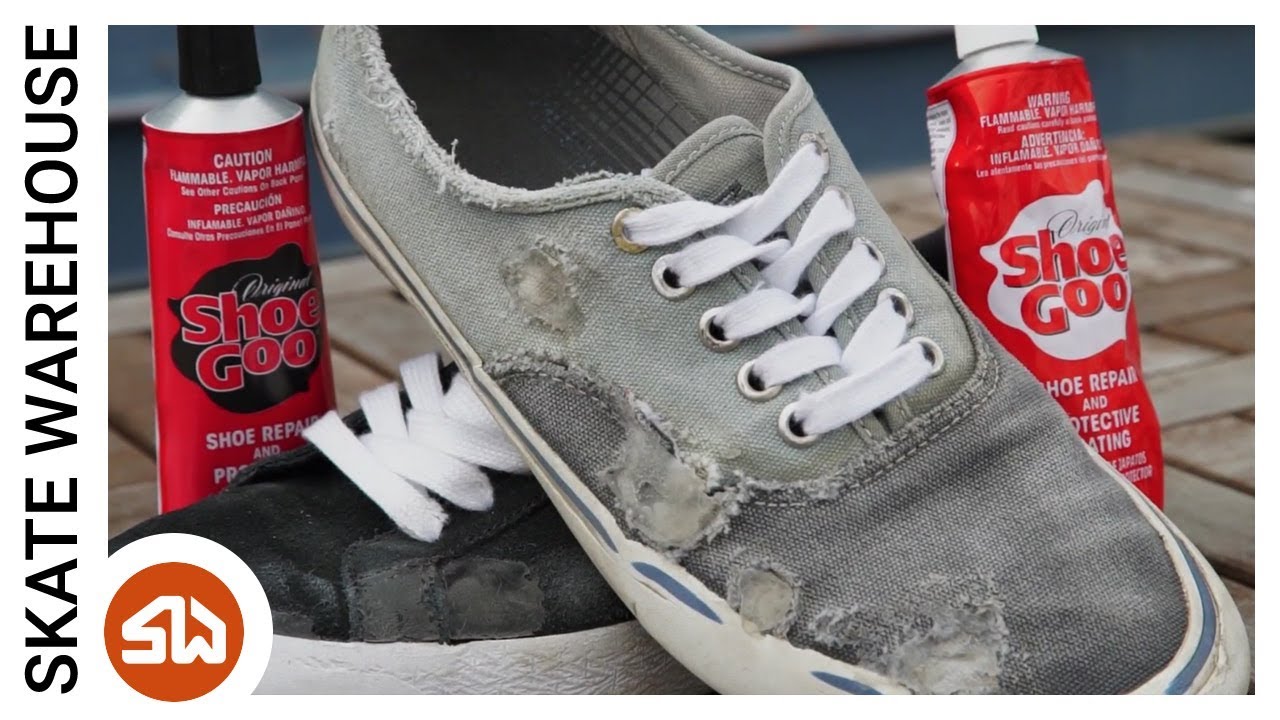
Shoe-specific rubberized adhesives (Shoe Goo, similar)
- Skin dry: 5–30 minutes depending on layer.
- Full cure: 24–48 hours; sometimes 72 hours for thick layers.
- Best for: sole damage, heel rebuilds, filling gaps.
Two-part epoxy
- Set time: 5–30 minutes for fast epoxies.
- Full cure: usually 24 hours.
- Best for: rigid, structural repairs.
Polyurethane glue (expanding)
- Initial set: 1–2 hours.
- Full cure: 24 hours; expansion slows drying.
- Best for: bonding different materials where some gap fill is needed.
Hot glue
- Set: immediate to a minute.
- Full cure: immediate, but bond strength is low for shoes.
- Best for: temporary fixes or craft projects, not long-term shoe repair.
When you ask how long does shoe glue take to dry, use these ranges and match them to the glue and job.

Step-by-step guide: how to glue a shoe for best results
Follow these steps for a strong, lasting repair and reliable timing expectations.
- Clean the surfaces
- Remove dirt, old glue, oils. Use rubbing alcohol or a mild solvent.
- Let surfaces dry fully.
- Roughen smooth areas
- Lightly sand smooth plastics or hard soles to increase grip.
- Apply the right amount of glue
- Thin, even layer for contact adhesives. Small beads for epoxy or super glue.
- Avoid over-applying; thick layers extend cure time.
- For contact adhesive
- Apply to both surfaces. Wait until tacky (5–15 minutes), then press firmly.
- Clamp or weigh down for at least 1–2 hours; full cure in 24–48 hours.
- For super glue or epoxy
- Hold parts together for the initial set time listed on the product.
- Avoid stressing the joint for 24 hours if possible.
- Finish and test
- Remove excess glue after it’s partially set but before fully cured.
- Wait full cure time before heavy use.
These steps reduce return repairs and answer the core concern: how long does shoe glue take to dry for a reliable fix.

Tips to speed drying safely and ensure a stronger bond
You can shorten wait times without sacrificing strength if you follow safe methods.
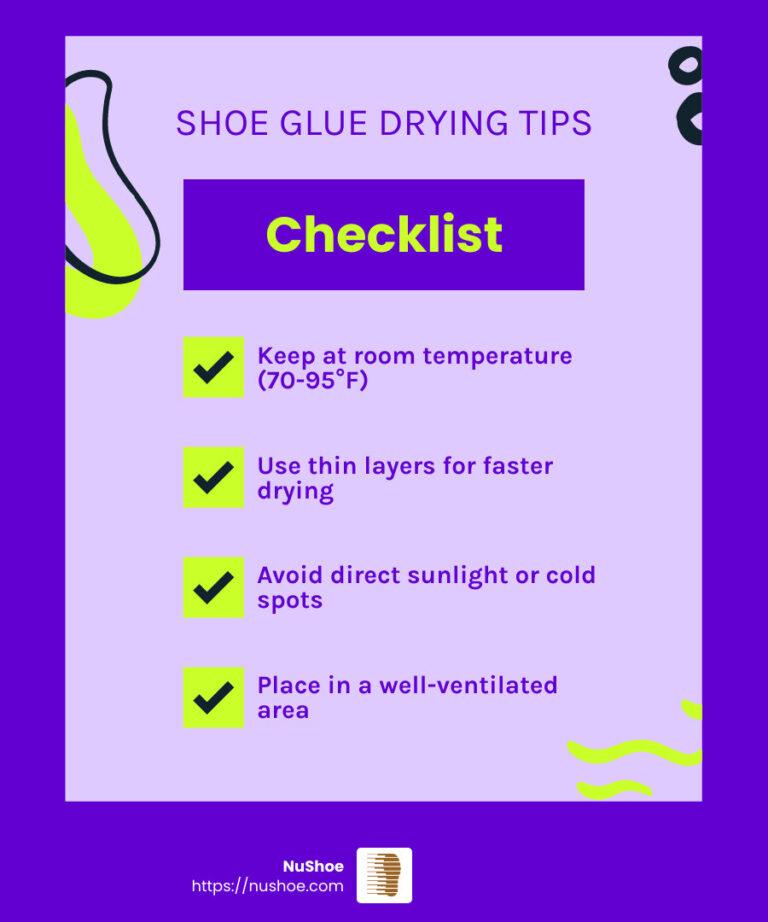
- Warm the area mildly: Room temperature or a warm room speeds drying; avoid direct heat or flames.
- Increase airflow: Use a fan to move air around the repair.
- Thin layers cure faster: Multiple thin coats usually beat one thick bead.
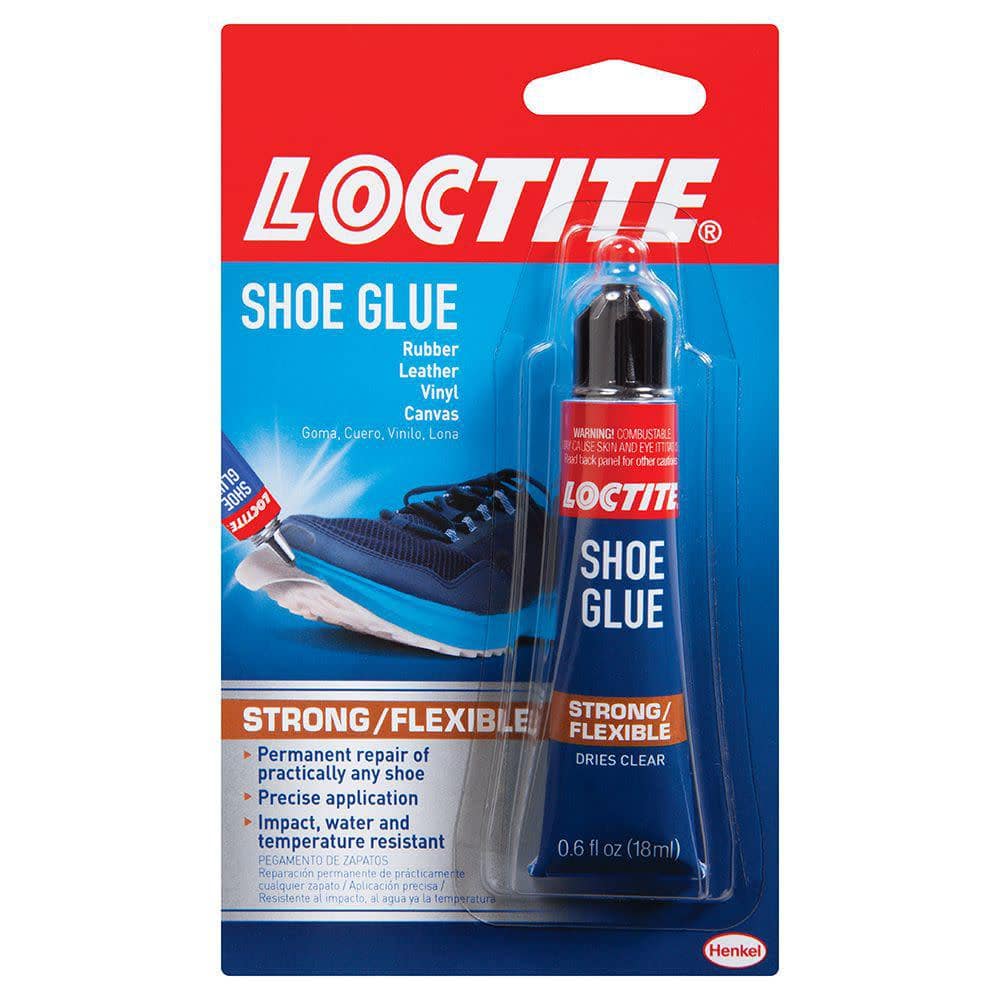
- Use the right glue: Match glue to materials; a flexible shoe glue lasts longer than a rigid epoxy on a sole.
- Clamp properly: Consistent pressure improves contact and cures faster.
Avoid hacks like hair dryers on high heat or open flames. Those can damage materials or create weak bonds. These simple, safe steps help when you wonder how long does shoe glue take to dry and want a good repair.
Common mistakes, troubleshooting, and real-life lessons
From my experience fixing dozens of shoes, these are the most common errors and how to fix them.
Mistakes to avoid
- Rushing before full cure: You might lift the bond or misalign parts.
- Using the wrong glue: Super glue on a flexible sole often fails quickly.
- Too much glue: Thick beads trap solvents and cure slowly.
- No surface prep: Dirt and oils ruin adhesion.
Troubleshooting
- Glue won’t set: Check temperature, humidity, and whether an accelerator or proper prep is needed.
- Bond breaks under flex: Use a more flexible adhesive or a shoe-specific product.
- Residue or stiff joint: Remove excess carefully and consider a different glue for flexible repairs.
Personal lesson
- I once glued a heavy work-boot sole with quick epoxy and the bond snapped within a week. After switching to a neoprene contact adhesive and clamping for 24 hours, the repair lasted months. The right glue and patience matter most.
These tips reduce the chance you’ll have to redo the repair and clarify expectations about how long does shoe glue take to dry.

Safety, care after repair, and when to seek a pro
Glue fumes and skin contact matter. Protect yourself and the shoe.
Safety basics
- Work in a ventilated area.
- Wear nitrile gloves for solvent or polyurethane glues.
- Avoid skin contact with cyanoacrylate; it bonds skin very fast.
- Keep glues away from children and pets.
Care after repair
- Let the shoe rest untouched for the full cure time listed on the product.
- Avoid heavy stress and water exposure until fully cured.
- For waterproofing, allow full cure before applying sealants.
When to see a cobbler
- Structural sole separation, heavy wear areas, or luxury shoes are often better handled by a professional.
- If multiple repairs fail, a cobbler can diagnose material or fit issues that glue alone won’t fix.
Following safety and care guidance keeps you safe and improves repair life. It also frames realistic expectations about how long does shoe glue take to dry for real-world use.
Frequently Asked Questions of how long does shoe glue take to dry
How long before I can wear shoes after gluing the sole?
Wait at least 24 hours for most contact adhesives and rubberized shoe glues; some quick fixes may hold sooner but won’t be fully strong.
Can I speed up curing with a hair dryer?
Mild warmth and airflow help, but high direct heat can weaken glue and shoe materials, so use a fan or low heat cautiously.
Is super glue good for reattaching a sole?
Super glue bonds fast but is brittle; it works for small repairs on hard parts but not for flexible sole reattachment under long-term stress.
What glue is best for rubber soles?
Neoprene-based contact adhesives or shoe-specific rubberized glues are usually best for flexible rubber-to-rubber or rubber-to-leather joins.
How can I tell if the glue is fully cured?
Check the product instructions for cure time; a cured bond feels firm and resists flexing. If in doubt, wait the full 24–48 hours for maximum strength.
Conclusion
Most shoe glues feel dry quickly, but strong, lasting repairs usually need 24–48 hours to cure. Match the glue to the material, prep surfaces well, use thin layers, and allow proper clamp time for the best results. I encourage you to try a careful repair on a spare pair first, follow the steps here, and share your results or questions below. If you liked this guide, subscribe for more practical repair tips or leave a comment about your toughest shoe fix.

Rubel Miah is the Senior Editor at MyStyleGrid.com, where he brings a sharp editorial eye and an unshakable love for fashion to everything he does. A true style addict, Rubel lives and breathes trends, from streetwear to high fashion, and has a knack for turning inspiration into impactful stories. With years of experience in fashion journalism and digital media, he curates content that empowers readers to express themselves through style. When he’s not editing features or forecasting the next big thing, you’ll find him hunting down vintage pieces or capturing street style moments around the city.