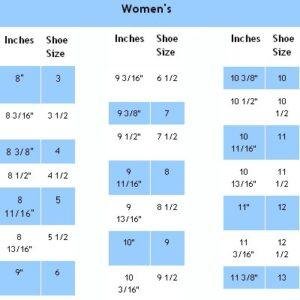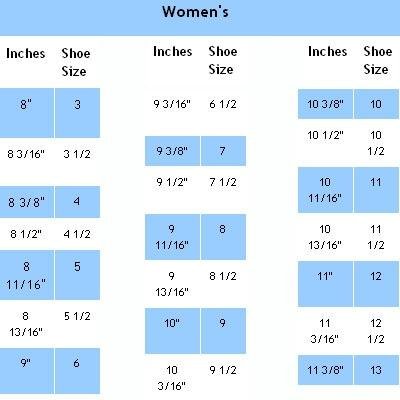
A US women’s size 8 shoe usually fits a foot about 9.5 inches long, or roughly 24.1 centimeters. This is a general US sizing estimate, not a guaranteed measurement for every brand or shoe style.
The shoe itself may measure longer than 9.5 inches on the inside or outside. Shoes need extra room for your toes, the lining, the shape of the toe box, and the way the sole is built. For the best fit, compare your measured foot length with the size chart for the specific brand.

Quick Answer: A Women’s US Size 8 Is About 9.5 Inches
A women’s US size 8 is commonly linked to these measurements:
| Measurement | Approximate value |
|---|---|
| Foot length | 9.5 inches |
| Foot length in centimeters | 24.1 cm |
| Approximate foot length in millimeters | 241 mm |
| Approximate European size | EU 38.5–39 |
| Approximate UK women’s size | UK 6 |
These values are only starting points. A women’s size 8 may fit a foot that is slightly shorter or longer because shoe brands use different lasts, materials, and sizing systems.
The most useful number is usually the foot length, not the full outside length of the shoe. A size 8 shoe may have an outsole that is more than 10 inches long, but that does not mean it fits a 10-inch foot.
What Does a Women’s Size 8 Measure?
A standard US women’s size 8 generally corresponds to a foot length of about 9.5 inches. Some brand charts list the equivalent as approximately 9.6 to 9.8 inches, so small differences are normal.
US shoe sizes are not based on a simple inch measurement printed on the shoe. They use a traditional sizing scale. Each full size represents about one-third of an inch in length, although the actual fit also depends on the shoe’s shape and construction.
The size number does not tell you the full width of the shoe. A standard women’s size 8 often has a medium width, commonly marked B, but widths vary:
- N or AA: Narrow
- M or B: Medium or standard
- W or D: Wide
- XW or EE: Extra wide
A person may need a women’s size 8 wide, for example, even when the foot length matches 9.5 inches.
Women’s Size 8 Conversion Chart
The following chart gives common US women’s size 8 conversions. Use it as a guide, then check the maker’s own chart.
| Sizing system | Approximate equivalent |
|---|---|
| US women’s | 8 |
| Foot length | 9.5–9.8 inches |
| Foot length | 24.1–24.9 cm |
| EU | 38.5–39 |
| UK | 6 |
| Japan or mondo-style length | 24–25 cm |
International conversions are not exact. European shoe sizes are based on a different scale than US sizes, and brands may round up or down. A US women’s 8 may appear as EU 38, 38.5, or 39 depending on the brand.
Do not convert by number alone when ordering online. Compare the brand’s listed foot length, especially if you are between sizes.

How to Measure Your Foot in Inches
Measuring your foot takes only a few minutes. The goal is to find the length of your foot while standing, because your foot can spread slightly under body weight.


What you need
- A sheet of paper larger than your foot
- A pencil
- A ruler or tape measure
- The socks you plan to wear with the shoes
- A hard, level floor
Follow these steps
- Place the paper on a hard floor with one edge against a wall.
- Stand on the paper with your heel lightly touching the wall.
- Keep your weight evenly spread across both feet.
- Mark the end of your longest toe. Your longest toe may not be your big toe.
- Measure from the wall-side edge of the paper to the toe mark.
- Repeat the process for the other foot.
- Use the measurement of the longer foot when checking a size chart.
Measure later in the day if possible. Feet often swell slightly after walking or standing. Measuring only one foot in the morning can lead to a shoe that feels too tight later.
Round up only when the brand’s chart directs you to do so. Do not automatically add a full inch to your foot measurement. The shoe already includes functional space for movement.
How to Choose the Right Size From Your Measurement
If your longer foot measures close to 9.5 inches, begin with a US women’s size 8. Then check the brand’s chart and the shoe’s fit notes.
Use this approach:
- Measure both feet.
- Record the longer foot.
- Find the brand’s women’s size chart.
- Match your foot length to the chart.
- Check the width options.
- Review the return policy before ordering.
For example, if your longer foot measures 9.4 inches, a women’s size 8 may work in many brands. If it measures 9.8 inches, you may need a size 8.5 or 9 in some shoes. The correct choice depends on the brand, style, socks, and desired fit.
A running shoe often needs more space in front of the toes than a dress shoe. A pointed pump may feel tight even when its measured length appears correct. A soft sneaker may stretch in width, but it usually will not gain much usable length.

Why a Women’s Size 8 Can Fit Differently Across Brands
A women’s size 8 is not identical across all US brands. Several design factors change how the shoe feels:
Shoe shape
A narrow, pointed toe box gives less room than a rounded or square toe box. Two shoes with the same labeled size can feel very different because the space is distributed differently.
Shoe type
Boots, sandals, running shoes, heels, slippers, and work shoes may use different fit standards. A size 8 in a rigid leather boot may not feel like a size 8 in a flexible knit sneaker.
Width
Length and width are separate measurements. If your toes feel squeezed at the sides but do not touch the front, you may need a wider size rather than a longer size.
Materials
Leather may soften and conform somewhat with wear. Synthetic materials and structured uppers may change very little. Do not rely on stretching to fix a shoe that is clearly too short.
Socks and insoles
Thick socks, orthotics, and replacement insoles use interior space. You may need a different size or width when wearing them.
Brand sizing policy
Some brands list the length of the foot that fits the shoe. Others list a conversion in centimeters or inches. A chart may also use measurements taken from the shoe last rather than the finished interior. Read the chart labels carefully.
Foot Length vs. Shoe Length: What Should You Measure?
Measure your foot, not the outside of the shoe. The outside sole includes material that does not provide usable interior space.


A shoe’s external length can be affected by:
- Heel shape
- Sole thickness
- Toe decoration
- Rounded or extended outsole edges
- Stitching and welt construction
- The angle of the toe
- Extra material at the back of the heel
The inside length can also be difficult to measure accurately. Curved toe boxes and padding make it hard to place a ruler flat from heel to toe. For this reason, a foot measurement and the manufacturer’s size chart are more useful than measuring a shoe’s outsole.
Your toes should not press against the front of the shoe. You should also be able to walk without your heel slipping excessively or your foot sliding forward.

Common Mistakes When Buying a Women’s Size 8
Many fit problems come from using the size number as the only measurement.
Mistake 1: Assuming every size 8 is the same
A US women’s size 8 is a starting point, not a universal physical size. Always check the individual brand and product.
Mistake 2: Measuring while sitting
Your foot can lengthen and spread when you stand. Measure while standing to get a more useful result.
Mistake 3: Measuring only one foot
Most people have small differences between their feet. Fit the longer foot and use an insole, heel grip, or other approved adjustment only when needed.
Mistake 4: Ignoring width
A longer shoe does not always solve a width problem. It may cause your heel to slip while leaving pressure across the ball of your foot.
Mistake 5: Buying by the shoe’s outside length
A long outsole does not prove that the shoe has a long interior. Measure your foot instead.
Mistake 6: Treating a conversion chart as exact
US, UK, EU, and centimeter sizes do not convert perfectly. Use conversions to narrow your choices, then confirm with the brand’s own measurements.
Mistake 7: Forgetting how the shoe will be used
A casual shoe, hiking boot, and high heel have different fit needs. Consider movement, socks, swelling, and the amount of time you will wear the shoe.
How Much Extra Room Should You Leave?
The right amount of space depends on the shoe and activity, but your toes should have room to move without hitting the front. A common practical check is to stand and make sure the longest toe does not press against the end.
For walking and running shoes, many people prefer more front space than they would in formal shoes. The foot can swell during long activity, and the toes move forward as you walk downhill or pick up speed.
Extra space should not cause the foot to slide. If your heel lifts with each step, the shoe may be too long, too wide, or poorly shaped for your foot.


A simple fit check:
- Toes can move freely.
- No toe touches the front while standing.
- The widest part of the foot rests near the widest part of the shoe.
- The heel stays reasonably secure.
- There is no sharp pressure or numbness.
- You can walk normally without gripping with your toes.

What If Your Foot Is Between Sizes?
If your foot falls between sizes, choose based on the shoe type and fit problem.
For a closed shoe, try the larger size if the smaller size causes toe pressure. You can sometimes improve a slightly roomy fit with thicker socks or a properly fitted insole.
For sandals or open shoes, a larger size may leave too much movement or allow your foot to slide. In that case, the shape of the footbed and the position of the straps matter as much as the length.
If the length is correct but the shoe feels tight across the forefoot, look for a wide version. Do not keep sizing up unless you also need more length.
Return the shoe if it causes pain, numbness, rubbing, or pressure during normal walking. A shoe should not require a painful break-in period to become wearable.
Best Sources for Checking Women’s Shoe Size
Use the following sources in this order:
- The shoe brand’s official size chart
- The product page’s fit notes
- The retailer’s measurement guide
- Customer reviews that mention fit, treated as personal reports rather than exact measurements
- Your own foot measurement
Useful reference sources include:
- Brannock Device official sizing information
- Nike women’s footwear size guide
- adidas women’s shoes and footwear size guide
- New Balance women’s footwear size guide
These charts may use different measurement methods and can change over time. Check the chart connected to the exact shoe you want to buy.

Frequently Asked Questions
Is a women’s size 8 the same as 9.5 inches?
Usually, a US women’s size 8 fits a foot about 9.5 inches long. Some brands associate the size with 9.6, 9.7, or 9.8 inches, so the brand chart is the final reference.
What is a women’s size 8 in centimeters?
A women’s US size 8 is commonly listed as about 24.1 centimeters, although some brand charts list a range closer to 24.5 or 25 centimeters.
Is a women’s size 8 the same as a men’s size 8?
No. A US women’s size 8 is generally about equivalent in length to a US men’s size 6.5, though the width and shape may differ. Men’s shoes often use different standard widths.
What is a women’s size 8 in European sizes?
A US women’s size 8 is often close to EU 38.5 or 39. Conversion varies by brand, so use the maker’s chart instead of relying on a single conversion.


Should I buy a size 8 if my foot measures exactly 9.5 inches?
Start with a women’s size 8, then check the brand chart and shoe type. Confirm that the toe box, width, heel hold, socks, and intended use all work for your foot.
Final Answer
A US women’s size 8 shoe generally fits a foot about 9.5 inches long, or 24.1 centimeters. Because sizing varies by brand and shoe design, treat that number as a guide rather than a guarantee.
Measure both feet while standing, use the longer measurement, check the brand’s official chart, and choose the width as carefully as the length. That process is more reliable than judging fit from the size label alone.

Madison Clark is a footwear expert and the voice behind MyStyleGrid.com. She specializes in honest shoe reviews, style tips, and practical guides to help readers find the perfect pair for any occasion. With years of experience in blogging and content creation, Madison makes footwear knowledge simple, stylish, and easy to follow.