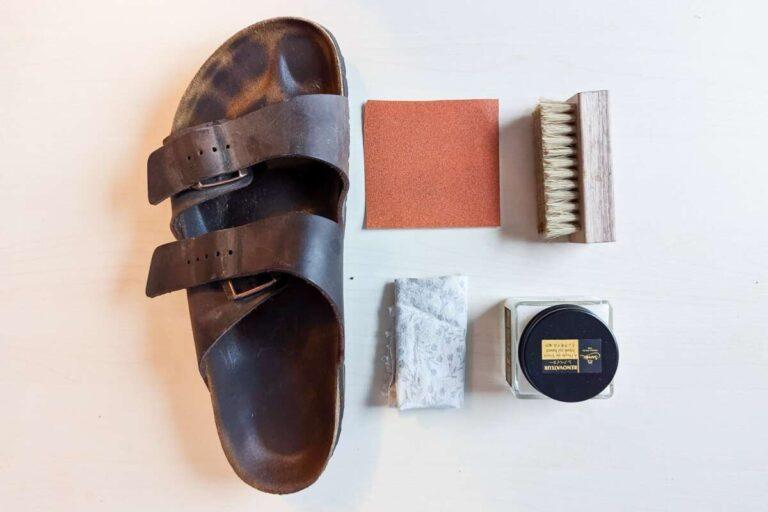
Clean a Birkenstock footbed with a damp brush, mild cleaner, gentle scrubbing, and slow air drying.
Learning how to clean footbed of Birkenstock sandals is simple when you protect the suede, cork, and leather. The key is to use very little water, avoid harsh soap, and let the sandals dry slowly. This guide explains a safe, practical method for removing dirt, odor, sweat marks, and light stains without damaging the footbed.
What Makes a Birkenstock Footbed Different?
A Birkenstock footbed is not one solid material. It usually has several layers that work together to support your feet.
The base contains cork and latex. Above it sits a suede lining that touches your skin. Some models also include a leather, synthetic, or textile upper. Each material reacts differently to water and cleaning products.
The suede footbed absorbs sweat and body oils over time. This can make it look dark, shiny, or uneven. It may also hold odor, especially during hot weather or after long walks.
When learning how to clean footbed of Birkenstock sandals, remember these basic material limits:
• Cork can weaken if it becomes soaked.
• Suede can become stiff or marked when over-wet.
• Leather may dry out if cleaned with strong soap.
• Heat can cause glue, cork, and leather to crack or change shape.
The goal is not to make the footbed look brand new. A well-worn footbed often shows the shape of your feet. The goal is to remove surface dirt and odor while keeping the sandal’s structure intact.

Supplies You Need Before Cleaning
Gather your supplies before you start. A small kit helps you clean with control and prevents the common mistake of reaching for a strong household cleaner.
You will need:
• A soft suede brush or clean toothbrush
• A clean microfiber cloth
• Lukewarm water
• A small bowl
• A gentle suede cleaner or Birkenstock cleaning product
• A dry towel
• Baking soda for odor control, if needed
• A suede eraser for small dry marks
Use a dedicated suede cleaner when possible. It is made for delicate nap and is less likely to leave a harsh residue. If you do not have one, use a very small amount of mild soap diluted well with water. Do not pour soap directly onto the footbed.
Avoid these products:
• Bleach
• Disinfectant sprays
• Alcohol
• Ammonia
• Strong laundry detergent
• Oil-based leather products
• Magic erasers
• Hair dryers and heaters
These products may remove color, flatten the suede, dry the cork, or leave a sticky surface. In my experience with footwear care, most damage comes from using too much water or trying to remove a stain too fast.

How to Clean Footbed of Birkenstock Sandals Step by Step
This method works for routine dirt, light sweat marks, and mild odor. Always test your cleaner on a hidden area first.
1. Remove loose dirt
Take the sandals outside or hold them over a trash can. Tap the soles together gently to release sand and loose grit.
Brush the footbed with a dry suede brush. Use short strokes in one direction. Do not scrub hard, because strong pressure can flatten the suede fibers.
Pay close attention to the heel and toe areas. These spots collect the most skin oil and dirt.
2. Protect the upper and cork
Place a dry towel around the upper edge of each sandal. This helps keep moisture away from leather or fabric straps.
You can also cover the cork edge with a clean cloth while you work. The cloth does not need to be tight. It only needs to act as a simple barrier against drips.
3. Mix a mild cleaning solution
Add a small amount of lukewarm water to a bowl. Mix in a little suede cleaner according to its label.
If you use mild soap, add only one or two drops. The mixture should be weak and lightly soapy, not thick or foamy.
A controlled solution is central to learning how to clean footbed of Birkenstock sandals. Too much cleaner can soak into the footbed and leave a dark ring.
4. Dampen the brush
Dip the brush into the solution, then squeeze or tap out the excess water. The brush should be damp, not dripping.
Work on a small section first. Brush the footbed with gentle circular motions. Clean from the heel toward the toe, then repeat across the whole footbed.
Do not flood the surface. Think of cleaning the suede like brushing a soft jacket, not washing a dish.
5. Lift marks gently
For a small dry mark, try a suede eraser after the footbed has dried. Rub lightly and brush away the residue.
For a darker sweat area, make several light passes instead of one hard scrub. Heavy pressure may create a smooth patch that looks different from the surrounding suede.
6. Wipe away residue
Use a clean, barely damp microfiber cloth to remove leftover cleaner. Wring the cloth well before touching the footbed.
Avoid repeated wiping. A few light passes are enough. Excess moisture is more dangerous than a small amount of leftover dust.
7. Let the sandals dry naturally
Place the sandals in a cool, dry room with good air movement. Keep them away from direct sun, radiators, vents, and hair dryers.
Allow them to dry fully before wearing them. Depending on how damp they became, this may take several hours or overnight.
When learning how to clean footbed of Birkenstock sandals, slow drying is one of the most important steps. Heat can dry the surface before the inside, which may lead to cracking or shape changes.
8. Brush the dry footbed again
After the sandals are fully dry, brush the suede lightly. This helps lift the nap and remove any dry residue.
If the surface feels slightly stiff, use short, soft strokes. Do not add more water unless a visible residue remains.

How to Remove Odor From a Birkenstock Footbed
Footbed odor usually comes from sweat, skin oils, bacteria, and trapped moisture. Cleaning removes much of the buildup, but good drying and regular care matter just as much.
For mild odor, brush the dry footbed and leave the sandals in a well-ventilated area overnight. Do not store them in a closed bag while they are damp.
For stronger odor, sprinkle a very thin layer of baking soda over the footbed. Leave it for several hours or overnight, then brush it away completely. Test this method on a small area first, because powder can settle into suede.
You can also use a shoe deodorizer made for suede or leather. Check the label and avoid products that contain strong alcohol or leave the footbed wet.
A useful routine is:
• Air the sandals after each long wear.
• Wear clean socks when practical.
• Avoid wearing them on back-to-back sweaty days.
• Keep them in a dry, ventilated space.
• Clean the footbed before odor becomes severe.
Baking soda may reduce odor, but it does not replace cleaning. It also will not repair stains, mold, or material damage.

How to Clean Deep Stains Without Damaging the Footbed
Deep stains need patience. A footbed that looks dark may contain sweat and oil rather than ordinary dirt. Trying to erase it in one session can cause more harm than leaving a faint mark.
Start with a dry brush. Then use a suede eraser on small spots. If the stain remains, repeat the damp-brush method once the footbed is completely dry.
Do not use a soaking treatment. The cork layer can absorb water, and the suede may develop tide marks. A wet footbed may also take much longer to dry.
For oil or grease, blot the area with a clean, dry cloth. Do not rub it deeper into the suede. A professional shoe cleaner may be the safest option for a large or old grease stain.
For mold or mildew, stop wearing the sandals until they are inspected and cleaned. Mold can spread through porous materials. A professional may recommend whether the footbed can be saved.
The practical lesson is simple: light cleaning is safer than aggressive restoration. When you learn how to clean footbed of Birkenstock sandals, you also learn when to stop.