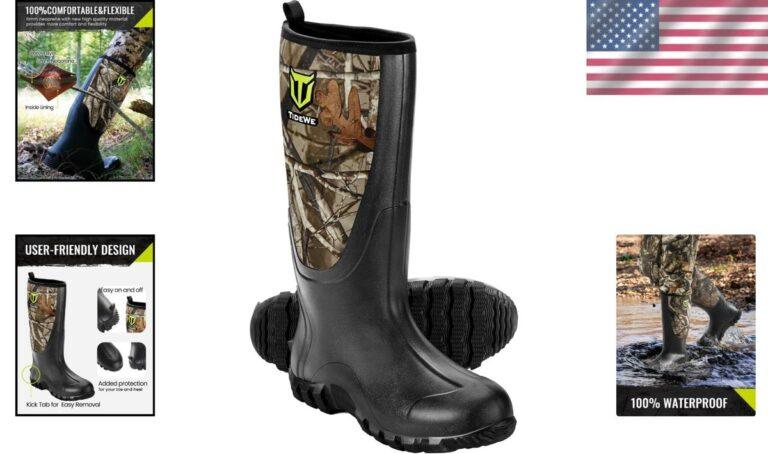
The best ways to make rubber boots more comfortable are better fit, cushioned insoles, dry socks, and gradual break-in.
Rubber boots protect your feet from rain, mud, snow, and standing water, but they can also feel stiff, sweaty, or painful. Learning how to make rubber boots more comfortable starts with finding the real cause of discomfort, then fixing pressure, moisture, support, and friction in the right order. This guide shares practical methods that work for daily wear, gardening, farm work, hiking, and outdoor jobs.
Why Rubber Boots Feel Uncomfortable
Rubber boots are made to block water. That strength can also make them less flexible than leather or fabric footwear. Most discomfort comes from a small number of common problems.
Poor fit
A boot that is too tight can press on your toes, heel, or ankle. A boot that is too loose can let your foot slide with each step. Both problems may lead to blisters, sore arches, and tired legs.
Your feet may also swell during the day. A pair that feels fine in the morning may feel tight after several hours. Try boots later in the day when your feet are at their largest.
Lack of foot support
Many rubber boots have thin, flat footbeds. They keep your feet away from wet ground, but they may not support your arches or cushion your heels. This is a major reason people search for how to make rubber boots more comfortable.
Heat and sweat
Rubber does not breathe well. Moisture can build up inside the boot, even in cool weather. Wet skin is more likely to rub, blister, and become irritated.
Stiff shafts and hard edges
New rubber boots often feel rigid around the ankle and calf. The top edge may also rub your leg. This issue is common with tall rain boots and work boots.
Foot shape and boot design
Every foot is different. Some people have wide toes, high arches, narrow heels, or prominent ankles. A boot may be well made but still feel wrong if its shape does not match your foot.

Start With the Right Boot Size and Shape
The most effective answer to how to make rubber boots more comfortable is to improve the fit before adding accessories. Insoles and thick socks cannot fully fix a boot that is the wrong size.
Check the toe room
Your toes should be able to move freely. Leave about a thumb’s width between your longest toe and the front of the boot. This space allows for foot swelling and helps prevent your toes from hitting the front while walking downhill.
Your toes should not feel curled or pressed together. If they do, choose a wider or larger model rather than forcing the boot to stretch.
Check the heel
Some heel movement is normal in pull-on rubber boots. However, your heel should not lift dramatically with every step. Too much movement causes friction and blisters.
Walk on a firm surface for several minutes. Bend your knees, climb a few steps, and sit down. A good fit should feel secure without squeezing your foot.
Check the calf and ankle
tall boots should not cut into your calf. You should be able to fit one or two fingers between the boot opening and your leg. If the shaft is too tight, look for an adjustable gusset or a wider calf design.
The ankle should bend without the rubber folding sharply into your skin. Deep creases can create painful pressure points.
Wear the socks you plan to use
Try boots with the socks you will wear outdoors. Thin dress socks and thick wool socks can create very different fits. This simple step can prevent many sizing mistakes.
A useful fitting checklist includes:
• Free toe movement without pressure
• A secure heel with limited lifting
• No sharp rubbing at the ankle
• Enough room for regular socks or an insole
• A shaft that does not pinch your calf
Add Support With Better Insoles
Replacing the original footbed is often the fastest way to make rubber boots more comfortable. A supportive insole can improve cushioning, arch support, and heel stability.
Choose the right type of insole
The best insole depends on your activity and foot shape.
• Cushioning insoles help reduce impact during walking or standing.
• Arch support insoles help spread pressure across the foot.
• Work boot insoles often provide firm heel and arch support.
• Gel heel cups can reduce heel impact but may take up extra space.
• Wool or thermal insoles add warmth in cold weather.
Avoid choosing the thickest insole automatically. A bulky insole can make the boot too tight across the top of your foot.
Remove the original footbed first
Many rubber boots have a removable liner or footbed. Take it out before adding a new insole. If you place one insole on top of another, you may lose valuable space and create pressure on your toes.
If the original footbed is glued in place, use a thin replacement insole. Do not force a thick insert into a narrow boot.
Match support to your arch
Your arch should feel supported, not pushed upward. If the insole creates a strong lump under your foot, it may be too firm or the wrong shape.
People with ongoing foot pain should consider advice from a podiatrist. Support needs vary, and an over-the-counter insole is not a universal treatment.
Replace worn insoles
Insoles lose cushioning over time. Replace them when they become flat, cracked, damp, or uneven. A worn insole can make a good boot feel uncomfortable.
Wear the Right Socks
Socks play a major role in how to make rubber boots more comfortable. They control moisture, reduce friction, and add a small amount of cushioning.
Choose moisture-managing fabric
Merino wool and synthetic outdoor socks often perform better than cotton. Cotton absorbs sweat and stays wet for a long time. That damp layer can increase rubbing and make your feet cold.
Merino wool can help manage moisture and temperature in both cool and mild conditions. Synthetic fabrics such as polyester and nylon also dry faster than cotton.
Use the right thickness
Thick socks can soften contact with stiff rubber. However, they should not make your toes feel crowded. If the boot becomes tight, use a thinner sock or choose a larger boot.
For cold weather, try a thin moisture-wicking liner sock under a medium-weight wool sock. This system can reduce friction while adding warmth.
Avoid wrinkled socks
Smooth your socks before putting on the boots. A small fold near the heel or toe can become a painful pressure spot after a long walk.
Change socks when they become damp. Carrying a spare pair is one of the simplest ways to stay comfortable during outdoor work.

Break In Rubber Boots Safely
Rubber boots do not break in like leather boots. The rubber may become more flexible with use, but it will not always stretch much. A gradual break-in period can still soften movement and reveal pressure points.
Use short sessions
Start by wearing the boots indoors for 20 to 30 minutes. Walk, sit, and bend your ankles. Check for rubbing before using them for a full day.
Increase wear time slowly over several days. This gives your skin and feet time to adapt.
Walk before working
Do not wear brand-new boots on a long hike, at a festival, or during a full shift. Test them near home first. This helps you find problems while you still have easy access to other shoes.
Do not use high heat
Avoid hair dryers, heaters, ovens, and direct flames. High heat can damage rubber, weaken adhesives, or change the boot’s shape. It may also create uneven areas that rub your feet.
Warm water may soften some materials, but it is not a reliable stretching method. Always follow the care instructions from the boot maker.
Use soft protection on pressure points
If you notice rubbing, cover the area before a blister forms. Moleskin, blister patches, or sports tape can reduce friction. Apply these products to clean, dry skin.
Do not use tape over a serious blister, open wound, or infected area. Seek medical care if redness, swelling, pus, or severe pain develops.

Reduce Heel Slip and Blisters
Heel movement is one of the most common comfort problems in pull-on rubber boots. The goal is not to eliminate every bit of movement. The goal is to stop repeated rubbing.
Try these methods:
• Wear socks with a padded heel.
• Add a thin heel grip if the boot has enough room.
• Use a supportive insole that holds the heel in place.
• Lace an optional boot liner or gaiter around the top if the design allows it.
• Check that the boot is not too large.
Heel grips may not stick well to wet or textured rubber. Clean and dry the area first, and replace the grip when it starts to peel.
If your heel still slips badly, the boot may simply be too large or too wide. Accessories cannot fully correct a poor fit.
Fix Pressure Around the Calf and Ankle
Tall rubber boots can feel restrictive around the lower leg. This can make walking awkward and leave red marks on the skin.
Choose an adjustable design
A side gusset, buckle, or flexible panel can help you control the fit. This is useful if your calf size changes or if you wear thick pants.
Add a boot liner
A fabric liner can reduce direct contact between your skin and the rubber. It may also improve warmth and absorb some moisture. Choose a liner that does not make the boot too tight.
Wear tall, smooth socks
Socks that reach above the boot edge can protect your skin. Avoid socks with thick seams at the ankle or calf. Those seams may create pressure under the stiff shaft.
Use a comfort sleeve
A soft neoprene or fabric sleeve can cushion the boot edge. Make sure it does not create extra compression around your leg.
Do not ignore numbness, tingling, or swelling. These signs may mean the boot is too tight. Remove the boots and reassess the fit.

Keep Rubber Boots Dry and Fresh
Knowing how to make rubber boots more comfortable also means controlling moisture inside them. Comfort drops quickly when the lining stays damp.
Follow this routine after each use: