Check the logo, materials, stitching, packaging, seller, and receipt before trusting Tory Burch sandals.
Learning how to tell if Tory Burch sandals are real takes more than spotting the famous double-T logo. Authentic pairs have a consistent mix of design, finish, construction, and seller history. This guide explains how to tell if Tory Burch sandals are real with simple checks you can use before buying online or in person.

How to Tell If Tory Burch Sandals Are Real at a Glance
The safest approach is to inspect several details together. One small flaw may come from wear, but many problems across the same pair can signal a counterfeit.
Use this quick inspection order:
- Check the seller and price.
- Compare the style with official product images.
- Inspect the Tory Burch logo.
- Review the leather, rubber, or fabric.
- Examine stitching, edges, and sole markings.
- Check the box, dust bag, tags, and receipt.
- Compare the item code and color with a trusted listing.
- Ask for proof of purchase when buying secondhand.
No single detail proves authenticity. Counterfeit makers can copy one feature well, much like a student can copy one line of handwriting. The full picture matters.
A genuine pair may also show small differences between seasons or factories. For that reason, use several signs rather than relying on one viral “authentication trick.”
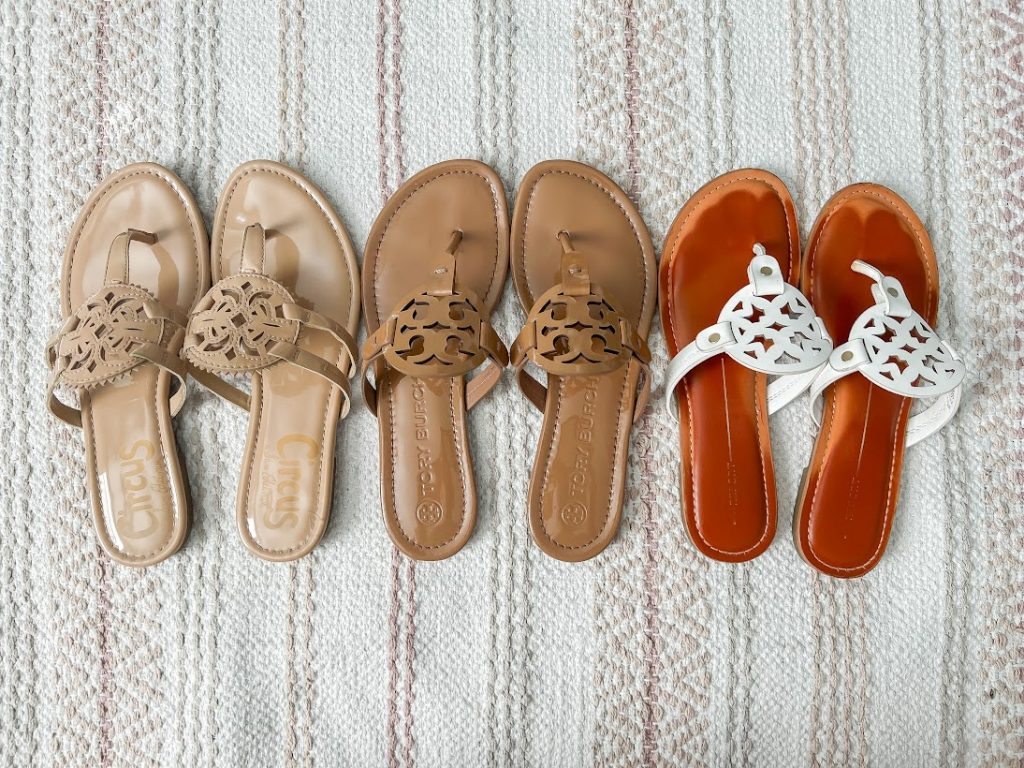
Check the Seller Before You Check the Sandals
Seller history is often the first and strongest clue. A real pair sold through an official store, a reputable department store, or a well-known resale platform has a lower risk than a pair from an unknown account.
Be careful with sellers who use stock photos only. Ask for clear photos of the actual sandals, including the footbed, outsole, size stamp, box label, and logo.
Watch for these warning signs:
• A price far below the normal sale price without a clear reason
• Many brand-new pairs in many sizes from a private seller
• Pressure to pay outside the marketplace
• Refusal to provide close-up photos
• A story about “factory seconds” with no proof
• Product photos copied from the Tory Burch website
• A seller with new accounts, poor reviews, or mismatched names
A discount does not automatically mean fake. Outlet sales, seasonal promotions, gently used items, and older collections can all cost less. Still, an extreme price gap deserves careful research.
When learning how to tell if Tory Burch sandals are real, seller behavior matters because counterfeit products often enter the market through unclear supply chains.

Compare the Style With Official Product Details
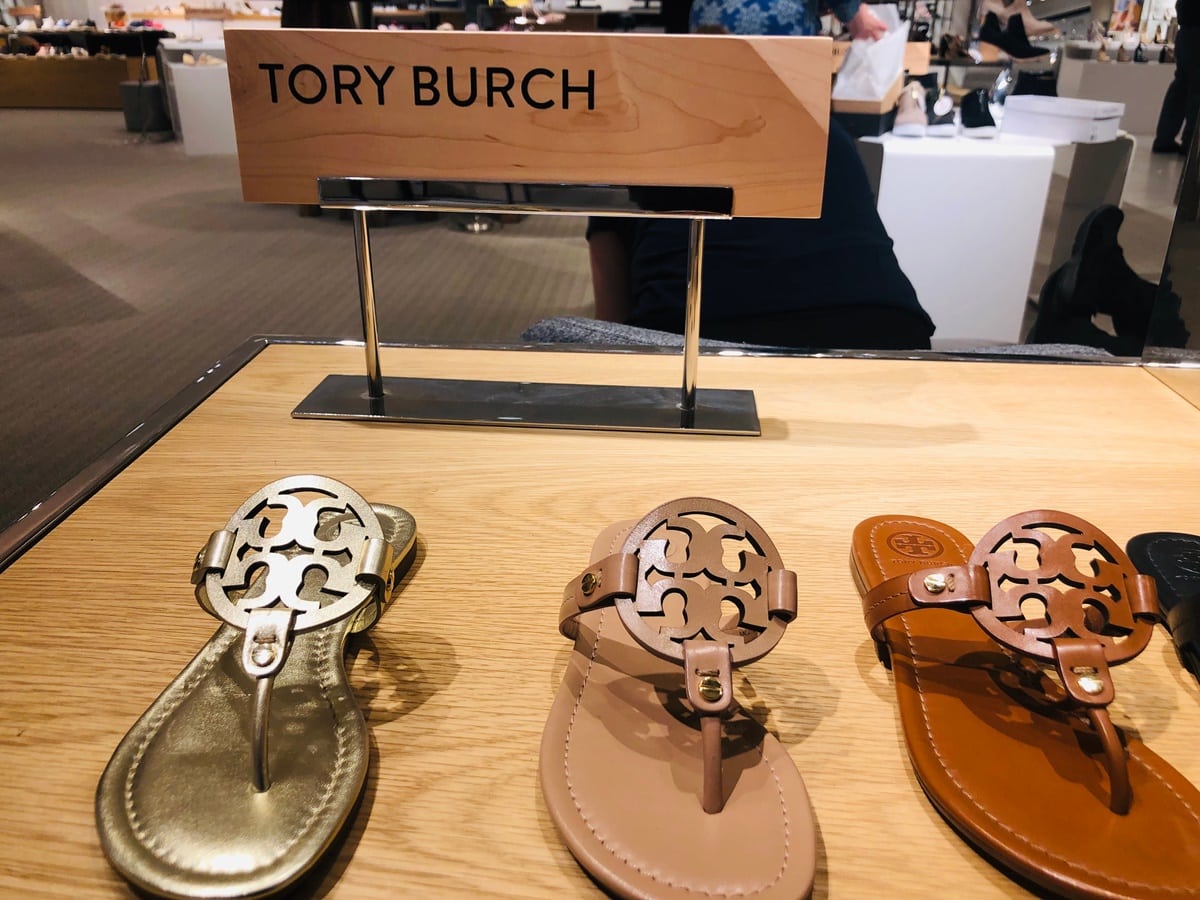
Tory Burch releases many sandal styles, including Miller, Mini Miller, Kira, Fisherman, and seasonal designs. Each style can have its own logo size, footbed shape, strap layout, and sole pattern.
Start by identifying the exact model. Search the style name, color, and season when possible. Then compare the pair with images from an official retail page or an established department store.
Look for differences in:
• Number and placement of straps
• Shape of the toe opening
• Size and position of the double-T logo
• Footbed color and texture
• Heel height
• Sole pattern
• Hardware color
• Edge shape around the straps
Do not compare a used sandal with a brand-new product photo as if they should look identical. Sun, sweat, dust, and foot pressure can change the appearance of leather and rubber.
A better comparison matches the same style and color. If the listing says “Miller leather sandal,” but the strap layout does not match any known Miller design, pause before buying.
This is one of the most useful parts of how to tell if Tory Burch sandals are real because counterfeit sellers often combine details from different models.

Inspect the Tory Burch Logo Closely
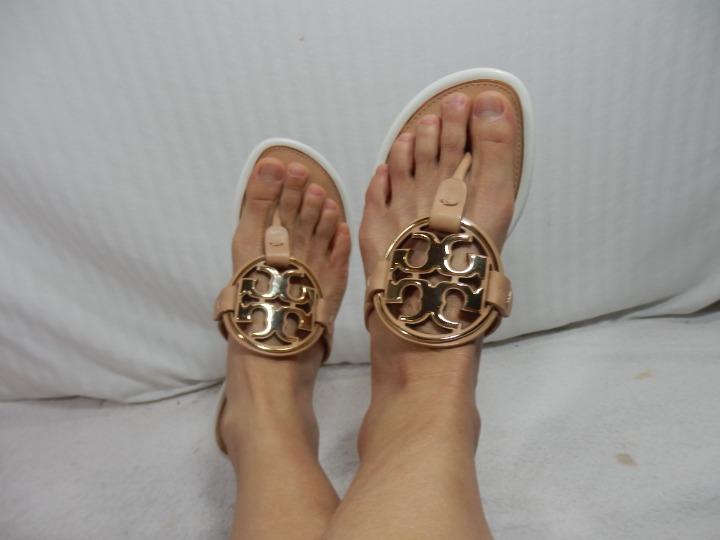
The double-T logo is the most famous feature on many Tory Burch sandals. It is also one of the most copied parts.
On a genuine pair, the logo usually looks balanced and clean. The two T shapes should have even spacing, smooth edges, and a stable position on the strap or footbed. The finish may be shiny, matte, raised, or embossed, depending on the model.
Look for:
• Uneven or crooked logo placement
• Rough edges around a metal emblem
• Thin plating that looks yellow or overly bright
• A logo that feels loose
• Uneven embossing
• Letters that appear too narrow or too wide
• Excess glue around the logo
The logo alone cannot prove authenticity. Some counterfeit factories produce convincing metal emblems. The logo must match the rest of the sandal, including the material, shape, footbed, and sole.
Also remember that genuine logos may show scratches after use. A worn logo is not automatically a fake logo. Focus on the original shape and construction, not only its current shine.
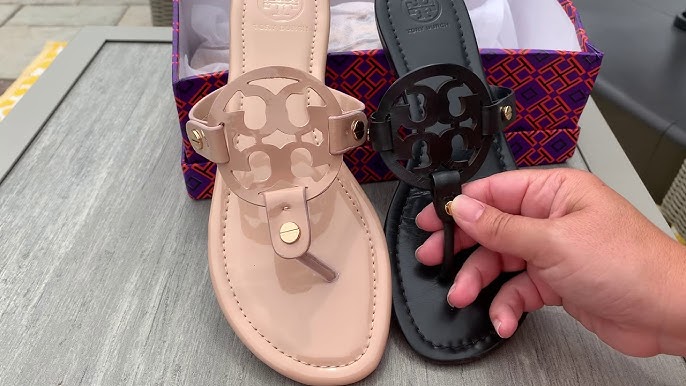
Examine the Materials and Overall Finish
Authentic Tory Burch sandals are made with materials that should feel consistent with the listed design. Depending on the style, you may see leather, suede, rubber, fabric, or synthetic components.
Genuine leather often feels firm but flexible. It may have a natural grain and a mild leather smell. Fake leather can feel overly plastic, stiff, thin, or strongly chemical, although smell is not a reliable test by itself.
Check the sandals for:
• Smooth but not sloppy edges
• Even color across both shoes
• Secure straps
• Clean glue work
• A balanced shape
• A footbed that feels properly finished
• No peeling, bubbling, or warped material
Be careful with the “real leather must look perfect” myth. Natural leather can have small grain changes, light marks, or slight color variation. These may support authenticity rather than weaken it.
At the same time, major cracks, rough coating, and peeling on an allegedly new pair are concerns. New shoes should not look heavily worn unless the seller clearly explains their condition.
When considering how to tell if Tory Burch sandals are real, judge quality as a group. Authentic footwear usually feels like one complete product, not several parts assembled in a hurry.
Study the Stitching, Footbed, and Sole
Construction details can reveal problems that a logo hides. Turn the sandals over and inspect the outsole, edges, and seams in bright light.
Stitching should generally look even and secure. Small variations can occur, but loose threads, skipped stitches, and messy ends deserve attention. Straps should sit straight and connect firmly to the sandal.
Inspect the footbed for:
• Clear branding or embossing where expected
• Even lettering
• A smooth, comfortable finish
• Correct color for the style
• No bubbles or lifting layers
Then check the outsole. The tread should look intentional and match the model’s design. It should not feel unusually light, brittle, or poorly molded.
Compare both sandals side by side. Counterfeit pairs may have slight differences in logo placement, strap length, color, or shape. One shoe can look acceptable alone but suspicious next to its mate.
A practical lesson is to use a flashlight and take close-up photos. Camera zoom can reveal rough embossing and excess adhesive that your eyes miss in a store.

Verify the Box, Dust Bag, Tags, and Receipt
Packaging can support an authentication decision, but it should never be your only proof. Fake packaging is easy to produce, and real packaging can be mixed with counterfeit shoes.
Check whether the box and labels match the sandals. Look for consistency in:
• Style name
• Size
• Color name
• Item or product code
• Barcode label