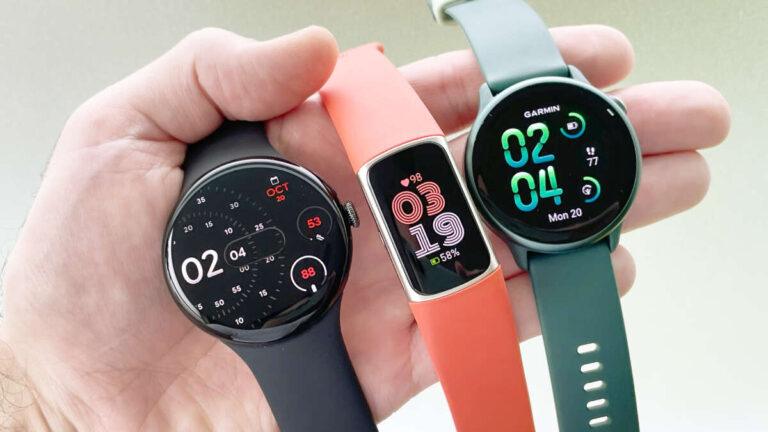
Garmin is the best Fitbit alternative for most people who want strong fitness tracking, long battery life, and useful health data.
Choosing what is a good alternative to a Fitbit depends on your goals, phone, budget, and the data you care about most. I have compared popular fitness trackers and smartwatches across sleep tracking, heart-rate accuracy, exercise tools, battery life, comfort, and subscription costs. This guide will help you find the right device without paying for features you will not use.
What is a good alternative to a Fitbit?
For most users, Garmin is the strongest Fitbit alternative. Garmin trackers offer reliable activity tracking, excellent GPS on many models, long battery life, and detailed workout data. They also work well for people who want to improve their fitness without relying on a monthly membership.
However, there is no single best choice for everyone. The right alternative depends on your daily habits:
• Choose an Apple Watch if you use an iPhone and want a full smartwatch.
• Choose a Garmin tracker if you care about fitness, running, battery life, and detailed health data.
• Choose a Samsung Galaxy Watch if you use an Android phone and want smart features.
• Choose an Oura Ring if you prefer a small, screen-free device for sleep and recovery.
• Choose a Withings device if you want health tracking with a traditional watch design.
• Choose an Amazfit tracker if you want many features at a lower price.
The best fitness tracker should fit your life like a comfortable pair of shoes. A feature-rich device is not useful if it feels uncomfortable, needs daily charging, or makes its most helpful tools hard to access.
The best Fitbit alternatives compared
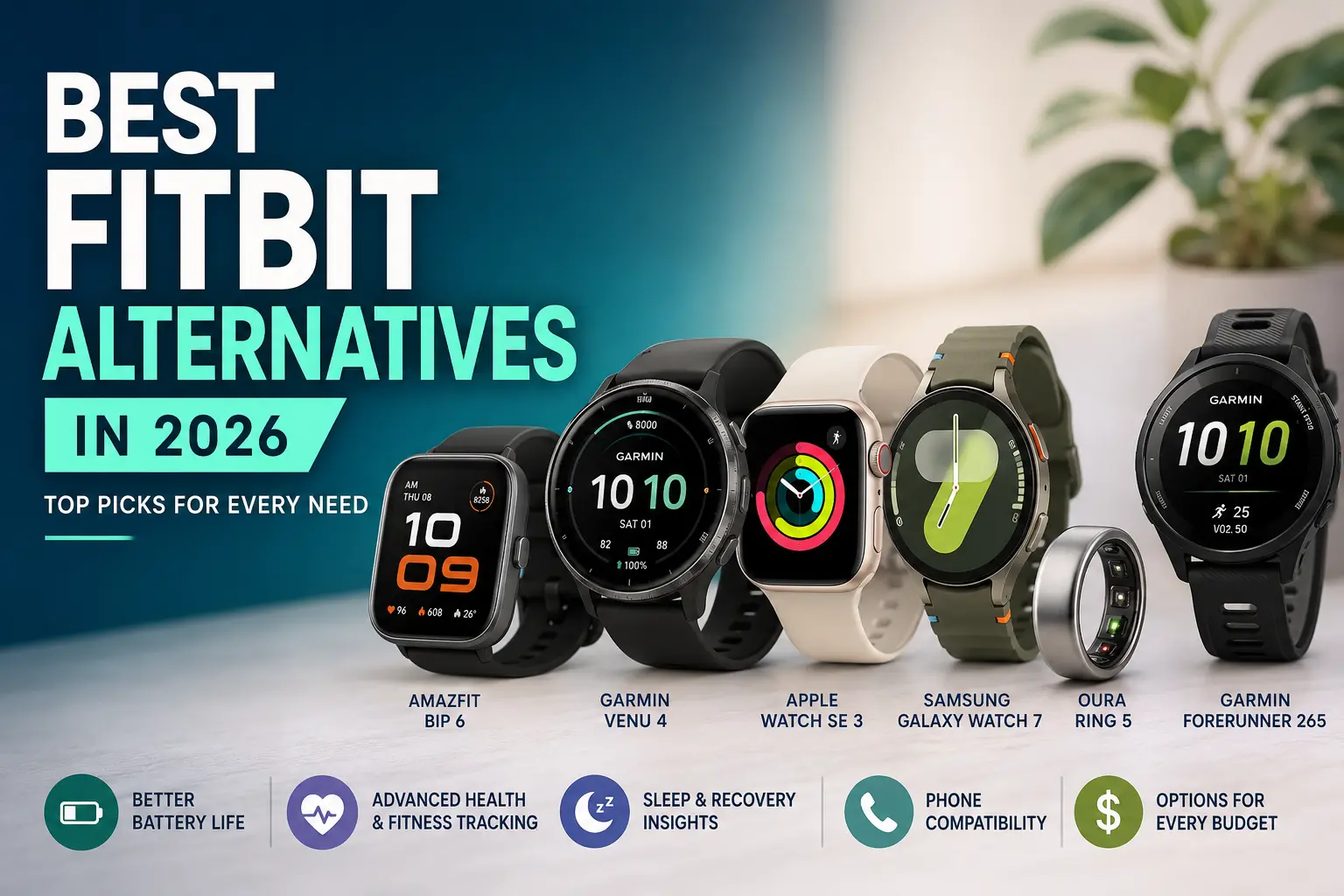
The following devices are among the most practical Fitbit alternatives available in the United States. Each one has a different strength, so compare the details before you buy.
Garmin
Garmin is often the best overall answer to what is a good alternative to a Fitbit. Its fitness watches and trackers are built for walking, running, cycling, swimming, strength training, and outdoor activity.
Popular Garmin options include the vívosmart 5, Forerunner series, Venu series, and Vivoactive series. Features vary by model, but many include heart-rate tracking, stress monitoring, sleep data, blood oxygen estimates, GPS, workout profiles, and body battery-style energy insights.
Advantages include:
• Battery life that often lasts several days or longer
• Strong GPS and exercise tracking on compatible models
• Detailed training data for runners and athletes
• No required premium subscription for core tracking features
• Broad compatibility with iPhone and Android phones
Garmin devices can feel more serious than Fitbit. The app may show more data than a casual user needs, and some health estimates can take time to understand. Still, Garmin is a strong pick for anyone who wants to grow from basic step counting into structured training.
Apple Watch
The Apple Watch is a good Fitbit alternative for iPhone users who want health tracking and smartwatch features in one device. It can track steps, heart rate, workouts, sleep, walking steadiness, and other health signals. Certain models also support features such as fall detection and irregular heart rhythm notifications.
Its biggest advantage is the wider Apple ecosystem. You can answer messages, use maps, listen to music, make contactless payments, and install apps directly from your wrist.
The main limits are important:
• It only works fully with an iPhone
• Battery life is usually shorter than Garmin’s
• Some advanced health features depend on the model and region
• It can cost more than a basic fitness tracker
If you already own an iPhone, the Apple Watch may be the most convenient choice. It is less ideal if you want a simple tracker that you can charge only once every week or two.
Samsung Galaxy Watch
The Samsung Galaxy Watch is one of the best Fitbit alternatives for Android users, especially people with Samsung phones. It combines fitness tracking with calls, messages, apps, payments, music controls, and health features.
Depending on the model, you may find heart-rate tracking, sleep stages, blood oxygen estimates, skin temperature data, GPS, workout recognition, and body composition estimates. Some features work best, or only work, with compatible Samsung phones.
Its strengths include:
• A bright screen with a polished smartwatch design
• Strong Android integration
• Built-in GPS on many models
• Useful workout and sleep features
• Access to a broad app ecosystem
Its battery life is usually better than some Apple Watch models but may not match a Garmin tracker. The Galaxy Watch is a smart choice for people who want a watch first and a fitness tracker second.
Oura Ring
Oura Ring offers a different answer to what is a good alternative to a Fitbit. It has no large screen and sits on your finger rather than your wrist. This makes it discreet and comfortable for many people, especially during sleep.
Oura focuses on sleep, recovery, readiness, heart rate, breathing trends, temperature changes, and daily activity. Its simple scores can help users understand whether they should train hard, take an easy walk, or rest.
The main benefits are:
• Very small and easy to wear overnight
• Strong focus on sleep and recovery
• No bright screen to distract you
• Helpful long-term trend reports
• Works well alongside a smartwatch or chest strap
The major drawback is its membership requirement for many detailed insights. It also does not replace a full smartwatch and may not be the best choice for people who want live workout data on their wrist.
Withings
Withings makes hybrid watches and health devices that appeal to people who dislike sporty-looking wearables. Models such as the ScanWatch line combine traditional watch styling with features such as heart-rate tracking, sleep monitoring, activity data, and selected health checks.
A Withings device may suit you if you want something that looks suitable at work, at dinner, or during travel. Battery life is often longer than that of a full smartwatch.
Still, Withings watches usually offer fewer apps and less detailed workout data than Apple, Samsung, or Garmin. They are best for health-minded users who value design, simplicity, and long battery life.
Amazfit
Amazfit offers affordable trackers and smartwatches with features that can compete with more expensive brands. Depending on the model, you may receive activity tracking, sleep data, heart-rate monitoring, GPS, workout modes, and long battery life.
Amazfit is worth considering when price matters most. It can provide a lot of information for less money than an Apple Watch or premium Garmin model.
The trade-off is that app quality, health insights, software updates, and sensor performance may vary by model. Read independent reviews of the exact device before buying, rather than judging the entire brand by one product.
Which Fitbit alternative is best for your needs?
The answer to what is a good alternative to a Fitbit changes based on how you plan to use the device. Start with your main goal, then check the smaller details.
Best for general fitness
Garmin vívosmart and Garmin Vivoactive models are strong choices for daily steps, walking, workouts, heart rate, and battery life. Apple Watch and Samsung Galaxy Watch are also good if you want notifications and apps.
Best for runners
Garmin Forerunner watches are designed with runners in mind. They often provide pace, distance, GPS, training load, recovery information, and structured workouts.
Apple Watch is also a capable running watch, especially for people who value music, maps, safety tools, and a bright screen. A dedicated Garmin may be better if training data and battery life are your top concerns.
Best for sleep tracking
Oura Ring is a leading option for people who mainly want sleep and recovery insights. Garmin, Apple, Samsung, and Withings can also track sleep, but the experience and depth of analysis differ.
Remember that consumer wearables estimate sleep stages. They are not the same as a clinical sleep study. Use the data to notice trends, not to diagnose a medical condition.
Best for iPhone users
Apple Watch is usually the easiest choice for iPhone owners. It connects smoothly with Apple Health, messages, calls, music, maps, and other services.
Garmin and Withings devices also work with iPhones, but some features may feel less connected than they would on Apple’s own platform.
Best for Android users
Samsung Galaxy Watch is a natural fit for many Android users. Garmin, Amazfit, and Withings also offer broad Android support.
Before buying, check phone compatibility. Some features may require a specific Android version, a Samsung phone, or permission to access health data.
Best for long battery life
Garmin, Withings, and Amazfit usually offer better battery life than full-featured smartwatches. Battery performance depends on GPS use, screen brightness, notifications, music, and health sensors.
A tracker that lasts seven days may be more useful to you than a watch with more features that needs charging every night.
Fitness tracker features that matter most
When people ask what is a good alternative to a Fitbit, they often focus on brand names. The more useful approach is to compare the features that affect daily use.
Heart-rate tracking
Most modern wearables use optical sensors to estimate heart rate from the wrist or finger. Results can be affected by movement, loose bands, tattoos, skin tone, cold weather, and exercise intensity.
For the most accurate heart-rate readings during hard exercise, a compatible chest strap is often better than a wrist sensor. A wearable can be useful for trends, but it should not replace medical equipment.
GPS
Built-in GPS lets a watch record outdoor routes without using your phone. This matters for runners, cyclists, hikers, and walkers.
Some low-cost trackers use connected GPS. In that case, the tracker depends on your phone for location data. This can save money but may be less convenient.
Sleep tracking
Sleep features may estimate time asleep, time awake, sleep stages, breathing patterns, and overnight heart rate. The best device is often the one you can wear comfortably every night.
A common mistake is to obsess over one night of data. Sleep scores can change because of travel, illness, alcohol, stress, late meals, or a poor sensor fit. Look for patterns over several weeks.
Workout tracking
Check whether the device supports the workouts you actually do. A runner may need pace and intervals. A swimmer may need pool length and stroke data. A gym user may want strength training logs.
More workout modes do not always mean better tracking. Clear, accurate data for your main activity is more valuable than a long list of modes you never use.
Battery life
Battery life affects data quality. If the watch dies overnight, it cannot track sleep. If it stays in a drawer while charging, it cannot record steps or workouts.
Think about your routine. Some people prefer a quick daily charge. Others want a device that can run for a week during travel or camping.
Subscription fees
Some brands place detailed reports, coaching, or long-term insights behind a monthly subscription. The device may still work without the plan, but the experience can be limited.
Add the subscription cost over two or three years. A cheaper tracker can become more expensive than a premium device if the membership is required for the features you want.
How to choose a Fitbit alternative
Use this simple process before you buy.
-
Decide what you want to measure. Choose steps, workouts, sleep, recovery, heart rate, or smart features.
-
Check your phone. Confirm whether the wearable supports iPhone or Android and whether all features work with your specific phone.
-
Set a total budget. Include the device, replacement bands, accessories, and any subscription.
-
Choose your battery target. Decide whether daily charging is acceptable.
-
Check comfort. Consider weight, band material, ring size, screen brightness, and whether you can sleep in it.
-
Review privacy settings. Read how the company stores and shares health data. Use strong account security and only grant needed permissions.
-
Buy from a retailer with a clear return policy. Comfort and data quality can vary from person to person.
In my experience comparing wearable devices, the most common buying mistake is choosing based on the largest feature list. People often return a watch because it is too bulky, too complex, or too demanding to charge. A simple device that you wear every day usually beats an advanced device that stays on your nightstand.
Another lesson is to avoid treating health scores as grades. A low readiness score does not mean you failed. It is only an estimate based on limited signals. Use the information as a guide, then consider how you actually feel.

Are Fitbit alternatives accurate?
Fitness trackers are useful for observing trends, but they are not perfect measuring tools. Step counts can differ between devices because each brand uses its own algorithms. Heart-rate accuracy can also change during exercise, especially when the band is loose or the wrist is moving quickly.
Sleep tracking is helpful for broad patterns but less reliable for exact sleep stages. Blood oxygen estimates can be affected by fit, movement, circulation, and other factors.
For better results:
• Wear the device snugly but not painfully
• Keep the sensor clean
• Place it in the position recommended by the manufacturer
• Compare trends over weeks, not single readings
• Use a chest strap for demanding heart-rate training
• Speak with a health professional about concerning symptoms
Wearables can support healthy habits, but they do not diagnose heart disease, sleep disorders, or other medical conditions unless a regulated medical feature is specifically designed and cleared for that purpose.
What should you avoid when replacing a Fitbit?
Before selecting what is a good alternative to a Fitbit, watch for these common problems.
• Buying an Apple Watch for an Android phone
• Choosing a tracker without checking subscription limits
• Assuming every device includes built-in GPS
• Ignoring band comfort and skin sensitivity
• Expecting medical-level accuracy from consumer sensors
• Selecting a bulky watch when sleep tracking is the main goal
• Forgetting to check water resistance for swimming
• Paying for features that do not match your routine
Also check how the company handles software support. A wearable is not just a piece of hardware. Its app, firmware updates, customer service, and data export options can affect how useful it remains over time.
If you already own a Fitbit, export your health data before switching. Some data may transfer through Apple Health, Google Health Connect, or other platforms, but the process is not always complete.
Frequently Asked Questions About What Is a Good Alternative to a Fitbit
What is the best overall alternative to Fitbit?
Garmin is the best overall Fitbit alternative for many people because it offers strong fitness tracking, long battery life, broad phone support, and useful features without requiring a premium subscription for basic data. The best model depends on whether you want simple activity tracking, running tools, or smartwatch features.
Is an Apple Watch better than a Fitbit?
An Apple Watch is better for iPhone users who want apps, messages, calls, music, safety tools, and health tracking in one device. Fitbit may be better if you want a simpler tracker, lower cost, or longer battery life.
Is Garmin better than Fitbit for fitness tracking?
Garmin is often better for runners, cyclists, swimmers, and people who want detailed training data. Fitbit can be easier for beginners and casual users who mainly want steps, basic workouts, and simple health trends.
What is the best Fitbit alternative for sleep tracking?
Oura Ring is a strong choice for sleep and recovery tracking because it is small, comfortable, and focused on overnight data. Garmin, Apple, Samsung, and Withings also offer sleep tracking, but their comfort, analysis, and battery life vary.
Can I use a Fitbit alternative without a subscription?
Yes, many Fitbit alternatives work without a monthly subscription. Garmin, Apple Watch, Samsung Galaxy Watch, Withings, and Amazfit provide core tracking features without requiring a paid plan, although optional services may add coaching or deeper analysis.
What is the best affordable alternative to a Fitbit?
Amazfit is often one of the best affordable alternatives because it offers activity tracking, workout modes, GPS on selected models, and long battery life at a lower price. Compare the exact model carefully because features and app quality differ across the range.
Do Fitbit alternatives work with iPhones and Android phones?
Many Fitbit alternatives work with both iPhone and Android, including Garmin, Withings, and Amazfit. Apple Watch is designed for iPhone, while some Samsung Galaxy Watch features work best with Samsung phones.
Conclusion
The best answer to what is a good alternative to a Fitbit is Garmin for most fitness-focused users, Apple Watch for iPhone owners, Samsung Galaxy Watch for Android smartwatch fans, and Oura Ring for sleep and recovery tracking. Withings and Amazfit are also worth considering when design, simplicity, or price matters most.
Focus on your phone, main health goals, comfort, battery needs, and long-term cost. The right tracker is the one you will wear consistently and understand clearly. Compare the models that fit your routine, check the return policy, and choose the device that helps you build better habits.