Size D in shoes usually means a medium width for men and a wide width for women.
Understanding what is size d in shoes can make shopping much easier, especially when your shoes feel tight at the sides but long enough in the toe. The letter D does not describe shoe length. It describes width, and its meaning can change by gender, brand, and shoe type. This guide explains size D clearly so you can choose a better fit with less guesswork.
What Is Size D in Shoes?
When people ask, “what is size d in shoes?” they are usually asking about the width letter shown beside a shoe size. For example, a men’s 10D means a size 10 shoe with a standard, medium width. The number shows length, while the letter shows width.
In most US shoe sizing systems:
• D is a standard or medium width for men.
• D is a wide width for women.
• D may have a different fit in children’s shoes or specialty footwear.
• A D width is wider than B for women but narrower than 2E or 4E for men.
The key point is simple: what is size d in shoes depends on who the shoe is made for. A men’s D and a women’s D are not always the same width because men’s and women’s standard shoe shapes use different width scales.
Shoe width and shoe length are different
Shoe size works like a two-part address. The number tells the shoe company how long the shoe should be. The letter tells it how broad the shoe should be across the forefoot.
For example:
• Men’s 9D: size 9 length with standard medium width
• Men’s 9E: size 9 length with a wider fit
• Women’s 8D: size 8 length with a wide fit
• Women’s 8B: size 8 length with a standard medium fit
Changing from a size 9D to a size 10D makes the shoe longer, not simply wider. If your toes have enough room but the sides pinch, you may need a wider width rather than a longer shoe.
Why the letter D is confusing
The letter system is not fully universal. Some brands use D for medium width in men’s shoes and wide width in women’s shoes. Other brands may use different labels, such as M for medium, W for wide, or XW for extra wide.
This is why the answer to what is size d in shoes should always include the brand’s own size chart. Width measurements can also vary because of the shoe’s shape, materials, padding, and construction.

What Does D Width Mean for Men’s Shoes?
For men’s shoes in the United States, D is usually the standard medium width. It is the most common width used in men’s sneakers, dress shoes, boots, and casual shoes.
A men’s D shoe is designed for a foot with average width. It should hold the foot securely without squeezing the little toe or pressing hard across the ball of the foot. However, “average” does not mean it will fit every person.
Men’s shoe width chart
Common US men’s width labels include:
• AAA or 3A: extra narrow
• AA or 2A: narrow
• B: narrow in many men’s shoes
• C: slightly narrow
• D: medium or standard
• 2E or EE: wide
• 3E or EEE: extra wide
• 4E: very wide
If you usually wear men’s size 10D, the D means the standard width for that size. A 10EE has the same general length but offers more room across the forefoot and sometimes through the instep.
A useful fitting lesson is that wide shoes do not always feel longer. Many people try a larger size when they need extra width. That can cause the heel to slip and the foot to move forward. Choosing the correct width often solves the problem more effectively.

What Does D Width Mean for Women’s Shoes?
For women’s shoes in the United States, D commonly means wide width. A women’s standard or medium width is usually B. Therefore, a women’s 8D is generally a size 8 shoe with a wide fit.
This difference is one of the most important parts of understanding what is size d in shoes. The same letter can describe a standard men’s width and a wide women’s width.
Women’s shoe width chart
Common US women’s width labels include:
• AAA or 3A: extra narrow
• AA or 2A: narrow
• B: medium or standard
• C: slightly wide in some brands
• D: wide
• 2E or EE: extra wide in some brands
• 4E: very wide in select styles
Not every women’s shoe brand offers D width. Some brands label it W instead. Others list only one width and make the shoe using a broader or narrower shape.
If a women’s B shoe leaves red marks along the sides of your foot, a D width may provide better comfort. Still, width should not be judged by pressure alone. A shoe that is too wide can allow sliding, rubbing, and poor foot control.

Is Size D the Same in Every Brand?
No. Size D is a useful guide, but it is not a perfect measurement shared by every shoe company. Brands use different lasts, which are the forms used to shape shoes. One brand’s D width may feel close to another brand’s standard width, while a third may feel narrower.
Shoe design also changes the fit. A pointed dress shoe often feels narrower than a round-toe sneaker with the same labeled width. Leather may soften over time, but it should not cause pain while you wait for it to stretch.
Factors that change how D width feels
The labeled width is only one part of fit. Pay attention to:
• Toe shape: Round and square toes usually offer more room than pointed toes.
• Upper material: Mesh stretches more easily than firm leather or synthetic material.
• Shoe structure: A stiff heel counter can change how the shoe holds your foot.
• Arch shape: A high instep may need more volume, not just more width.
• Foot swelling: Feet often become larger later in the day.
• Socks: Thick socks can make a medium shoe feel narrow.
• Insole design: A raised or padded insole may reduce interior space.
For this reason, what is size d in shoes should be treated as a starting point. Always check the brand’s chart and read fit notes before buying online.
How to Tell If You Need D Width
Your feet may need a D width if a standard shoe feels tight across the front or sides. The best sign is consistent pressure in the same area, not a brief feeling caused by a new shoe.
You may need a wider or narrower shoe if you notice:
• Your little toe presses against the side of the shoe.
• The ball of your foot sits on the edge of the sole.
• The upper bulges outward when you stand.
• You develop blisters on the sides of your feet.
• Your toes feel crowded even when the shoe has enough length.
• Your heel slips because you sized up to gain width.
• Your foot feels numb, hot, or cramped during normal walking.
A shoe should feel comfortable when you try it on. Do not rely on the idea that shoes must hurt before they break in. Mild stiffness may improve, but sharp pressure, tingling, and repeated rubbing are signs of poor fit.
A simple home fit check
You can check shoe width at home with paper, a pencil, and a ruler:
- Place a sheet of paper on a hard floor.
- Stand on it while wearing the socks you plan to use.
- Trace around your foot while holding the pencil upright.
- Measure the widest part of the outline.
- Compare the result with the brand’s width chart.
- Repeat the process for the other foot.
Measure both feet because one foot is often slightly larger. Choose the size and width that fit the larger foot. A foot specialist can provide a more accurate assessment if you have pain, swelling, bunions, diabetes, or another condition that affects circulation or sensation.

How to Measure Your Shoe Width
Measuring width is helpful, but it does not replace trying on the shoe. Different shoes have different internal shapes, and foot width changes under body weight.
Follow these steps for a more useful measurement:
- Measure your feet at the end of the day. Feet often expand after standing and walking.
- Wear the socks that match the shoe.
- Stand with your weight evenly placed on both feet.
- Measure the widest area, usually around the ball of the foot.
- Record the measurements for both feet.
- Compare the larger measurement with the manufacturer’s chart.
- Walk for several minutes before deciding.
A Brannock Device, commonly used in shoe stores, measures foot length, width, and the distance from the heel to the ball of the foot. It can give a useful starting point, but the final fit still depends on the shoe’s design.
One mistake I often see in real-world shoe fitting is measuring only while sitting. When you stand, your foot spreads and lengthens under your weight. A shoe that seems roomy in a chair may feel tight after a full day on your feet.

Size D Compared With Other Shoe Widths
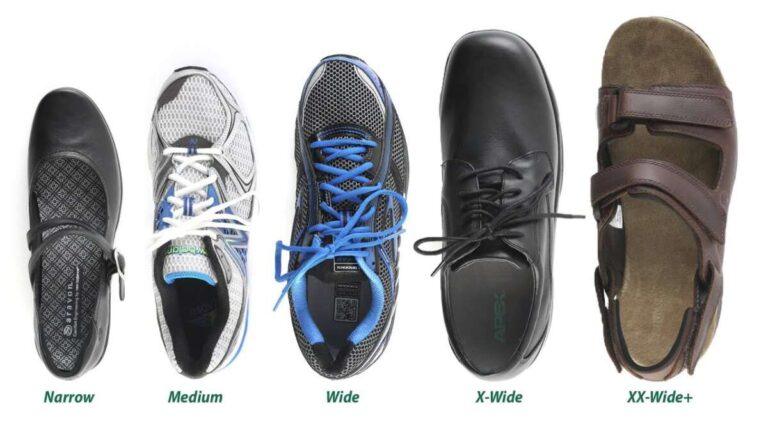
Knowing what is size d in shoes becomes easier when you compare it with nearby width letters. Width labels usually move from narrow to wide, but the exact sequence differs by gender and brand.
For men, the common pattern is:
• B: narrow
• D: medium
• 2E or EE: wide
• 4E: extra wide
For women, the common pattern is:
• 2A: narrow
• B: medium
• D: wide
• 2E: extra wide in some brands
The jump from one width to the next is not always a fixed number of inches. Shoe companies may use different measurements and shapes. A width label should therefore be read as a category, not as a guarantee of a precise interior measurement.
D versus wide labels
Some brands call a men’s D width “medium” and a women’s D width “wide.” Other brands use M, W, XW, or EE. In many cases, D and W may refer to a similar category, but you should not assume they are identical.
The safest approach is to compare the brand’s measurement chart, product description, and customer fit reviews. Look for comments about toe room, heel movement, and whether the shoe runs narrow or wide.

Common Mistakes When Choosing D Width Shoes
A correct width can improve comfort, balance, and shoe life. Yet many shoppers focus only on the number and ignore the shape of the foot.
Avoid these common mistakes:
• Buying a longer shoe to fix a width problem
• Assuming every D width fits the same
• Measuring only one foot
• Trying shoes on late at night without considering swelling
• Ignoring toe shape and instep height
• Expecting painful shoes to stretch into comfort
• Wearing thick socks during fitting but thin socks later
• Judging fit while sitting instead of walking
• Choosing a width based only on an old shoe size
A shoe should leave enough room for your toes to move without letting your foot slide. As a practical guide, many people benefit from about a thumb’s width between the longest toe and the end of the shoe, though the exact amount depends on the activity and shoe type.
Running shoes may need more front space than dress shoes because feet can swell during long activity. Work boots may need extra room for thick socks, while ballet flats may need a secure fit to prevent slipping.

Benefits and Limits of D Width Shoes
D width shoes can provide a balanced fit for people whose feet match the intended width. They may reduce side pressure, improve comfort, and help the foot sit properly over the shoe’s sole.
Potential benefits include:
• Better room across the ball of the foot
• Less pressure on the little toe
• Fewer side blisters
• More natural toe movement
• Better comfort during long periods of standing
• A more secure fit than simply sizing up
However, D width is not automatically better. A wide shoe can cause heel movement if your foot is narrow. It may also create folds in the upper or reduce stability during sports.
The best width is the one that matches your foot and the shoe’s purpose. Someone with a bunion may need a roomy toe box, while someone with a narrow heel may need a shoe with strong heel support and adjustable laces.
How to Buy Size D Shoes Online
Online shopping is easier when you treat shoe buying like a small research task. Start with your foot measurements, then compare them with the exact product page rather than a general size chart.
Use this checklist:
- Measure both feet in the afternoon or evening.
- Confirm whether D means medium or wide for that shoe.
- Check the brand’s width chart.
- Read reviews from people with similar foot shapes.
- Look for a free return or exchange policy.
- Check the toe shape and material.
- Order from a seller that lists accurate product details.
- Try the shoes indoors on a clean floor.
When the shoe arrives, walk, bend, and stand in it. Check whether your toes can move, whether the widest part of your foot lines up with the widest part of the shoe, and whether your heel stays in place.
Do not remove tags or wear the shoes outside until you are sure they fit. This simple habit protects your return options and prevents an expensive mistake.
Frequently Asked Questions About What Is Size D in Shoes
Is D a wide shoe size?
D is usually a medium width in US men’s shoes and a wide width in US women’s shoes. The meaning can vary by brand, so check the product’s width chart before ordering.
Is women’s size 8D wide?
Yes, women’s size 8D generally means a size 8 shoe in a wide width. A women’s 8B is more often the standard medium width.
Is men’s size 10D wide?
No, men’s size 10D is usually a standard medium width. Men’s wide shoes are often marked 2E or EE, although labels vary by company.
What is the difference between D and EE shoe width?
In most men’s shoes, D is medium and EE is wide. EE gives more room across the forefoot, but the amount of extra space depends on the brand and shoe design.
Can I wear D width shoes if I have wide feet?
You may be able to wear D width shoes if D matches your gender-specific width scale and your feet measure within that range. If the sides pinch or your foot spills over the sole, try a wider option instead.
Does D width mean the shoe is longer?
No. The number controls shoe length, while D describes width. A 9D and a 9EE are usually similar in length but different in width.
Do D width shoes work for bunions?
A D width may help if it provides enough room around the bunion, but width alone is not the whole answer. Look for a broad, soft toe box and stop wearing any shoe that causes pain or numbness.
Conclusion
So, what is size d in shoes? In the US, D usually means medium width for men and wide width for women. The number shows length, while the letter shows width, but brand charts and shoe shapes can change the way D feels.
Measure both feet, try shoes on while standing, and choose width based on comfort rather than a familiar number. If you understand the difference between length and width, you can avoid sizing up unnecessarily and find shoes that support your feet more comfortably. Use these tips on your next shoe search, and share your experience or questions in the comments.

Madison Clark is a footwear expert and the voice behind MyStyleGrid.com. She specializes in honest shoe reviews, style tips, and practical guides to help readers find the perfect pair for any occasion. With years of experience in blogging and content creation, Madison makes footwear knowledge simple, stylish, and easy to follow.