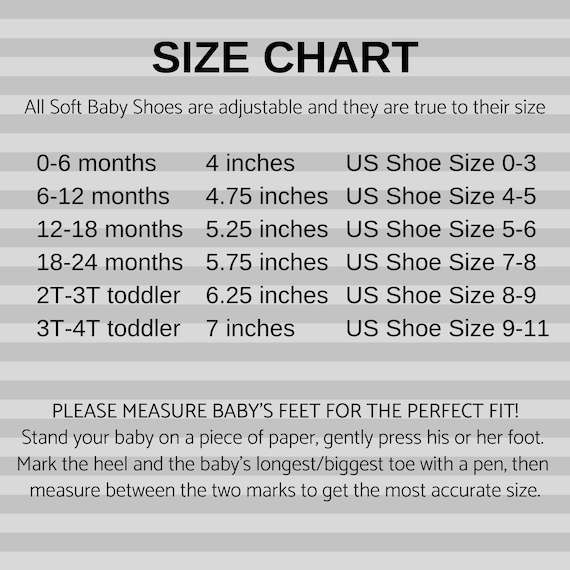
Most 5-month-old babies wear US infant shoe size 1 or 2, but foot length matters more than age.
Parents often search for what size does a 5 month old wear in shoes because baby shoe labels can vary widely between brands. In most cases, a 5-month-old has a foot about 3.75 to 4.25 inches long, but growth, genetics, and the shoe’s design all affect the best fit. This guide explains how to measure your baby’s feet, understand infant shoe sizes, and choose safe footwear without guessing.
What shoe size does a 5-month-old usually wear?
Most 5-month-old babies wear a US infant shoe size 1 or 2. Some babies may fit a size 0, while others may need a size 3, so age should only provide a starting point.
A typical size range looks like this:
| Baby’s age | Common US shoe size | Approximate foot length |
|---|---|---|
| Newborn to 3 months | 0 | 3.5 to 3.75 inches |
| 3 to 6 months | 1 or 2 | 3.75 to 4.25 inches |
| 6 to 9 months | 2 or 3 | 4.25 to 4.5 inches |
| 9 to 12 months | 3 or 4 | 4.5 to 4.75 inches |
These measurements are general estimates, not rules. Baby shoe sizing is not fully standardized. A size 2 in one brand may fit like a size 1 or size 3 in another.
When asking what size does a 5 month old wear in shoes, the most useful answer is usually “measure the foot and compare it with the brand’s chart.” A baby’s foot length gives a more reliable result than the number of months since birth.
Do 5-month-old babies need shoes?
Most 5-month-old babies do not need firm shoes because they are usually not walking yet. Bare feet are often best indoors because they allow natural movement and help babies feel the floor as they learn to roll, sit, crawl, and stand.
Soft footwear can still be useful in certain situations. Socks, booties, and flexible baby shoes may protect feet from cold surfaces, rough fabric, or light outdoor contact.
Choose soft footwear for:
• Keeping feet warm
• Completing an outfit for a special event
• Protecting feet in a stroller or carrier
• Covering feet during cool outdoor walks
• Helping prevent scratches from rough surfaces
Avoid stiff soles, narrow toe boxes, and heavy shoes. At this age, shoes should feel more like a soft layer of clothing than equipment for walking.
The American Academy of Pediatrics and pediatric foot specialists generally support flexible, lightweight footwear for early walkers. Before walking begins, there is usually no developmental need for structured shoes.
How to measure a 5-month-old’s feet at home
Measuring your baby’s feet takes only a few minutes. Try to measure both feet because one foot may be slightly longer than the other.
Follow these steps:
-
Place a sheet of paper on a hard floor.
-
Put your baby’s foot gently on the paper.
-
Hold the ankle steady without pressing down on the toes.
-
Mark the back of the heel and the tip of the longest toe.
-
Measure the distance between the two marks.
-
Repeat the process with the other foot.
-
Use the measurement from the longer foot.
If your baby curls their toes, wait and try again when they are calm. Measuring while your baby is relaxed often gives a more accurate result. You can also trace the foot, but tracing may make the foot appear slightly larger if the pencil angle is not straight.
Measure with the type of sock your baby will wear. A thick winter sock can change the fit, while a thin cotton sock may have little effect.
When parents ask what size does a 5 month old wear in shoes, I recommend measuring at the end of the day when feet may be slightly fuller. This mirrors adult shoe fitting, although the difference is usually small in babies.

Baby shoe size chart by foot length
Foot length is the best way to compare your baby’s measurement with a shoe size. The chart below gives common US infant sizing estimates.
| US infant size | Approximate foot length | Typical age range |
|---|---|---|
| 0 | 3.5 to 3.75 inches | Newborn to 3 months |
| 1 | 3.75 to 4 inches | 3 to 6 months |
| 2 | 4 to 4.25 inches | 3 to 6 months |
| 3 | 4.25 to 4.5 inches | 6 to 9 months |
| 4 | 4.5 to 4.75 inches | 9 to 12 months |
Brand charts may use centimeters instead of inches. If so, remember that:
• 3.75 inches equals about 9.5 centimeters
• 4 inches equals about 10.2 centimeters
• 4.25 inches equals about 10.8 centimeters
The chart can help answer what size does a 5 month old wear in shoes, but it cannot replace checking the manufacturer’s chart. Look for the brand’s foot length range, not only its age label.

How much room should baby shoes have?
Baby shoes should have a small amount of extra space. Aim for about 0.25 to 0.5 inch of room beyond the longest toe.
This space allows the toes to move and gives the foot room to grow. Too little space can press against the toes. Too much space can make the shoe slip, bunch, or create a tripping risk when your baby begins standing.