Snowboard boots should feel snug and secure, without causing pain, numbness, or pressure points.
Knowing how tight should my snowboard boots be can make the difference between a strong day on the mountain and sore feet after one run. Your boots should hold your heel and ankle firmly while allowing normal toe movement and steady blood flow. This guide explains how to check the fit, adjust the lacing, avoid common mistakes, and choose the right level of tightness for comfort, control, and warmth.

How tight should snowboard boots be?
Snowboard boots should feel snug across your foot and ankle. They should not feel loose, but they also should not squeeze your toes or cut into your lower leg.
A well-fitted snowboard boot keeps your heel in place when you bend your knees. Your toes may lightly touch the front of the boot when you stand straight. When you flex into a riding stance, your toes should pull back slightly from the front.
A simple rule is this:
- Your heel should stay down when you lift your toes.
- Your ankle should feel supported, not crushed.
- Your toes should have room to move a little.
- Your foot should not go numb.
- Your boot should not create sharp pressure points.
Think of the fit like a firm handshake. It should be secure and steady, but not painful.
The answer to how tight should my snowboard boots be also depends on the boot’s design. Traditional lace boots, quick-pull systems, and dual-zone systems spread pressure in different ways. Some boots feel snug right away, while others soften after a few hours of riding.
How your snowboard boots should feel when standing
When you first put on your boots, stand upright with your knees straight. Your toes may gently touch the end of the liner. This is normal, especially with new boots.
Now bend your knees as if you are riding downhill. Your heel should settle into the heel pocket, and your toes should move away from the front. If your toes still press hard against the shell while your knees are bent, the boots may be too short.
Use this quick fit check:
- Put on your normal snowboard socks.
- Lace or tighten the boots as you would before riding.
- Stand straight for 30 seconds.
- Bend your knees into a riding position.
- Lift your toes and try to raise your heel.
- Walk around and check for pressure or numbness.
Your heel should move only slightly. A small amount of movement is normal. Large movement means the boot is too loose or the shape does not match your foot.
A boot that feels perfect while standing may still fail on the snow. Snowboarding places more pressure on your toes, ankle, and shin than simple walking does. Test the boots in a riding stance before making a final choice.

Heel hold is more important than maximum tightness
Many riders tighten their boots too much because they want better control. The real goal is not maximum tightness. The goal is proper heel hold.
Your heel should stay close to the boot’s footbed as you flex forward. If your heel lifts, your board may respond late when you turn. You may also tighten the boot more than needed, which can create pain across the top of your foot.
To test heel hold, try these movements:
- Bend your knees and lean forward.
- Lift your toes while keeping your heel down.
- Rock from your heels to your toes.
- Take a few slow steps.
- Press your shin into the tongue of the boot.
If your heel rises more than about a small amount, look for a better fit. You may need a different boot shape, a better liner, or a small heel-hold insert.
Good heel hold lets you keep the boot comfortably snug. Poor heel hold forces you to crank down the laces, but the boot may still feel loose.
How tight should snowboard boot laces be?
Traditional laces should be tight enough to remove gaps, but not so tight that they stop normal foot movement. Tighten the lower section first, then adjust the upper section based on your riding style and leg shape.
The lower section should hold your foot in place. The upper section should support your ankle and shin. Avoid pulling every lace zone with the same force.
Try this method:
- Push your heel firmly into the back of the boot.
- Tighten the lower laces until your foot feels secure.
- Flex forward once or twice.
- Tighten the upper laces enough to support your ankle.
- Recheck your toes and circulation.
If the top of your foot hurts, loosen the lower laces slightly. If your ankle feels loose, tighten the upper section instead.
Many riders make the mistake of tying boots as tightly as possible before riding. This can restrict blood flow and make your feet colder. A firm, even fit works better than extreme pressure.
How tight should quick-lace snowboard boots be?
Quick-lace snowboard boots should feel even from toe to ankle. Pull the lower zone until your foot feels held in place, then adjust the upper zone for ankle support.
Some quick-lace systems create strong pressure in one narrow area. If that happens, loosen the system and spread the pressure more evenly. Do not assume the tightest setting gives the best control.
Dual-zone boots are often easier to fine-tune. You can keep the forefoot comfortable while making the ankle and shin more secure. This helps riders with wide feet, high arches, or sensitive pressure points.
After tightening, walk for a few minutes. Then sit and flex your ankles. If the boot feels much tighter after movement, adjust it before riding. Liners warm and soften as you ride, so a slightly firm new boot may become more comfortable later.

Signs your snowboard boots are too tight
Boots that are too tight can cause pain, cold feet, and poor control. Tightness may also hide a sizing problem. More pressure cannot fix a boot that is too short or too narrow.
Watch for these signs:
- Your toes feel crushed or curled.
- Your feet become numb within a few minutes.
- You feel burning across the top of your foot.
- Your ankle or shin has sharp pressure.
- Your foot changes color or feels unusually cold.
- You cannot wiggle your toes at all.
- Pain continues after you loosen the laces.
A small amount of contact at the toe is acceptable when you stand. Constant pressure is not. Your toes need enough space to maintain warmth and circulation.
Cold feet are not always caused by cold weather. A boot that is too tight can reduce blood flow. Thick socks can also make the problem worse by filling the extra space and compressing your foot.
Signs your snowboard boots are too loose
Loose snowboard boots make it harder to control your board. They also increase rubbing, blisters, and fatigue.
Your boots may be too loose if:
- Your heel lifts every time you bend forward.
- Your ankle moves inside the liner.
- You need to tighten the laces again during the day.
- Your toes hit the front when you stop.
- Your shins do not stay against the boot tongue.
- You feel delayed response when turning.
- The board feels less stable at higher speed.
A loose boot often causes riders to lean too far forward or backward to compensate. This can make basic turns feel harder than they should.
You can sometimes improve a slightly loose fit with an aftermarket footbed or heel-hold pad. However, these solutions cannot reliably fix a boot that is much too large. Starting with the correct size is always the better option.
How snowboard boots should fit with socks
Wear the same socks you plan to use on the mountain when you try on snowboard boots. Thin or medium-weight snowboard socks usually work best.
Avoid wearing two pairs of socks. Extra socks can create folds, pressure points, and poor circulation. They can also make a boot seem too small when the boot itself is the correct size.
Good snowboard socks should:
- Reach above the boot cuff.
- Fit smoothly without wrinkles.
- Move sweat away from your skin.
- Avoid thick seams over your toes.
- Provide warmth without adding too much bulk.
Your foot should not slide inside the sock. A smooth, close-fitting sock gives the liner a better chance to hold your foot.
When riders ask how tight should my snowboard boots be, I also ask what socks they wear. A boot can feel perfect in a thin sock and painfully tight in a thick cotton sock.
How boot flex affects tightness
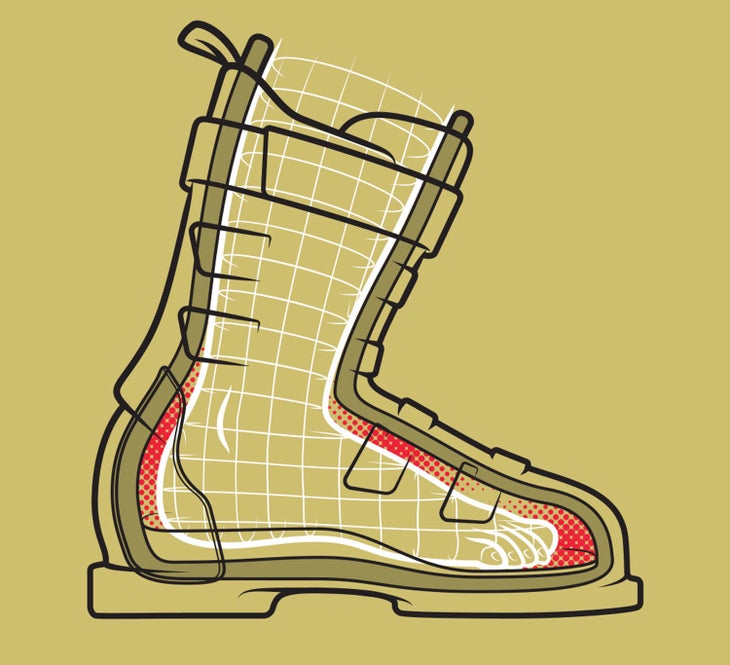
Boot flex changes how tight your boots should feel. Soft boots allow more movement and may feel comfortable with a lighter fit. Stiff boots need strong heel and ankle support because they transfer more force to the board.
Beginners often prefer medium-flex boots. They offer support while still allowing natural movement. Advanced riders may choose stiffer boots for fast carving, hard landings, or aggressive terrain.
Your boots should not feel loose just because they are soft. Soft flex describes how the boot bends. It does not mean your heel should move inside the liner.
A stiff boot that is too tight can limit ankle movement and cause pain. A soft boot that is too loose can feel unstable. Match the boot’s flex to your ability, riding style, and comfort needs.
How tight should new snowboard boots be?
New snowboard boots often feel firm. The liner will compress and shape itself as you ride. This process is called break-in, and it can make the boot feel roomier over time.
New boots should feel snug, but they should not cause serious pain. Do not buy boots that are painfully small and expect them to stretch several sizes. The liner may pack out, but the shell will not grow in the same way.
Before riding new boots, wear them at home for 20 to 30 minutes. Flex your knees, walk around, and check for pressure points. This can reveal problems before you reach the lift line.
Boot-fitting professionals often use heat molding for compatible liners. Heat molding can improve comfort and reduce break-in time, but it cannot correct a badly sized shell. Always follow the manufacturer’s instructions.
Common snowboard boot fitting mistakes
The most common mistake is buying boots based on shoe size alone. Snowboard boots use different size charts, and each brand has its own shape. Measure both feet and compare them with the manufacturer’s chart.
Other mistakes include:
- Trying boots on without snowboard socks.
- Shopping late in the day without checking fit carefully.
- Choosing extra room for thick socks.
- Tightening the boots before pushing the heel back.
- Ignoring numbness because the boots feel “performance tight.”
- Buying a size too large for immediate comfort.
- Focusing on appearance instead of foot shape.
- Assuming pain will always disappear after break-in.
Feet often swell during the day. Try boots in the afternoon or evening when your feet are closer to their riding size. Compare both feet, and fit the larger foot first.
A useful lesson from real boot-fitting sessions is that comfort and control usually improve together. Riders often think pain means the boot is secure. In practice, pain can distract you, reduce circulation, and make you ride less confidently.

How to improve snowboard boot fit
If your boots are close to fitting well, small changes may help. Make one adjustment at a time so you know what works.
Try these options:
- Use a supportive snowboard footbed.
- Add a heel-hold pad if your heel lifts.
- Adjust the lower and upper lace zones separately.
- Use thinner socks if the fit feels cramped.
- Use a liner designed for heat molding.
- Ask a professional boot fitter to check the shell shape.
- Replace worn liners when they no longer hold your foot.
A footbed can support your arch and reduce movement. It may also help your toes relax. The footbed should not lift your foot so much that the boot becomes tight across the top.
If one foot is smaller, fit both boots to the larger foot. Use a footbed or heel insert to improve the smaller side. Do not buy two different sizes unless a professional recommends it.
A practical fitting test before you buy
Use this test when trying on snowboard boots in a store:
- Put on your normal riding socks.
- Place your foot into the boot.
- Tap your heel on the floor to seat it.
- Tighten the boot in separate zones.
- Stand straight and check toe contact.
- Bend your knees into a riding stance.
- Lift your toes and check heel movement.
- Walk for at least 10 minutes.
- Look for pain, numbness, or sharp pressure.
- Try the other boot and compare both feet.
Keep the boots on long enough for pressure points to appear. A one-minute test may miss a problem that becomes obvious after ten minutes.
If possible, stand on a sloped surface or use a snowboard simulator. This gives you a better idea of how the boot will feel while riding.
How tight should my snowboard boots be for beginners?
Beginners should choose a snug, comfortable fit with reliable heel hold. Do not choose extremely stiff or painfully tight boots in the hope of improving faster.
Learning already requires balance, ankle movement, and repeated bending. Boots that cause pain can make each turn feel harder. A medium-flex boot with even support is often a practical starting point.
New riders also spend more time sitting, standing, and walking than experienced riders. Comfort matters. Your boots should support your feet without creating pressure that distracts you from learning.
As your skills improve, you can decide whether you need more stiffness or a different riding feel. Good fit comes first.

How tight should my snowboard boots be for park riding?
Park riders usually want a secure but slightly more forgiving fit. A soft or medium-flex boot can allow more ankle movement for spins, presses, and jumps.
Your heel still needs to stay controlled. A loose heel can make landings less stable and increase the chance of blisters. Keep the lower foot secure, then adjust the upper zone for comfort.
Park riding involves repeated impacts. Check your laces or quick-pull system during the day. Liners may soften, and your feet may shift after several runs.
How tight should my snowboard boots be for carving?
Carving and high-speed riding demand strong heel and ankle support. Your boot should feel firm when you drive your knees into the turn, but it should not restrict circulation.
Stiffer boots often work well for carving because they transfer movement quickly. Even so, a stiff boot must match your foot shape. A boot that creates pressure across the top of your foot will not become comfortable just because it offers more response.
Use the riding stance test. If your heel stays down and your toes remain comfortable, the fit is likely close. If you must overtighten the boot to hold your heel, try another shape or liner.
Frequently Asked Questions About How Tight Should My Snowboard Boots Be
Should my toes touch the end of snowboard boots?
Your toes may lightly touch the end when you stand straight. When you bend your knees into a riding stance, your toes should pull back slightly and should not feel crushed.
Should snowboard boots hurt when they are new?
New boots may feel firm, but they should not cause sharp pain, numbness, or lasting pressure. The liner can soften with use, but a boot that is clearly too small will not become several sizes larger.
How much heel lift is acceptable in snowboard boots?
A small amount of movement can be normal, but your heel should remain mostly in place when you flex forward. Large heel lift can reduce control and may lead to blisters.
Can tight snowboard boots cause cold feet?
Yes. Boots that are too tight can reduce circulation and make your feet feel cold or numb. Thick socks and over-tightened laces can create the same problem.
Should I wear thick socks with snowboard boots?
Usually, no. One smooth, moisture-wicking snowboard sock is better than two thick pairs, which can create pressure and reduce circulation.
Do snowboard boots loosen over time?
Most snowboard boot liners soften and compress with use. The shell does not expand much, so do not buy a painfully small boot expecting it to grow into the correct size.
Should snowboard boots be tighter than regular shoes?
They should feel more secure than casual shoes, especially around the heel and ankle. However, they should not squeeze your toes or cause pain.
Conclusion
The right snowboard boot fit is snug, even, and secure. Your heel should stay in place, your ankle should feel supported, and your toes should have enough room for comfort and circulation.
When deciding how tight should my snowboard boots be, use the riding stance test instead of judging the fit while standing alone. Wear the right socks, seat your heel, adjust each zone, and pay attention to numbness or sharp pressure.
A comfortable boot helps you ride longer and control your board with less effort. Test your fit before your next trip, ask a boot-fitting professional for help when needed, and share your own fitting lessons with other riders.

Rubel Miah is the Senior Editor at MyStyleGrid.com, where he brings a sharp editorial eye and an unshakable love for fashion to everything he does. A true style addict, Rubel lives and breathes trends, from streetwear to high fashion, and has a knack for turning inspiration into impactful stories. With years of experience in fashion journalism and digital media, he curates content that empowers readers to express themselves through style. When he’s not editing features or forecasting the next big thing, you’ll find him hunting down vintage pieces or capturing street style moments around the city.