Pointed toe boots should fit snugly at the heel and instep, with room for your toes to lie flat without pressure.
Knowing how should pointed toe boots fit can save you from sore toes, blisters, numbness, and wasted money. The pointed shape naturally narrows toward the front, so the best fit depends on more than your usual shoe size. This guide explains how to check length, width, heel grip, toe space, comfort, and break-in potential before you buy.
How Should Pointed Toe Boots Fit?
Pointed toe boots should feel secure but not tight. Your heel should stay mostly in place as you walk, while your toes should have enough space to rest naturally inside the boot.
The pointed tip may extend beyond your toes. That is normal. Your toes do not need to reach the end of the boot. What matters is where the boot’s widest area sits compared with the ball of your foot.
A well-fitting pair should meet these basic points:
• Your longest toe should not press against the front.
• Your toes should not overlap or curl under.
• The ball of your foot should sit at the widest part of the boot.
• Your heel should not lift excessively with each step.
• The instep should feel held without pressure or pinching.
• You should be able to walk without numbness, burning, or sharp pain.
When people ask how should pointed toe boots fit, I explain it with a simple image: your foot should sit inside the boot like a hand inside a well-fitted glove. It should feel supported, not trapped.

Check the Length Before Anything Else
Length is one of the first things to test when learning how should pointed toe boots fit. Put on both boots and stand up. Your feet spread slightly under your body weight, so checking while seated can give you a false sense of space.
Press gently near the front of the boot. There should be a small gap between your longest toe and the end of the foot-shaped interior. You do not need a large empty space, but your toe should not touch the front when you stand or walk.
Keep these tips in mind:
• Measure both feet because one foot is often slightly larger.
• Fit the larger foot first.
• Use your longest toe as the guide, not always your big toe.
• Walk down a firm surface to check whether your toes slide forward.
• Try boots later in the day when feet are naturally a little larger.
Many pointed boots have a long decorative tip. This extra length can make the boot look larger without giving your toes more room. The true fit is determined by the internal footbed, not the visible shape of the toe.
A common mistake is buying a smaller size because the heel feels loose. That can push your foot forward and crush your toes. A better solution is to assess the heel separately with a suitable insole, heel grip, or different boot shape.

Make Sure the Toe Box Is Not Too Narrow
The toe box is the front area that holds your toes. In pointed toe boots, this area often tapers sharply. That taper can create pressure even when the boot has the correct length.
Your toes should lie flat and point forward in a relaxed way. They should not feel folded, squeezed together, or forced into a pointed position.
Signs that the toe box is too narrow include:
• Tingling or numbness in the toes
• Burning across the ball of the foot
• Red marks after removing the boots
• Blisters near the little toe
• Pain on the side of the big toe
• Toes crossing or curling inside the boot
• A feeling that your foot is spilling over the sole
Leather may soften with wear, but it will not reliably create extra length. It may give slightly across the width, yet severe pressure should not be treated as a normal break-in stage.
When considering how should pointed toe boots fit, look at your foot shape as well as the boot shape. People with wide feet, bunions, high arches, or sensitive toes may need a wider pointed style, a soft leather upper, or a rounded point instead of an extremely sharp toe.
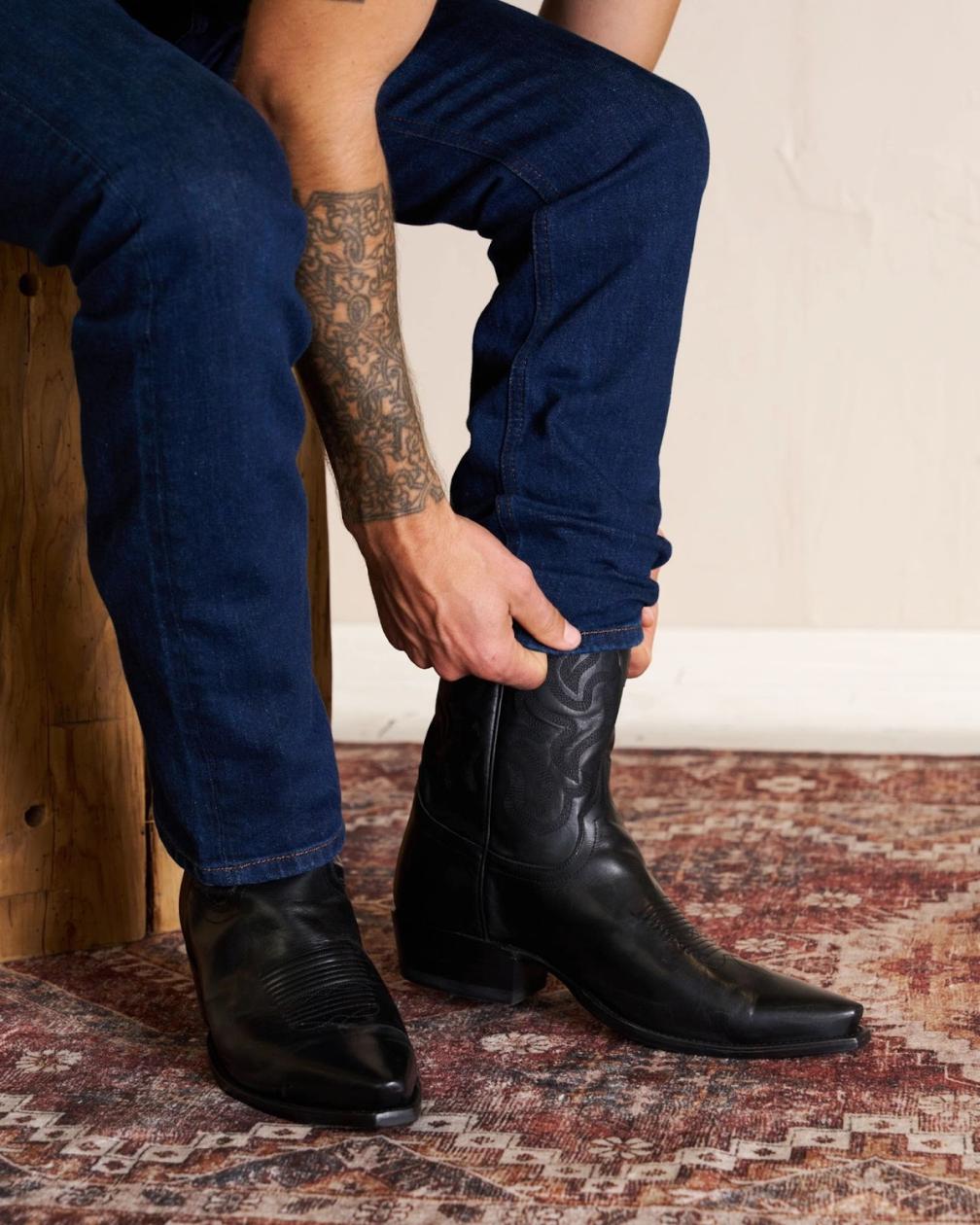
Check the Ball of Your Foot and the Boot’s Shape
The widest part of your foot is usually around the ball, near the base of your toes. This area should match the widest part of the boot. If it sits too far forward or too far back, the boot may feel unstable and uncomfortable.
Stand in the boots and bend your knees slightly. Your foot should not slide forward into the narrow tip. If it does, the boot may be too large, too smooth inside, or shaped poorly for your foot.
Look for these fit clues:
• The widest part of your foot lines up with the widest part of the sole.
• The sides of your foot do not bulge over the edge.
• The boot bends near the ball of your foot, not under your arch.
• Your toes remain relaxed when you take a step.
• Your weight feels balanced from heel to forefoot.
This is especially important with pointed toe ankle boots and pointed toe cowboy boots. Some styles have a stiff sole that does not bend much. In that case, the boot should still allow natural movement without forcing your foot to slide or twist.
A boot can look elegant but still have the wrong foot shape for you. Style matters, but structure matters more. The right pair should support your foot instead of asking your foot to adapt to an awkward shape.
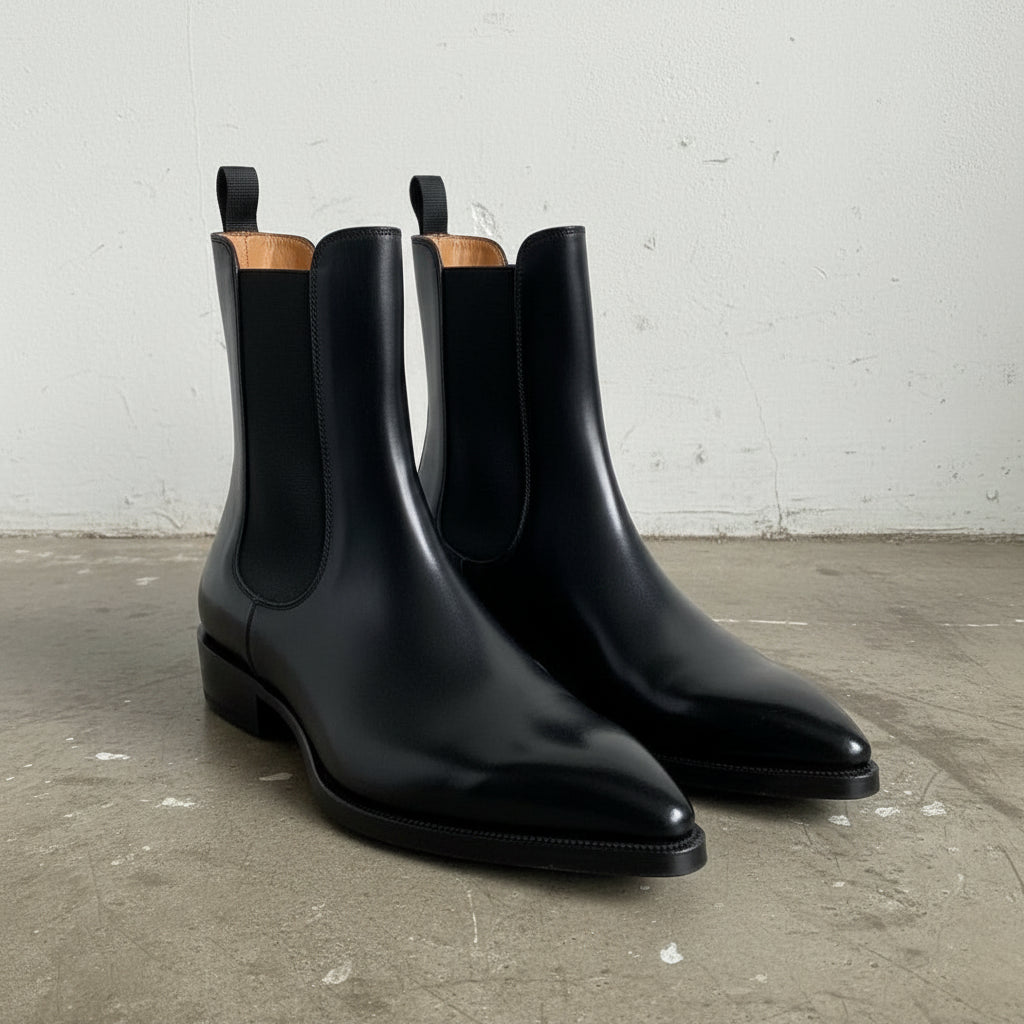
How Much Heel Slip Is Normal?
A small amount of heel movement can be normal in new boots, especially if the leather is stiff. Your heel may lift slightly as the sole bends. However, your heel should not rise dramatically or come out of the boot when you walk.
To test heel fit, walk at your normal pace. Do not take tiny steps just to make the boots seem comfortable. Try stairs, a turn, and a few longer strides.
Your heel fit is usually acceptable when:
• The heel lifts only slightly.
• Your foot does not slide forward.
• The boot does not rub the back of your heel.
• You can lift your toes and move your ankle without losing the boot.
• The heel feels supported when you change direction.
If your heel slips a lot, the boot may be too large, too wide at the heel, or too loose across the instep. You can sometimes improve a mild fit issue with thicker socks or a slim insole. Large heel movement usually means the boot shape is wrong for your foot.
Do not solve heel slip by choosing a shorter size. That often creates painful pressure at the front and changes how should pointed toe boots fit in the worst way.

Check the Instep and Ankle Fit
The instep is the top of your foot between the toes and ankle. A boot should hold this area comfortably. If the instep is too loose, your foot may slide forward. If it is too tight, you may feel pressure, numbness, or restricted movement.
Zip-up pointed toe boots should close without forcing the zipper. Pull-on boots should require some effort to put on, but they should not cause pain or leave deep marks.
Try these checks:
• Make sure the boot does not pinch the top of your foot.
• Walk with your ankles relaxed.
• Bend your foot slightly as you step.
• Check whether the shaft rubs your ankle bone.
• Look for even contact rather than tight spots.
People with high insteps may need boots with elastic panels, adjustable laces, or a softer upper. People with low insteps may need a better-fitting last, a thin insole, or a style with more structure across the top.
A good fit feels like gentle contact. The boot should stay with your foot instead of squeezing it.
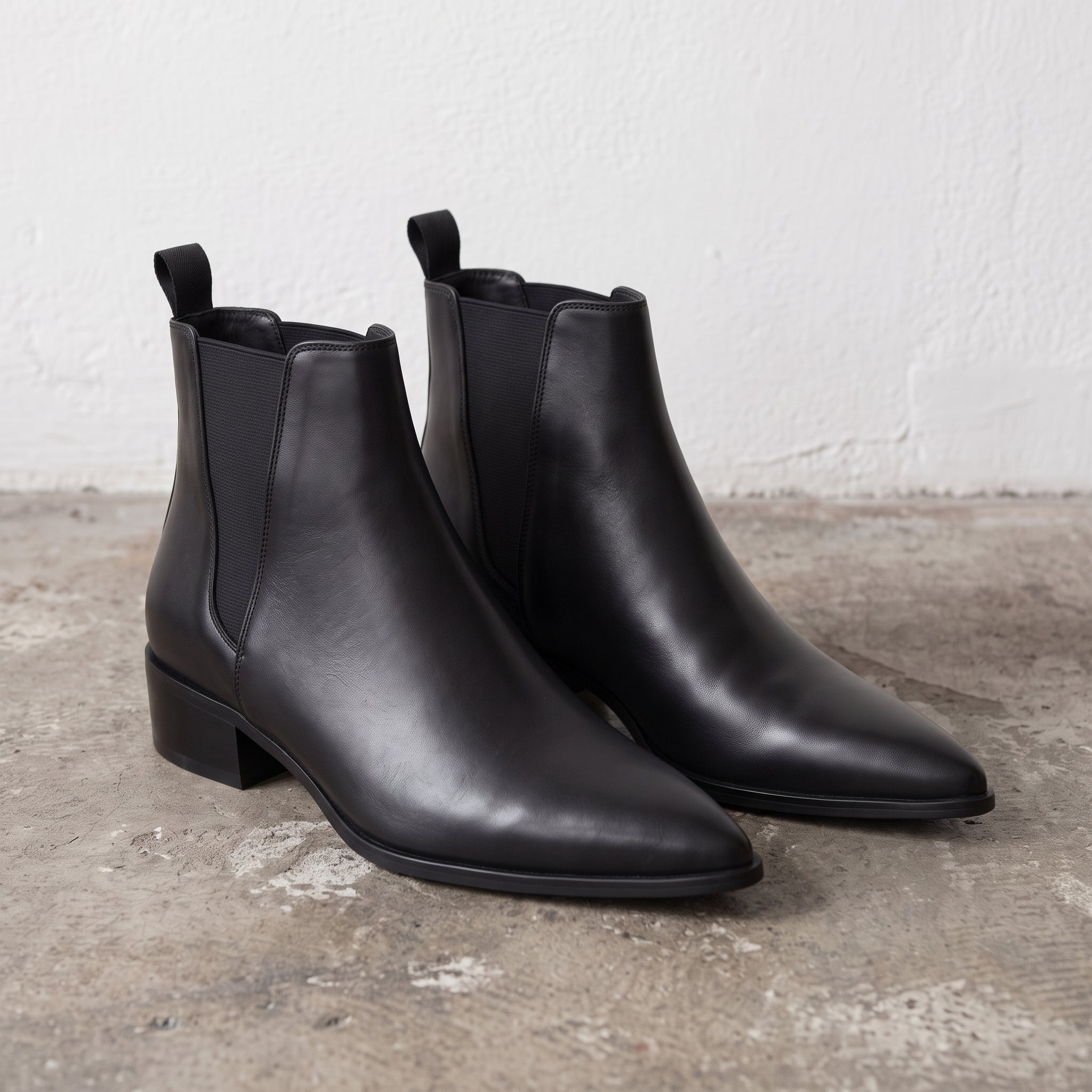
Try Pointed Toe Boots With the Right Socks
Socks can change the fit more than many shoppers expect. Thick winter socks may make a close-fitting boot feel too tight. Thin dress socks may allow too much movement inside a loose boot.
Wear the type of socks you plan to use with the boots. For example, wear dress socks when testing office boots and medium-weight socks when testing casual fall boots.
Also check the material. Seamless or low-seam socks may reduce rubbing across the toes. Moisture-wicking fabrics can help keep your feet dry, which may reduce friction during long wear.
Avoid testing boots barefoot if you will not wear them that way. A boot that feels perfect without socks may pinch once you add even a thin layer.
When explaining how should pointed toe boots fit, I always include the sock test because it reflects real use. A five-minute store fitting can feel very different from a full workday.
Walk and Test the Boots Before Buying
Standing still is not enough. You need to test the boots while moving because walking changes how your foot sits inside the shoe.
If you are shopping in person, spend at least several minutes walking on a firm, clean surface. If you are shopping online, use a return-friendly seller and test the boots indoors on a clean floor.
Use this simple fitting routine:
-
Put on both boots with your usual socks.
-
Stand still and check toe pressure.
-
Walk at a normal pace.
-
Walk up and down stairs if possible.
-
Turn quickly and check heel movement.
-
Bend your knees and test the instep.
-
Remove the boots and inspect your feet for red marks.
-
Repeat the test later in the day if you can.
Do not ignore discomfort because the boots look beautiful. I have seen people keep a stylish pair after feeling toe pressure in the first few minutes, hoping the problem would disappear. It usually became worse after a full day of walking.
A practical rule is simple: new boots may feel firm, but they should not feel painful.
Should Pointed Toe Boots Feel Tight at First?
Pointed toe boots can feel firm at first, especially when made from thick leather. Firmness is different from harmful tightness. The boot may soften as you wear it, but your toes should still have room to rest naturally from day one.
A small amount of resistance across the leather upper can be acceptable. Sharp pressure, numbness, burning, or toe cramping is not.
You may be able to break in mild stiffness with:
• Short indoor wear sessions
• Thick socks for a few minutes at a time
• A professional stretching service
• A boot stretcher designed for the correct area
• Leather conditioner suited to the boot material
Do not rely on stretching to fix a boot that is too short or dramatically too narrow. Stretching can change the feel of the upper, but it cannot turn an unsuitable shape into a perfect one.
The safest answer to how should pointed toe boots fit is this: comfortable now, with room for gentle softening later.
How to Fit Different Types of Pointed Toe Boots
Different boot styles can fit in different ways. The same size may feel very different in an ankle boot, knee-high boot, western boot, or heeled fashion boot.
Pointed Toe Ankle Boots
Pointed toe ankle boots should hold the heel and ankle securely. The shaft should not rub the ankle bone or create a hard pressure point.
Check the flex area near the front of the ankle. If the boot bends sharply into your ankle when you walk, the design may not suit your ankle shape.
Pointed Toe Knee-High Boots
Knee-high boots need a good foot fit and a comfortable shaft fit. The calf should not feel painfully tight, and the top should not dig into your leg when you sit.
A loose shaft can usually be managed with clothing or an adjustable style. A boot that restricts circulation is not a safe fit.
Pointed Toe Cowboy Boots
Cowboy boots often have a firm heel counter and a snug instep. Your foot may slide slightly into the boot when new, but it should settle into place after the boot is on.
The ball of your foot should sit at the widest part of the boot. If your toes feel crushed, the pointed shape is too narrow for you, even if the boot length seems correct.
Pointed Toe Heeled Boots
Heels move your weight toward the front of the foot. That makes toe-box fit even more important. Check that your foot does not slide forward and that you can keep your toes relaxed.
The higher the heel, the more carefully you should assess forefoot pressure and stability.
Materials and Construction Matter
The boot material affects comfort, stretch, breathability, and break-in time. Full-grain leather often softens with wear, while synthetic materials may keep their original shape longer.
Material alone does not guarantee a good fit. A soft upper can still sit on a narrow or poorly shaped sole. A stiff boot can still be comfortable when its internal shape matches your foot.
Pay attention to these construction details:
• A firm heel counter can improve support.
• A cushioned insole can reduce impact.
• A flexible forefoot may improve walking comfort.
• A smooth lining may reduce friction.
• Strong stitching can improve durability.
• A stable outsole can reduce foot strain.
High heels and hard soles may increase pressure on the ball of the foot. If you plan to wear pointed boots for long periods, consider a lower heel, cushioned insole, or alternating pair of shoes during the day.
Research on footwear comfort consistently shows that fit, pressure distribution, and foot shape affect comfort and injury risk. The exact best design varies from person to person, so your own walking test remains important.
Common Fit Problems and Simple Fixes
Even a nearly perfect boot may need a small adjustment. The key is knowing which problems are fixable and which mean you should return the boots.
Toes Touch the Front
The boots may be too short, or your foot may slide forward because of the heel. Try a larger size only if the width and heel remain secure. If your toes still touch the end, choose a different shape.
Heel Slips
Mild heel slip may improve with thicker socks, a heel grip, or a thin insole. Major slipping usually means the boot does not match your heel or instep.
The Little Toe Feels Crushed
This often means the toe box is too narrow. A professional shoe stretch may help leather, but a wider style is usually the better long-term choice.
The Top of the Foot Feels Pinched
The instep may be too low for your foot. Look for a different boot last, adjustable closure, or softer upper.
The Arch Feels Unsupported
The boot may have a flat or poorly placed insole. Try a supportive insert if it does not crowd your toes. If the problem continues, choose another footbed shape.
The Ball of the Foot Hurts
A high heel, hard sole, or forward sliding may be increasing pressure. Lower heels, cushioned insoles, and better heel control can help.
Pain that continues after removing the boots deserves attention. If you have ongoing numbness, swelling, or foot pain, consult a qualified health professional rather than forcing a pair to work.
Mistakes to Avoid When Buying Pointed Toe Boots
Learning how should pointed toe boots fit also means learning what not to do. Many fit problems begin with a rushed purchase.
Avoid these common mistakes:
• Buying the same size in every brand
• Choosing a smaller size to reduce heel slip
• Testing only one boot
• Shopping late at night when you are tired
• Ignoring toe numbness
• Assuming leather will fix severe tightness
• Wearing different socks during testing
• Judging fit while sitting down
• Keeping boots that cause pain because they are on sale
• Skipping the return policy
Size numbers are not universal. A size 8 in one brand may have a different length, width, heel cup, or toe shape in another. Always use the brand’s measurements when available, but treat them as a starting point rather than a final answer.
Your feet should not have to earn comfort. A boot is a tool for walking, not a test of endurance.
A Practical Fit Checklist
Use this checklist before you keep a pair of pointed boots:
• Both feet fit comfortably.
• Your longest toe does not press the front.
• Your toes lie flat and do not overlap.
• The ball of your foot matches the widest part of the boot.
• Your heel stays mostly in place.
• The instep feels secure but not tight.
• You can walk, turn, and use stairs comfortably.
• Your usual socks fit without crowding.
• There are no sharp pressure points.
• The boots feel supportive after several minutes.
• You understand the return policy.
If the boots pass each test, they are likely a good match. If they fail one major test, especially length or toe width, keep looking.
Frequently Asked Questions About How Should Pointed Toe Boots Fit
Should pointed toe boots be tight at the toes?
No. Pointed toe boots should feel secure, but your toes should not be squeezed, curled, or numb. The toe area may feel close around the foot, but it should not cause pain or pressure.
How much space should be in pointed toe boots?
Leave a small amount of space between your longest toe and the end of the foot-shaped interior. The exact amount varies by foot and boot design, but your toe should not touch the front while standing or walking.
Should my heel slip in new pointed toe boots?
A small amount of heel movement can be normal in new boots. Excessive slipping, rubbing, or sliding toward the toe usually means the boot is too large or does not match your heel shape.
Do pointed toe boots stretch?
Leather pointed toe boots may soften and stretch slightly across the width. They will not usually gain meaningful length, and synthetic materials may stretch very little.
Should I size up in pointed toe boots?
Size up only when your toes touch the front or the boot feels too short. Do not size up just to solve heel slip, because a longer boot may cause your foot to slide forward.
Are pointed toe boots bad for your feet?
Pointed toe boots are not automatically harmful, but a narrow or poorly fitted pair can cause pressure, blisters, and discomfort. Choose a shape that suits your foot, limit long wear when needed, and stop wearing boots that cause persistent pain.
Can I wear pointed toe boots with wide feet?
Yes, but look for a wider fit, soft leather, a less severe point, or a style with more room across the forefoot. Your toes should not spill over the sole or feel squeezed together.
Conclusion
The best answer to how should pointed toe boots fit is simple: they should hold your heel and instep securely while giving your toes room to rest flat and move naturally. Check the length, toe-box width, ball-of-foot position, heel grip, and comfort while walking.
Do not depend on a painful break-in period to solve a poor fit. Test both boots with your usual socks, shop with a return option, and choose comfort before appearance. Use this guide the next time you shop, and share your best pointed boot-fitting tip in the comments.

Madison Clark is a footwear expert and the voice behind MyStyleGrid.com. She specializes in honest shoe reviews, style tips, and practical guides to help readers find the perfect pair for any occasion. With years of experience in blogging and content creation, Madison makes footwear knowledge simple, stylish, and easy to follow.