Check the label, size system, shape, width, and fit because no single clue proves a boot’s gender.
Learning how to tell if boots are mens or womens can feel confusing, especially with unisex styles, vintage pairs, and brands that use different size charts. The best approach combines several clues, then confirms the answer through measurements and comfort. This guide explains each step clearly so you can identify a pair with confidence and avoid costly sizing mistakes.
Start With the Label and Size Markings
The label is usually the fastest way to tell if boots are mens or womens. Look inside the shaft, under the tongue, along the side of the footbed, or on the original box. Many manufacturers print a size such as “Men’s 9,” “Women’s 8,” “M 9,” or “W 8.”
Some boots show both size systems. For example, a label may read “US M 8 / W 9.5.” This means the same boot is listed as a men’s size 8 and a women’s size 9.5. The exact difference varies by brand, but a 1.5-size conversion is common in US footwear.
Check these areas first:
• Tongue label: Hiking boots, work boots, and sneakers often place the size tag here.
• Inner shaft: Tall boots may have a label sewn into the upper lining.
• Footbed: Removable insoles often hide the printed size.
• Outsole: Some older or handmade boots stamp the size on the bottom.
• Box or receipt: Retail packaging may identify the intended size category.
A letter can offer a useful clue, but it is not always universal. “M” may mean men’s in one chart and medium width in another. “W” can mean women’s or wide width. Always compare the marking with the brand’s own size guide when possible.

Compare Men’s and Women’s Boot Sizes
US men’s and women’s boot sizes use different scales. In many brands, a women’s US size is about 1.5 sizes higher than the equivalent men’s size. For example, a men’s 7 may be close to a women’s 8.5.
This rule is only a starting point. Brands may use different lasts, fits, and conversion tables. European sizes are often shared between men and women, so a size 40 or 41 does not identify the boot’s intended gender by itself.
Here is a general US conversion guide:
| Men’s US size | Approximate women’s US size |
|---|---|
| 6 | 7.5 |
| 7 | 8.5 |
| 8 | 9.5 |
| 9 | 10.5 |
| 10 | 11.5 |
| 11 | 12.5 |
| 12 | 13.5 |
Use this chart carefully. It does not replace a brand’s official chart, and it cannot tell you whether a boot will fit your foot. It only helps compare size labels.
When asking how to tell if boots are mens or womens, size conversion is helpful, but it should never be your only test. A women’s boot in a larger size may fit a man well, while a men’s boot in a smaller size may fit a woman comfortably.

Examine the Shape of the Boot
The shape of the boot can provide more information than color or decoration. Traditional men’s boots often have a broader forefoot, a straighter outline, and a roomier instep. Traditional women’s boots may have a narrower heel, a tapered toe, and a more shaped waist.
These are design patterns, not rules. Feet vary widely, and many modern boots use a unisex shape. Work boots, motorcycle boots, combat boots, and outdoor boots often focus on function rather than gender.
Pay attention to the following areas:
• Toe box: Is it broad and rounded, or narrow and pointed?
• Heel area: Does the heel cup feel wide, narrow, deep, or shallow?
• Waist: Is the middle of the sole straight, or does it curve inward?
• Instep: Does the upper allow room across the top of the foot?
• Shaft: Is the ankle opening wide, close-fitting, or strongly tapered?
A pointed toe does not automatically mean a women’s boot. Many cowboy, dress, and western boots for men use pointed toes. Likewise, a chunky sole does not automatically mean a men’s boot. Fashion trends often borrow shapes from every part of the footwear market.
Think of the boot’s shape as a map, not a verdict. It can guide you, but the size marking and actual measurements offer stronger proof.

Check the Width and Foot Measurements
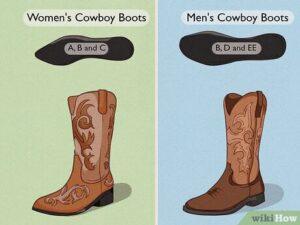
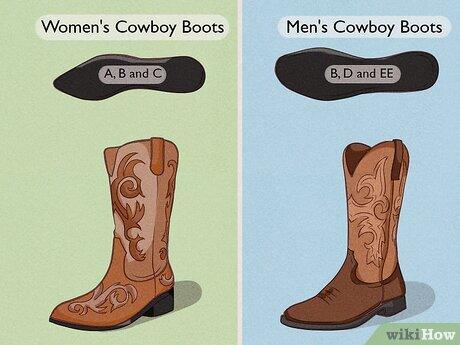
Width is one of the most reliable ways to understand a boot’s intended fit. Men’s boots often use widths such as B, D, 2E, or 4E. Women’s boots often use B as a standard width, with A or AA for narrow feet and D or 2E for wide feet.
Width labels differ by brand. A men’s D width is often a standard or medium width, while a women’s D width commonly indicates a wide fit. This difference can create confusion when comparing boots across categories.
Measure both feet while standing. Feet can spread under body weight, and one foot may be larger than the other. Wear the socks you expect to use with the boots.
Use this simple method:
-
Place a sheet of paper on a hard floor.
-
Stand on the paper with your heel lightly touching a wall.
-
Trace around each foot, or ask someone to help.
-
Measure the longest point from heel to toe.
-
Measure the widest part across the ball of the foot.
-
Compare both measurements with the brand’s chart.
Length alone does not determine fit. Two boots can have the same inner length but feel very different because one has more space at the toes or a wider heel cup.
If you are learning how to tell if boots are mens or womens for resale, record the insole length and ball width in inches or centimeters. Buyers trust measurements more than vague labels such as “looks like a men’s 10.”

Look at the Heel, Shaft, and Construction
Heel design can offer another clue. Traditional women’s fashion boots may have a raised, slim, or angled heel. Traditional men’s boots often use a lower block heel or a flatter work-boot heel. Still, this difference is less useful for western, riding, work, and fashion boots because those categories use many heel styles.
The shaft also matters. Women’s fashion boots may have a narrower ankle or calf opening. Men’s boots often allow more room through the shaft, especially in work and outdoor models. However, tall riding boots and slim men’s dress boots can also have close-fitting shafts.
Construction details may reveal the boot’s purpose:
• Heavy leather, protective toe caps, and deep lug soles often suggest work or outdoor use.
• Clean leather, thin soles, and polished finishes may suggest dress use.
• Reinforced stitching and welted construction often support long-term wear.
• Flexible uppers, decorative buckles, and fashion heels may point toward style-led design.
These clues identify the boot’s function more reliably than its gender. A rugged women’s work boot and a sleek men’s boot can share the same construction methods. Purpose, fit, and comfort should guide your choice.
A boot’s color is one of the weakest clues. Black, brown, tan, white, red, and patterned finishes are worn by people of every gender. Branding and shape matter more than color.

Identify Unisex, Vintage, and Handmade Boots
Many boots are not strictly men’s or women’s boots. Unisex models are made on a shared last and sold across gender categories. Common examples include combat boots, Chelsea boots, rain boots, hiking boots, and classic leather work boots.
Vintage boots require extra care. Older brands may use sizing systems that no longer match modern charts. A vintage label may also list a numerical size without stating men’s or women’s. In that case, measurements and catalog research are more useful than appearance.
Handmade boots can be even harder to classify. A shoemaker may build a pair for one customer, use a custom last, or apply a local sizing system. The boot may not match any standard men’s or women’s chart.
For these pairs, check:
• Actual insole length
• Ball width
• Heel width
• Instep height
• Shaft circumference
• Full outsole length
• Markings inside the boot
A useful rule is this: if the boot has no clear gender label, treat it as a measurement question rather than a gender question. If it fits your foot, suits your needs, and can be worn safely, the original category may not matter.
This is especially important with resale boots. Labels can be missing, faded, or changed by previous owners. A careful measurement protects you from relying on a guess.

Use the Fit Test Before You Decide
The most practical way to tell if boots are mens or womens is to test how they fit. Gender labels describe the original market category, but fit determines whether you can wear the boots comfortably.
Try the boots at the end of the day. Feet often swell slightly after walking, so an evening fitting gives a more realistic result. Wear the socks you plan to use with the boots.
Check these points:
• Toes: Your toes should not touch the front when standing or walking.
• Heel: A small amount of heel movement can be normal in new boots, but your heel should not lift sharply.
• Width: The sides should not pinch, bulge, or cause numbness.
• Instep: The laces or upper should not press painfully across the top of your foot.
• Ankle: The boot should support the ankle without rubbing.
• Flex point: The boot should bend near the ball of your foot, not across your toes.
Walk on a clean indoor surface for several minutes. Bend, climb a step, and sit down. Pay attention to hot spots, pressure points, and slipping.
Do not assume leather boots will stretch in every direction. Leather may soften and give slightly, but it will not reliably add a full size or fix a badly shaped toe box. A boot that hurts before break-in usually remains a poor choice.
In my experience, the most common mistake is choosing a boot based on the label and ignoring the foot shape. A person may reject a comfortable women’s boot because of the label, then buy a men’s boot that causes heel slip. The better decision is the one that supports the foot.

Avoid Common Identification Mistakes
Several popular methods can lead you in the wrong direction. They may seem easy, but they are not dependable.
• Guessing from color: Color does not identify the intended wearer.
• Judging from decoration: Buckles, flowers, studs, and stitching can appear in many boot categories.
• Assuming a wide toe means men’s: Some women’s boots are made for wide feet.
• Assuming a high heel means women’s: Men’s western and dress boots can have raised heels.
• Trusting one size chart: Brands use different lasts and conversion systems.
• Ignoring width: A correct length can still feel wrong if the width is unsuitable.
• Treating “M” as men’s every time: It may mean medium width.
• Measuring only the outsole: The outsole includes design space and may not match the inner footbed.
• Believing break-in fixes everything: Softening cannot correct severe length or width problems.
Another mistake is confusing style with biological fit. A boot marketed to women may have a narrow shape because of its design, but not every woman has narrow feet. A boot marketed to men may have a wider shape, but not every man needs extra room.
Brands also make gender-neutral products. Some use separate men’s and women’s versions, while others use one shared model with different size ranges. Product pages, model numbers, and official fit notes can help confirm the design.

A Simple Checklist for Identifying Boots
Use this checklist when buying, selling, or sorting an unlabeled pair.
-
Find the size label inside the boot.
-
Check whether the label says men’s, women’s, unisex, or only gives a number.
-
Search the brand’s official size chart.
-
Compare the marked size with the US conversion system.
-
Measure the insole, footbed, width, and shaft.
-
Examine the toe box, heel cup, instep, and ankle shape.
-
Identify the boot’s purpose, such as work, hiking, riding, dress, or fashion.
-
Look for the model name or product code.
-
Try the boots with normal socks and walk indoors.
-
Describe the boots by measurements if the category remains uncertain.
For online sales, write honest details such as “marked US 8, measures approximately 10.4 inches inside, medium width, best suited to a narrow-to-medium foot.” This is more useful than claiming a gender category based only on shape.
When giving or buying secondhand boots, ask for photos of the label, sole, insole, and measurement tape. Clear photos can prevent returns and reduce confusion.

How to Tell if Boots Are Mens or Womens: Key Differences
The following table summarizes common patterns. These are general trends, not fixed rules.
| Feature | Often found in men’s boots | Often found in women’s boots |
|---|---|---|
| US size scale | Lower number for the same foot length | About 1.5 sizes higher |
| Standard width | Often D | Often B |
| Heel shape | Lower or broader block heel | Narrower, raised, or shaped heel |
| Toe shape | Broader or straighter | More tapered in some fashion styles |
| Shaft shape | More room in some work styles | More shaped ankle or calf in some fashion styles |
| Label | Men’s, M, or a men’s model code | Women’s, W, or a women’s model code |
| Product category | Work, military, outdoor, dress | Fashion, riding, dress, outdoor |
| Exceptions | Very common | Very common |
The table can help you form a first impression, but it cannot confirm the category. A unisex boot may share nearly every feature with both columns.
The most accurate answer comes from combining label information with measurements and a real fit test.
Frequently Asked Questions About How to Tell if Boots Are Mens or Womens
Can women wear men’s boots?
Yes. Women can wear men’s boots if the length, width, arch, and heel fit well. Convert the size carefully, then check the actual measurements because brands do not use identical shapes.
Can men wear women’s boots?
Yes. Men can wear women’s boots when the boot provides enough toe, instep, and heel room. Wide sizing may help, but a larger size does not always solve a narrow boot shape.
Is a women’s boot size 9 the same as a men’s size 9?
No. In many US brands, a women’s size 9 is close to a men’s size 7.5. Always check the brand’s conversion chart because the difference can vary.
Does the letter W mean women’s?
Not always. “W” may mean women’s, but it can also mean wide width. Read the full label and compare it with the manufacturer’s sizing system.
Can you tell boot gender from the sole?
Sometimes the sole gives clues about the boot’s purpose, but it cannot prove whether the boot is men’s or women’s. Tread pattern, heel, and sole width are shared across many styles.
Are European boot sizes gender specific?
Usually not. European sizes commonly use one shared numerical scale, so size 40 or 41 does not identify a men’s or women’s boot. Fit and the brand’s product listing provide better clues.
How should I identify boots with no label?
Measure the inner length, width, heel, instep, and shaft. Then compare those measurements with brand charts or similar models instead of relying only on appearance.
Are cowboy boots made differently for men and women?
Often, yes, but not always. Women’s cowboy boots may use a narrower last or higher heel, while men’s versions may offer a broader fit, yet many western styles are effectively unisex.
Conclusion
The best way to tell if boots are mens or womens is to combine several clues. Start with the label, compare the size system, inspect the boot’s shape and width, and confirm everything through measurements and a careful fit test.
Gender labels are useful for shopping, but they do not define who can wear a boot. Comfort, support, safety, and purpose matter more than a word on the box. Use this checklist the next time you inspect a new, vintage, handmade, or secondhand pair, and share your best boot-identification tips with other readers.

Madison Clark is a footwear expert and the voice behind MyStyleGrid.com. She specializes in honest shoe reviews, style tips, and practical guides to help readers find the perfect pair for any occasion. With years of experience in blogging and content creation, Madison makes footwear knowledge simple, stylish, and easy to follow.