Choose sunglasses by matching frame shape, fit, lens protection, and personal style to your face and daily needs.
The best pair should feel like a well-fitted jacket for your face: balanced, comfortable, and suited to the way you live. Learning how to choose the right sunglasses for your face means looking beyond trends and comparing face shape, frame size, bridge fit, lens quality, and UV protection. This guide brings together practical styling advice, optical basics, common mistakes, and simple steps to help you make a confident choice.
Why Face Shape Matters When Choosing Sunglasses
Your face shape does not limit your style. It simply gives you a useful starting point. Sunglasses can add contrast, soften sharp lines, or create balance between your forehead, cheekbones, jaw, and chin.
When learning how to choose the right sunglasses for your face, focus on balance rather than strict rules. A round face often looks great with angular frames, while a square face may suit softer curves. Still, frame size and fit matter just as much as shape.
Your face may also combine two shapes. For example, you might have a narrow oval face with a strong jaw or a heart-shaped face with broad cheekbones. That is normal. Use face-shape advice as a guide, not as a test you can fail.
How to Identify Your Face Shape
Start with a clean mirror, good light, and your hair pulled away from your face. Look at the widest part of your face, the shape of your jaw, and whether your face is longer than it is wide.
You can also take a straight-on photo. Keep the camera at eye level and avoid a wide-angle selfie lens, which can distort your features.
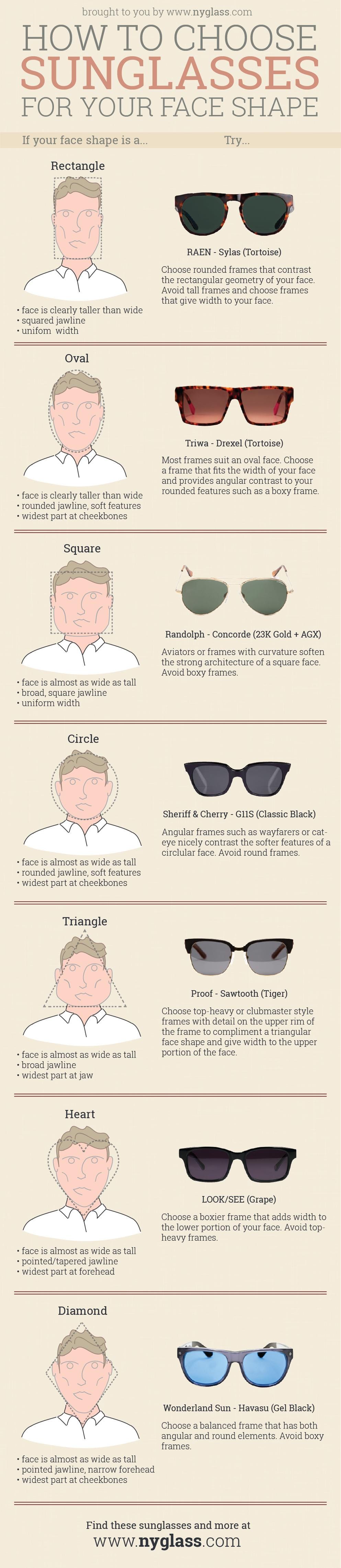
Oval face
An oval face is usually longer than it is wide. It often has balanced cheekbones, a gently curved jaw, and a forehead that is slightly wider than the chin.
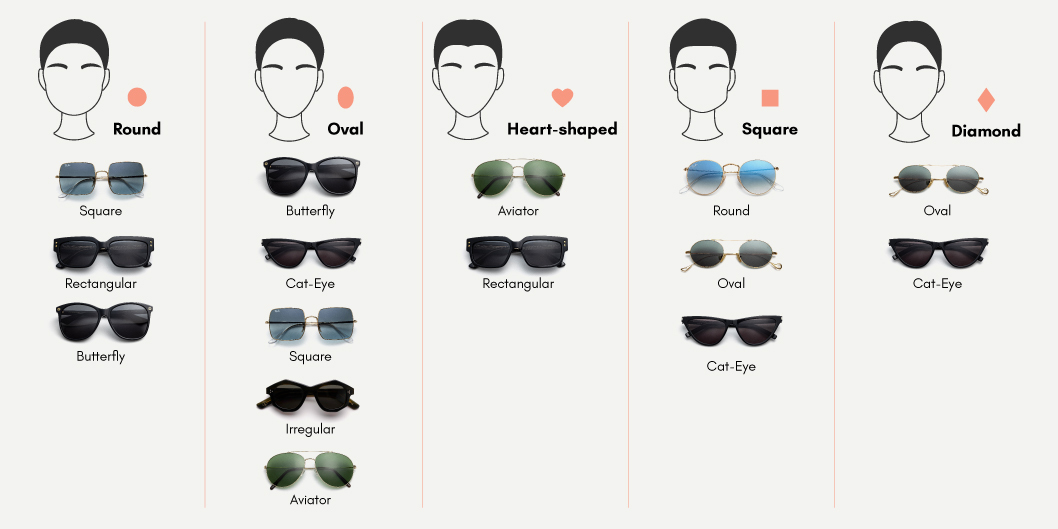
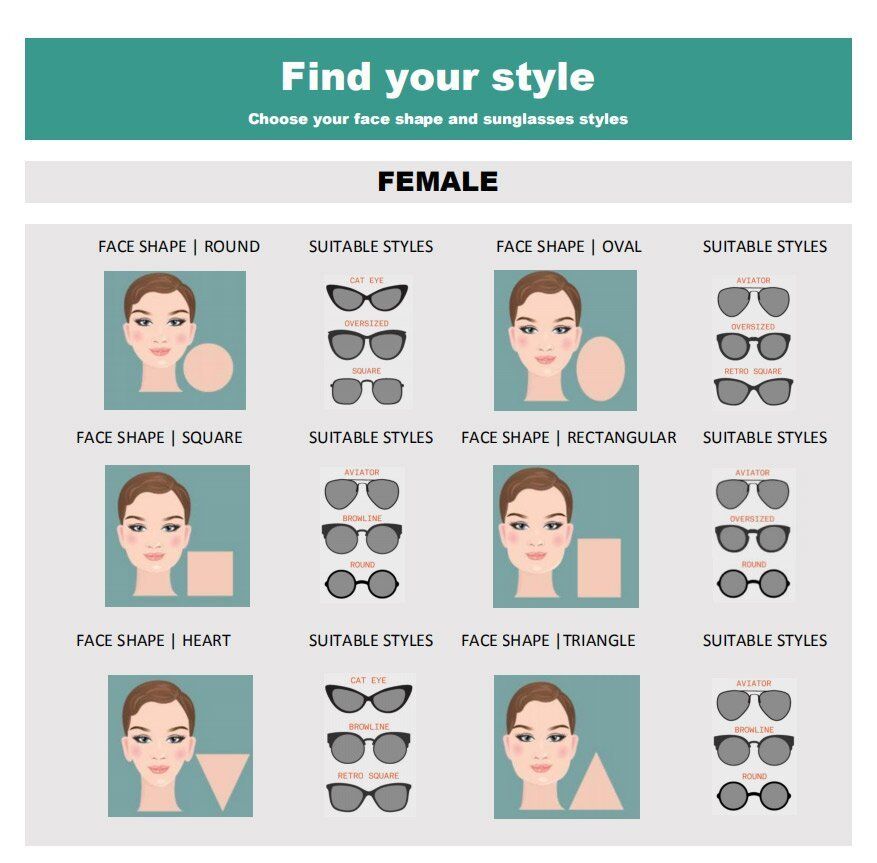
Most frame styles work well with this shape. Medium-sized square, rectangular, round, aviator, cat-eye, and geometric frames can all look polished.
Round face
A round face has similar width and length. The cheeks are often full, and the jawline has soft curves.
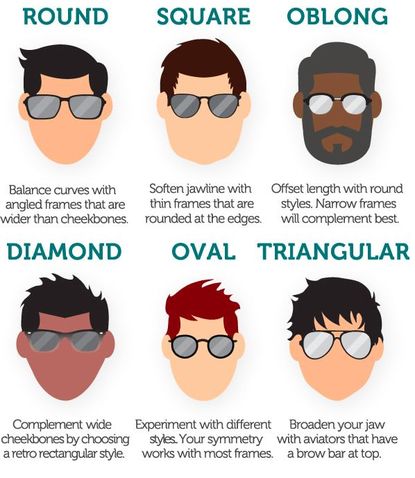
Rectangular and square sunglasses can add useful contrast. Slightly taller frames may also work, but avoid frames that are too small or very narrow because they can make the face look wider.
Square face
A square face often has a broad forehead, strong cheekbones, and a defined jaw. The width and length may be similar.
Round, oval, aviator, and softly curved frames can balance angular features. You do not need to avoid square frames, but choose one with softened corners if you want a more blended look.
Heart-shaped face
A heart-shaped face is often wider at the forehead and cheekbones, then narrows toward the chin. A widow’s peak may also be present, though it is not required.
Thin-rimmed frames, light colors, aviators, and rounded shapes can help balance the upper and lower face. Bottom-heavy frames may also add visual width near the chin.
Diamond face
A diamond face is often widest at the cheekbones, with a narrower forehead and jaw.
Oval, cat-eye, rimless, and gentle geometric frames can highlight the eyes while balancing the cheekbones. Avoid frames that feel too narrow across the widest part of your face.
Oblong or rectangular face
An oblong face is longer than it is wide. The forehead, cheeks, and jaw may have a similar width.
Taller lenses and frames with a strong top line can make the face look more balanced. Oversized frames may work well if they do not slide down or extend too far beyond the cheeks.
How to Choose Sunglasses Based on Face Shape
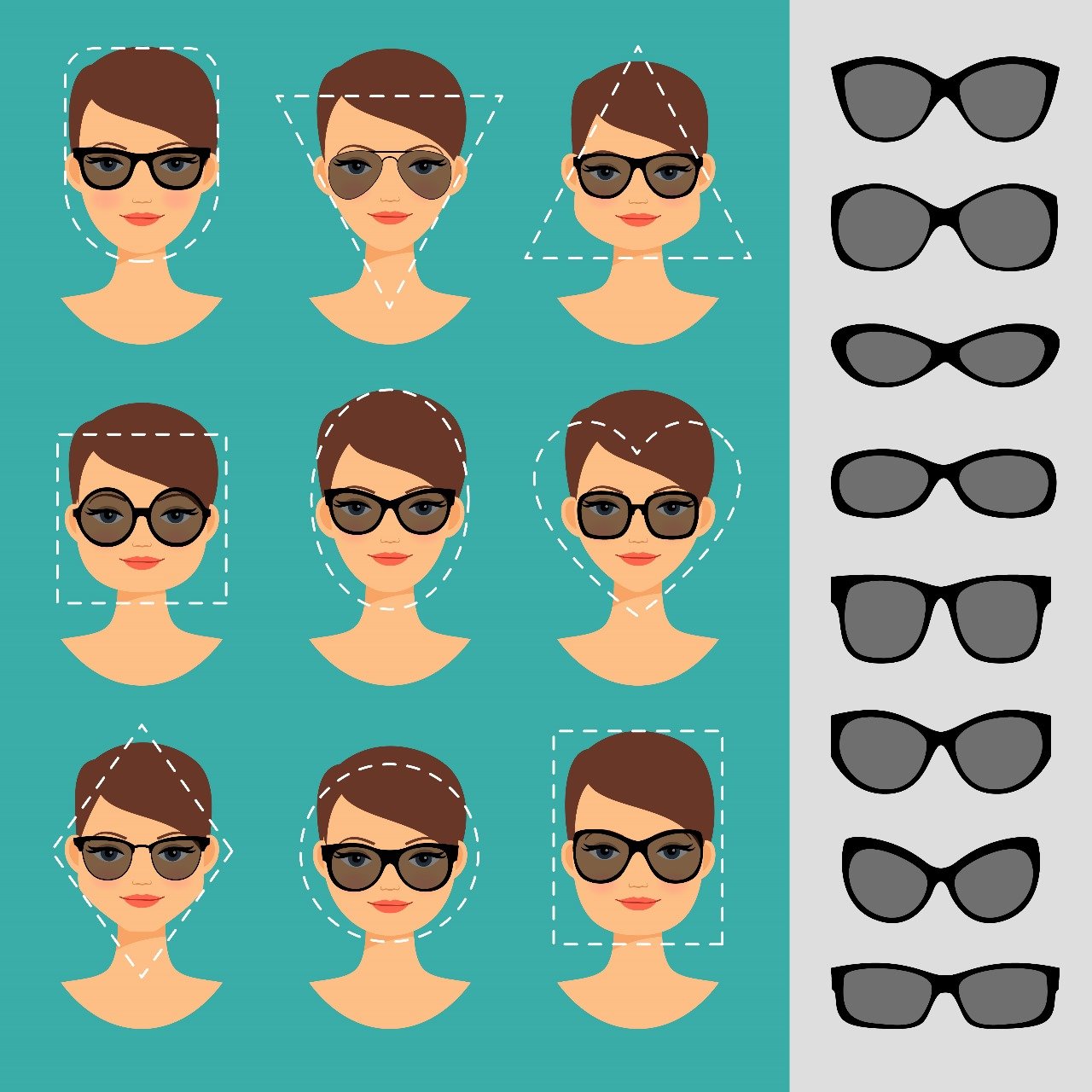
The simplest way to choose a frame is to compare its shape with your facial lines. Contrast often creates balance, while similar shapes can create a softer, more blended look.
Here is a practical guide:
- Round face: Try rectangular, square, browline, or geometric sunglasses.
- Square face: Try oval, round, aviator, or softly curved sunglasses.
- Oval face: Try most frame shapes, with special attention to proportion.
- Heart-shaped face: Try aviator, cat-eye, rimless, or light-colored frames.
- Diamond face: Try oval, cat-eye, and rimless styles.
- Oblong face: Try taller lenses, oversized frames, and bold top lines.
These suggestions are not hard laws. Personal style can matter more than face shape. If you love round sunglasses with a round face, wear them. The goal is to understand why a frame works, then decide whether that look fits your personality.
When advising people on how to choose the right sunglasses for your face, I often suggest trying the opposite of your strongest facial lines first. It is a quick way to discover balance. After that, experiment with similar shapes if you prefer a softer or more fashion-forward effect.
Choose the Correct Sunglasses Size
A stylish frame can still look wrong if the size is off. Sunglasses that are too wide may slide down, while frames that are too narrow can pinch your temples and make your face look wider.
Look for these signs of a good fit:
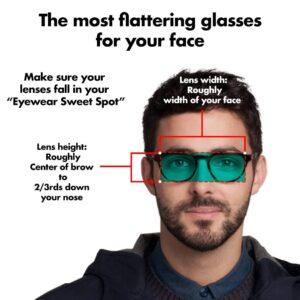
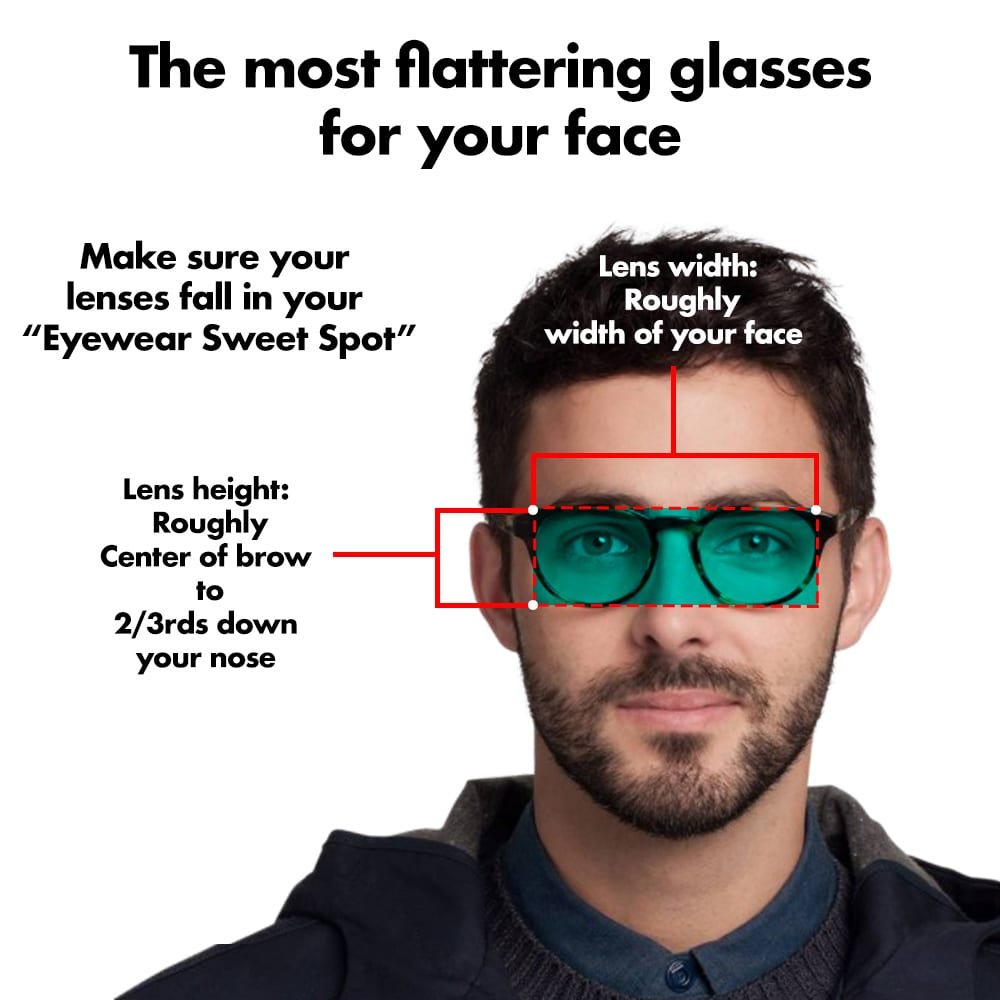
- Your pupils should sit close to the center of each lens.
- The frame should not press hard against your temples.
- Your eyebrows may show slightly, but they should not sit far below the top of the frame.
- The frame should not touch your cheeks when you smile.
- The bridge should rest comfortably without leaving deep marks.
- The sunglasses should stay in place when you turn your head.
- The arms should sit straight instead of bending outward.
Most sunglasses have three measurements printed inside one temple. They usually show lens width, bridge width, and temple length in millimeters. For example, a marking such as 52–18–140 means a 52-millimeter lens width, an 18-millimeter bridge, and 140-millimeter temple arms.
You do not need to match these numbers perfectly. Use them as a helpful comparison when replacing a pair that already fits well.
A common mistake is choosing oversized sunglasses only because they look dramatic in a product photo. If the frame covers your eyebrows, touches your cheeks, or slips down your nose, it is probably too large for daily wear.
Think About Your Nose and Bridge Fit
Bridge fit is one of the most overlooked parts of choosing sunglasses. The bridge is the section that rests across your nose. If it does not fit well, the glasses may slide, pinch, or leave marks.
People with a low nose bridge may find that standard frames sit too low. Look for low-bridge-fit styles, adjustable nose pads, or frames with a narrower bridge. Some brands label these designs as “Asian fit,” though the best choice depends on your individual features, not your background.
People with a higher nose bridge may prefer frames with a deeper bridge or adjustable pads. The frame should rest securely without placing pressure on the sides of your nose.
Plastic frames often have a fixed bridge. Metal frames commonly have adjustable nose pads, which can make small fit changes easier. An optician can usually adjust many frames in just a few minutes.
Pick Lenses for Protection and Visual Comfort
Good sunglasses should protect your eyes, not just improve your outfit. Look for lenses labeled 100% UVA and UVB protection or UV400 protection. These labels indicate that the lenses block ultraviolet radiation across the relevant UV range.
Ultraviolet exposure can contribute to eye problems over time. Health experts commonly recommend sunglasses that block both UVA and UVB rays, especially during long periods outdoors. Children need eye protection too because they often spend more time outside.
Lens darkness is not the same as UV protection. A very dark lens without proper UV filtering may reduce visible light while allowing harmful UV rays through. Always check the product label or buy from a reputable seller.
Polarized lenses can reduce glare from roads, water, snow, and other flat surfaces. They are useful for driving, fishing, boating, hiking, and beach days. However, polarization does not automatically mean stronger UV protection. Check for both features.
Photochromic lenses darken in response to UV light. They can be convenient for changing conditions, but many do not darken fully inside a car because windshields block much of the UV light that activates them.
Understand Lens Colors and Their Uses
Lens color changes how the world looks, but it does not determine UV protection. Choose a color based on comfort, activity, and personal preference.
- Gray lenses: Reduce brightness while keeping colors fairly natural. They work well for everyday use and driving.
- Brown or amber lenses: Improve contrast and can feel helpful in changing light.
- Green lenses: Reduce glare while maintaining good color balance.
- Yellow lenses: May improve contrast in low light, but they are not ideal for strong sunlight.
- Rose or red lenses: Can make some environments feel brighter and may improve contrast for certain activities.
- Blue or fashion-tinted lenses: Offer a style statement, but their performance depends on lens quality and coating.
For everyday outdoor use, gray, brown, and green lenses are usually easy choices. If you have a specific vision need, ask an eye-care professional before choosing a specialty tint.
Match Sunglasses to Your Skin Tone, Hair, and Style
Once the fit and protection are right, color becomes a fun part of the decision. Your sunglasses should work with your wardrobe and feel natural on your face.
Warm skin undertones often pair well with brown, tortoiseshell, gold, bronze, olive, and warm red frames. Cool undertones may suit black, silver, gray, blue, clear, and cool purple frames. Neutral undertones can often wear both warm and cool colors.
Hair color can also guide your choice:
- Dark hair often pairs well with black, tortoiseshell, jewel tones, and clear frames.
- Light hair may look balanced with soft brown, champagne, gray, pastel, or translucent frames.
- Red or copper hair can work well with green, brown, amber, and warm metal frames.
- Gray hair often pairs beautifully with black, silver, navy, clear, or deep burgundy frames.
These are style ideas, not strict color rules. A bright red frame may be perfect if it reflects your personality. The best pair should feel like you, not like a costume.

Choose Sunglasses for Your Lifestyle
The best sunglasses for a beach trip may not be the best sunglasses for driving or running. Think about where and how you will wear them.
For daily use, choose a comfortable frame with reliable UV protection, durable hinges, and lenses that do not distort your view. For driving, gray or brown polarized lenses may reduce glare, but check that the tint does not make signs or traffic lights difficult to see.
For sports, look for secure temples, impact-resistant lenses, and a wraparound shape that offers wider coverage. Polycarbonate lenses are lightweight and impact resistant, but no eyewear is unbreakable. Follow the product’s safety guidance.
For water activities, polarized lenses can reduce reflected glare. For high-altitude trips, strong UV protection is especially important because UV exposure increases with elevation.
For fashion wear, you have more freedom with unusual shapes, colors, and materials. Still, fashion sunglasses should meet the same basic standard for UV protection.
Compare Common Sunglass Materials
Frame material affects weight, comfort, durability, and price.
Acetate
Acetate is a plant-based plastic known for rich colors and layered patterns. It often feels more substantial than basic plastic and can be adjusted by a trained professional.
Standard plastic
Plastic frames can be light and affordable. They offer many colors and shapes, but lower-quality versions may become brittle or lose their shape over time.
Metal
Metal frames can look slim and refined. Stainless steel, titanium, and other metals vary in weight and durability. Titanium is light and strong, but it often costs more.
Nylon and sport materials
Nylon-based materials can be flexible and light. They are common in active eyewear because they can handle movement and outdoor use.
When learning how to choose the right sunglasses for your face, material should support the fit you need. A beautiful frame is not useful if it feels heavy after ten minutes.
Avoid These Common Sunglasses Mistakes
Small details can make a large difference in comfort and appearance. Watch for these common errors:
- Buying a frame without checking UV protection.
- Choosing a pair that is too narrow because it looks sleek online.
- Ignoring bridge fit and then dealing with constant slipping.
- Assuming darker lenses offer better eye protection.
- Picking a frame only because it is trendy.
- Wearing damaged or deeply scratched lenses.
- Buying counterfeit sunglasses from an unreliable seller.
- Forgetting that prescription sunglasses need accurate measurements.
- Choosing a wraparound style that distorts your peripheral vision.
- Cleaning lenses with a rough shirt or paper towel.
I have seen people focus on the logo first and fit second. That usually leads to discomfort. A better approach is to test the frame for several minutes, move your head, smile, and look down. If it stays comfortable, it has passed a useful real-life test.
A Simple Step-by-Step Buying Method
Use this process in a store or while shopping online:
- Identify your general face shape.
- Measure a pair of glasses that already fits well.
- Choose two or three frame shapes that create balance.
- Check the bridge and temple fit.
- Confirm 100% UVA and UVB protection.
- Decide whether you need polarized lenses.
- Compare lens color with your main activities.
- Check the return policy before buying online.
- Review the frame material and hinge quality.
- Try the sunglasses with your usual hairstyle and clothing.
Take a front view and side view photo if you are shopping online. Read the measurements, study customer photos, and check whether the retailer offers virtual try-on tools. These tools can help, but they cannot fully replace a real fit test.
If you wear prescription lenses, use a licensed optical provider. Some very curved or narrow frames may not work well with every prescription.
Sunglasses for Different Face Features
Face shape is only one part of the picture. Specific features can guide your choice too.
If you have a prominent brow, a strong browline frame can highlight it, while a lighter frame can create a softer appearance. If your eyes are close together, avoid frames with a very narrow bridge because they may make the eyes look closer.
If your eyes are wide set, a stronger bridge or darker center detail may help create balance. If you have high cheekbones, check that the lower rim does not touch your cheeks when you smile.
For a longer nose, a lower bridge can sometimes make the nose appear shorter, while a higher bridge may visually lengthen it. For a shorter nose, a higher bridge can create a little more vertical space.
These effects are subtle. The frame should never feel uncomfortable simply to create a visual illusion.
How to Care for Your Sunglasses
Proper care keeps lenses clear and frames in good condition.
Rinse dusty lenses with clean water before wiping them. Use lens cleaner and a clean microfiber cloth. Store sunglasses in a hard case when they are not in use, especially in a bag or car.
Avoid leaving sunglasses on a hot dashboard. High heat can damage coatings, warp plastic, and loosen frame parts. Do not place lenses face down on a table.
If the frame becomes loose, visit an optician for adjustment. Replace sunglasses if the lenses are badly scratched, the UV protection is uncertain, or the frame no longer holds its shape.
Frequently Asked Questions About How to Choose the Right Sunglasses for Your Face
What sunglasses look best on a round face?
Angular frames, such as rectangular and square styles, can add contrast to a round face. Choose a size that fits comfortably and does not extend too far beyond your cheeks.
How do I know if sunglasses fit my face?
The frame should stay in place without pinching, slipping, or touching your cheeks. Your pupils should sit near the center of the lenses, and the temples should rest comfortably against your head.
Are polarized sunglasses better for your eyes?
Polarized lenses reduce reflected glare, so they can improve comfort near water, snow, and roads. They do not automatically provide UV protection, so confirm that the lenses also block 100% of UVA and UVB rays.
Should sunglasses cover your eyebrows?
Sunglasses may cover part of your eyebrows, especially in oversized styles. They should not sit so high or low that they look unbalanced, slip down, or touch your cheeks.
What lens color is best for everyday sunglasses?
Gray, brown, and green lenses are popular for everyday use because they reduce brightness while keeping vision comfortable. The most important feature is proper UV protection, not the color itself.
Can I wear round sunglasses with a round face?
Yes. Face-shape rules are guides, not restrictions. If you choose round frames, consider a size, bridge, or color that adds some contrast and keeps the overall look balanced.
How do I choose sunglasses for a heart-shaped face?
Look for aviator, cat-eye, oval, rimless, or light-colored frames. These styles can balance a wider forehead and narrower chin without adding too much weight to the upper face.
Do expensive sunglasses protect your eyes better?
Price alone does not guarantee better protection. Check the label for 100% UVA and UVB protection, buy from a trusted seller, and prioritize fit, lens quality, and durability.
Conclusion
Choosing sunglasses becomes much easier when you focus on four basics: face shape, frame size, bridge fit, and lens protection. Use contrast to balance your features, choose materials that suit your routine, and never confuse dark lenses with UV protection.
The right pair should feel comfortable, protect your eyes, and express your style. Try several shapes, move naturally while wearing them, and trust both the measurements and your comfort. Explore quality eyewear from a reputable seller, and share your favorite frame style or fitting tip in the comments.

Rubel Miah is the Senior Editor at MyStyleGrid.com, where he brings a sharp editorial eye and an unshakable love for fashion to everything he does. A true style addict, Rubel lives and breathes trends, from streetwear to high fashion, and has a knack for turning inspiration into impactful stories. With years of experience in fashion journalism and digital media, he curates content that empowers readers to express themselves through style. When he’s not editing features or forecasting the next big thing, you’ll find him hunting down vintage pieces or capturing street style moments around the city.