The best sunglasses match your face shape by balancing its natural angles, width, length, and key facial features.
Learning how to find sunglasses for your face shape makes shopping much easier. The right pair can frame your eyes, soften sharp lines, and create better visual balance. After testing many frame styles, I have found that face shape is a useful starting point, but fit, comfort, lens quality, and personal style matter just as much. This guide will help you choose sunglasses with confidence instead of guessing in front of the mirror.
Why your face shape matters when choosing sunglasses
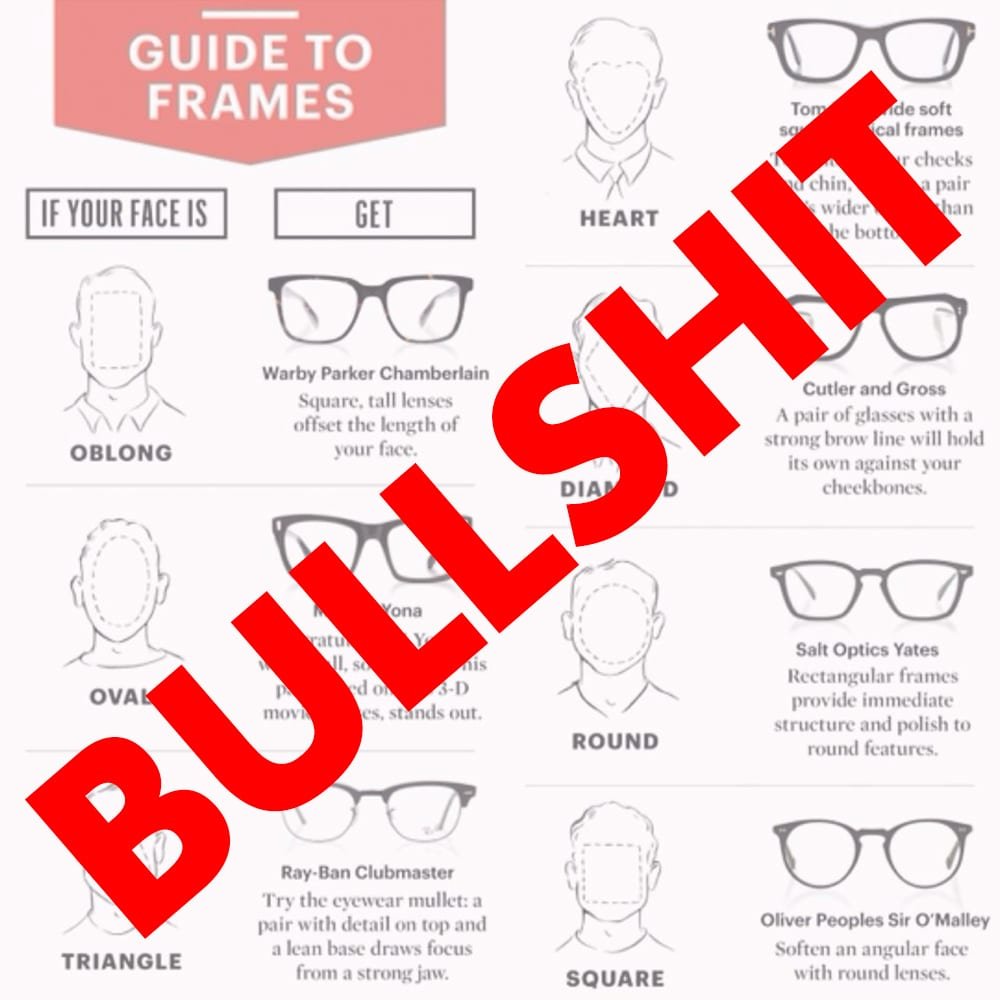
Sunglasses do more than block bright light. They sit at the center of your face, so their shape can change how your features look. A rounded frame may soften a strong jaw, while a square frame can add structure to soft cheeks.
The goal is balance, not strict rules. Your face does not need to fit one perfect category. Most people have a blend of two or more shapes, and your hairstyle, facial hair, eyebrows, and frame size can change the overall effect.
When learning how to find sunglasses for your face shape, focus on these four points:
• Shape: Decide whether your face looks more round, angular, long, or tapered.
• Proportion: Notice whether your face is wider than it is long, or longer than it is wide.
• Contrast: Choose between soft, curved frames and bold, angular frames.
• Fit: Make sure the sunglasses sit securely without pressure or slipping.
A useful rule is to create contrast. Round faces often look balanced with angular frames. Square faces often look softer with curved frames. However, matching shapes can also work if you want a gentle, low-contrast look.
How to identify your face shape
Before choosing frames, look at your face in a mirror with your hair pulled back. Use a clean mirror, good lighting, and a relaxed expression. Do not judge your face while smiling, since a smile can change the shape of your cheeks and jaw.
You can also take a straight-on photo. Keep the camera at eye level and avoid a wide-angle selfie lens. A wide lens may make the center of your face look larger than it really is.
Measure your face at home
Use a soft measuring tape or a ruler. Record these measurements:
-
forehead width: Measure across the widest part of your forehead.
-
Cheekbone width: Measure from the highest point of one cheekbone to the other.
-
Jaw width: Measure from the base of your ear to the tip of your chin, then multiply by two.
-
Face length: Measure from the center of your hairline to the bottom of your chin.
The measurements do not need to be exact. You are looking for broad patterns. If your face length is close to its width and your jaw is soft, you may have a round face. If your face is longer than it is wide, you may have an oval or oblong face.
Recognize common face shapes
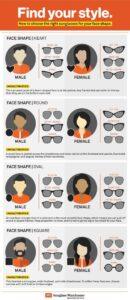
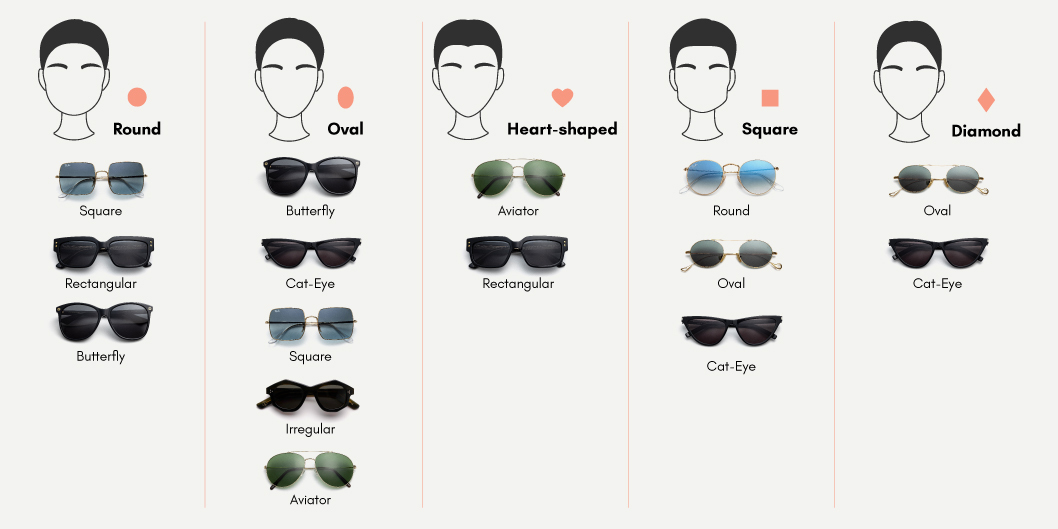
• Oval: The face is longer than it is wide. The cheekbones are usually the widest point, and the jaw is softly curved.
• Round: The face has similar length and width. The cheeks look full, and the jaw has a smooth curve.
• Square: The forehead, cheekbones, and jaw have similar widths. The jawline looks strong and defined.
• Heart: The forehead is wider, while the chin is narrow or pointed.
• Diamond: The cheekbones are wide, with a narrower forehead and jaw.
• Oblong: The face is noticeably longer than it is wide. The forehead, cheeks, and jaw may have similar widths.
• Triangle: The jaw is wider than the forehead, creating a bottom-heavy appearance.
If you still cannot decide, take a photo and trace the outside of your face on the screen with your finger. The outline often makes the main shape easier to see.

The best sunglasses for an oval face
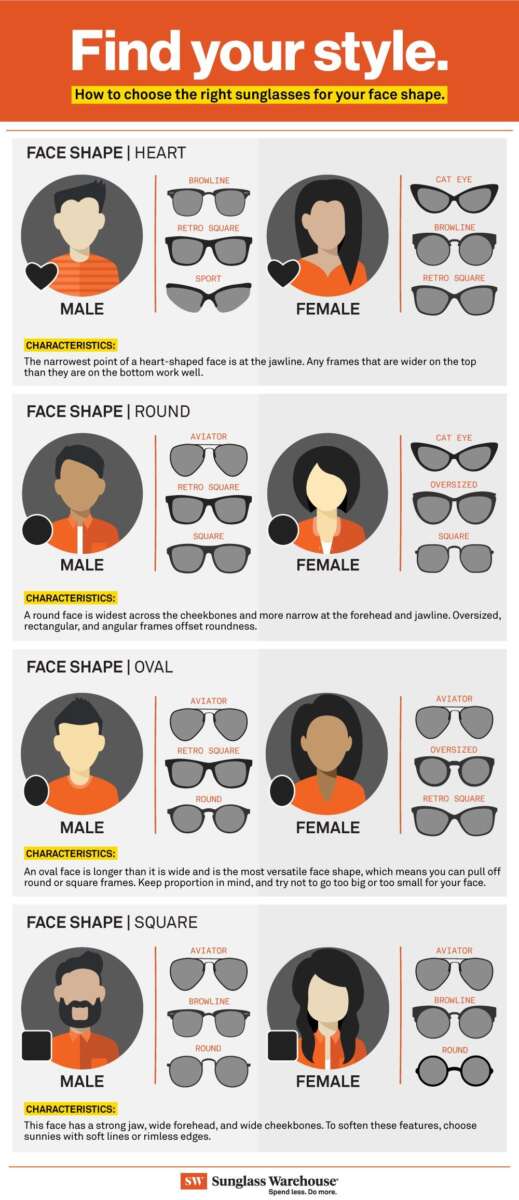
An oval face usually has balanced proportions and softly curved lines. The cheekbones may be slightly wider than the forehead and jaw. This shape works well with many sunglasses styles.
Good choices include:
• Wayfarer frames
• Aviator sunglasses
• Cat eye frames
• Round frames
• Square frames
• Browline frames
The main goal is to keep the frame in proportion with your face. Very narrow sunglasses can make an oval face look longer. Extremely large frames may hide your natural balance.
When learning how to find sunglasses for your face shape, oval faces offer the most freedom. Try both soft and angular styles, then compare how each frame changes your features. A medium-sized frame that follows the width of your cheekbones often looks especially natural.

The best sunglasses for a round face
A round face has soft cheeks, a curved jaw, and similar width and length. The right frame can add definition and make the face appear slightly longer.
Look for:
• Rectangular frames
• Square frames
• Geometric frames
• Browline styles
• Angular wayfarer frames
Choose frames that are wider than the fullest part of your cheeks. This creates a longer, more balanced appearance. Higher-set temples can also draw the eye upward.
Avoid very small, narrow frames if they make your cheeks look wider. Round frames are not forbidden, but they create a soft-on-soft effect. That look can be stylish when chosen on purpose, especially with thin metal rims or darker lenses.
A common mistake is choosing oversized sunglasses only because they cover more of the face. Large frames can look attractive, but they should not touch your cheeks or extend far beyond your temples.

The best sunglasses for a square face
A square face often has a broad forehead, strong cheekbones, and a defined jaw. Its length and width may be similar. Curved frames can soften these firm lines and add visual movement.
Consider:
• Round sunglasses
• Oval frames
• Aviators
• Soft cat eye frames
• Rimless or thin-rimmed styles
Frames with curved edges create contrast with a square jaw. A slightly wider frame can also balance the face, but avoid sunglasses that are much wider than your head.
If you prefer a bold look, square frames can work too. Choose a frame with rounded corners rather than sharp corners. This keeps the style structured without making the face look overly angular.
In my experience, people with square faces often reject round sunglasses too quickly. They worry that the curves will look too soft. In practice, a well-sized round frame can be one of the most flattering choices because it acts like a visual counterweight to the jaw.

The best sunglasses for a heart-shaped face
A heart-shaped face is wider at the forehead and narrower toward the chin. The cheekbones may be prominent, while the chin looks delicate or pointed.
Try these styles:
• Aviator sunglasses
• Round frames
• Oval frames
• Light-colored or rimless frames
• Bottom-heavy frames
Frames that are wider at the bottom can help balance a broad forehead and narrow chin. Thin rims and softer colors may also reduce visual weight around the upper face.
Avoid very thick, top-heavy frames if they make your forehead appear wider. That said, a bold cat eye can still work if you enjoy a dramatic style. Look for one with a gentle outer lift rather than an extremely sharp wing.
For anyone learning how to find sunglasses for your face shape, heart-shaped faces show why frame weight matters. Shape is important, but the thickness, color, and lens size can change the effect just as much.

The best sunglasses for a diamond face
A diamond face is widest at the cheekbones. The forehead and jaw are usually narrower, and the chin may look pointed. This shape often benefits from frames that highlight the eyes while softening the cheek area.
Good options include:
• Oval sunglasses
• Cat eye frames
• Browline sunglasses
• Rimless frames
• Curved aviators
Frames with a strong brow line can draw attention upward. Oval and cat eye styles can also complement high cheekbones without adding too much width at the center of the face.
Avoid frames that are extremely narrow at the cheekbones. They may make the widest part of your face look more pronounced. Very wide, straight frames can also compete with your natural structure.
A gentle curve is often the safest starting point for diamond faces. From there, you can explore more dramatic shapes based on your style and comfort.
The best sunglasses for an oblong face
An oblong face is longer than it is wide. The forehead, cheekbones, and jaw may have similar widths, while the sides of the face look relatively straight.
Choose sunglasses that add width and reduce the appearance of length:
• Oversized frames
• Tall lenses
• Square sunglasses
• Round sunglasses
• Bold browline styles
Deep lenses can help create balance because they take up more vertical space. A frame with a strong top bar or decorative temples can also make the face look wider.
Avoid very narrow, shallow sunglasses. Small lenses may make an oblong face appear even longer. You should also check that the frame does not sit too high above your eyebrows, since extra space can lengthen the appearance of the face.
When considering how to find sunglasses for your face shape, remember that frame height matters. Many shoppers look only at width, but lens depth can be just as important.

The best sunglasses for a triangle-shaped face
A triangle-shaped face is wider near the jaw and narrower at the forehead. The aim is usually to add visual interest near the upper face and create a more even appearance.
Consider:
• Cat eye sunglasses
• Browline frames
• Aviators with a strong upper bar
• Light-colored frames
• Frames with detailed temples
A heavier upper rim can draw attention toward the eyes and forehead. Medium or large frames may also balance a wider jaw, as long as they do not feel oversized.
Avoid frames that are much heavier at the bottom. They can add more emphasis to the jaw. Softly curved styles may work well, especially when the top of the frame has enough structure.
How to choose the right frame size
Face shape helps you choose a style, but frame size determines whether that style looks and feels right. A beautiful frame can still fail if it pinches, slides, or sits too far from your face.
Check these details when trying on sunglasses:
• Your eyes should sit near the center of the lenses.
• The frame should not press against your temples.
• The frame should not touch your cheeks when you smile.
• Your eyebrows may show slightly, but they should not be hidden by a very heavy frame unless that is your preferred look.
• The bridge should rest comfortably without leaving painful pressure marks.
• The temples should stay level and should not bend outward.
Many online retailers list measurements in millimeters. These often appear as three numbers, such as 52 18 140. The first number is the lens width, the second is the bridge width, and the third is the temple length.
Your current favorite glasses can provide a useful size guide. Measure them or check the numbers printed inside the temple. Use those measurements as a starting point, not a rigid rule, because frame shape affects how each measurement feels.
A frame that is slightly wider than your face may look modern. A frame that is much wider may slide down or create a distracting gap near the temples.
Consider your nose, eyebrows, and hair
Face shape is only one part of the fit. Your nose bridge, brow position, and hairstyle can change how sunglasses sit and look.
If sunglasses slide down, you may need:
• Adjustable nose pads
• A narrower bridge
• A low-bridge fit
• Rubber nose grips
If the frame touches your cheeks, try a taller bridge or a smaller lens height. If your eyebrows sit low, a thin frame may feel more balanced than a thick top bar.
Hair also affects the final look. Long, full hair can balance large frames. Short hair may make a bold frame more noticeable. Facial hair can add width around the jaw, so your best sunglasses may differ from the choice you would make without it.
This is why learning how to find sunglasses for your face shape should not become a strict formula. Your face is a moving picture, not a fixed diagram. Look at the complete combination of frame, hair, brows, and expression.
Choose lenses for protection and daily use
Style matters, but eye protection comes first. In the United States, look for sunglasses labeled as blocking 99% to 100% of UVA and UVB rays, or offering UV400 protection. Dark lenses without proper UV protection can reduce brightness while still allowing harmful ultraviolet radiation to reach the eyes.
Important lens features include:
• UV protection: Helps shield your eyes from ultraviolet radiation.
• Polarization: Reduces glare from roads, water, snow, and other flat surfaces.
• Photochromic lenses: Darken when exposed to outdoor light, though they may not darken fully inside a vehicle.
• Gradient lenses: Provide darker coverage at the top and lighter vision below.
• Prescription lenses: Combine vision correction with sun protection.
Polarized lenses can make driving and outdoor activities more comfortable, but they may make some digital screens harder to read at certain angles. They also do not replace UV protection. Always check for both features.
Lens color affects contrast, not UV safety. Gray lenses usually preserve natural color. Brown or amber lenses can increase contrast in some conditions. Green lenses offer a balance of contrast and color perception. Choose based on your activities, and do not assume a darker tint offers better protection.
Match sunglasses to your personal style
Once you know how to find sunglasses for your face shape, use style to make the final choice. The best sunglasses should feel like something you would wear often, not a costume you bought for a single photo.
Think about:
• Your usual clothing colors
• Your favorite jewelry metal
• Your lifestyle and daily activities
• Whether you prefer classic or bold accessories
• How much attention you want the sunglasses to attract
Black frames look sharp and versatile. Tortoiseshell adds warmth and texture. Clear frames feel light and modern. Gold and brown tones can complement warm skin tones, while silver, black, gray, and blue often suit cooler palettes. These are style suggestions, not strict color rules.
Try the same frame in more than one color. A shape that feels too bold in black may look subtle in clear acetate. A thin gold frame may feel softer than the same design in dark metal.
One of my most useful shopping lessons has been to test sunglasses in natural daylight. Store lighting can hide color shifts and make a frame appear less reflective than it really is. Walk near a window, look from different angles, and check whether the lenses create distracting reflections.
Common mistakes to avoid
Many poor sunglasses choices come from focusing on appearance for a few seconds instead of comfort over a full day.
Avoid these mistakes:
• Choosing a frame only because it is trendy.
• Buying sunglasses that are too tight at the temples.
• Ignoring UV protection.
• Picking a size that touches your cheeks.
• Assuming every face belongs to one shape.
• Confusing dark lenses with safe lenses.
• Buying online without checking measurements and return terms.
• Forgetting how the frame looks when you smile.
A frame should feel stable when you move your head, bend down, or walk outside. It should not need constant adjustment. If you feel pressure after a few minutes, that pressure usually becomes worse after several hours.
You should also be careful with “face shape rules” that promise one perfect frame. These rules are useful for narrowing your choices, but they are not medical or scientific laws. Personal taste, frame construction, and comfort still matter most.
A simple process for finding your best sunglasses
Use this process the next time you shop:
-
Identify your general face shape using a mirror or simple measurements.
-
Choose two or three frame shapes that create balance.
-
Check the frame width against your cheekbones and temples.
-
Make sure your eyes sit near the center of each lens.
-
Smile and check whether the frame touches your cheeks.
-
Test the bridge for slipping, pinching, or uncomfortable pressure.
-
Confirm that the lenses provide full UV protection.
-
Test the sunglasses in natural light.
-
Compare at least three styles before deciding.
-
Choose the pair you will actually wear often.
If shopping online, measure a pair you already own and compare its numbers with the product listing. Read the return policy before ordering. Reviews can help, but remember that a frame that fits one person may not fit another person with a similar face shape.
This step-by-step method makes how to find sunglasses for your face shape simple and practical. You are not searching for a magical frame. You are narrowing the field until the shape, size, protection, and style all work together.
Frequently Asked Questions About How to Find Sunglasses for Your Face Shape
How do I know which sunglasses suit my face shape?
Identify whether your face looks round, square, oval, heart-shaped, diamond-shaped, oblong, or triangular. Then choose frames that balance your main features, such as angular frames for soft lines or curved frames for strong angles.
Can I wear sunglasses that do not match my face shape?
Yes. Face shape guidelines are suggestions, not strict rules. Frame size, color, comfort, and your personal style can make almost any shape work.
Are oversized sunglasses good for every face shape?
Oversized sunglasses can suit many faces, but they must still fit correctly. They should not touch your cheeks, slide down your nose, or extend so far past your temples that they look unstable.
Should sunglasses cover my eyebrows?
Not always. Your eyebrows can show slightly, and this often looks natural. A thick frame may cover them if you prefer a bold style, but the frame should not block your vision or feel too heavy.
What sunglasses are best for a round face?
Angular frames, such as square, rectangular, geometric, and browline styles, often add definition to a round face. Choose a frame that is slightly wider than the fullest part of your cheeks.
Are polarized sunglasses better for your eyes?
Polarized lenses reduce glare, which can improve comfort during driving and outdoor activities. They do not automatically provide UV protection, so check that the sunglasses also block UVA and UVB rays.
How should sunglasses fit on the nose?
The bridge should rest securely without pinching or leaving painful marks. If the sunglasses slide, look for adjustable nose pads, a different bridge width, or a low-bridge design.
Conclusion
The easiest way to learn how to find sunglasses for your face shape is to combine face shape, frame size, comfort, and UV protection. Use contrast to create balance, but do not let style rules limit you. A round face may suit angular frames, a square face may look great in curved frames, and an oval face can often wear almost anything.
Measure a pair you already like, test new frames in natural light, and check how they feel when you move and smile. The right sunglasses should protect your eyes and feel like a natural part of your look. Explore a few frame styles, compare the fit carefully, and share your favorite choice with someone who enjoys finding the perfect pair too.

Rubel Miah is the Senior Editor at MyStyleGrid.com, where he brings a sharp editorial eye and an unshakable love for fashion to everything he does. A true style addict, Rubel lives and breathes trends, from streetwear to high fashion, and has a knack for turning inspiration into impactful stories. With years of experience in fashion journalism and digital media, he curates content that empowers readers to express themselves through style. When he’s not editing features or forecasting the next big thing, you’ll find him hunting down vintage pieces or capturing street style moments around the city.