The best sandals for neuropathy in feet combine soft cushioning, stable support, a roomy fit, and safe traction.
If burning, tingling, numbness, or sharp foot pain makes each step feel uncertain, the right sandal can bring welcome relief. Neuropathy can also reduce your sense of heat, pressure, and injury, so comfort alone is not enough. I look for sandals that reduce pressure points, stay secure, and let you check your feet with ease. The picks below include orthopedic walking sandals, recovery slides, and acupressure styles. Each one suits a different need, and I explain the trade-offs so you can choose with confidence.
Bravover Orthopedic Walking Sandals
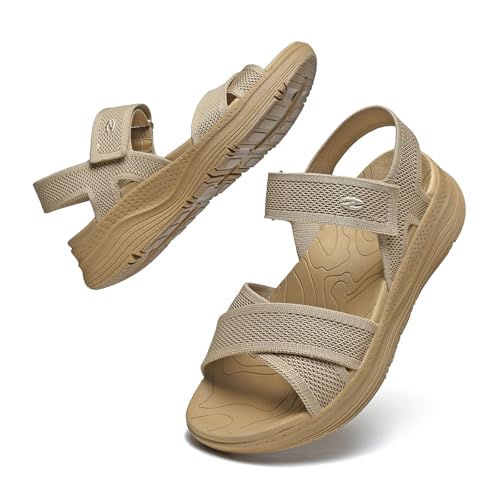
The Bravover orthopedic walking sandal is a strong all-around choice for people who want support without wearing a closed shoe. Its open design allows air to reach the foot, which can feel helpful during warm weather. The arch support aims to spread pressure more evenly across the sole. That matters when neuropathy makes one small pressure spot feel much worse than it should.
I like this style for errands, short walks, travel, and daily home use. The sandal looks more like a normal walking shoe than a medical device, so it is easy to wear with casual clothes. Still, people with reduced feeling should inspect the foot after use and stop if they notice redness, rubbing, or a hot spot. No sandal can treat nerve damage, but a good fit may make walking less tiring.
Pros:
- Supportive design for daily walking
- Open construction helps with airflow
- Arch support may reduce sole strain
- More casual and wearable than many medical shoes
- Useful for errands, travel, and home use
- Offers more coverage than a simple slide
Cons:
- Open straps may still rub sensitive skin
- Not ideal for rough trails or wet surfaces
- Arch shape may not suit every foot
BYRIVER Acupuncture Massage Sandals
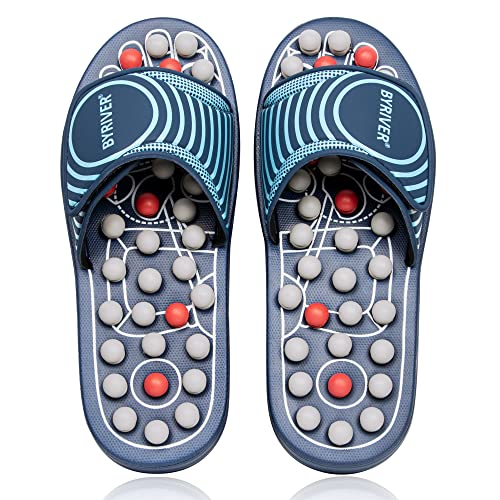
BYRIVER massage sandals use raised points under the feet to create an acupressure-like sensation. Some people enjoy that firm pressure after a long day. The sandals may also encourage you to slow down and pay attention to how your feet feel. That can be useful for people who want a short foot massage at home.
However, this is not the safest first pick for every person with neuropathy. Reduced sensation can make it hard to notice excessive pressure, skin damage, or poor circulation. I would use these only for brief sessions, with medical guidance when needed, and never on broken skin. Start slowly, check your feet often, and avoid forcing yourself to tolerate pain.
Pros:
- Firm massage points provide a strong foot sensation
- Can be used at home without a massage machine
- Easy slip-on format
- May feel relaxing after standing or walking
- Suitable for people who enjoy acupressure
- Simple design makes storage easy
Cons:
- Raised points may feel too harsh for sensitive feet
- Requires extra caution with numbness or diabetes
- Not designed for long-distance walking
- May not provide the soft cushioning some users need
HMLHML Men’s Recovery Slides
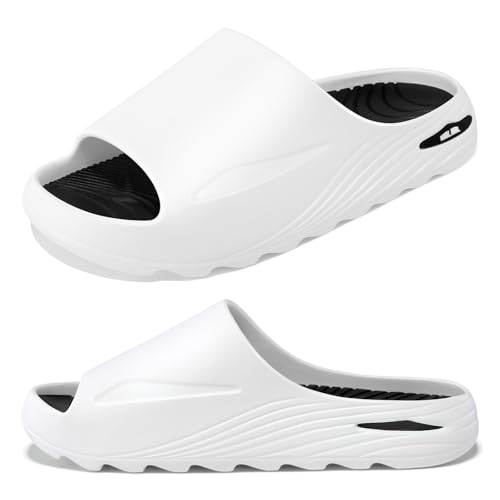
HMLHML recovery slides focus on cushion, arch support, and low-effort wear. The thick sole can feel gentle under the heel and forefoot. Its open-toe shape gives the toes room to move and helps keep the foot cool. For many men, this kind of slide works well after exercise, around the house, or during short outdoor trips.
The broad slide format is convenient, but it does not hold the foot as securely as an adjustable sandal. I would not choose it for fast walking, uneven ground, or activities that require sharp turns. A stable gait matters when neuropathy affects balance. Use the slides on even surfaces and make sure your heel does not lift with every step.
Pros:
- Thick cushioning helps soften hard floors
- Arch support may improve comfort during standing
- Easy to put on and take off
- Open toe helps reduce heat buildup
- Good option for post-workout recovery
- Useful around the home and for casual use
Cons:
- Loose slide design offers limited heel control
- May feel bulky to users who prefer thin sandals
- Not the best choice for uneven terrain
BYRIVER Spring Acupuncture Foot Massager
This BYRIVER model uses spring-loaded massage elements to create a deep, active feel beneath the foot. It targets users who prefer a stronger massage than a flat recovery sandal can provide. The design may help the feet feel more awake after hours of sitting. It also gives a simple way to add a short massage routine to your day.
In my view, the key word is “short.” Neuropathy may limit your ability to judge pressure, and a deep massage can irritate the skin or soft tissue. Begin with only a few minutes while standing near a support. Check your feet afterward, and avoid this product if your clinician has told you to avoid pressure, massage, or acupressure.
Pros:
- Strong massage sensation for experienced users
- Spring action may feel more dynamic than fixed bumps
- Easy slip-on construction
- Can fit into a home wellness routine
- Useful for people who dislike flat soles
- Compact alternative to a powered foot massager
Cons:
- May be too intense for painful neuropathy
- Needs careful use and frequent skin checks
- Not intended as a walking sandal for long trips
- Limited cushioning compared with recovery slides
BraceAbility Neuropathy Foot Sleeves

BraceAbility neuropathy sleeves are not sandals, but they can work beneath sandals when you need light coverage or compression. The toeless shape leaves the toes free while covering much of the foot and ankle. Some users like this design because it can reduce the feel of fabric between the toes. It may also add gentle support during daily activity.
Compression products require a careful fit. Too much pressure can be a concern for anyone with circulation problems, swelling, diabetes, or nerve loss. I recommend asking a health professional before using compression, especially if your feet are cold, pale, swollen, or hard to feel. These sleeves cannot replace a cushioned sandal, but they may complement one when properly fitted.
Pros:
- Toeless design works with open sandals
- May provide gentle compression and support
- Covers the ankle and midfoot area
- Can reduce direct friction from some footwear
- Useful for people who dislike full socks
- Lightweight and easy to pack
Cons:
- Does not provide a sole, tread, or cushioning
- Compression may not suit users with poor circulation
- Can feel tight if the size is wrong
- Needs regular washing and careful skin checks
Women’s Acupressure Massage Sandals
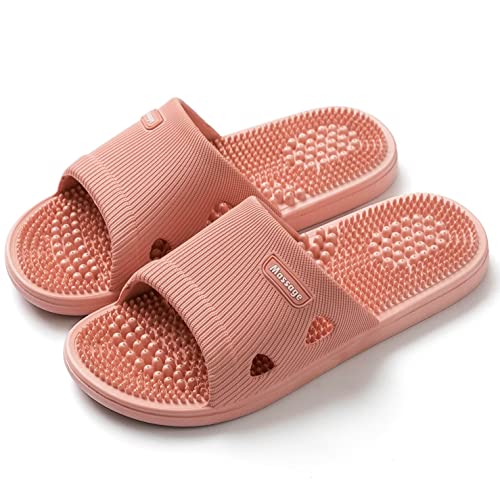
These women’s acupressure sandals are made for users who want a massage feel in a bright, simple slide. The raised footbed creates pressure below key areas of the foot. A non-slip outer sole may help with short indoor use. The open style also makes them quick to wear after a bath, shower, or busy day.
These sandals deserve the same warning as other massage-point footwear. Numb feet do not always send a clear pain signal, so a pleasant feeling can become too much pressure. I would not use them as an everyday walking shoe for neuropathy. Instead, treat them as a short, controlled comfort tool, and stop at the first sign of redness or soreness.
Pros:
- Fun color and simple casual style
- Raised footbed offers a massage effect
- Non-slip design may help on indoor floors
- Quick slip-on convenience
- Open construction allows airflow
- Good for brief relaxation sessions
Cons:
- Hard massage points may bother tender feet
- Not a replacement for supportive walking sandals
- Requires close inspection after each use
- May not provide enough room for swollen feet
Men’s Acupressure Massage Sandals

This men’s acupressure sandal offers the same basic idea as the women’s version, with sizing aimed at larger feet. Its textured footbed creates a firm point-by-point sensation. That feel appeals to people who enjoy pressure massage and want a simple sandal for home use. The dark, neutral look also fits easily into a casual routine.
I would rank this as a specialty item rather than one of the safest daily sandals for neuropathy. The footbed does not give the soft, even cushion that many sensitive feet need. If you try it, wear it for a very short period and keep your weight balanced. People with open sores, poor blood flow, severe numbness, or a history of foot ulcers should avoid self-directed pressure tools unless a clinician approves them.
Pros:
- Designed for larger men’s sizes
- Firm textured sole gives a clear massage feel
- Easy to wear indoors
- Neutral color suits daily casual use
- May help users who prefer acupressure
- Does not require batteries or setup
Cons:
- Too firm for many sensitive feet
- Limited arch and heel cushioning
- Not suited to long walks or active use
- Needs extra caution with reduced sensation
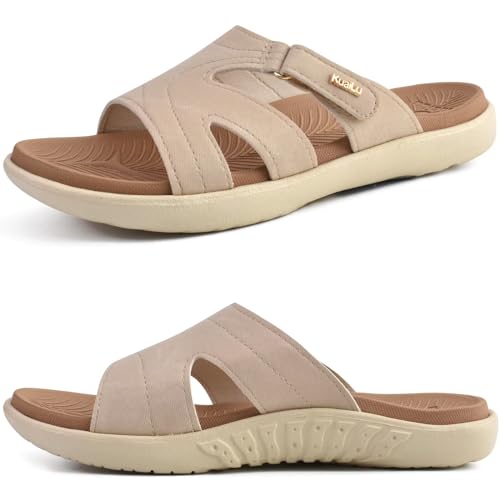
KuaiLu Women’s Orthotic Recovery Slides

KuaiLu recovery slides are built around a thick, soft sole and an orthotic-style arch. They are a practical choice for women who spend time on hard floors or want a comfortable post-walk shoe. The wide slide shape gives the foot a little breathing space. The tan color also looks more polished than a basic athletic recovery sandal.
This style can feel like a cushion under the foot, but the open heel reduces control. I prefer it for indoor use, light errands, poolside areas, and recovery after exercise. It may not be suitable for users whose neuropathy affects balance or causes frequent stumbling. Choose a secure sandal with adjustable straps when you need to walk on uneven ground.
Pros:
- Thick cushioning helps absorb hard-floor impact
- Orthotic arch design supports the middle of the foot
- Lightweight for easy daily wear
- Attractive neutral color
- Comfortable option for recovery periods
- Simple slip-on design saves time
Cons:
- Open heel gives less stability than a strapped sandal
- May not suit severe balance problems
- Thick sole can feel less flexible
- Fit may change if feet swell during the day
Women’s Wide Diabetic Hiking Sandals

This wide hiking sandal is the most practical choice here for swollen feet, wide feet, and users who need a more adjustable fit. Hook-and-loop straps can make it easier to change the fit during the day. The open upper allows airflow, while the wider shape leaves more room around the toes. That extra space can help reduce squeezing and pressure on tender areas.
I would consider this a strong candidate for people searching for the best sandals for neuropathy in feet, especially when swelling changes shoe fit. Even so, “diabetic” or “orthopedic” in a product name does not guarantee medical protection. Inspect every strap and seam, wear clean socks if advised, and check the skin after walking. For hikes, keep the route mild and choose a closed, protective shoe when rocks, heat, or sharp objects pose a risk.
Pros:
- Wide shape gives toes more room
- Adjustable hook-and-loop straps help manage swelling
- Useful for walking and light outdoor activity
- Breathable open design suits warm weather
- May reduce pressure from a tight upper
- Better fit control than a basic slide
Cons:
- Straps can still rub if positioned poorly
- Not fully protective against rocks or sharp objects
- May feel too roomy on narrow feet
- Requires careful cleaning and skin checks
My Recommendation
After comparing the group, I would start with an adjustable walking sandal rather than a massage-point model. The Bravover is the best general pick for daily comfort, while the wide women’s hiking sandal is better for swelling and fit changes. Men who want soft recovery wear may prefer HMLHML, and women who want a thick recovery slide may like KuaiLu.
Massage sandals can feel interesting, but I would treat them as optional tools, not primary neuropathy footwear. Numbness can hide pressure damage, so soft support and stable fit usually matter more than a strong foot sensation. The BraceAbility sleeve may help some users who need a toeless layer, but compression should be cleared when circulation is a concern. Product stock, sizes, colors, and prices can change on Amazon, so check the current listing before ordering.
| Best for | Why |
|---|---|
| Daily walking and general comfort | Bravover combines an open design with arch support and a more secure walking shape. |
| Swollen or wide feet | The women’s wide hiking sandal uses adjustable straps and offers more room across the foot. |
| Home recovery and soft cushioning | HMLHML and KuaiLu slides provide thick cushioning for short, easy-use periods. |
How I Choose Sandals for Neuropathy
Neuropathy changes the rules of shoe shopping. A sandal that feels fine for five minutes may create a problem after an hour. I focus first on fit, pressure control, stability, and the ability to inspect the foot. Style comes later.
Look for a soft, even footbed
A footbed should spread pressure rather than place it on one hard point. Soft foam can help reduce the shock from tile, concrete, and wood floors. However, very soft foam may allow the foot to roll or sink too much. I prefer a balanced sole that cushions the step but still feels stable.
Choose adjustable straps when possible
Feet may swell after heat, standing, travel, or activity. A fixed strap can become tight and create a pressure mark. Hook-and-loop straps are often easier to adjust than a narrow buckle. Make small changes, and do not tighten a sandal just to stop the foot from sliding.
Give the toes enough room
Toes should not press against one another or hang over the sole. A roomy toe area lets the foot spread during walking. It also makes it easier to spot redness, blisters, or changes in color. A sandal that is too wide can cause sliding, so room must come with reasonable control.
Check the sole and tread
Good traction lowers the risk of slips. This matters because neuropathy may affect balance and foot position. Look for a sole with clear tread and enough firmness for the surface you use. A smooth indoor sole may not be safe on wet pavement.
Avoid seams and rough edges
Small seams can act like a pebble inside the shoe. They may rub the skin without causing much pain, especially when sensation is low. Run a clean finger across the inside before wearing the sandal. Also check straps, glue marks, sharp edges, and any raised area near the toes.
Inspect your feet every day
The CDC and other health authorities stress regular foot care for people with diabetes and nerve problems. Look at the top, bottom, heel, and spaces between the toes. Use a mirror or ask for help if you cannot see the soles. Call a health professional for a wound, blister, swelling, warmth, drainage, or color change that does not improve.
Neuropathy Sandal Buying Guide
Shopping online can make it hard to judge a sandal. Product photos show style, but they do not show how the straps feel after a full day. I suggest measuring both feet late in the day, when swelling may be greatest. Compare those measurements with the seller’s size chart, not only your usual shoe size.
Fit matters more than the label
Terms such as “orthopedic,” “diabetic,” and “recovery” can be useful clues, but they are not a medical guarantee. The sandal still needs to match your foot shape. Your heel should sit on the footbed, and your toes should stay inside the sole. If the sandal twists, pinches, or slides, it is not the right fit.
Consider your level of sensation
If you have mild tingling, you may tolerate more styles than someone with deep numbness. Severe numbness calls for extra caution. A textured or acupressure footbed may feel pleasant but can create hidden pressure. When feeling is poor, choose smooth cushioning and inspect your skin often.
Think about where you will wear them
Home sandals do not need the same features as outdoor walking sandals. For indoor use, a light recovery slide may be enough. For sidewalks, choose better tread and a strap that keeps the foot secure. For a beach or pool, look for water-friendly materials, but still check for trapped moisture and rubbing.
Do not ignore heat and moisture
Some nerve conditions affect sweating. A sandal that traps moisture can soften the skin and make rubbing worse. Breathable straps and an open upper may help. Dry your feet well, especially between the toes, and do not wear damp sandals for long periods.
Break sandals in slowly
Do not wear a new pair for a full day right away. Start with ten to fifteen minutes indoors. Remove them and inspect your feet. Increase use only if the skin looks normal and the sandal feels secure.
Are Acupressure Sandals Safe for Neuropathy?
Acupressure sandals are not automatically unsafe, but they are not right for everyone. Their raised points place concentrated pressure under the foot. People with reduced feeling may not notice when that pressure becomes harmful. That is why I place them below smooth, cushioned sandals for most users.
Do not use massage sandals over an open wound, blister, rash, infection, or fresh surgery site. Ask a clinician before use if you have diabetes, poor circulation, severe numbness, or a history of foot ulcers. Stop at once if you see redness, bruising, swelling, bleeding, or pain that lasts after removal. A massage product should never replace medical care.
How to Wear Sandals Safely With Neuropathy
Put the sandal on while sitting down. Make sure the sole is clean and free of stones. Walk a few steps on a flat surface before going outside. Keep your stride slow until you know how the sandal behaves.
Check the foot after the first short session. Look for red lines from straps, rubbed skin, blisters, and areas that feel warmer than the other foot. If a mark remains after about twenty minutes, adjust the fit or stop using that pair. Do not cover a problem with a bandage and continue walking without finding the cause.
Rotate footwear when possible. Alternating pairs gives each sandal time to dry and lets you notice which one causes problems. Keep nails trimmed with care, and avoid walking barefoot outdoors. Neuropathy can hide small injuries, so prevention is far easier than healing a foot wound.
Who Should Ask a Doctor Before Buying?
Anyone with diabetes, circulation disease, a current foot wound, severe swelling, or major loss of feeling should ask a health professional for advice. A podiatrist can assess pressure, walking pattern, skin health, and shoe fit. A clinician can also decide whether compression or massage is suitable.
Seek prompt medical advice for a wound that is red, warm, draining, swollen, or slow to heal. Sudden weakness, severe color change, or intense new pain also needs attention. Sandals can improve comfort, but they cannot repair damaged nerves or cure the cause of neuropathy.
FAQs Of Best Sandals for Neuropathy in Feet
What are the best sandals for neuropathy in feet?
The best choice usually has soft cushioning, a stable sole, a roomy toe area, adjustable straps, and good traction. The Bravover is a strong general option, while the wide women’s hiking sandal suits swelling. Your foot shape and level of sensation should guide the final choice.
Should people with neuropathy wear open-toe sandals?
Open-toe sandals can improve airflow and reduce heat. They also leave toes exposed to bumps, sun, and sharp objects. Use them for safe settings, and choose more protective footwear outdoors or around hazards.
Are massage sandals good for nerve pain?
Some people enjoy the sensation, but massage sandals do not treat nerve damage. Their raised points may be unsafe for numb feet because they create focused pressure. Use them only with caution and medical advice when risk factors are present.
How should sandals fit swollen feet?
Choose a wide footbed with adjustable straps. The toes should not touch the edge, and the upper should not leave deep marks. Measure later in the day and recheck the fit when swelling changes.
Can sandals cure neuropathy?
No. Sandals may reduce pressure and improve comfort, but they cannot cure neuropathy. Treat the underlying condition with a qualified health professional and use footwear as part of safe daily foot care.
Final Verdict: Which Should You Buy?
For most shoppers, I would choose the Bravover orthopedic sandal for daily comfort. Choose the wide women’s hiking sandal for swelling, or HMLHML for soft recovery wear. I would use acupressure styles only with extra care.
The best sandals for neuropathy in feet should feel stable, smooth, roomy, and easy to inspect. Check fit, skin, and traction before every long walk.

Madison Clark is a footwear expert and the voice behind MyStyleGrid.com. She specializes in honest shoe reviews, style tips, and practical guides to help readers find the perfect pair for any occasion. With years of experience in blogging and content creation, Madison makes footwear knowledge simple, stylish, and easy to follow.