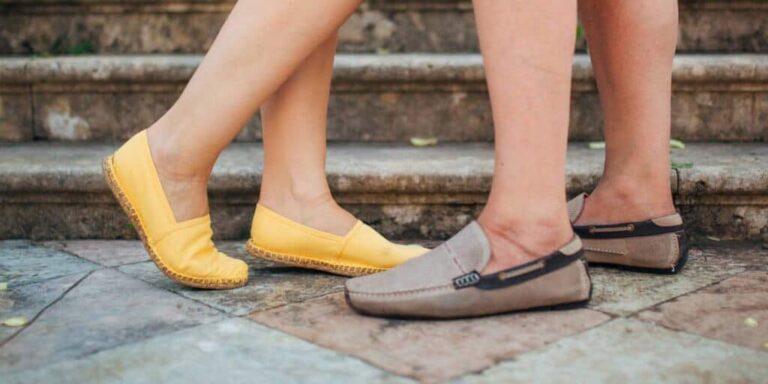
No, men’s and women’s shoe sizes are not exactly the same, even when the numbers look similar.
The question “are men and women shoe sizes the same” has a simple answer: usually, no. In the United States, women’s shoes often run about 1.5 sizes larger than men’s shoes in length, while the shape and width can also differ. This guide explains shoe size conversion, width standards, fit issues, and smart ways to choose the right pair.

Are men and women shoe sizes the same?
Men’s and women’s shoe sizes use different scales in the United States. A women’s size is often about 1.5 sizes higher than the equivalent men’s size.
For example, a men’s US 8 usually matches a women’s US 9.5 in length. This is only a starting point because brands, shoe styles, and foot shapes vary.
The answer to “are men and women shoe sizes the same” also depends on more than length. Men’s shoes often have a wider standard fit, while women’s shoes may use a narrower heel and a roomier forefoot.
A size number is like a rough map. It points you in the right direction, but it does not show every curve of the road.
Men’s and women’s shoe size conversion chart
The chart below shows a common US size conversion. It is useful for a first estimate when shopping across men’s and women’s footwear.
| Men’s US size | Women’s US equivalent |
|---|---|
| 5 | 6.5 |
| 5.5 | 7 |
| 6 | 7.5 |
| 6.5 | 8 |
| 7 | 8.5 |
| 7.5 | 9 |
| 8 | 9.5 |
| 8.5 | 10 |
| 9 | 10.5 |
| 9.5 | 11 |
| 10 | 11.5 |
| 10.5 | 12 |
| 11 | 12.5 |
| 11.5 | 13 |
| 12 | 13.5 |
This conversion is not a guarantee. Some brands use a one-size difference, while others follow the more common 1.5-size gap. Always check the brand’s own size chart when one is available.
If you ask, “are men and women shoe sizes the same,” the chart shows why the answer is no. The number changes because each sizing system starts from a different scale.

How to convert men’s shoe sizes to women’s sizes
To convert a men’s US shoe size to a women’s US size, add about 1.5 sizes.
For example:
- Start with a men’s size 9.
- Add 1.5 sizes.
- The estimated women’s equivalent is size 10.5.
To convert a women’s size to a men’s size, subtract about 1.5 sizes.
For example:
- Start with a women’s size 8.
- Subtract 1.5 sizes.
- The estimated men’s equivalent is size 6.5.
This method works best for unisex sneakers, athletic shoes, and casual shoes. It may be less accurate for boots, dress shoes, sandals, and narrow fashion styles.
The key lesson is that “are men and women shoe sizes the same” should not be answered by comparing the numbers alone. A women’s 9 and a men’s 9 do not usually have the same length.

Why shoe widths also differ
Length is only one part of shoe fit. Width can change how comfortable a shoe feels, even when the length is correct.
In standard US sizing:
• Men’s medium width is usually D.
• Women’s medium width is usually B.
• Men’s wide width is often 2E.
• Women’s wide width is often D.
• Extra-wide labels vary by brand and may include 4E or wider options.
This means a men’s shoe may feel wider than a women’s shoe with the same converted length. A woman with a broad foot may prefer a men’s sneaker. A man with a narrow foot may find a women’s model more secure.
When people ask, “are men and women shoe sizes the same,” width is one reason the answer cannot be based on size numbers alone. Two shoes can have equal inner length but feel very different across the toes, arch, and heel.
Main differences between men’s and women’s shoes
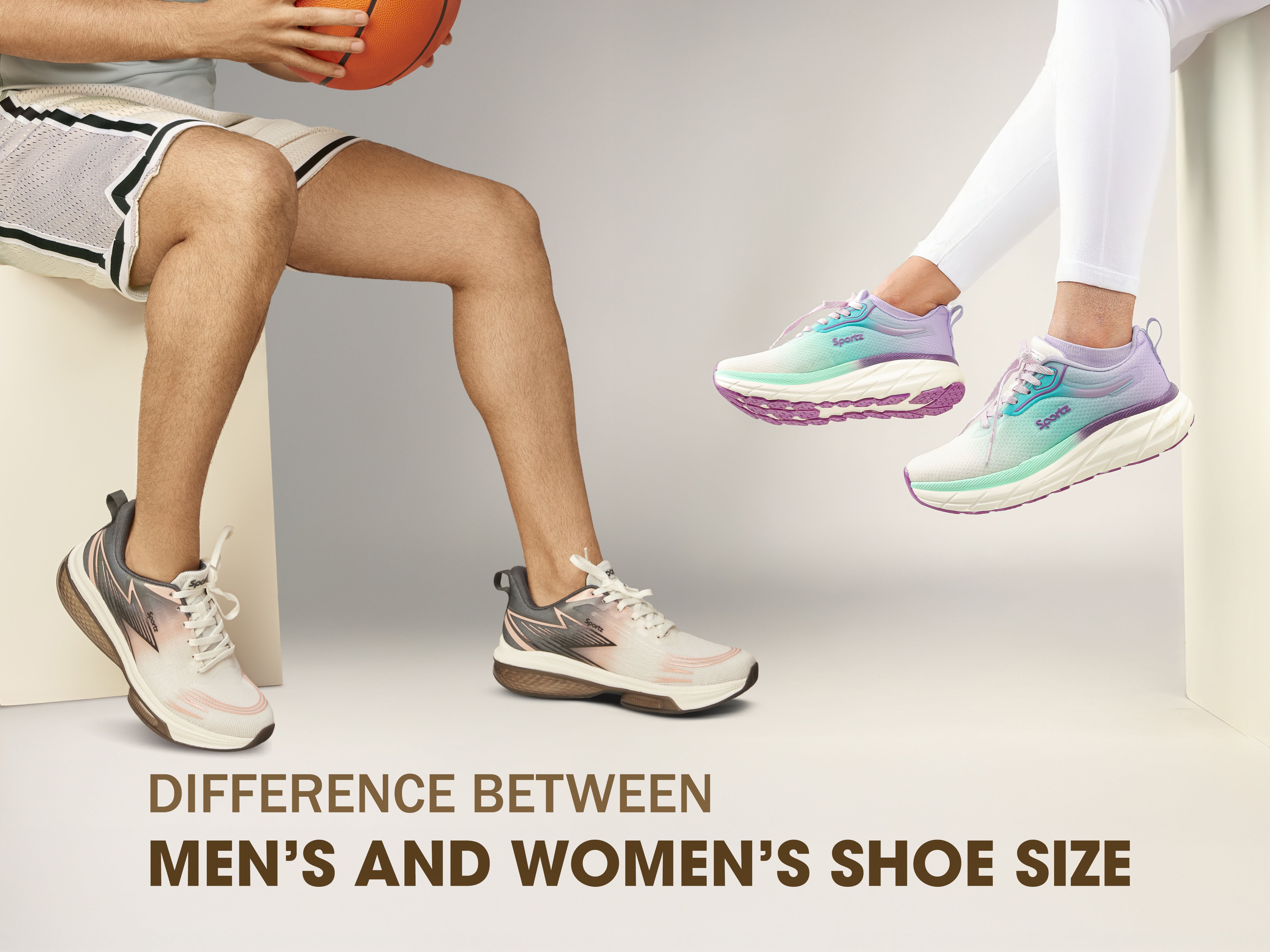
Men’s and women’s footwear is often designed around average foot shape data. These are general patterns, not strict rules for every person.
Men’s shoes
Men’s shoes often have:
• A wider standard width
• A broader toe box
• A more uniform width from heel to forefoot
• More room around the midfoot
• A heavier build in some athletic and work shoes
Women’s shoes
Women’s shoes often have:
• A narrower standard width
• A narrower heel area
• A relatively roomier forefoot in some designs
• More shape around the arch
• Lighter materials in some running and casual shoes
These differences are common, but they are not universal. A person’s foot shape matters more than the label on the box.
For instance, a man with a slim heel may get a better fit in a women’s running shoe. A woman with a wide foot may feel more comfortable in a men’s trainer. This is another reason “are men and women shoe sizes the same” has a different practical answer for each shopper.

Can men wear women’s shoes and women wear men’s shoes?
Yes. People can wear shoes made for any gender if the length, width, and shape fit well.
Many sneakers are sold as unisex products. In these cases, the main difference may be the size scale rather than a major design change. However, some women’s shoes use a narrower heel or a different upper shape, and some men’s shoes offer more room through the midfoot.
When shopping across categories, focus on:
• Your measured foot length
• Your foot width
• The shoe’s fit notes
• The brand’s conversion chart
• Your usual socks
• The activity you plan to do
A good fit should feel secure without pressure. Your toes should have room to move, and your heel should not slide excessively.
So, are men and women shoe sizes the same in unisex shoes? Not always. The shoe may be the same model, but the listed size can still follow a men’s or women’s scale.
How to measure your shoe size at home
Measuring your feet can help when a brand’s sizing is unfamiliar. Do this at the end of the day because feet often swell slightly after walking.
You will need paper, a pen, a ruler, and the socks you plan to wear.
- Place the paper on a hard floor.
- Stand on the paper with your heel against a wall.
- Trace around your foot, or ask someone to mark the heel and longest toe.
- Measure from the back of the heel to the longest toe.
- Measure the widest part of your foot.
- Repeat for the other foot.
- Use the larger foot when choosing a size.
Do not measure while sitting. Your foot spreads more when standing, so a seated measurement can lead to shoes that are too short or tight.
A useful fitting lesson is to trust your feet more than a familiar number. Shoe sizes are labels, not laws. If your left and right feet differ, choose a shoe that fits the larger foot and adjust the smaller side with lacing or an insole.

Why shoe sizes vary by brand
Shoe sizing is not perfectly standardized across all brands. Manufacturers may use different lasts, materials, toe shapes, and internal measurements.
A running shoe may feel longer than a leather dress shoe in the same labeled size. A pointed toe can reduce usable space, while a soft knit upper may stretch around the foot. Boots may need extra room for thicker socks, but sandals may require a closer fit.
Other factors include:
• The shape of the toe box
• The height of the instep
• The stiffness of the upper
• The thickness of the insole
• The shoe’s intended activity
• Differences between US, UK, and European sizing
This explains why the answer to “are men and women shoe sizes the same” can change from one brand to another. A conversion chart gives an estimate, but a brand-specific chart and customer reviews often give better guidance.

Common mistakes when converting shoe sizes
Buying the wrong size can cause blisters, pain, numbness, and poor movement. These mistakes are easy to avoid.
Comparing the same number
A men’s 8 and a women’s 8 are usually not equal. The women’s size is generally shorter in the US system.
Ignoring width
A shoe can have the correct length but still squeeze the toes or allow the heel to slip. Check width letters when available.
Using one conversion rule for every country
US, UK, and European sizes do not convert in exactly the same way. Confirm which country’s sizing system a retailer uses.
Measuring only one foot
Many people have one foot slightly larger than the other. Measure both and fit the larger foot.
Shopping by gender instead of fit
The words “men’s” and “women’s” describe a design category, not your personal foot shape. Comfort and support should guide your choice.
These mistakes show why “are men and women shoe sizes the same” is more than a yes-or-no search. The best answer includes length, width, shape, and purpose.

How to choose the right size when buying online
Online shopping removes the chance to try on shoes first, so use a careful process.
- Measure both feet.
- Compare the measurements with the brand’s chart.
- Read reviews for comments about length and width.
- Check whether the shoe runs large, small, narrow, or wide.
- Review the return policy before ordering.
- Try the shoes indoors on a clean floor.
- Walk, bend, and check your toes before removing tags.
Your longest toe should not press against the front. A small space is helpful, especially in walking and running shoes. Your heel should stay mostly in place, but it should not feel trapped or painful.
For athletic shoes, many fit specialists suggest leaving roughly half an inch of space in front of the longest toe. The exact amount depends on your activity, foot shape, and personal comfort.
Do shoe size conversions apply to boots, sandals, and athletic shoes?
The basic conversion may apply, but the best size can change by shoe type.
Running shoes often need extra toe room because feet expand during exercise. Hiking boots may need space for thick socks and downhill movement. Dress shoes can feel smaller because of firm leather and narrow toe shapes.
Sandals require a different check. Your heel should rest on the footbed, and your toes should not hang over the front. Straps should hold the foot without digging into the skin.
This is why the question “are men and women shoe sizes the same” should always include the shoe’s purpose. A size that works for casual sneakers may not work for work boots or formal shoes.
Frequently Asked Questions About Men’s and Women’s Shoe Sizes
Is a men’s size 8 the same as a women’s size 8?
No. In the US system, a men’s size 8 is commonly close to a women’s size 9.5. The exact fit can vary by brand and shoe style.
How many sizes should I add when converting men’s shoes to women’s?
Add about 1.5 sizes for a common US conversion. For example, a men’s 7 usually equals about a women’s 8.5, but check the manufacturer’s chart.
Can a woman wear men’s shoes?
Yes. A woman can wear men’s shoes if the length, width, and heel fit comfortably. Men’s shoes may work well for people who need a wider fit.
Can a man wear women’s shoes?
Yes. A man can wear women’s shoes when the shoe provides enough length and width. Women’s shoes may suit men with narrow feet or a smaller heel.
Are men’s shoes wider than women’s shoes?
Men’s standard-width shoes are usually wider than women’s standard-width shoes. In US sizing, men’s medium width is often D, while women’s medium width is often B.
Are European men’s and women’s shoe sizes different?
European sizing usually does not separate men’s and women’s scales in the same way as US sizing. However, the shoe’s width and shape can still differ by model and brand.
Should I size up when buying running shoes?
You may need a little extra room in running shoes, especially at the toe. Do not size up automatically; measure your feet and follow the brand’s running-shoe chart.
Conclusion
Are men and women shoe sizes the same? Usually not. US women’s sizes are commonly about 1.5 sizes higher than men’s sizes, and width, heel shape, and shoe design can create further differences.