The best boots for hallux rigidus have stiff soles, wide toes, firm support, and enough depth for a helpful insert.
A sore, stiff big toe can turn a simple walk into a slow, careful task. Tight boots may press on the joint, while soft soles can force the toe to bend with every step. I have found that the right boot works best when it limits painful motion, leaves room for the toes, and pairs well with a rigid carbon-fiber insert. The products below are inserts rather than boots, but they can make compatible hiking, work, and walking boots much more supportive for hallux rigidus.
Welnove Carbon Fiber Hike Support Insole

The Welnove Hike Support Insole is made for people who want firm support inside hiking or outdoor boots. Its carbon-fiber design helps reduce bending through the front of the foot. That matters because hallux rigidus often becomes more painful when the big toe must flex during each step. The long, firm plate can act like a small bridge beneath the foot and spread pressure across the shoe.
I see this model as a strong choice for trail walks, yard work, and long days in sturdy boots. It is listed in an XL size, so buyers should compare the stated measurements with their own shoe before ordering. The insole may also need a boot with enough interior height, since a rigid insert takes up some space. When fitted correctly, it can make a flexible boot feel more controlled and stable.
Pros:
- Rigid carbon-fiber support helps limit painful toe bending
- Designed with hiking and outdoor use in mind
- Useful for hallux rigidus, turf toe, and some foot injuries
- Can improve stability inside roomy boots
- May reduce forefoot strain during steady walking
- Works for men and women when the size fits
Cons:
- XL sizing may not fit smaller shoes
- Firm plates can feel too hard for people who prefer soft cushioning
- May not fit boots with a low or narrow interior
TEGA Carbon Fiber Insole for Hallux Rigidus
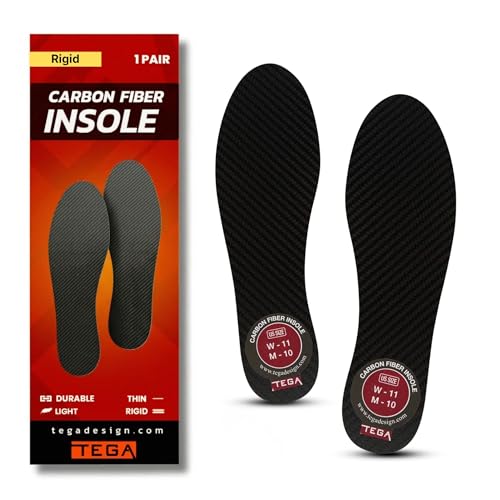
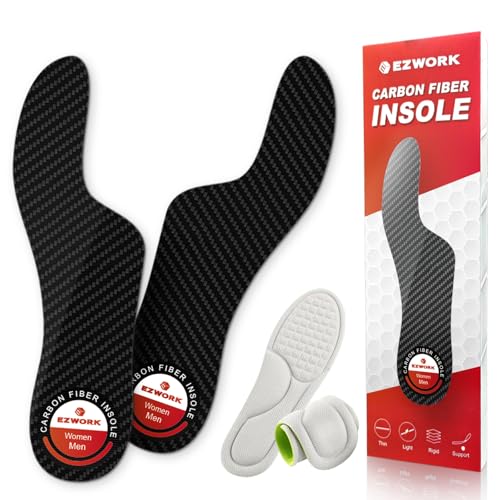
The TEGA Carbon Fiber Insole is a one-pair rigid insert built for turf toe, foot fractures, hallux rigidus, and hallux limitus. It is also marketed for sports, trekking, basketball, and running. The main benefit is simple: the plate helps keep the front of the foot from folding too much. This can be useful when a normal boot sole feels too soft or when a painful toe reacts to every push-off.
This insert is a good match for an active user who does not want to stop outdoor hobbies. I would place it in a boot that has a removable footbed and a fairly wide toe box. A tight boot can turn a helpful support into another source of pressure. Buyers should also note the listed W11.5 size and make sure the length matches the inside of the boot.
Pros:
- Made for several forefoot conditions, including hallux rigidus
- Rigid shape can reduce motion at the big-toe joint
- Suitable for sports and outdoor activities
- One-pair design supports use in a regular shoe pair
- May help a soft boot feel more stable
- Useful for people who need support without a post-op shoe
Cons:
- Only the listed size may be available in this product option
- May feel rigid during the first few wears
- Does not add much cushioning under the heel or ball of the foot
Morton’s Extension Carbon Fiber Orthotic

This Morton’s Extension Orthotic uses a rigid carbon-fiber platform to support the front of the foot. A Morton’s extension can extend under the big toe area and help reduce excessive motion at the first metatarsophalangeal joint. That design is often considered when the big toe hurts during push-off. It may also help people with turf toe, arthritis, or a stiff first joint.
The listed length is 26.5 cm, which the product identifies around a men’s size 10 or women’s size 11. That makes measuring especially important before purchase. I would choose this model for someone who wants a direct, firm approach rather than a thick, soft insole. It should work best in a boot with a removable liner and enough toe depth for the extension.
Pros:
- Morton’s extension design targets the big-toe joint
- Carbon fiber gives strong support with a thin profile
- May limit painful movement during walking
- Useful for hallux rigidus, arthritis, turf toe, and Morton’s toe
- Can fit inside many roomy walking or work boots
- Firm construction may last longer than soft foam inserts
Cons:
- One-piece design may not suit people who need a full pair
- Precise sizing is needed for a comfortable fit
- May feel too firm for users who need plush cushioning
Sunnyeah Thin Carbon Fiber Insole

The Sunnyeah Carbon Fiber Insole stands out for its thin 0.047-inch profile. That slim build is helpful when a boot already feels snug or has limited room beneath the footbed. It is designed to limit foot bending and may help relieve pressure linked with turf toe, hallux rigidus, broken toes, and arthritis. The insert is made for people who want firm control without adding a bulky layer.
I would consider this model for work boots, walking boots, and everyday shoes that cannot accept a thick orthotic. It is listed at 9.6 inches, so users must confirm the length against their shoe size. A thin plate does not mean a soft plate; this product remains rigid. Start with short wear periods so the foot can adjust and check for new pressure spots.
Pros:
- Very thin design saves interior boot space
- Helps limit bending at the front of the foot
- Useful for hallux rigidus and several toe injuries
- Can fit boots that reject thick inserts
- Low profile may reduce changes to the boot fit
- Good option for daily walking and recovery support
Cons:
- Listed length may not suit every foot size
- Provides limited cushioning because the plate is thin
- May slide if the boot footbed does not hold it securely
Titanium-Enhanced Carbon Fiber Insole

This titanium-enhanced carbon-fiber insole is sold as a one-pair insert with a 295 mm length. Its focus is strength and rigidity rather than soft comfort. A firm insert can help reduce the amount of toe flex that occurs inside a flexible boot. For hallux rigidus, that feature may make each step feel less like the joint is being forced to act as a hinge.
The 295 mm measurement makes this product more appropriate for larger feet, but buyers should still use the maker’s size guide. I would pair it with a sturdy boot that has a broad toe box and a removable insole. It may suit hiking, work, or recovery use when the user needs a durable-feeling support plate. It is not a replacement for an evaluation when pain, swelling, or walking trouble continues.
Pros:
- Sold as a pair for use in both boots
- Strong carbon-fiber construction supports limited toe motion
- Titanium enhancement may appeal to users seeking a reinforced design
- Useful for turf toe and related forefoot problems
- Good match for larger boots and larger feet when measured correctly
- May provide a stable base during hikes and work tasks
Cons:
- 295 mm length may be too large for many users
- Rigid construction may require a gradual break-in period
- Offers less cushion than a comfort-focused orthopedic insole
Small-Size Carbon Fiber Rigid Shoe Insert

This carbon-fiber insert is sized for women’s 6 to 6.5 and men’s 5 to 5.5. That smaller range fills a useful gap because many rigid inserts focus on medium or large feet. Its firm structure is intended to reduce bending through the forefoot. That can help when a small boot has enough width but not enough support beneath the big toe.
I would recommend checking the actual insert length before placing it in a favorite pair of boots. A correct fit keeps the plate from pressing into the toes or ending in the wrong part of the arch. This model may suit smaller-footed users with hallux rigidus, turf toe, or a healing toe injury. As with any rigid support, comfort depends on the boot shape, sock thickness, and the user’s foot condition.
Pros:
- Designed for smaller women’s and men’s shoe sizes
- Rigid plate can reduce painful forefoot bending
- Useful for hallux rigidus and turf toe support
- May fit smaller hiking and work boots better than XL inserts
- Lightweight design does not require a bulky cushion layer
- Can give a soft boot a firmer walking platform
Cons:
- Limited size range excludes many users
- May need trimming only if the maker permits it
- Firm support may not feel comfortable without a gradual adjustment period
My Recommendation
These are not boots by themselves, so I judge them by how well they can improve a compatible boot. For hallux rigidus, I look for a stiff sole, a roomy toe box, enough depth, and a removable footbed. The insert should sit flat and should not push the big toe upward or squeeze the sides of the foot. A rigid insert cannot fix a poor boot fit, but it can make a flexible boot act more like a stable walking shoe.
The Welnove model is my top pick for outdoor users who want hiking-focused support and need an XL size. The TEGA is a practical choice for active users who want a rigid insert for trekking or sports. The Morton’s extension is the most targeted option for people who want support under the big-toe area. Sunnyeah is the best thin option, while the titanium-enhanced model suits larger feet and the final insert is best for small feet.
| Best for | Why |
|---|---|
| Hiking and outdoor work | Welnove offers firm support for roomy outdoor boots and long walks. |
| Small or tight-fitting boots | Sunnyeah uses a thin profile that takes up less interior space. |
| Targeted big-toe support | The Morton’s extension focuses support beneath the first toe joint. |
What Is Hallux Rigidus?
Hallux rigidus is a stiff and often painful joint at the base of the big toe. The joint is called the first metatarsophalangeal joint. It helps the foot push off when a person walks, climbs stairs, or runs. When the joint loses motion, each step can feel tight, sharp, or blocked.
Some people notice pain on top of the joint. Others feel pain beneath the toe or see a bump near the joint. Stiffness may be worse after rest, in cold weather, or after a long day on the feet. Shoes can make the problem worse when they bend easily or press on the top and sides of the joint.
Hallux rigidus is not the same as a bunion, although both conditions affect the big-toe area. A bunion often changes the toe’s alignment toward the smaller toes. Hallux rigidus mainly involves reduced motion and joint wear. A person can have both conditions, so a foot exam is useful when symptoms are not clear.
How Boots Can Help Hallux Rigidus
The best boots for hallux rigidus do not force the big toe to bend deeply. A stiff outsole can reduce motion during the push-off phase. A rocker sole can also help the foot roll forward without asking the toe joint to do all the work. These features may lower stress during walking, though they do not reverse joint damage.
A wide toe box is just as important. The toes should spread without touching the sides of the boot. The upper should not press on a bump or stiff joint. Soft leather, flexible fabric, or stretch panels may feel better than hard materials that break in directly over the sore area.
Boot height matters too. An ankle-height boot may be enough for daily walking, while a taller hiking boot can add ankle control on uneven ground. Extra height is not always better. A tall boot that is heavy, narrow, or hard to lace may increase fatigue and change the way a person walks.
Key Features to Look For in the Best Boots for Hallux Rigidus
Rigid or Rocker-Style Sole
A sole that bends at the big toe can increase joint movement. For that reason, I favor a stiff sole or a rocker shape. The sole should still feel stable and safe, not so stiff that it makes balance difficult. A test walk on a flat floor can reveal whether the boot rolls smoothly or catches at the toe.
Wide and Tall Toe Box
Width alone is not enough. The toe box also needs vertical space so the top of the boot does not rub the joint. Try boots with the socks you plan to wear. Make sure the big toe does not touch the front when you walk downhill or go down stairs.
Removable Footbed
A removable footbed gives you room to add a carbon-fiber insert. It can also let you test the boot with and without the original liner. If the boot has a fixed, thick footbed, an insert may raise the foot too much. That can create pressure across the top of the toes.
Stable Heel and Midsole
A stable heel can help the foot stay centered. Look for a heel counter that holds the rear of the foot without rubbing the Achilles tendon. A supportive midsole may also reduce excess foot motion. Still, the boot should not feel like a hard block under every part of the foot.
Good Lacing and Adjustability
Laces let you change pressure as the foot swells. A boot with a two-zone lace system can hold the heel while leaving more room over the forefoot. Quick hooks may make the boot easier to use, but they should not create a pressure point. Avoid tying the lower laces so tightly that they press the top of the big-toe joint.
Enough Room for Socks and Inserts
Winter socks and rigid inserts both take up space. A boot that fits perfectly with a thin sock may become tight with a wool sock. I suggest measuring the foot late in the day, when it is often at its largest. Leave enough room to move the toes without letting the heel slide.
Why Carbon-Fiber Inserts May Help
Carbon fiber is light and firm. A carbon-fiber insert can limit bending under the forefoot. This may reduce the amount of movement at a painful big-toe joint. It can also spread some load across the sole of the foot, depending on the shape and fit.
That does not mean every person with hallux rigidus needs a rigid insert. Some users need a custom orthotic, a softer insole, or a medical shoe. Others may feel worse if a plate is too long, too narrow, or placed in a boot with little room. The goal is controlled comfort, not maximum hardness.
I recommend a slow start. Wear the insert at home for 15 to 30 minutes. Check the skin and note any new pain. If it feels acceptable, add short outdoor walks before using it for a full work shift or long hike.
Boot Types That Often Work Well
Hiking Boots
Hiking boots can work well when they have a stiff sole, a broad front, and a secure heel. They also provide traction on uneven ground. Choose a pair that bends near the midsole rather than directly under the big toe. A removable insole is a major advantage when adding support.
For light trails, a mid-height hiking boot may offer enough stability without excess weight. For rough terrain, a stronger boot can reduce twisting. Yet heavy boots may tire the legs, so match the boot to the trail and your activity level.
Work Boots
Work boots need more than a safety toe. The toe cap must leave enough space around the big toe. Some safety boots taper sharply behind the cap, which can squeeze the forefoot even when the stated size seems correct.
Look for a flat, stable platform and a sole that does not fold at the toe. Waterproof materials may be useful, but stiff waterproof uppers need careful fitting. Try them late in the day with work socks before committing to a long shift.
Walking Boots
Walking boots with a rocker sole can make forward motion easier. They are often lighter than work boots and may have softer collars. This can make them useful for daily errands and casual walks.
Do not confuse a soft, flexible sole with comfort for hallux rigidus. A soft sole may feel pleasant at first but still allow too much toe movement. I prefer a sole that feels firm under the forefoot and smooth during the roll forward.
Winter Boots
Winter boots can be helpful when they combine a roomy toe box with a firm sole. Insulation and thick socks make sizing more difficult. Try the boots with your cold-weather socks and any insert you plan to use.
Traction also matters. A painful toe can affect balance, especially on ice. A stable tread and secure heel may help, but no boot removes the need for care on slippery surfaces.
Boots and Features I Would Avoid
I would avoid pointed boots, narrow fashion boots, and shoes that press directly on the top of the big-toe joint. I would also be cautious with very flexible minimalist boots. They may allow the joint to move more than it can comfortably handle.
Thin soles with little protection can be hard on rocky ground. High heels shift weight toward the forefoot and may increase pressure near the big toe. Slip-on boots can work for some people, but they may lack the heel control needed for long walks.
Another warning sign is a boot that feels better only when the foot is held in an unusual position. Comfort should come from space and support, not from squeezing the foot into place. If numbness, burning, or sharp pain starts, remove the boot and reassess the fit.
How to Fit Boots for a Stiff Big Toe
Start by measuring both feet while standing. Most people have one foot that is slightly longer or wider. Use the larger foot when choosing a size. Measure late in the day and wear the socks used for the activity.
Next, check the toe box. You should be able to wiggle the toes. The big toe should not touch the front while walking. Walk down a gentle slope or use stairs if the store allows it. If the toes slide forward, the boot may be too loose at the heel or too short.
Check the flex point by holding the boot at both ends and gently bending it. The boot should not fold easily at the big-toe joint. A firm sole is often better for hallux rigidus, but the boot should still roll forward in a controlled way.
If using an insert, remove the factory footbed first when possible. Put the insert in place and test the boot with normal socks. Look for pressure on the top of the foot, heel lift, or a cramped toe box. These signs mean the boot may not have enough volume.
How to Use a Rigid Insert Safely
Do not wear a new rigid insert for a full day at once. Start with a short period and increase slowly. Your muscles may need time to adjust to the new support. A gradual change can also reveal whether the insert is the right length.
Keep the insert flat. Do not fold it or place it on top of a thick factory insole unless the boot has enough space. If the insert has a rough edge, check whether it can be trimmed according to the manufacturer’s instructions. Never trim a plate in a way that removes its support area.
Inspect your skin after each early use. Redness that fades soon may be normal during adjustment, but blisters, lasting marks, swelling, or numbness are not signs to ignore. Stop using the insert and seek advice if pain gets worse.
When to See a Foot Specialist
See a medical professional if the pain limits normal walking, keeps returning, or comes with swelling and warmth. A specialist can check joint motion, alignment, nerve function, and footwear needs. An exam can also rule out a fracture, gout, infection, or another problem that may look like hallux rigidus.
Medical care may include activity changes, physical therapy, medication advice, shoe changes, or an orthotic. In more advanced cases, a clinician may discuss injections or surgery. A boot or insert can support comfort, but it should not delay care for severe or unexplained symptoms.
Seek prompt care for sudden severe pain, major swelling, color change, loss of feeling, or an inability to bear weight. People with diabetes, poor circulation, or reduced sensation should be especially careful with new footwear. Small pressure spots can become serious when sensation is reduced.
How I Evaluate the Best Boots for Hallux Rigidus
I start with motion control. The boot or insert should reduce painful bending without making walking feel unsafe. Then I check the toe box, since even a strong sole cannot help if the boot squeezes the joint.
I also consider the intended use. A hiking insert may need a different fit from a casual walking insert. Weight, traction, water protection, lacing, and interior volume all matter. The best boots for hallux rigidus are not the same for every person or activity.