The best women’s hiking boots for Achilles tendonitis combine heel support, a stable fit, cushioning, and enough room to move.
A long trail can feel great until each step pulls at the sore cord above your heel. Poor boots may rub, slip, or force your ankle to bend too far. I look for boots that hold the heel steady, soften impact, and work with an orthotic when needed. The picks below include hiking boots, trail shoes, and support products that can help women walk with more comfort. Always check with a medical professional if pain is sharp, sudden, or getting worse.
How I Chose the Best Women’s Hiking Boots for Achilles Tendonitis
Achilles tendonitis needs a careful approach. A boot cannot heal an injured tendon by itself. Still, the right footwear can reduce common stress points during hikes, walks, and daily tasks.
I focus on five main details. First, the heel must feel secure without a hard edge pressing into the tendon. Second, the midsole should soften each foot strike. Third, the outsole should grip dirt, rock, and wet ground. Fourth, the boot should support the arch without forcing the foot into an awkward shape. Finally, the design should allow a natural stride.
A small heel rise can feel helpful for some people because it may reduce the amount of ankle bend. However, every foot is different. A very stiff boot can protect the ankle on rough ground but may feel harsh during long walks. A soft trail shoe can feel smooth but may not offer enough support on loose slopes.
I also check fit, weight, waterproofing, breathability, and insert space. Women with Achilles pain often need to size with hiking socks. The heel should not lift much, and the toes should not touch the front. If a boot causes rubbing at the tendon, stop using it before a small hot spot becomes a larger problem.
Women’s Orthopedic Waterproof Trail Sneakers

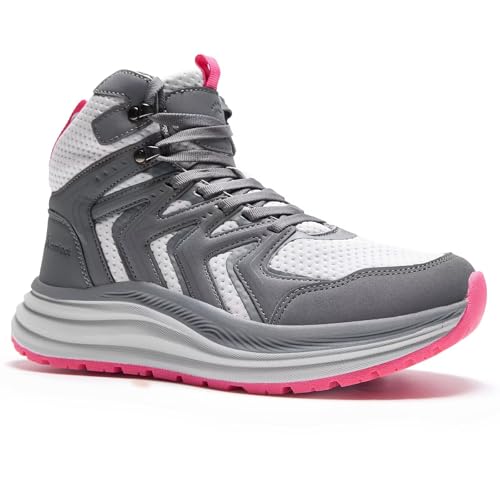
This orthopedic trail sneaker is built for women who want hiking comfort without the bulk of a traditional boot. Its design focuses on arch support, heel cushioning, and a stable ankle feel. The waterproof build can help keep feet dry on damp paths and light rain days. The gray color also works well for walking, travel, and daily wear.
The ankle boot shape may help limit unwanted side motion on uneven ground. Its room for an orthotic is useful if a podiatrist has suggested an insert. I would pair it with moisture-wicking socks and break it in on short walks first. Keep in mind that waterproof shoes can feel warmer than mesh shoes during hot weather.
Pros:
- Waterproof design suits wet trails and rainy walks
- Arch support may reduce foot fatigue
- Heel cushioning helps soften repeated impact
- Ankle height offers added stability
- Orthotic-friendly design supports custom inserts
- Useful for hiking, work, travel, and walking
Cons:
- May feel warm in summer conditions
- Waterproof materials may need more break-in time
- Fit may feel snug for very wide feet
NORTIV 8 Women’s Waterproof Hiking Boots

The NORTIV 8 waterproof hiking boot is a practical choice for women who hike in changing weather. It has a classic trekking shape with ankle coverage and a protective outsole. The black and pink color scheme adds a bright touch without looking too flashy. This boot is designed for trail use, so it offers more structure than a basic walking sneaker.
I like this style for hikers who need steady footing on rocky or muddy paths. The higher collar can help keep the heel and ankle from sliding inside the shoe when the laces are set well. It is important to lace the boot firmly but not so tight that it presses on the Achilles area. Before a long hike, test it on stairs and short slopes to check for rubbing.
Pros:
- Water-resistant construction helps on wet trails
- Higher ankle design supports a steady fit
- Trail outsole helps improve traction
- Protective build suits rocky ground
- Bright color details improve outdoor style
- Good option for moderate hikes and day trips
Cons:
- May feel firmer than a lightweight trail shoe
- Requires careful lacing around the ankle
- Can feel warm during hot-weather hikes
PROFOOT Achilles Tendonitis Heel Cups

The PROFOOT heel cup is not a hiking boot, but it can make a big difference when a current pair of boots feels too flat. It is made for women’s shoe sizes 6 through 10 and focuses on heel support and alignment. The cup sits under the heel and may help reduce direct impact during walking. It can also provide a small lift that some people find more comfortable with Achilles soreness.
This insert works best in shoes with enough internal space. I would place it beneath the existing removable insole only if the boot has room, or follow the maker’s fitting instructions. A heel cup that slides can create more trouble than it solves, so check its position after a few minutes of walking. Because inserts change the shoe angle, introduce them slowly rather than wearing them for a full-day hike at once.
Pros:
- Designed specifically for Achilles tendon support
- Fits women’s sizes 6 through 10
- May soften heel impact on hard ground
- Can improve comfort in existing hiking shoes
- Lightweight and easy to carry as a spare
- Useful for walkers who do not need a new boot
Cons:
- Does not replace a supportive hiking boot
- Needs enough room inside the shoe
- May feel unusual during the first few walks
Columbia Women’s Newton Ridge Plus Waterproof

The Columbia Newton Ridge Plus is a well-known style for women who want a sturdy boot with a classic outdoor look. Its waterproof build is useful for muddy paths, wet grass, and light snow. The leather-like upper and supportive shape provide more protection than a low trail runner. The Elk and Mountain Red color also gives the boot a warm, traditional hiking style.
This boot may suit hikers who value stability and protection over an ultra-light feel. The sole is made for varied ground, while the lace system lets you adjust the heel hold. I recommend wearing medium hiking socks and checking that the collar does not touch the sorest part of the tendon. It may take several short walks to soften the upper before a full day on the trail.
Pros:
- Waterproof design helps protect feet from moisture
- Durable upper suits regular outdoor use
- Stable sole supports uneven trail surfaces
- Protective toe area helps on rocky paths
- Classic look works for hiking and casual wear
- Good choice for cool and wet conditions
Cons:
- Heavier than many lightweight hiking shoes
- Upper may need a longer break-in period
- May feel stiff for short urban walks
NORTIV 8 Women’s Lightweight Ankle Hiking Boots

The lightweight NORTIV 8 ankle boot targets hikers who dislike heavy footwear. Its shorter, lighter shape can feel less tiring during long walks and easy day hikes. The khaki color is simple and easy to pair with outdoor clothing. An ankle boot can also offer more protection than a sneaker while keeping the stride fairly flexible.
For Achilles tendonitis, lower weight can matter because tired legs often change the way a person walks. This boot may work well on maintained trails, park paths, and travel days. I would not expect a light boot to feel as protective as a rigid mountain boot on steep, rough terrain. Check the heel fit before buying, since too much movement can lead to extra rubbing.
Pros:
- Lightweight feel reduces leg fatigue
- Ankle height gives more coverage than a sneaker
- Flexible design supports a natural walking motion
- Useful for easy hikes and travel
- Neutral khaki color suits many outfits
- Often easier to break in than a heavy boot
Cons:
- May offer less protection on rough mountain trails
- Light materials may not feel as warm in cold weather
- Heel hold depends on careful lacing
Modvel Foot and Ankle Brace Socks

The Modvel brace sock adds compression around the foot and ankle. It is a useful companion for people who already own comfortable hiking boots but want extra support. The sleeve-style design is less bulky than a rigid brace. It may help the ankle feel more secure during walks, exercise, and everyday movement.
Compression should feel snug, not painful or numb. I would wear it under a hiking sock only if the boot still has enough room and the fabric does not create pressure points. This type of support does not replace rest, a proper diagnosis, or a gradual return to activity. It may be especially useful for mild support needs when paired with one of the more stable boots in this guide.
Pros:
- Provides light compression around the ankle
- Fits under many hiking boots
- Less bulky than a hard ankle brace
- May improve the feeling of ankle stability
- Useful for walking, running, and daily activity
- Easy to pack for travel or trail use
Cons:
- Does not provide the same support as a rigid brace
- Can feel tight in a narrow boot
- Compression may not suit every user
NORTIV 8 Women’s Waterproof Arch Support Boots

This NORTIV 8 hiking boot combines waterproof coverage with built-in arch support. It is aimed at women who want a supportive option for wet trails and outdoor chores. The ankle design gives the foot a more held-in feel than a casual sneaker. The khaki finish has a clean look for both trail days and casual use.
Arch support can help reduce foot strain when the foot rolls inward or becomes tired, though it should never cause sharp pressure. The waterproof upper is useful in rain, but it may reduce airflow in warm weather. I suggest testing the boot with the socks and inserts you plan to use on the trail. A snug heel, flexible forefoot, and enough toe room are more important than choosing a very tight fit.
Pros:
- Waterproof build suits wet outdoor conditions
- Built-in arch support helps reduce foot fatigue
- Ankle coverage adds stability on uneven ground
- Protective shape works for hiking and outdoor work
- Khaki color looks practical and versatile
- Room may allow use with some foot inserts
Cons:
- May feel warm during summer hikes
- Arch shape may not suit every foot
- Needs a careful fit check around the heel
Modvel Compression Ankle Sleeve
This Modvel ankle sleeve is another low-profile support choice for women with mild ankle discomfort. It can be worn during walking, training, or daily tasks. The stretch design is easy to put on and does not use bulky straps. That makes it a useful layer under hiking boots when a little compression feels better.
I see this product as an accessory rather than a stand-alone answer for Achilles tendonitis. It may help some users feel more aware of ankle position, but it cannot correct a poor boot fit. Make sure the sleeve lies flat and does not bunch behind the heel. If you notice tingling, cold toes, or increased pain, remove it and reassess the size.
Pros:
- Low-profile shape fits under many boots
- Stretch fabric allows easy movement
- Light compression may support daily activity
- Simple design has no hard parts
- Useful for travel, walks, and light exercise
- Easy to carry in a hiking pack
Cons:
- Offers less control than a structured ankle brace
- May roll or bunch if the size is wrong
- Can add warmth inside a waterproof boot
What Features Matter Most for Achilles Tendonitis?
Heel fit and collar comfort
The back of the boot should hold your heel in place without digging into the tendon. A padded collar can help, but padding alone does not guarantee comfort. Look for a shape that sits around the ankle rather than pressing directly on the sore area.
When trying boots on, walk up and down a slight incline. This exposes heel lift and collar pressure better than standing on a flat floor. Your heel may move a little, but it should not slide with every step.
Moderate cushioning
A cushioned midsole can reduce the harsh feel of pavement, roots, and packed dirt. However, very soft foam may make the foot wobble. I prefer a balanced midsole that feels forgiving but still gives a stable platform.
People with Achilles tendon pain should avoid judging cushioning by pressing the shoe with one finger. Walk in it instead. A boot can feel soft in hand yet feel unstable under body weight.
A supportive but natural arch
Arch support should meet the foot in a comfortable place. If it feels like a lump under the arch, the boot may not match your foot shape. Some people need a custom orthotic, while others do well with the factory footbed.
Removable insoles are valuable because they create space for a medical insert. They also make it easier to replace a worn footbed. Always check how much room remains after adding an insert and hiking socks.
Heel-to-toe drop
The heel-to-toe drop describes the height difference between the heel and forefoot. A small amount of lift may reduce ankle bend for some hikers. It is not a cure, and a sudden change can create new strain.
If you switch from flat shoes to raised boots, increase wear time slowly. Your calf and foot muscles need time to adapt. A physical therapist can help you choose a safe setup if symptoms continue.
Traction and stability
Good traction helps prevent slips. That matters because a sudden slide can load the Achilles tendon quickly. Look for a rubber outsole with a clear tread pattern suited to your usual trail.
A very aggressive outsole may feel awkward on smooth floors. That is normal for a trail boot, but it is another reason to choose footwear based on where you plan to use it.
How to Fit Hiking Boots When Your Achilles Hurts
Shop later in the day if possible. Feet often swell after hours of activity, so a late-day fit gives a more useful result. Wear the socks you plan to hike in.
Leave about a thumb’s width between your longest toe and the front of the boot. Your toes should move freely, but your foot should not slide forward on descents. Tie the lower laces snugly, then adjust the upper laces to hold the ankle without squeezing it.
Walk for at least ten minutes. Check the heel, tendon, arch, little toe, and ball of the foot. Any sharp rub is a warning sign, not something to ignore.
If the boot feels good but the heel still moves, try a different lacing pattern or a thinner sock. Do not solve major heel lift by overtightening the collar. That can create pressure near the Achilles tendon.
Boots, Insoles, and Ankle Sleeves: What Should You Use?
A supportive boot is the foundation. It protects the foot and gives the outsole a chance to grip the trail. An insole can then fine-tune arch and heel comfort.
A heel cup may help when the boot feels too flat or when hard ground causes heel impact. It will not fix a boot that rubs, twists, or slips. Also, adding an insert can make the boot too tight.
An ankle sleeve adds light compression and body awareness. It may fit people who want support without a hard brace. Yet compression products vary in feel, and they should never cause numbness or color changes.
I would start with the simplest comfortable setup. Choose a well-fitting boot first. Add one accessory at a time so you can tell what helps and what creates pressure.
How to Break In Hiking Boots Safely
Wear the boots indoors for 20 to 30 minutes. Check for hot spots after each session. If the skin turns red in one place, change the sock or stop wearing the boot until you solve the fit.
Next, take a short walk on a level surface. Avoid a steep trail for the first outing. Then add small hills and longer walks over several sessions.
Do not soak leather or synthetic boots to speed break-in. That old trick can damage materials and may not soften the areas that matter. Slow use works better and gives your feet time to adjust.
Carry blister tape, spare socks, and a small foot-care kit on the first few hikes. Prevention is easier than treatment once pain begins.
My Recommendation
For most women seeking the best women’s hiking boots for Achilles tendonitis, I would start with the Women’s Orthopedic Waterproof Trail Sneakers. They offer a useful mix of heel cushioning, arch support, waterproof coverage, and a lighter trail feel. They may suit women who want one pair for walking, easy hikes, work, and travel.
For rougher trails, the Columbia Newton Ridge Plus is the stronger pick for protection and stability. It is a better match for hikers who accept extra weight in exchange for a more traditional boot structure. The NORTIV 8 waterproof models are practical value choices for wet paths, while the lightweight NORTIV 8 is better for easy trails and long travel days.
The PROFOOT heel cup and Modvel sleeves are add-ons, not substitutes for a good boot. They may help fine-tune comfort when the base shoe already fits well. Product stock, colors, sizes, and prices can change, so check the current Amazon listing before ordering.
| Best for | Why |
|---|---|
| Best overall comfort | The orthopedic waterproof trail sneaker blends cushioning, support, and a lighter feel. |
| Best for rough trails | The Columbia Newton Ridge Plus offers a sturdy build, ankle coverage, and strong trail protection. |
| Best support add-on | The PROFOOT heel cup may improve heel comfort inside a properly fitting hiking shoe. |
FAQs Of Best Women’s Hiking Boots for Achilles Tendonitis
Can hiking boots help Achilles tendonitis?
They may reduce irritation by improving heel stability, cushioning impact, and limiting unwanted foot motion. Boots cannot heal the tendon alone. Rest, gradual activity, and professional care may also be needed.
Should hiking boots have a raised heel for Achilles pain?
A modest heel rise may feel more comfortable for some people because it reduces ankle bend. Do not make a sudden change to a much higher heel. Ask a physical therapist or podiatrist if you are unsure.
Are waterproof boots good for Achilles tendonitis?
Waterproof boots can work well if they fit correctly and have enough cushioning. They may feel warmer and less flexible than breathable trail shoes. Choose waterproofing based on your climate and trail needs.
Can I use heel cups inside hiking boots?
Yes, if the boot has enough room and the cup stays in place. Add it slowly and check for new pressure. Stop if it causes pain, numbness, or more heel movement.
When should I stop hiking with Achilles pain?
Stop if pain becomes sharp, your walking pattern changes, swelling increases, or the tendon feels weaker. Seek medical advice for severe pain, a sudden pop, or trouble pushing off the foot.
Final Verdict: Which Should You Buy?
The orthopedic waterproof trail sneaker is my top pick for the best women’s hiking boots for Achilles tendonitis because it balances support, cushioning, and daily comfort. Choose the Columbia for rough trails, the lightweight NORTIV 8 for easy hikes, and PROFOOT for added heel support.
The right fit matters more than a brand name. Start slowly, use supportive socks, and check with a clinician when pain does not improve.
Madison Clark is a footwear expert and the voice behind MyStyleGrid.com. She specializes in honest shoe reviews, style tips, and practical guides to help readers find the perfect pair for any occasion. With years of experience in blogging and content creation, Madison makes footwear knowledge simple, stylish, and easy to follow.