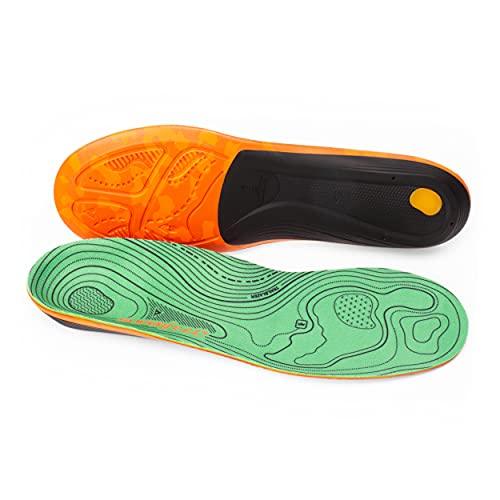
The best insoles for Crispi boots add firm arch support, shock control, comfort, and a better fit for long days outdoors.
Crispi boots are built for hard miles, but even a great boot can feel rough when the footbed does not match your arch. I know the feeling: your heel feels tired, your forefoot burns, or your feet ache after a long hike. The right insole acts like a small suspension system under your feet. It can reduce pressure, improve boot fit, and help your legs feel fresher at the end of the day. I reviewed these options for hiking, hunting, work, flat feet, plantar fasciitis, and heavy daily use. Fit matters most, so always check the size chart and boot volume before buying.
Superfeet Hike Cushion Insoles

Superfeet Hike Cushion Insoles are the most natural match for Crispi hiking and hunting boots in this group. They use a medium-to-high arch shape, so they can give the foot a steady platform without feeling like a soft foam pad. The cushioning is useful on rocky ground, steep descents, and long forest roads. I also like that the design focuses on both comfort and foot control.
These insoles make sense when your Crispi boots already fit well but need more support under the arch. The cushion can take some sting out of repeated heel strikes while the structured base helps limit excess foot motion. They may feel firm during the first few wears, so I suggest starting with short walks. Give your feet time to adjust before taking them on a full-day hunt.
Pros:
- Strong match for hiking and hunting boots
- Medium-to-high arch support
- Useful cushion for rocky trails
- Helps create a stable foot platform
- Good choice for long outdoor days
- Offers more structure than a basic foam insole
Cons:
- May feel too firm for low arches
- Can reduce toe room in snug Crispi boots
- Needs a short break-in period
Dr. Scholl’s Advanced Pain Relief

Dr. Scholl’s Advanced Pain Relief Insoles target people who spend many hours on their feet. The product is made for work shoes and boots, with shock absorption and arch support at the center of the design. Its listed weight capacity reaches up to 340 pounds, which gives larger users a reason to consider it. In a roomy pair of Crispi boots, this insole can add comfort without requiring a specialty insert.
I would look at this option if heel pain, arch fatigue, or long work shifts are your main concern. The cushioning feels more comfort-focused than trail-focused, so it may suit mixed use better than technical mountain hikes. You still need to check the trimmed size and boot fit. A thick insert can lift the heel and make the boot feel tighter across the instep.
Pros:
- Designed for work shoes and boots
- Strong shock-absorbing focus
- Supports users up to the listed 340-pound limit
- Helpful for long shifts and daily standing
- Arch support may ease common foot fatigue
- Easy option for users who want broad availability
Cons:
- May be too cushioned for tight Crispi boots
- Not a custom medical orthotic
- Some users may prefer a firmer hiking platform
WalkHero Heavy Duty Boot Insoles
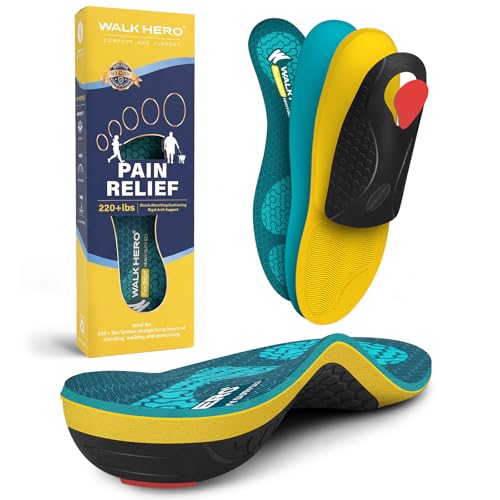
WalkHero Heavy Duty Insoles are aimed at people who need a firm insert for work boots and outdoor footwear. The product is listed for users over 220 pounds, so it focuses on durable support rather than a thin, barely-there feel. That can work well in Crispi boots with enough internal space. The orthopedic shape may also help users who feel that flat factory footbeds offer little support.
In practical use, a heavy-duty insole should spread pressure across more of the foot instead of letting the heel take every impact. That benefit matters when you carry a pack, stand on hard floors, or walk over uneven land. I would pair these with roomy Crispi boots and supportive socks. If your boots already feel tight, the added structure may create pressure on the top of the foot.
Pros:
- Made for heavy-duty work boot use
- Listed support for users over 220 pounds
- Useful for flat factory footbeds
- Firm structure can improve foot stability
- Good for work, walking, and outdoor chores
- May spread pressure across the foot
Cons:
- Needs enough boot volume
- May feel firm under sensitive feet
- Less trail-specific than a dedicated hiking insole
Hiking Boot Arch Support Insoles
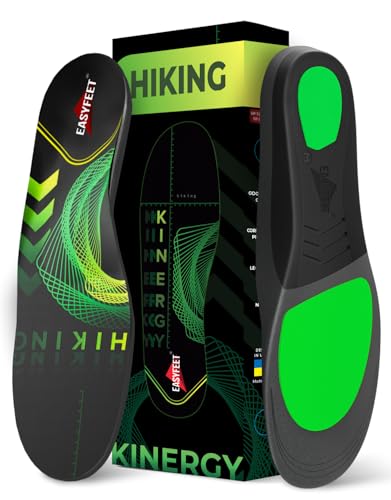
These hiking boot insoles offer a simple way to add arch support to Crispi footwear. They are made for men and women, which makes them useful for shoppers who want a general hiking insert rather than a work-only model. The focus is on support under the arch and comfort during walks. They can be a sensible low-cost starting point when the stock insole feels too flat.
I see this model as a flexible choice for casual hikers, new boot owners, and people who want to test a supported footbed. It may help reduce the tired feeling that builds after miles on hard ground. Still, a generic hiking insole cannot solve every foot problem. Make sure the arch lands under your natural arch, not behind it or too far forward.
Pros:
- Made for hiking boots
- Provides added arch support
- Suitable for men and women
- Useful upgrade from a flat stock footbed
- Good starting choice for casual hikers
- Can suit everyday outdoor walking
Cons:
- Fit and support may vary by foot shape
- May not offer enough support for severe pain
- Could require trimming for a precise fit
Heavy Duty 230+ Pound Orthotics

This heavy-duty support insole is designed for users over 230 pounds and includes medium arch support. That middle-ground arch shape can suit many people who do not need an especially high profile. The insert also focuses on plantar fasciitis support and shock absorption. In a Crispi boot with a removable footbed, it can provide a more stable base for daily walking or outdoor work.
The main appeal is balance. You get more support than a soft comfort liner, but the medium arch should feel less aggressive than a high-arch model. I would consider it for flat feet, moderate arch fatigue, or work that keeps you moving for hours. As with any support insole, pain that persists or worsens deserves an evaluation by a qualified health professional.
Pros:
- Listed for users over 230 pounds
- Medium arch suits many foot shapes
- Focuses on plantar fasciitis comfort
- Provides shock absorption under each step
- Useful for work boots and outdoor boots
- May suit flat or low arches better than a high arch insert
Cons:
- May feel bulky in close-fitting boots
- Medium support will not suit every arch
- May need a gradual break-in period
Welnove 220+ Pound Support Insoles

Welnove 220+ Pound Support Insoles are another heavy-duty option for Crispi boots. They are built around plantar fasciitis support and may appeal to users who want a stronger insert for work or long walks. The product is listed in a large size, so shoppers should pay close attention to the size range before ordering. A good size match helps the heel sit in the correct cup and keeps the arch in the right place.
I like this type of insole for users who need more support than standard foam can provide. It can help the boot feel less flat and may reduce the harsh feel of hard surfaces. However, heavy support is not the same as soft comfort. If you prefer a plush, flexible step, this design may take time to feel natural.
Pros:
- Listed for users over 220 pounds
- Made with plantar fasciitis support in mind
- Useful for work and daily walking
- Can add structure to roomy Crispi boots
- May reduce the flat feel of a stock liner
- Suitable for shoppers seeking heavy-duty support
Cons:
- Size selection needs careful review
- May feel less plush than a cushion insole
- Can take time to break in
Copper Fit Work Gear Comfort Insoles

Copper Fit Work Gear Comfort Insoles focus on everyday comfort in work footwear. Their unisex design makes them easy to consider for different users, and they can work in Crispi boots that see both outdoor and job-site use. This is the type of insert I would choose when comfort, not maximum correction, is the main goal. It may add a softer feel beneath the foot during long hours.
These insoles are worth a look if your boots fit well but feel hard underfoot. They may cushion routine steps and make standing more pleasant. I would not expect them to replace a firm orthotic for a serious arch problem. Check the thickness, trim line, and heel fit so the insole does not crowd the boot.
Pros:
- Designed for work gear and daily use
- Unisex design
- Comfort-focused feel
- Can soften firm boot interiors
- Useful for standing and walking at work
- May suit users who dislike rigid orthotics
Cons:
- May not provide enough firm arch control
- Less targeted for technical hiking
- Thickness may affect boot fit
Arm & Hammer Work Boot Insoles

Arm & Hammer Work Boot Insoles combine memory foam comfort with arch support. That combination can feel inviting in Crispi boots used for chores, walks, and moderate outdoor work. Memory foam gives the foot a softer landing, while the arch area adds more shape than a plain liner. The design may also appeal to people who want a familiar work-boot insole from an established household brand.
I would choose this model for comfort-first use rather than steep, technical trails. It can make a stiff boot feel friendlier, especially when the factory footbed has worn down. The tradeoff is that memory foam may compress faster under heavy, repeated use than a firm support shell. If you carry a heavy pack often, compare it with a more structured hiking insole.
Pros:
- Memory foam adds a soft step
- Includes arch support
- Designed for work boots
- Good for everyday chores and walking
- Can improve comfort in firm Crispi boots
- Comfort-focused design suits many casual users
Cons:
- Memory foam may compress with heavy use
- May not offer enough control for hard hikes
- Can feel warm in hot conditions
Professional Heavy Duty Orthotics

These professional heavy-duty orthotics are built for users over 230 pounds and use medium arch support. They target plantar fasciitis, flat feet, and support needs linked to work boots. That makes them a strong candidate for Crispi boots with a roomy interior and a removable factory footbed. Their main purpose is to provide a firm base that does not collapse easily under load.
I see this model as a practical choice for demanding daily use. It may help workers, hikers, and larger users feel more supported across long hours. The medium arch is less extreme than a high-arch design, but fit still matters more than the label. Remove the original insole first if needed, then test the boot indoors before taking a long trip.
Pros:
- Listed for users over 230 pounds
- Medium arch support suits many users
- Targets plantar fasciitis and flat feet
- Built for work boots and daily use
- Firm base can resist excess compression
- Useful for long hours on hard ground
Cons:
- May feel rigid at first
- Requires enough room inside the boot
- Not a custom insert prescribed for one person
How I Chose the Best Insoles for Crispi Boots
I looked at the needs that matter most in a Crispi boot. A good insole must support the arch without forcing the foot into an awkward position. It should also control heel movement, soften impact, and fit without crushing the toes. I gave extra weight to support level, intended use, boot volume, and the needs of users with foot pain.
I also separated hiking comfort from work-boot comfort. A plush memory foam insert can feel great on a job site, while a stable hiking insert may perform better on slopes. Neither style is automatically better. The best insoles for Crispi boots depend on your arch height, body weight, mileage, and the way your specific boots fit.
What to Look for in Crispi Boot Insoles
Arch shape
Start with your natural arch. A low arch often feels better with moderate support, while a high arch may need a shaped insole with good cushioning. Do not choose a high arch insert only because it sounds more supportive. If the arch presses in the wrong spot, it can create pain instead of relief.
Boot volume
Crispi boots can have a secure, close fit. That is useful on uneven trails, but it leaves less space for a thick aftermarket footbed. A thick insole may raise your heel, reduce toe room, or press against the boot tongue. If your factory insole comes out, use its shape as a guide when checking replacement size.
Support versus softness
Soft foam feels pleasant at first, like standing on a small pillow. Yet a pillow does not always give the control needed for a steep trail. Firm support can spread pressure and reduce foot movement, but it may need a short break-in. Choose comfort foam for daily use and structured support for heavy loads or long hikes.
Heel control
A loose heel can cause rubbing and make the foot work harder. Look for an insole that holds the heel in place without squeezing it. A secure heel cup can also help the boot feel more stable. If heel slip remains after changing insoles, the issue may come from boot size, lacing, or sock thickness.
Shock absorption
Shock control matters on hard trails, pavement, and work floors. Cushion under the heel and forefoot can reduce the sharp feel of repeated steps. Still, no insole removes all impact. Good boots, proper lacing, healthy socks, and a gradual mileage plan work together.
Weight and durability
A heavy-duty insole may last longer under a larger user or a heavy pack. A light hiking insole can feel better when every ounce matters. Think about how you use your Crispi boots. A hunter walking several miles needs a different balance than a worker standing on concrete all day.
How to Fit Insoles in Crispi Boots
First, take out the original insole if the boot allows it. Place the old insole over the new one and compare the heel and toe shape. If trimming is needed, cut a little at a time and keep the toe edge smooth. A poor cut can create a ridge that rubs the foot.
Next, put on the socks you normally wear with the boots. Slide your foot in and check the toes, arch, heel, and instep. Your toes should move freely, and your heel should not lift sharply with each step. Walk indoors for at least 15 minutes before using the new insole outside.
Break in the insert slowly. Wear it for a short walk on day one, then add time if your feet feel good. Mild awareness under the arch can be normal, but sharp pain, numbness, or growing soreness is a warning. Stop and reassess the size, shape, and support level.