The best men’s sandals for neuropathy combine a soft fit, stable sole, easy adjustment, and room for sensitive feet.
A hot day can make foot pain feel much worse. Tight straps rub, hard footbeds create pressure, and a loose sandal can make walking feel unsafe. I looked for men’s sandals that help reduce common comfort problems linked with sensitive feet, diabetes, plantar pain, and neuropathy. The models below offer different strengths, from wide adjustable uppers to cushioned recovery soles. Still, sandals cannot treat nerve damage. Check your feet often, avoid walking barefoot, and ask your podiatrist about the right footwear for your needs.
GPOS Sport Recovery Sandals for Men

The GPOS sport recovery sandal is a simple slide made for easy daily wear. Its broad upper helps keep the sandal in place without forcing the foot into a narrow shape. The soft recovery-style footbed may feel pleasant after a long day of standing or walking. For men with neuropathy, that mix of simple entry and cushioned support can make short trips more comfortable.
I like this style for home use, errands, poolside walks, and relaxed summer travel. The open design allows air to reach the foot, which may help reduce heat and sweat. However, I would still inspect the sole and footbed each day because reduced feeling can make it hard to notice a small stone or rough edge. This is a comfort sandal, not a medical device, so users with poor balance should move with care.
Pros:
- Easy slip-on design for quick use
- Soft recovery-style cushioning
- Arch support may help reduce foot fatigue
- Light feel for indoor and casual outdoor wear
- Open construction improves air flow
- Useful after exercise or long periods on the feet
Cons:
- Slide design may feel less secure on steep or uneven ground
- Open toes leave the feet exposed to bumps and debris
- Fit may not suit men who need a very wide or extra-deep toe box
My Recommendation
The GPOS sandal is best for men who want a low-effort recovery slide with soft cushioning. It fits a relaxed lifestyle well, especially for home use, showers, travel, and short walks on smooth paths. I would not make it my first choice for long hikes or users who need a closed heel and firm lockdown. Among the best men’s sandals for neuropathy, it stands out for simple comfort and fast on-and-off use. Check the latest size chart and return terms before ordering.
Dockers Newpage Outdoor Sport Sandal

The Dockers Newpage is a more traditional outdoor sandal with a sporty look. It uses adjustable straps to help the wearer set a closer fit than a basic slide. That matters when a man wants a sandal that stays on during light outdoor activity. Its memory foam footbed adds a soft layer between the foot and the ground.
This model may work well for casual walks, vacations, fishing trips, and daily summer wear. The closed sections around parts of the foot can offer more protection than a completely open flip-flop. Still, extra coverage does not remove the need for regular foot checks. If neuropathy affects balance or pressure awareness, use the sandal first on level ground and watch for rubbing near the straps.
Pros:
- Adjustable straps allow a more personal fit
- Memory foam adds a soft step-in feel
- Sport sandal shape suits casual outdoor use
- More foot coverage than a simple flip-flop
- Can feel more secure than a loose slide
- Versatile design works with shorts or casual pants
Cons:
- Several straps may need careful adjustment
- Memory foam can feel warm in very hot weather
- May not provide enough width for severe swelling
- Not a substitute for a prescribed diabetic shoe
My Recommendation
I recommend the Dockers Newpage for men who need a casual outdoor sandal with more structure than a slide. It is a good match for shoppers who value adjustable straps, memory foam, and a familiar sport-sandal shape. It may be less suitable for feet that swell during the day unless the straps leave enough room. As a candidate for the best men’s sandals for neuropathy, it offers useful coverage, but fit and daily skin checks remain essential.
KuaiLu Leather Sport Flip-Flops

The KuaiLu leather sport flip-flop targets men who prefer a thong sandal but still want some arch support. Its footbed is shaped to give the arch more definition than a flat foam flip-flop. The leather-style upper gives it a neat look for summer outfits. It also has a lightweight feel that works well for relaxed use.
Support under the arch can help some users feel less foot strain, but it will not correct every walking problem. The toe post is the main point to watch. Men with reduced sensation may not notice pressure between the toes until irritation has already started. I suggest wearing this sandal for short periods first and checking the skin after every use.
Pros:
- Arch support is more pronounced than on flat flip-flops
- Leather-style upper looks neat and casual
- Lightweight design helps reduce shoe fatigue
- Open shape promotes ventilation
- Easy to pack for travel and beach trips
- Useful for short, relaxed walks on smooth surfaces
Cons:
- Toe post may irritate sensitive skin
- Flip-flop shape offers limited heel security
- Not ideal for long walks or uneven trails
- Does not protect the toes from impact
My Recommendation
The KuaiLu leather sport flip-flop is best for men who already know that thong sandals fit their feet well. It suits short walks, indoor use, pool areas, and warm-weather travel. I would avoid it for men with severe balance problems, toe wounds, or a history of rubbing from toe posts. It can be one of the best men’s sandals for neuropathy for the right user, but it requires more care than a wide adjustable sandal.
COFACE Recovery Sandals for Men

The COFACE recovery sandal has the same basic appeal as other cushioned slides, but its focus is a soft, lightweight step. It is made for men who want to move from work, exercise, or a long day into a more relaxed sandal. The wide slide form makes it easy to put on without bending down for straps. Its simple black style also works with many casual clothes.
A cushioned sole may reduce the harsh feel of hard floors for some users. That can be helpful when neuropathy makes each step feel less predictable or when the feet tire quickly. I would use this pair on clean, even surfaces and avoid treating it like a hiking sandal. The open heel may also feel loose if the wearer takes long strides or walks fast.
Pros:
- Soft cushion gives a gentle step-in feel
- Lightweight build is easy to wear for daily tasks
- Slide design allows quick entry and removal
- Arch shape may improve comfort over flat soles
- Black color is easy to pair with casual clothing
- Good option for post-workout or home recovery
Cons:
- Open heel gives less support than a back-strap sandal
- May not be stable enough for uneven surfaces
- Soft foam can feel less firm for users who want strong control
- Open design provides little protection from objects
My Recommendation
I see the COFACE recovery sandal as a strong choice for men who want soft indoor comfort and quick access. It is especially useful after work, light exercise, or time spent standing. Men who need a secure heel or strong side support should choose an adjustable sport sandal instead. In the search for the best men’s sandals for neuropathy, COFACE offers good everyday value when the main goal is cushioning on level ground.
FitVille Wide Diabetic Sandals

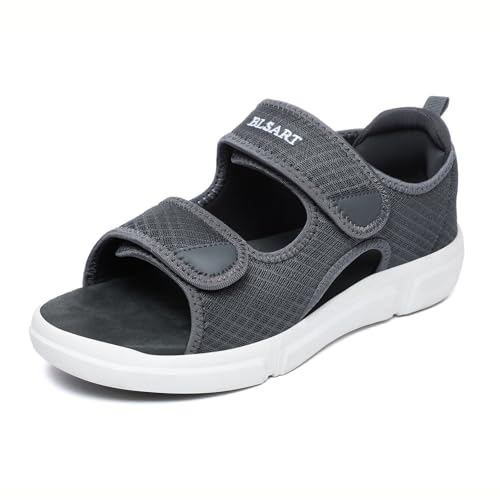
The FitVille diabetic sandal is built for men who need more room and more control over the fit. Its wide-width design can be useful for swollen feet, bunions, hammertoes, or thick socks. Adjustable straps let the wearer change the fit during the day. That feature is important because foot size and swelling can change from morning to evening.
The open upper gives the foot space while the supportive shape helps create a steadier feel than a flat flip-flop. I also like the focus on easy adjustment for users who find fixed straps too tight. No sandal should be called wound-safe without a proper medical assessment, though. Before daily use, check the inside for rough seams and make sure no strap presses on a numb area.
Pros:
- Wide fit gives toes more room to spread
- Adjustable straps help manage changing foot size
- Suitable for men who need extra space around the forefoot
- Supportive footbed may reduce daily foot strain
- Useful for users with mild swelling or foot shape changes
- Diabetic-focused design encourages a comfort-first fit
Cons:
- Wide shape may feel loose on narrow feet
- More straps require extra time to set correctly
- Open areas leave some of the foot exposed
- Users with active sores should seek medical guidance first
My Recommendation
The black FitVille model is best for men who need a wide sandal with adjustable room. It is a strong fit for swelling, bunions, broad feet, and users who dislike pressure across the toes. I would choose it over a fixed flip-flop when fit changes during the day are a concern. For many shoppers, it is among the best men’s sandals for neuropathy because the adjustable width makes comfort easier to manage, though a clinician should guide footwear choices for serious foot disease.
FitVille Wide Diabetic Sandals in Gray

The gray FitVille sandal provides the same wide, adjustable concept in a lighter-looking color. This matters to shoppers who want a neutral sandal that does not look as heavy as an all-black pair. The roomy design helps reduce the cramped feeling that often comes with narrow summer footwear. Adjustable closures make it easier to set a gentle fit without relying on a tight stretch strap.
I would consider this model for daily errands, light walks, and warm indoor or outdoor use. It may also suit men who wear custom inserts, although buyers should confirm the available footbed space before ordering. A sandal that feels roomy is not automatically safe if the foot slides forward or sideways. Take a few slow steps at home, then inspect the skin and check that the heel stays aligned.
Pros:
- Wide-width design gives sensitive toes more breathing room
- Adjustable straps support a more customized fit
- Gray color offers a softer casual look
- Arch support may help with standing comfort
- Useful for feet that change size during the day
- More stable than many loose thong sandals
Cons:
- May look bulky on slim feet
- Loose straps can allow foot movement if set poorly
- Not fully protective against dropped objects or rough ground
- May need a short break-in period for strap comfort
My Recommendation
Choose the gray FitVille pair if you want the room and adjustability of the black version with a more subtle color. It is best for men with wide feet, mild swelling, or pressure-sensitive toes. I would recommend it for slow daily walking rather than sports or rough trails. It deserves a place among the best men’s sandals for neuropathy because its fit can be changed as comfort needs change.
Orthofeet Gemini Orthopedic Leather Sandals

The Orthofeet Gemini brings a more orthopedic look to this list. Its leather upper gives the sandal a dressed-up finish, while the roomy shape aims to reduce pressure on the foot. Orthopedic footwear often works best when it gives the toes space and holds the foot in a stable position. This model is worth considering for men who want a sandal that looks suitable for daily clothing, not just athletic wear.
The Gemini may be a better match for users who need support and a more structured feel. Its design can suit walking around the house, shopping, travel, and other low-impact tasks. Leather may take time to soften, so I suggest short first wears and a close skin check. Men with severe neuropathy should also confirm that the sandal does not create hidden pressure around the heel, instep, or toes.
Pros:
- Leather upper gives a polished and durable appearance
- Orthopedic shape focuses on foot comfort and support
- Roomy fit may help reduce toe pressure
- Good choice for men who dislike sporty slides
- Suitable for casual daily walking
- May work well with a comfort-focused wardrobe
Cons:
- Higher-style orthopedic construction may cost more
- Leather can feel less airy than mesh or soft foam
- May require a careful break-in period
- Wide sizing may not suit narrow feet
My Recommendation
I recommend the Orthofeet Gemini to men who want a more refined orthopedic sandal with a roomy feel. It is best for daily wear, travel, and casual walking when appearance matters as much as support. This is not the pair I would pick for beach use or wet conditions unless the care instructions allow it. For shoppers comparing the best men’s sandals for neuropathy, the Gemini is a strong premium-style option for comfort-minded users.
KuaiLu Leather Cushion Recovery Sandals

The second KuaiLu model combines a leather-style upper with a cushioned recovery footbed. It is made for men who want the familiar ease of a flip-flop but prefer more padding under the foot. The soft step can feel pleasant during slow walks and relaxed daily use. Its simple shape also makes it easy to pack in a travel bag.
Compared with very flat flip-flops, the added cushion and footbed shape may help the foot feel less tired. The trade-off is that a thong design still leaves the heel open and depends on the toes to hold the sandal. I would keep walks short until I knew the toe post and sole worked well for my feet. As with any sandal for sensitive feet, look for redness, blisters, heat, or swelling after wear.
Pros:
- Cushioned footbed softens contact with hard floors
- Leather-style upper looks clean and casual
- Light construction suits travel and daily use
- Arch shape may support more natural comfort
- Easy to put on without buckles or laces
- Good option for relaxed summer outfits
Cons:
- Toe post may not suit all sensitive feet
- Open heel reduces walking security
- Limited toe protection for outdoor tasks
- Not the best choice for long hikes or fast walking
My Recommendation
The KuaiLu cushion recovery sandal is best for men who want a soft flip-flop for short, easy walks. It fits home use, travel, pool areas, and casual summer wear better than demanding outdoor work. I would select an adjustable wide sandal if the foot swells or needs a very stable platform. It remains a useful budget-friendly choice in the best men’s sandals for neuropathy category when the wearer tolerates a toe post.
How I Chose These Men’s Sandals for Neuropathy
Choosing sandals for neuropathy takes more than looking at the word “comfort” in a product title. Neuropathy can reduce the ability to feel heat, pain, pressure, or injury. A sandal may feel soft yet still rub the skin or let the foot slide. I focused on the features that matter most for safe daily wear.
Room for the toes: A cramped toe box can create pressure on the toes and nail edges. Wide designs, such as the FitVille models, may help men with broad feet or swelling. However, extra width should not let the foot move freely inside the sandal.
Gentle adjustability: Adjustable straps help the wearer create a snug fit without over-tightening. This is helpful when feet swell during the day. The strap should hold the foot in place but should never leave deep marks or numbness.
Stable sole: A firm, slip-resistant outsole can help reduce unwanted movement. A very soft sole may feel nice at first but can feel unstable for some users. I look for a balance between cushioning and control.
Low pressure points: Seams, toe posts, hard edges, and tight straps can cause trouble. This is why I treat flip-flops with more caution. They can work for some men, but the toe area needs close attention.
Useful coverage: Open sandals keep feet cool, but they also expose the toes. A sport sandal with some coverage may offer more protection for casual outdoor use. No open sandal can protect the foot from every hazard.
Easy care: Sandals should be easy to clean and dry. Sweat, dirt, and moisture can irritate skin. Follow the care instructions and replace a pair when the tread wears down or the footbed develops a rough area.
What Features Matter Most for Neuropathy?
Fit Comes Before Cushioning
A thick footbed cannot fix a poor fit. The heel should sit in a natural place, and the toes should not hang over the front edge. The upper should hold the foot without squeezing it. If the foot slides, the toes may grip the sandal and create extra strain.
Try sandals later in the day if your feet swell. Wear the socks you plan to use with them. Walk on a clean indoor floor for a few minutes. Then remove the sandals and check for red marks, hot spots, or changes in skin color.
Arch Support Should Feel Even
Arch support can help some men feel less strain, but more support is not always better. A high ridge in the wrong place can create a pressure point. The support should meet the arch in a smooth, natural way. If it feels sharp or causes tingling, stop wearing the sandal.
Several pairs in this review use an orthotic or recovery-style footbed. These designs may help with comfort, but they do not diagnose or treat neuropathy. A podiatrist can help if you have pain, balance trouble, deformity, or a history of foot ulcers.
Cushioning Needs a Stable Base
Soft foam can feel like a pillow under the foot. That can be pleasant on hard floors. Yet a sole that bends or twists too much may make balance harder. Men with reduced sensation often benefit from a sandal that feels predictable under each step.
Use recovery slides for their intended purpose. They are often better for home, locker rooms, and short walks than for rough trails. For outdoor use, a sport sandal with a secure strap may offer better control.
Look for a Safe Walking Pattern
A good sandal should not make you change the way you walk. If you curl your toes to keep it on, lift your feet in an unusual way, or feel your ankle roll, the sandal is not a good match. Try a shorter stride and slower pace during the first few wears.
Balance problems deserve special attention. A back strap can help, but it does not guarantee safety. If you feel unsteady, use a closed supportive shoe or ask a health professional for advice.
How to Wear Sandals Safely With Neuropathy
Start with 10 to 15 minutes indoors. Remove the sandals and inspect both feet. Look between the toes, around the heel, under the forefoot, and along every strap. Repeat this process each time you test a new pair.
Do not wear sandals with wet feet if the footbed becomes slippery. Dry your feet well, especially between the toes. Avoid very hot pavement, hot tubs, and heated floors because neuropathy may make heat harder to sense.
Keep toenails trimmed with care, and do not cut calluses or corns on your own if you have diabetes or poor circulation. A small cut can become a serious issue. Contact a medical professional if you notice a blister, open sore, swelling, warmth, drainage, or skin color change.
Replace sandals when the tread becomes smooth. Also replace them if the footbed caves in, cracks, or develops a sharp edge. Worn footwear can change how pressure moves across the foot. The most comfortable sandal today may not remain safe after months of heavy use.
Sandals Versus Closed Shoes for Neuropathy
Sandals provide air flow and can feel less restrictive in warm weather. They also make it easier to see the skin and spot a problem. This is useful for daily foot checks. But open footwear leaves the toes open to sun, impact, dirt, and small objects.
Closed shoes offer more protection. They may be the better choice for yard work, long walks, travel in busy areas, or cold weather. A proper closed shoe should still have a wide toe box, smooth lining, stable sole, and enough depth for the foot.
I see sandals as one part of a footwear plan. A man may wear an adjustable sandal at home and a protective shoe outside. The right choice depends on sensation, balance, circulation, skin health, and the activity. Never choose an open sandal simply because it feels soft.
Best For Comparison
| Best for | Why |
|---|---|
| Wide or swollen feet | FitVille diabetic sandals offer adjustable straps and extra room. |
| Soft home and recovery use | GPOS and COFACE slides provide easy entry and cushioned comfort. |
| Casual outdoor walking | Dockers Newpage and Orthofeet Gemini offer more structure and coverage. |
Fit and Sizing Tips
Measure both feet while standing. One foot may be longer or wider than the other. Use the larger measurement when comparing it with the brand’s size chart.
Leave a small amount of space in front of the longest toe. The toes should not touch the edge when you walk. The heel should not hang off the back. A sandal that is too short can create pressure even when the upper feels loose.
Pay attention to width. A wide sandal should give the foot room without letting it slide from side to side. If you need a wide size, do not simply buy a much longer sandal. Extra length can create a trip risk.
Try sandals with clean, dry feet. If you use orthotics, confirm that the footbed can accept them. Some recovery slides have a fixed footbed and may not leave enough depth for an insert.
Care Tips to Make Sandals Last
Clean the footbed often. Follow the maker’s care directions, since leather, foam, and synthetic materials need different treatment. Do not soak leather sandals unless the instructions allow it.
Let sandals dry fully before wearing them again. Do not place them against a very hot heater or in extreme direct heat. Heat can damage foam and cause some materials to warp.
Check the straps and seams each week. A loose strap can change the fit without warning. Run a clean finger over the footbed to find rough spots, grit, or cracks.
Rotate pairs when possible. A second pair gives each sandal time to dry. It also lets you compare wear and notice when one footbed has flattened. Good care can extend product life, but it cannot replace regular foot checks.
FAQs Of Best Men’s Sandals for Neuropathy
What are the best men’s sandals for neuropathy?
The best pair depends on your foot shape, balance, skin health, and daily activity. Wide adjustable sandals, such as the FitVille models, suit men who need more room. GPOS and COFACE slides suit soft home recovery use. Ask a podiatrist if you have ulcers, severe numbness, or balance problems.
Should men with neuropathy wear flip-flops?
Some men can wear flip-flops for short periods, but the toe post may cause rubbing. Flip-flops also offer less heel control and less protection. Check your feet after use and stop if you see redness, a blister, or pressure marks.
Are recovery sandals good for diabetic feet?
Recovery sandals can feel comfortable, but comfort alone does not make them medically safe. Look for a smooth fit, stable sole, and no pressure points. Men with diabetes should follow their clinician’s advice, especially if they have poor circulation, open skin, or a past ulcer.
How much room should sandals have?
Your toes should not touch the front edge or hang over it. The heel should stay on the footbed. You need enough room for natural movement, but not so much that the foot slides. A secure, gentle fit is safer than a loose fit.
How often should I check my feet?
Check your feet every day if you have neuropathy or diabetes. Look for cuts, blisters, redness, swelling, warmth, and drainage. Use a mirror or ask for help if you cannot see the soles clearly. Seek medical advice quickly when a foot problem does not improve.
Final Verdict: Which Should You Buy?
The FitVille wide diabetic sandal is my top choice for men who need room, adjustment, and daily comfort. GPOS is best for soft recovery use, while Orthofeet Gemini suits shoppers who want a more structured leather style.
The best men’s sandals for neuropathy should fit gently, stay stable, and pass a daily skin check. Choose by foot needs, not by looks alone, and ask a podiatrist when numbness or wounds are severe.

Rubel Miah is the Senior Editor at MyStyleGrid.com, where he brings a sharp editorial eye and an unshakable love for fashion to everything he does. A true style addict, Rubel lives and breathes trends, from streetwear to high fashion, and has a knack for turning inspiration into impactful stories. With years of experience in fashion journalism and digital media, he curates content that empowers readers to express themselves through style. When he’s not editing features or forecasting the next big thing, you’ll find him hunting down vintage pieces or capturing street style moments around the city.