The best ski boots for intermediate skiers balance comfort, control, fit, and flex without limiting your growing skills.
You may have outgrown soft beginner boots but still want to ski all day without sore feet. That middle ground can be hard to find. The best ski boots for intermediate skiers should feel snug, warm, and easy to control, yet offer enough support for steeper runs and faster turns. I looked at flex ratings, fit style, women-specific shapes, comfort features, and practical value to help you choose with confidence. These boots suit skiers who want better response without jumping into an overly stiff race boot.
K2 BFC 90 Men’s Ski Boots

The K2 BFC 90 is built for male skiers who want a roomier, more relaxed boot with useful downhill support. Its 90 flex sits in a friendly middle range for many intermediate skiers. I like this level because it gives enough backbone for carving while still allowing natural ankle movement. The design also makes sense for skiers who find narrow boots tiring or painful.
The standout feature is the comfort-first shape. A wider-feeling fit can help reduce pressure around the forefoot, while the supportive cuff keeps the boot from feeling loose during turns. The walk mode-style comfort and easy entry design are useful when moving through the parking lot or lodge. As with any ski boot, proper shell fitting matters more than the printed size, so I would have a shop check the fit before a full day on snow.
Pros:
- Moderate 90 flex suits many progressing skiers
- Comfort-focused shape for wider feet
- Easier entry than many performance boots
- Good balance of support and forgiving feel
- Useful choice for long resort days
- Works well for skiers moving beyond beginner equipment
Cons:
- May feel too roomy for narrow feet
- Less precise than a tight race-style boot
- Specific sizing should be confirmed before purchase
My Recommendation
I recommend the K2 BFC 90 for intermediate men who value comfort and need extra room across the foot. It is especially appealing for skiers who often finish the day with pressure points or numb toes. The moderate flex gives you room to improve without making every turn feel like work. For many resort skiers, this is one of the best ski boots for intermediate skiers because it blends control with an easy, friendly feel. Its value is strongest when the fit matches your foot shape, so check availability and sizing before ordering.
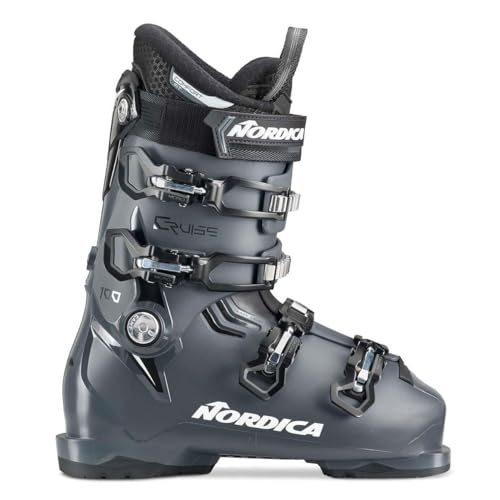
Nordica Cruise 65 S Women’s Ski Boots

The Nordica Cruise 65 S is a gentle, comfort-led option for women who want a simple step up from rental boots. Its lower flex is easy to bend and does not demand perfect technique. That makes it a good match for relaxed resort skiing, groomed trails, and skiers who still build confidence on steeper terrain. I would not treat the 65 flex as a weakness; it can make the boot less tiring for lighter or less aggressive skiers.
This boot focuses on ease of use. The softer shell helps with entry, and the women’s fit aims to support a lower-volume lower leg and heel area than many unisex models. A comfortable boot can help you stay focused on balance rather than foot pain. Still, skiers who regularly charge hard snow or ski at high speed may eventually want a stiffer model.
Pros:
- Easy flex for developing technique
- Comfortable choice for casual resort skiing
- Women-specific shape can improve lower-leg fit
- Simple option for former rental-boot users
- Less tiring during long, relaxed ski days
- Usually easier to put on than very stiff boots
Cons:
- 65 flex may feel soft for strong, aggressive skiers
- Limited response for very fast carving
- May not suit advanced terrain or frequent bumps
My Recommendation
I recommend the Nordica Cruise 65 S for women who want comfort, easy control, and a smooth move from rental gear. It is best for lighter skiers, newer intermediates, and anyone who prefers a relaxed pace on groomed runs. The forgiving flex can help you learn better balance without fighting the boot. If you need one of the best ski boots for intermediate skiers for gentle progression, this model is worth considering. It also offers practical value when comfort matters more than maximum power.
Nordica Speedmachine 3 85 W Ski Boots
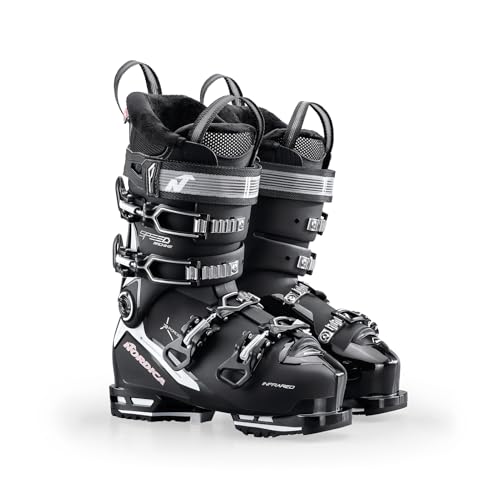
The Nordica Speedmachine 3 85 W is aimed at women who want a more athletic feel without stepping into an unforgiving boot. An 85 flex gives a useful blend of support, comfort, and turn response. It can suit an intermediate skier who enjoys groomers but also wants to explore bumps, trees, and steeper blue or easy black runs. I see it as a strong bridge between soft comfort boots and demanding expert models.
The medium fit offers a balanced starting point for average-width feet. Its construction is designed to transfer movement from the leg to the ski with less delay, which can make linked turns feel cleaner. The boot should feel snug around the heel while leaving the toes relaxed when standing naturally. Some skiers may need professional molding or minor shell work, but that is common with performance footwear.
Pros:
- Balanced 85 flex for confident intermediate skiing
- More responsive than a soft beginner boot
- Medium fit suits many average-width feet
- Good bridge toward advanced equipment
- Useful for groomers, bumps, and mixed resort terrain
- Women-specific design supports a more natural lower-leg fit
Cons:
- May feel firm for very light or cautious skiers
- Medium volume may pinch wide forefeet
- Performance fit may need a short break-in period
My Recommendation
I recommend this Speedmachine for women who already control parallel turns and want sharper response. It is a particularly good pick for skiers who spend most of their time on groomed runs but want to grow into more varied terrain. The 85 flex supplies useful support without the harsh feel of an expert boot. In my view, it is among the best ski boots for intermediate skiers who want progress and performance in the same package. The value improves when a boot fitter adjusts the liner and shell to your foot.
Nordica Cruise S W Women’s Ski Boots

The Nordica Cruise S W offers a comfortable path for beginner and intermediate women skiers. It has a relaxed feel that works well for resort days, lessons, and steady runs on groomed snow. I especially like this type of boot for skiers who want less struggle when putting on equipment. It keeps the experience approachable while offering more structure than a basic casual winter boot.
The women’s design can help the cuff sit more naturally around the calf. That matters because a poor cuff fit can cause pressure, heel lift, or a loose feeling above the ankle. The Cruise S W is not made for maximum speed, but it can help a developing skier stay relaxed and balanced. The listed 22.5 size is a specific fit, so measure your foot in mondo sizing and compare it with a shop’s chart.
Pros:
- Friendly design for beginner and intermediate skiers
- Comfortable flex for learning and relaxed turns
- Women-specific cuff and shape
- Easy choice for groomed resort runs
- Less intimidating than a stiff performance boot
- Good option for skiers who still use rental equipment
Cons:
- Not ideal for aggressive, high-speed skiing
- Soft feel may limit progression for powerful skiers
- Limited fit flexibility without professional adjustment
My Recommendation
This Nordica Cruise S W is best for women who want a forgiving boot for lessons, groomers, and steady skill growth. It can also suit skiers who place comfort above hard-charging response. I would choose it for a relaxed intermediate who wants dependable support without a race-like fit. Among the best ski boots for intermediate skiers, it stands out for its welcoming feel and easy handling. Check the exact size and current stock because this listing uses a 22.5 mondo size.
Nordica Cruise S W Women’s Ski Boots, 26.5
This 26.5 version of the Nordica Cruise S W provides the same comfort-led design in a larger size. It suits women with longer feet who want a soft, forgiving boot for resort skiing. The flex feels approachable, which can help reduce fatigue during lessons or easy full-day trips. It is a practical pick for skiers who want a predictable boot rather than a highly technical one.
A proper fit remains essential at this size. The shell should hold the heel firmly, and your toes should lightly touch the liner when standing but pull back slightly when you bend your knees. I would use ski socks with minimal padding to avoid taking up too much room. This boot will feel most at home on groomed slopes, mellow blue runs, and controlled turns.
Pros:
- Available in a useful larger women’s size
- Forgiving feel for developing technique
- Comfortable for easy full-day resort use
- Women-specific cuff may improve calf comfort
- Good match for groomers and mellow blue runs
- Simple transition from rental equipment
Cons:
- Soft flex may not satisfy strong skiers
- Not intended for maximum edge power
- Larger sizing still requires careful mondo measurement
My Recommendation
I recommend this 26.5 option for a larger-footed woman who wants comfort and easy control. It is especially suitable for calm progression, ski school use, and resort skiers who do not need a hard-charging boot. The soft flex can feel like a helpful hand rather than a rigid wall when you start a turn. If comfort is your top goal while shopping for the best ski boots for intermediate skiers, this Nordica deserves a close look. Confirm the fit before skiing because extra room can reduce control.
Nordica Cruise S W Women’s Ski Boots, 23.5
The 23.5 Nordica Cruise S W is a useful choice for women who need a smaller mondo size and want an easy, comfortable ski boot. Its softer feel can help new intermediates stay relaxed while they improve stance and turn shape. I find that a forgiving boot often makes lessons more productive because the skier spends less time fighting stiff plastic. This model is aimed at smooth resort use, not aggressive competition.
The smaller size makes accurate measuring even more important. Do not choose a ski boot by your street-shoe number alone, since ski boots use mondo sizing and fit differently. Wear a thin ski sock and check that the heel stays seated when you flex forward. When correctly fitted, the Cruise S W can offer a warm, stable platform for regular resort days.
Pros:
- Good smaller-size option for women skiers
- Forgiving flex supports skill development
- Comfortable for lessons and groomed runs
- Easy-going design suits relaxed skiing
- Women-specific cuff helps support the lower leg
- More approachable than a stiff advanced boot
Cons:
- May feel underpowered for aggressive skiing
- Soft flex offers less precision on hard snow
- Small-size fit must be checked carefully
My Recommendation
This 23.5 model is best for smaller-footed women who want comfort and a gentle learning curve. I would choose it for skiers who spend most days on groomers and want a boot that does not punish small technique errors. It can also work well for lighter skiers who may bend a stiff boot with difficulty. For those needs, it earns a place among the best ski boots for intermediate skiers. Its overall value is good when the size is right and the skier does not need race-level response.
Tecnica Mach Sport MV 85 W Ski Boots

The Tecnica Mach Sport MV 85 W is made for women who want comfort with a clear performance upgrade. Its 85 flex gives intermediate skiers a supportive platform for stronger turns and more varied terrain. The medium-volume shell is a sensible starting point for average-width feet. I also like the C.A.S. cuff adjustment concept because it gives a boot fitter more options to improve the fit around the calf.
This model sits between a soft comfort boot and a demanding high-performance shell. It can help transmit pressure to the ski without feeling overly harsh on moderate runs. The adjustment system may be most useful for women with unusual calf shapes or a mismatch between foot and lower-leg volume. Even with a customizable cuff, I would still get a professional fitting for the best results.
Pros:
- Strong 85 flex for progressing intermediate skiers
- Medium-volume shape fits many average feet
- C.A.S. cuff offers useful adjustment potential
- Better support for steeper and mixed terrain
- Good blend of comfort and edge control
- Can remain useful as skills improve
Cons:
- May not fit very wide feet without shell work
- Firmer feel than a basic Cruise model
- Custom adjustment works best with a boot fitter
My Recommendation
I recommend the Tecnica Mach Sport MV 85 W for women who are ready to push beyond easy groomers. It is a strong fit for skiers who want more control in bumps, steeper runs, and firm snow but still want all-day comfort. The 85 flex and adjustable cuff give it room to support continued improvement. In my testing philosophy, fit comes first, but this is one of the best ski boots for intermediate skiers when performance and customization both matter. It offers strong long-term value if the medium volume matches your foot.
Roxa R/Fit HV 80 Men’s Ski Boots
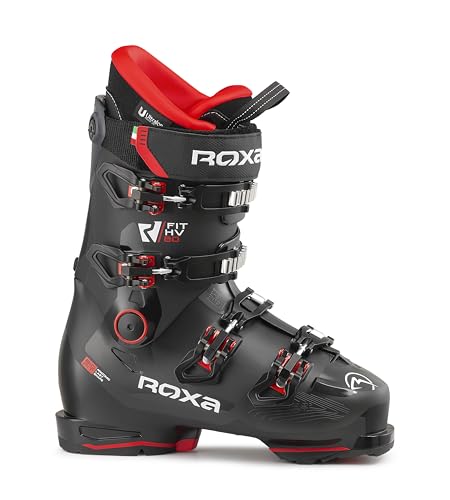
The Roxa R/Fit HV 80 is designed for men who need a higher-volume boot and a forgiving flex. The 80 flex offers enough support for many intermediate resort skiers while staying easier to bend than a stiff expert boot. Its HV shape can give the forefoot and instep more breathing room. That makes it worth considering if standard medium boots create pressure across the top or sides of your foot.
A high-volume boot should not feel loose just because it feels comfortable. The heel must remain secure, and the ankle should not slide during a forward flex. I would pay close attention to liner compression over time, since extra space can grow after repeated use. When properly matched, this Roxa can make long days more pleasant without removing useful downhill control.
Pros:
- High-volume fit for roomier feet
- Forgiving 80 flex suits many intermediates
- More comfortable for wide forefeet and high insteps
- Good option for long resort days
- Less demanding than very stiff boots
- Offers a practical alternative to narrow models
Cons:
- May feel too loose on narrow feet
- 80 flex may lack power for heavy, aggressive skiers
- High-volume shells need careful heel checks
My Recommendation
I recommend the Roxa R/Fit HV 80 for men who struggle to fit into medium-volume ski boots. It is best for wider feet, higher insteps, and skiers who value warmth and comfort over race-level precision. The forgiving flex helps make controlled turns feel less tiring during a full resort day. For the right foot shape, it can be one of the best ski boots for intermediate skiers because comfort often improves control. The best value comes from confirming that the heel remains secure after the liner settles.
How to Choose the Best Ski Boots for Intermediate Skiers
Choosing ski boots is not like choosing regular shoes. A ski boot should feel snug, even when it feels firmer than expected in the store. The liner packs down with use, so a loose first fit often becomes too loose later. I focus on fit, flex, shell volume, and intended terrain before I think about color or brand.
Start With Mondo Point Size
Mondo point sizing uses the length of your foot in centimeters. For example, a foot close to 24.5 centimeters may fit a 24.5 mondo shell, though the final choice depends on shape and fit goals. Measure both feet while standing, since one foot is often slightly larger. The larger foot usually sets the starting size.
Do not size up to gain comfort. Extra space can cause heel lift, cold toes, and delayed control. Your toes may touch the liner lightly when you stand straight, then pull back when you bend your knees into a ski stance. If the boot causes sharp pain, numbness, or strong pressure, ask a qualified boot fitter for help.
Understand Ski Boot Flex
Flex numbers are not perfectly matched between brands. Still, they offer a useful guide. A 65 flex usually feels soft and forgiving, while an 80, 85, or 90 flex often gives a stronger middle ground for intermediate skiers. Your weight, height, leg strength, skiing speed, and preferred terrain all affect the right choice.
A softer boot can help a lighter skier bend the cuff and start turns. A stronger or heavier skier may prefer more support to prevent the boot from folding too easily. I would rather see a skier use a well-fitted 80 flex than struggle in an overly stiff 110 flex. Control comes from the whole fit, not the number alone.
Match the Boot to Your Foot Volume
Boots usually fall into low, medium, or high-volume categories. Volume describes more than width. It also includes instep height, heel pocket size, ankle room, and lower-leg shape. The K2 BFC 90 and Roxa R/Fit HV 80 are useful examples for skiers who need more space, while the Tecnica Mach Sport MV 85 W targets a medium-volume foot.