The best ski boots for wide calves women are roomy, adjustable models that blend calf comfort, warmth, and firm ski control.
If standard ski boots pinch your lower legs, leave red marks, or make each buckle feel like a battle, you are not alone. Many women need more room around the calf and a softer, more forgiving fit. I reviewed these ski boots with that problem in mind. I looked at comfort, flex, entry ease, fit range, and value. The goal is simple: help you find a boot that feels secure on the slope without feeling like a clamp.
Rossignol Kelia 50 Ski Boots

The Rossignol Kelia 50 is a friendly downhill boot for women who want simple comfort and easy control. Its softer flex suits new skiers and casual resort riders. I like this type of flex for women who find stiff boots painful around the shin and calf. It gives the leg some room to move instead of demanding a strong racing stance all day.
The women-specific shape also makes this model a useful place to start when shopping for the best ski boots for wide calves women. Still, calf width varies from person to person, so I would check the size chart and buckle position before ordering. The Kelia 50 is best for groomed runs, ski lessons, and relaxed days on the mountain. It offers a calm, forgiving ride rather than an aggressive race feel.
Pros:
- Soft flex feels kind to new skiers
- Women-specific design supports a comfortable stance
- Easy choice for groomed resort runs
- Less demanding than a high-flex performance boot
- Classic black and white look pairs with most ski gear
- Good match for casual and beginner-level use
Cons:
- May feel too soft for powerful or advanced skiers
- Calf room still depends on leg shape and size
- Not the best choice for high-speed or race-style skiing
My Recommendation
I recommend the Rossignol Kelia 50 for beginners and light-to-average-weight women who want a soft, less stressful boot. It can suit women with fuller calves when the shell and buckle setting provide enough room. I would not buy it based on the word “wide” alone, because this is not a substitute for a professional boot fit. As an entry-level option, it offers strong value when comfort and easy handling matter most.
Rossignol Kelia 50 in Women’s 24.5

This Rossignol Kelia 50 listing gives shoppers a 24.5 option in the same approachable women’s downhill platform. A correct mondo size matters more than a loose boot, especially when you need calf comfort. I find that many skiers try to solve lower-leg pressure by sizing up, but that can cause heel lift and weak control. The better plan is to choose the correct foot length and then adjust the calf area.
The Kelia 50 works well for a skier who wants to learn without fighting a rigid shell. Its forgiving feel can reduce fatigue during long beginner sessions. That matters when the real problem is not skill but discomfort that makes you want to unbuckle before lunch. For women comparing the best ski boots for wide calves women, this model is worth considering if the 24.5 shell matches both foot length and lower-leg shape.
Pros:
- Comfort-focused flex helps reduce beginner fatigue
- Useful 24.5 size option for shoppers in that range
- Women’s fit supports a natural ski stance
- Simple design is easy to match with ski clothing
- Suitable for lessons and moderate resort use
- Less intimidating than a stiff performance boot
Cons:
- Size 24.5 will not suit every foot length
- Soft flex may limit aggressive edge pressure
- It may need professional shell fitting for very wide calves
My Recommendation
This version is best for women who already know that mondo 24.5 usually fits them and who want an easy, relaxed downhill boot. It is especially useful for new skiers who need comfort during lessons or short resort trips. I suggest trying it with the ski socks you actually wear, not thick cotton socks. If the foot fits well but the calf feels tight, ask a boot fitter about cuff adjustment rather than moving to a much larger size.
Nordica Cruise S W Ski Boots 24.5
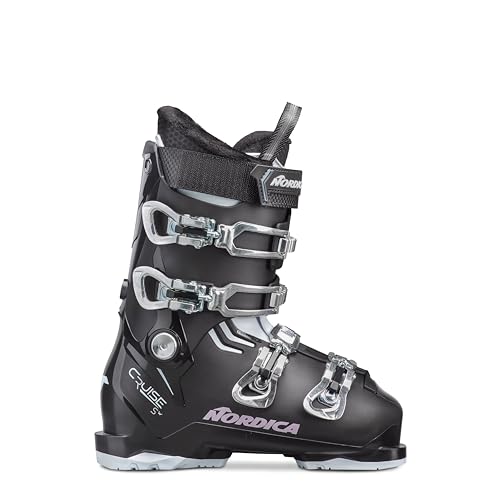
The Nordica Cruise S W is built around the comfort side of all-mountain skiing. The Cruise name is aimed at skiers who want an easier entry and a less punishing ride. Its women’s construction and softer feel make it appealing when shin pressure and calf squeeze are the main concerns. I see it as a practical step up for a skier who wants more support than a very basic beginner boot.
The 24.5 version is a good fit candidate for women in that mondo size, but fit must come first. A boot should hold the heel while allowing the toes to relax when you stand naturally. The upper cuff should feel supportive, not sharp or numb. Among the best ski boots for wide calves women, the Cruise S W stands out for shoppers who want comfort with enough structure for varied resort terrain.
Pros:
- Comfort-first design suits long resort days
- Soft, forgiving flex helps newer skiers turn with less effort
- All-mountain label gives it broader use than a basic lesson boot
- Women-specific shape supports a balanced stance
- 24.5 size helps shoppers who need that mondo measurement
- Good choice for skiers who dislike overly rigid cuffs
Cons:
- May not deliver enough power for advanced skiers
- Calf fit can still vary widely between women
- Exact shell fit should be confirmed before wearing it all day
My Recommendation
I recommend the Nordica Cruise S W 24.5 to beginner and intermediate women who want a comfortable all-mountain boot. It is a strong candidate for fuller calves when its cuff shape and buckle range match the skier’s leg. The main benefit is balance: it does not focus only on softness, and it does not feel like a race boot. For many shoppers, that balance is the heart of the best ski boots for wide calves women.
Rossignol Kelia 50 in Women’s 24.5
This second 24.5 Kelia listing gives shoppers another buying route for the same well-known beginner-friendly boot. The model keeps things simple, which can be a real advantage for women who do not want a complex race-style setup. Its softer flex helps the skier bend the ankle and start a turn without using excessive force. That makes it less likely to feel like a hard plastic cast around the lower leg.
I would pair this boot with a thin, warm ski sock and careful sizing. Thick socks can create more pressure, not more comfort, because they fill the shell too quickly. The Kelia 50 is not a guaranteed wide-calf boot, yet its relaxed purpose makes it a reasonable option for women who need a gentler fit. It is best for resort skiing, first seasons, and relaxed family trips.
Pros:
- Approachable flex supports new skiers
- Comfortable choice for easy groomed trails
- Women-specific design encourages a natural posture
- 24.5 size is clearly listed for easier shopping
- Simple setup helps reduce gear confusion
- Good value for casual downhill use
Cons:
- Limited choice for high-performance skiing
- May not provide enough calf space for every fuller leg
- Sizing up can cause heel movement and poor control
My Recommendation
Choose this Kelia 50 listing if you want a low-stress boot and the 24.5 size matches your foot. It suits a woman who values warmth, ease, and comfort over speed. I would consider it one of the more sensible options for the best ski boots for wide calves women at a beginner level, but I would still confirm the calf fit at home before skiing. Return policies and current stock can change, so check those details before purchase.
Nordica Cruise S W Ski Boots 25.5
The Nordica Cruise S W in 25.5 gives taller or larger-footed women access to the same comfort-led platform. The larger size can offer a little more overall volume, but it should never be used as a shortcut for calf room. Boot sizes change shell length and foot volume, not always the cuff shape in the way a wide-calf skier needs. I recommend checking both foot length and calf circumference before placing an order.
This boot makes sense for resort skiers who want a smooth, forgiving ride across groomers and mild all-mountain terrain. Its comfort focus may help women who spend many hours standing in boots. The support is useful, but the feel remains friendly rather than highly aggressive. If you need the best ski boots for wide calves women and wear a 25.5, this model deserves a close look.
Pros:
- 25.5 size suits women with longer feet
- Comfort-focused design supports full-day resort use
- Forgiving flex helps reduce leg strain
- Useful for beginner and intermediate progression
- More versatile than a very soft entry-only boot
- Women-specific build supports a balanced stance
Cons:
- A larger size does not automatically mean a wide cuff
- Too soft for demanding advanced skiing
- Foot and calf fit need separate checks
My Recommendation
I recommend this 25.5 Cruise S W for women whose foot length calls for that size and who want comfort on varied resort runs. It may work well for a fuller calf when the cuff sits smoothly without pressure points. The best result will come from trying it on with one thin ski sock and standing in a ski stance. It is a sound comfort pick, especially when a skier wants room without giving up all structure.
Rossignol EVO 70 HV+ Ski Boots

The Rossignol EVO 70 HV+ is the most interesting choice here for shoppers who need a higher-volume fit. The “HV” name points to a high-volume design, which often gives more room through the foot and shell than a narrow performance boot. That does not guarantee a wide calf, but it makes this model worth testing when standard boots feel cramped. The 70 flex also offers more support than a very soft beginner boot.
This model is listed for men and women, so the fit may feel less tailored than a women-specific boot. In return, some women may prefer its roomier shape and stronger support. I would place it high on the list for a skier with a broader foot, fuller lower leg, or both. When people ask me about the best ski boots for wide calves women, I always remind them that high volume and calf volume are related but not identical.
Pros:
- High-volume design may feel roomier through the shell
- 70 flex provides more support than entry-level soft boots
- Useful for intermediate skiers who want to progress
- Unisex design can suit women seeking extra overall volume
- Good candidate for broader feet and fuller lower legs
- More responsive for controlled turns than a very soft boot
Cons:
- High volume does not guarantee a wide calf opening
- May feel less women-specific than the Kelia or Cruise
- Could feel too supportive for a very new skier
My Recommendation
The EVO 70 HV+ is best for intermediate women who want room and a bit more power. It is my leading candidate for women with broad feet who also struggle with calf pressure. I would choose it over a soft beginner boot when the skier wants to improve edge control and ski more varied terrain. A boot fitter can often make small cuff changes, so this model has strong potential when the stock fit is close.
Rossignol EVO 70 HV+ Alternative Size
This EVO 70 HV+ listing offers another size or stock option for the same high-volume Rossignol design. I like having a second listing because ski boot availability can change quickly by size and season. The boot remains a solid middle ground between a soft comfort model and a firm expert boot. Its high-volume profile may give the calf and foot a less crowded feeling, though every leg needs an individual check.
The EVO 70 flex should help a developing skier stand more confidently over the skis. It can transfer energy without requiring the hard forward pressure of a race boot. That makes it a better match for women who ski several days each season and want their boots to last through skill growth. For the best ski boots for wide calves women, this is one of the stronger choices when overall volume matters.
Pros:
- High-volume shell can improve comfort for broader feet
- Moderate flex supports learning and progression
- Roomier feel may reduce pressure on the lower leg
- Works for both men and women seeking extra volume
- Good option for groomers and moderate all-mountain runs
- More supportive than a very soft comfort boot
Cons:
- May require a footbed or shell work for the best fit
- Not a true custom wide-calf solution
- Could feel bulky on a narrow foot
My Recommendation
I recommend this EVO 70 HV+ option for a woman who needs more shell volume and prefers a supportive, medium-flex boot. It is a smart choice for intermediate resort skiing and gradual skill growth. If your foot is narrow but your calf is wide, take extra care because the lower shell may feel too loose. When the volume matches your whole leg and foot, the value is excellent.
Head Edge 65 W HV Ski Boots

The Head Edge 65 W HV is another high-volume women’s boot with a moderate flex. It aims to make alpine skiing feel less demanding while giving the skier useful support. The “W HV” naming is important for this review because it combines a women’s model with a higher-volume fit. That combination can help women who feel squeezed in narrow boots.
The 65 flex sits in a comfortable middle zone for many beginner and intermediate skiers. It should feel more stable than an extra-soft lesson boot without becoming overly harsh. I would look at this model if you want a women-specific high-volume option rather than a unisex shell. It has a strong case among the best ski boots for wide calves women, especially for a skier wearing size 25.5.
Pros:
- Women-specific high-volume design
- 65 flex balances support and comfort
- Good fit direction for fuller feet
- Suitable for beginner and intermediate resort skiing
- May reduce pressure from a narrow upper shell
- More supportive than many entry-level comfort boots
Cons:
- Higher volume may be too loose for narrow feet
- It may not suit aggressive expert skiing
- Calf comfort still depends on the individual cuff fit
My Recommendation
The Head Edge 65 W HV is best for women who want a women-specific high-volume boot with moderate support. I especially like it for a skier who has both a wider foot and a fuller calf. It may be a better match than a standard-volume women’s boot, but I would still measure the leg and test the buckles. Its mix of comfort, control, and fit potential makes it a strong overall contender.
Rossignol Pure Comfort 60 Ski Boots

The Rossignol Pure Comfort 60 focuses on a relaxed fit and an easy day on the mountain. It is a useful choice for women who want comfort before speed. The relaxed shape may help relieve pressure across the foot and lower leg compared with a narrow race-oriented boot. Its 60 flex also suits skiers who want enough support for basic turning without a stiff, demanding feel.
I would consider this model for beginners, occasional skiers, and women who dislike the locked-in feel of performance shells. The relaxed fit can be helpful, but it should not create heel movement. A comfortable boot still needs to hold the heel and ankle in place. For shoppers seeking the best ski boots for wide calves women, this Rossignol is a practical comfort pick when the calf and foot both need a little breathing space.
Pros:
- Relaxed fit favors comfort over a tight race feel
- 60 flex is friendly for new and casual skiers
- May offer more room through the foot area
- Good match for occasional resort trips
- Less tiring for skiers who prefer gentle support
- Women-specific design supports easy handling
Cons:
- Relaxed fit may feel too loose on narrow feet
- Not ideal for high-speed or expert-level skiing
- Extra room through the foot does not ensure extra calf room
My Recommendation
I recommend the Pure Comfort 60 for women who place comfort at the top of the list. It is a good fit direction for a beginner with a fuller foot or a skier who spends only a few days on snow each year. I would not choose it for hard charging or deep technical terrain. For relaxed resort skiing, though, it can feel like trading a stiff work shoe for a soft winter hiker.
K2 BFC 95 Women’s Ski Boots

The K2 BFC 95 Women’s Ski Boots are the most performance-minded option in this group. BFC stands for “Built For Comfort,” and the model targets skiers who want a roomier feel without giving up strong support. A 95 flex is firmer than the other women’s comfort models here. That can suit an intermediate or advanced skier who needs better response during faster turns.
The comfort design is appealing for fuller feet and legs, but a firm boot still needs careful fitting. A roomy shell can reduce pressure, yet too much space can make the skier over-tighten the buckles. I would use this model when you ski often and want a boot that can keep up as your technique improves. It deserves serious attention from women searching for the best ski boots for wide calves women with a need for both room and power.
Pros:
- Firm 95 flex offers strong support and response
- Comfort-focused BFC design favors a roomier fit
- Good choice for intermediate and advanced resort skiers
- Better suited to progression than an extra-soft beginner boot
- May reduce the need to over-tighten narrow shells
- Useful for women who ski often and want lasting performance
Cons:
- 95 flex may feel too stiff for a new skier
- Roomy construction can feel loose on a narrow foot
- Still may need professional adjustment around the calf
My Recommendation
The K2 BFC 95 is my pick for the strongest skier in this review who still wants comfort. It suits intermediate and advanced women who ski with confidence and need more power than a 60 or 65 flex boot can provide. I would also consider it for a fuller calf when the roomier comfort shape matches the foot. This is a higher-value choice for frequent skiers, but beginners may find it more boot than they need.
How I Compare Ski Boots for Wide Calves
Choosing the best ski boots for wide calves women takes more than reading a product name. I look at the whole fit system. The calf, ankle, heel, instep, and forefoot must work together. If one area feels wrong, the skier may tighten another area too much and create new pain.
First, I check the flex. A soft flex often feels more forgiving, especially for beginners and lighter skiers. A medium or firm flex gives more support but may press harder against the shin if the cuff does not suit the leg. Women who ski fast or weigh more may prefer a firmer boot, while casual beginners often do better with a softer model.
Next, I look for volume. High-volume boots give extra space around the foot and shell. That can help a woman with a broad forefoot or high instep. However, high volume does not always mean a larger calf opening. The cuff height, buckle position, liner thickness, and shell shape also matter.
I also consider entry and exit. A boot that takes ten minutes to put on may ruin the first hour of a ski day. Comfort-focused boots often use a softer shell or a more open shape. That can make them easier to step into. Still, the boot should close with even pressure rather than one buckle doing all the work.
How to Measure Your Calf for Ski Boots
Measure your calf at the widest point while standing. Keep the tape level and do not pull it tight. Write down the measurement in inches and centimeters. Then compare it with the seller’s fit information when available.
Measure both legs because small differences are common. Also measure while wearing the ski sock you plan to use. A thick sock can change the result and create false confidence. I prefer one thin, warm ski sock because it gives the liner space to work.
Foot length matters just as much. Place your heel against a wall and measure to the longest toe. Ski boot sizing uses mondo sizing, which is based on centimeters. Do not assume your street shoe size will match your ski boot size.
A good shell should feel snug when you first try it. Your toes may lightly touch the front when you stand straight. When you bend your knees into a ski stance, your toes should pull back slightly. The heel should stay mostly in place. If the boot feels roomy everywhere, it may be too large even if the calf feels comfortable.
What Makes a Wide-Calf Ski Boot Comfortable?
The best ski boots for wide calves women usually have a cuff that does not create one sharp pressure point. A smooth cuff spreads pressure over a larger area. Adjustable buckles can help, but they cannot fix every shell shape. Some boots also work well with a professional cuff modification.
A soft liner can improve first-day comfort. It warms and molds around the leg with use. Yet a liner that is too thick may reduce room. Heat molding can help in some cases, but I recommend using a trained boot fitter. Home heating can damage the shell or liner.
A proper stance also affects calf pressure. If the boot forces the leg too far forward, the shin may press hard into the tongue. If the cuff is too loose, the leg may move inside the boot. Both problems can cause pain. A small adjustment to forward lean, footbed, or cuff alignment may help more than buying a larger boot.
Wide Calf Fit Tips That Save Time
Try boots at the end of the day when feet are slightly larger. Wear the same ski socks and base layers you use on snow. Buckle the boot lightly at first, then stand in a ski stance for at least 10 to 15 minutes. Walk around the room, but do not judge the boot only by how it feels while sitting.
Do not crank down every buckle. Start at the lower shell and work upward. The lower buckles should hold the foot, while the upper buckles should support the calf. If you must tighten the upper buckle until it hurts, the cuff may not suit your leg.
Avoid solving a calf problem by buying a foot shell that is too large. That can cause heel lift, cold feet, blisters, and poor turning. A boot fitter may be able to adjust the cuff, move a buckle, or create more shell room. Those small changes can turn a nearly right boot into a great boot.
Remember that boots pack out. The liner becomes softer after several ski days. A snug first fit can become comfortable, but a loose fit usually becomes looser. I prefer a close, even fit with no numbness or sharp pain.
Best for Comparison Table
| Best for | Why |
|---|---|
| Beginners and casual resort skiers | Rossignol Kelia 50 and Pure Comfort 60 offer soft flex and easy comfort. |
| Women needing higher overall volume | Rossignol EVO 70 HV+ and Head Edge 65 W HV give more room-focused fit options. |
| Intermediate skiers wanting more power | K2 BFC 95 adds firmer support while keeping comfort central. |
Common Mistakes When Buying Ski Boots
One common mistake is shopping by color or street shoe size. Style matters, but fit controls warmth and ski performance. The same listed size can feel different across brands and shell shapes. Always use the mondo size and the brand’s own chart as your starting point.
Another mistake is assuming every women’s boot has a wide calf. Women’s boots often use a lower cuff or a women-specific shape, but that does not make every model wide. Look for high-volume wording, relaxed fit language, adjustable cuff details, and clear measurements. If those details are missing, treat the boot as a possible fit rather than a guarantee.
Some shoppers also focus only on the calf. A wide calf with a narrow forefoot may need a different boot from a wide calf with a high instep. The whole foot must stay secure. Comfort at the top cannot make up for a loose heel.
Finally, do not ignore warmth. A boot that cuts circulation can make feet cold. A boot that is too loose can also feel cold because the foot moves and the liner cannot insulate well. Thin ski socks and a snug, even fit usually work better than thick socks.
FAQs Of Best Ski Boots for Wide Calves Women
Are high-volume ski boots good for wide calves?
High-volume ski boots can help, but they do not always have a wide calf cuff. They usually offer more space around the foot and shell. Check the upper cuff and buckle range as well. A boot fitter can confirm whether the shape suits your leg.
Should I size up if ski boots feel tight around my calves?
Usually, no. Sizing up may create heel lift and weak control. Choose the correct mondo size, then look for a roomier model or professional cuff adjustment. A larger foot shell is not the same as a wider calf opening.
What flex is best for women with fuller calves?
A soft or medium flex often feels easier on the lower leg. Beginner skiers may prefer a flex around 50 to 65, while stronger intermediate skiers may want 70 to 95. Skill, weight, height, and skiing style all matter.
Can a boot fitter make ski boots wider around the calf?
Often, yes. A boot fitter may adjust the buckle, cuff, liner, or shell. The exact options depend on the boot and the pressure point. Do not try major shell heating at home.
How should wide-calf ski boots feel when first worn?
They should feel snug and even, not painful. Your heel should stay in place, and you should not feel numbness or a sharp edge at the calf. Stand in a ski stance for several minutes before deciding.
Final Verdict: Which Should You Buy?
The Rossignol EVO 70 HV+ is my top choice for women who need more room and solid support. Beginners may prefer the Rossignol Kelia 50, while stronger skiers should consider the K2 BFC 95.
The best ski boots for wide calves women must match your full foot and leg shape. Measure first, try them with ski socks, and use a boot fitter when needed for lasting comfort.

Madison Clark is a footwear expert and the voice behind MyStyleGrid.com. She specializes in honest shoe reviews, style tips, and practical guides to help readers find the perfect pair for any occasion. With years of experience in blogging and content creation, Madison makes footwear knowledge simple, stylish, and easy to follow.