Wash footbeds with soap, baking soda, or vinegar; rinse and dry completely to remove odor.
I’ve cleaned hundreds of pairs of sandals over years of shoe care work and home experiments. If you want clear, practical advice on how to clean sandals that smell, you’re in the right place. This guide explains why sandals stink, step-by-step cleaning methods for every material, safe disinfecting tips, and long-term prevention. Read on and you’ll learn simple, effective techniques that actually work.
Why sandals smell and what to know first
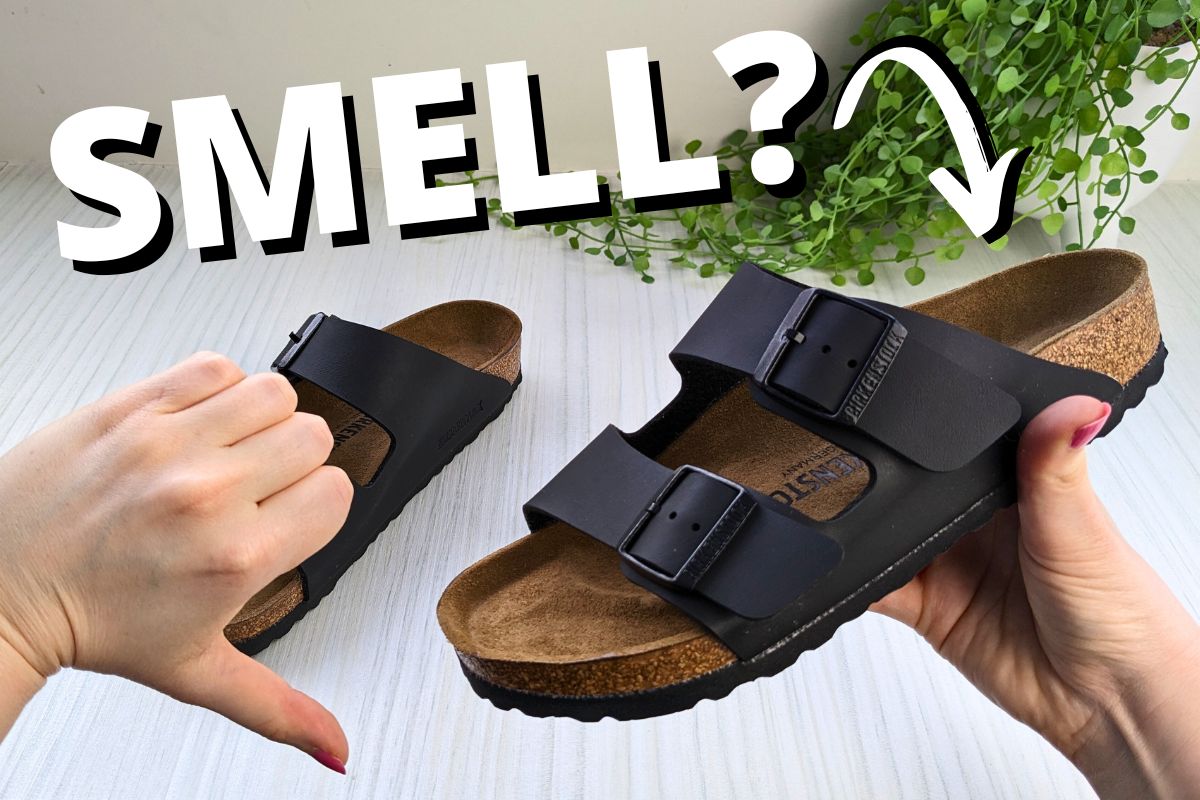
Smell happens when sweat, skin cells, bacteria, and dirt build up on the footbed and straps. Sandals offer little barrier, so moisture evaporates slowly in some spots and bacteria multiply. The smell is usually bacterial or fungal rather than the sandal itself. Knowing the cause helps you pick the right cleaning method when learning how to clean sandals that smell.
I’ve seen leather straps go sour from salt, and foam footbeds collect grime fast. That taught me to match cleaning steps to materials. Before you start, check the manufacturer label and test cleaners on a hidden spot. Small tests save shoes.

Tools and supplies you’ll need
Gathering the right tools makes how to clean sandals that smell faster and safer. Keep supplies simple and easy to find.
- Soft-bristled brush for scrubbing
- Mild dish soap or gentle laundry detergent
- Baking soda for odor neutralizing
- White vinegar for disinfecting
- Rubbing alcohol or hydrogen peroxide for tough spots
- Soft cloths or microfiber towels
- Old toothbrush for seams and grooves
- Warm water in a bowl or bucket
- Optional: disinfectant spray for quick refresh
Always use mild cleaners on delicate materials. Harsh chemicals can dry leather or ruin cork.
Quick everyday cleaning (5–10 minutes)
A fast routine prevents odors and reduces deep cleaning frequency. Do this after sweaty days or frequent wear.
- Rinse off loose dirt under running water.
- Mix a few drops of dish soap in warm water.
- Scrub footbeds and straps with the soft brush or cloth.
- Rinse well and pat dry with a towel.
- Air dry completely in shade.
This quick routine is the baseline for how to clean sandals that smell. It removes sweat and surface bacteria before they create bad odors.

Deep-clean methods by material
Different materials need different care. Follow the right method to avoid damage.
Rubber and plastic sandals
Rubber tolerates water and mild cleaners well.
- Make a soapy soak with warm water and dish soap.
- Scrub with a soft brush, especially tread and straps.
- For odor, sprinkle baking soda, let sit 15–30 minutes, then rinse.
- Dry in shade.
Rubber handles stronger treatments. I once soaked a pair overnight with no damage, but avoid bleach to preserve color.
Fabric sandals and straps
Fabric traps sweat and dust. Be gentle.
- Spot-clean with mild detergent and a soft brush.
- Use diluted white vinegar (1:3 vinegar to water) to neutralize odor. Blot and rinse.
- For removable fabric liners, you can often machine wash on gentle in a mesh bag.
- Air dry fully.
Testing is key. Some dyes run, so test first.
Leather sandals
Leather needs careful cleaning to stay supple.
- Wipe with a damp cloth and mild saddle soap or a leather cleaner.
- Avoid soaking. Use minimal water.
- For odor, sprinkle a little baking soda inside overnight then brush out.
- Condition leather after it dries to prevent cracking.
I ruined a favorite pair once by over-wetting them. Less water, more care.
Cork and contoured footbeds
Cork can crack if dried too fast.
- Wipe with a damp cloth and soap.
- Use a soft brush in grooves.
- Apply a bit of rubbing alcohol on a cloth for stubborn smell, then let air dry slowly.
- Seal cork occasionally with a specific cork sealer to prolong life.
For most materials, the key step in how to clean sandals that smell is matching cleaner strength to material.

Natural disinfecting and odor removal options
If you prefer natural methods, these are effective and gentle.
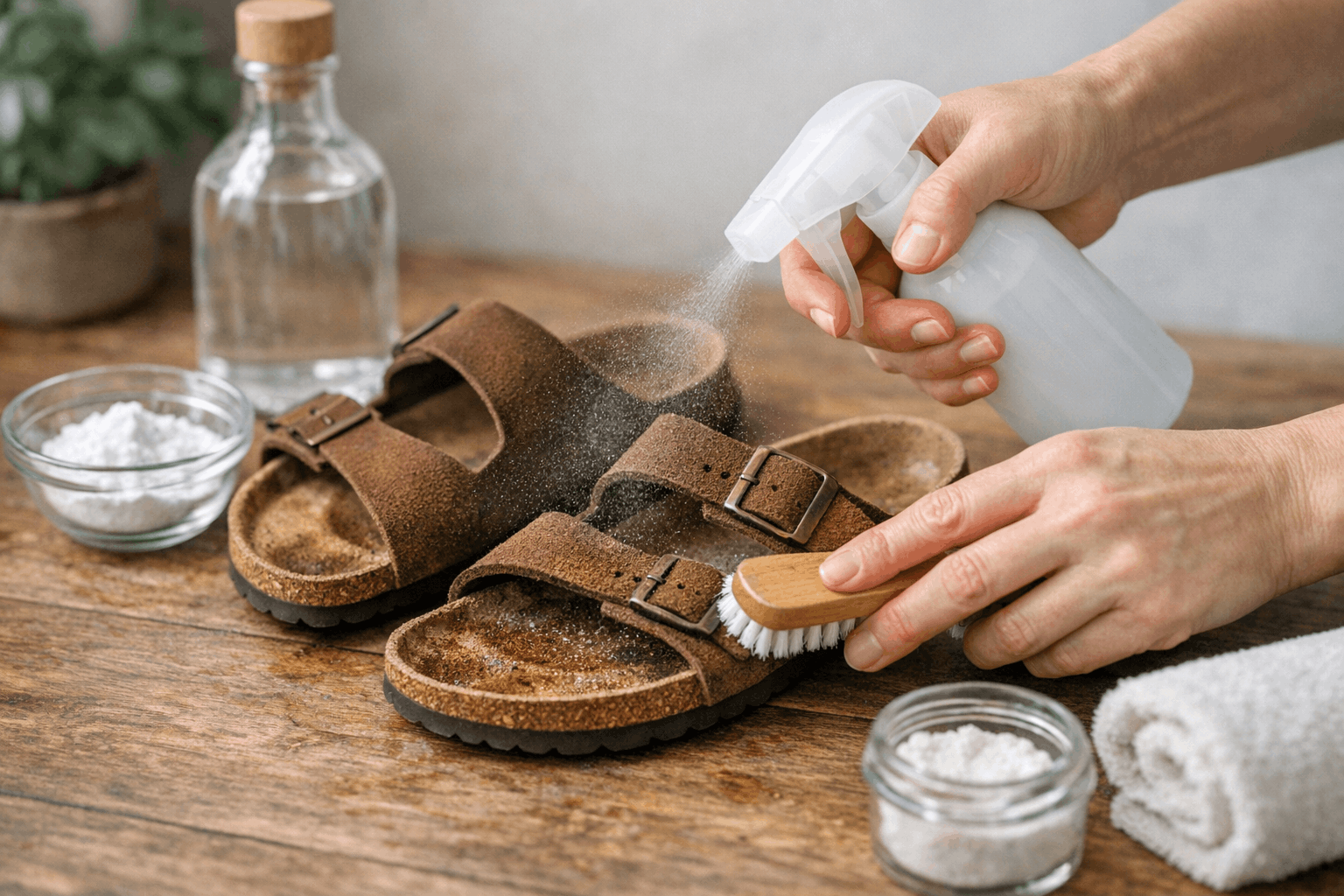
- Baking soda paste: Mix baking soda with water, apply to footbed, let sit 30–60 minutes, brush off.
- Vinegar spray: Combine equal parts white vinegar and water, mist sandals, let sit 10–15 minutes, then rinse.
- Tea tree oil: Add a few drops to water for antifungal action. Wipe, don’t soak.
- Lemon juice: Works for mild odors, but avoid on leather because acid can dry it.
These methods reduce bacteria and neutralize smells. They are cheap and safe when used properly.

How to disinfect sandals safely
Disinfecting targets bacteria and fungus that cause odor. Use the right product for the job.
- For hard soles, use 70% isopropyl alcohol on a cloth to wipe surfaces.
- For fabric, vinegar solution or diluted hydrogen peroxide can be used spot-wise.
- For leather, avoid alcohol and peroxide. Use a leather-safe disinfectant.
- Let sandals air dry fully after disinfecting.
Disinfecting too often or with harsh chemicals can damage materials. Rotate gentle methods with stronger treatment only when needed.

Drying, airing, and storage to prevent return of odor
Drying is as important as cleaning when learning how to clean sandals that smell. Damp sandals quickly re-grow odor.
- Air-dry in shade to avoid sun damage.
- Stuff with paper towels to absorb moisture faster.
- Use a fan for faster drying but avoid direct heat sources.
- Store in a well-ventilated area. Avoid sealed plastic bins for damp sandals.
- Place cedar blocks or sachets near sandals to keep moths and mustiness away.
A simple habit: after wearing, let sandals air out 24 hours before storing. This cuts down on bacteria.

Preventive tips to stop smell from starting
Prevention saves time and keeps sandals fresh longer.
- Wear breathable socks or no-show liners when appropriate.
- Rotate between pairs to allow full drying time.
- Apply foot powder or antiperspirant to sweaty feet.
- Clean footbeds weekly in heavy-use seasons.
- Avoid wearing sandals into wet, muddy conditions if you can.
These small steps reduce how often you need to deep clean. They are practical and effective.
When to repair or replace versus deep-cleaning
Some smells come from irreversible damage. Know when to repair and when to replace.
- Replace if foam footbeds are collapsing or permanently stained and smelly.
- Repair straps or re-glue loose soles to extend life.
- Deep-clean if odor returns but material is structurally sound.
- Replace if fungal infection persists after repeated cleaning.
I recommend replacing when comfort and structure are gone. No cleaning routine restores a broken footbed.
Personal experience and lessons learned
In my shoe-care work, I learned three clear lessons about how to clean sandals that smell. First, daily rinses prevent deep-set odor. Second, matching cleaners to material prevents damage. Third, simple natural solutions are often enough. One memorable pair had a very sour footbed. A baking soda night treatment and leather conditioner restored them for another season. Mistakes I made include over-soaking leather and using bleach on colored straps. Those cost pairs early.
Frequently Asked Questions of how to clean sandals that smell
How often should I clean my sandals to prevent smell?
Clean sandals lightly after heavy use and do a deeper clean once every 1–2 weeks during hot months. Frequency depends on sweat and activity level.
Can I put my sandals in the washing machine?
Some fabric or foam sandals can go on a gentle cycle inside a mesh bag, but avoid machine washing leather, cork, or glued sandals. Check manufacturer instructions first.
Will baking soda damage my sandals?
Baking soda is safe for most materials when used sparingly and brushed off. Avoid long contact with some delicate dyes.
How quickly do sandals need to dry to avoid smell?
Drying within 24 hours is ideal. Faster drying cuts bacterial growth and prevents strong odors.
What disinfectants are safe on sandals?
Use 70% isopropyl alcohol on hard surfaces, vinegar solutions on fabric, and leather-safe disinfectants on leather. Avoid bleach on colored or delicate materials.
Conclusion
Now you have clear, practical steps on how to clean sandals that smell. Start with a quick daily rinse, choose the right deep-clean method based on material, and use gentle disinfecting when needed. Prevent odors with proper drying, rotation, and small habits like foot powder. Try one method this week and see how quickly your sandals freshen up. If you found this guide helpful, leave a comment, share your own tips, or subscribe for more shoe-care advice.

Madison Clark is a footwear expert and the voice behind MyStyleGrid.com. She specializes in honest shoe reviews, style tips, and practical guides to help readers find the perfect pair for any occasion. With years of experience in blogging and content creation, Madison makes footwear knowledge simple, stylish, and easy to follow.