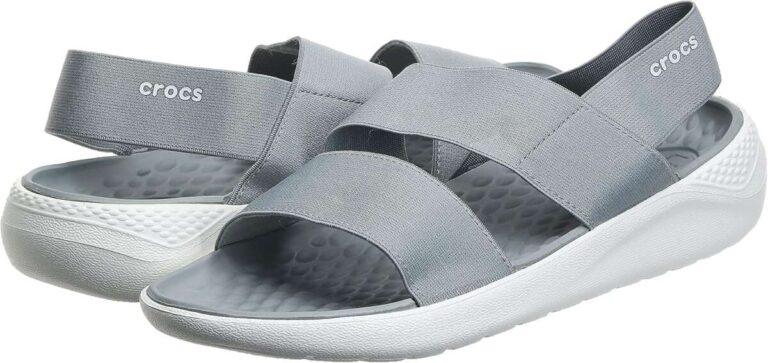
Warm water, gentle heat, and gradual wear can safely loosen Croc sandals without damaging their shape.
If your Croc sandals feel tight, you usually do not need to replace them right away. Crocs are made from a flexible, closed-cell resin called Croslite, which can soften with warmth and relax with careful use. This guide explains how to stretch Croc sandals by a small amount, where to use caution, and when a different size is the better choice.
Can You Stretch Croc Sandals?
Yes, you can stretch Croc sandals slightly. The material may soften and adjust around your foot when exposed to mild heat or warm water. However, Croc sandals cannot usually be stretched several full sizes.
The best results come from working on small pressure points. These may include:
• Tight straps
• Narrow side walls
• A stiff toe area
• Rubbing near the heel
• Pressure across the top of the foot
Croslite is not leather. It does not respond well to aggressive pulling or strong heat. Think of it like soft wax rather than fabric: gentle warmth helps it move, but too much heat can leave a permanent mark.
If your toes touch the front or your heel hangs over the back, stretching may not solve the problem. In that case, the sandals are likely too small.
How to Stretch Croc Sandals With Warm Water
Warm water is one of the gentlest ways to loosen Croc sandals. It works well when the sandals feel snug but are already close to the correct size.
What you need
• A basin or sink
• Warm water
• Clean, thick socks
• A dry towel
Do not use boiling water. Very hot water can soften the Croslite too much and may cause the sandal to lose its shape.
Step-by-step method
-
Fill a basin with warm water. The water should feel hot but comfortable, not scalding.
-
Place the Croc sandals in the water for about 30 to 60 seconds. Keep the straps and footbed fully exposed to the warmth.
-
Remove the sandals and pat away excess water with a towel.
-
Put on thick socks. Wool or cotton socks work well because they add gentle pressure.
-
Wear the warm sandals for 10 to 15 minutes. Walk around your home on a clean floor.
-
Focus on the tight area. Move your toes, flex your feet, and take slow steps.
-
Remove the sandals and let them cool while they sit in the shape of your foot.
-
Repeat the process the next day if needed.
This method is useful because it combines mild heat with controlled pressure. The socks act like a soft shoe stretcher, while your feet guide the shape.
In my experience helping people adjust molded shoes, one short session is safer than one long session. Many people make the mistake of soaking the sandals for several minutes and then wearing them until they cool. That can stretch one area too much and create an uneven fit.

How to Stretch Croc Sandals With a Hair dryer
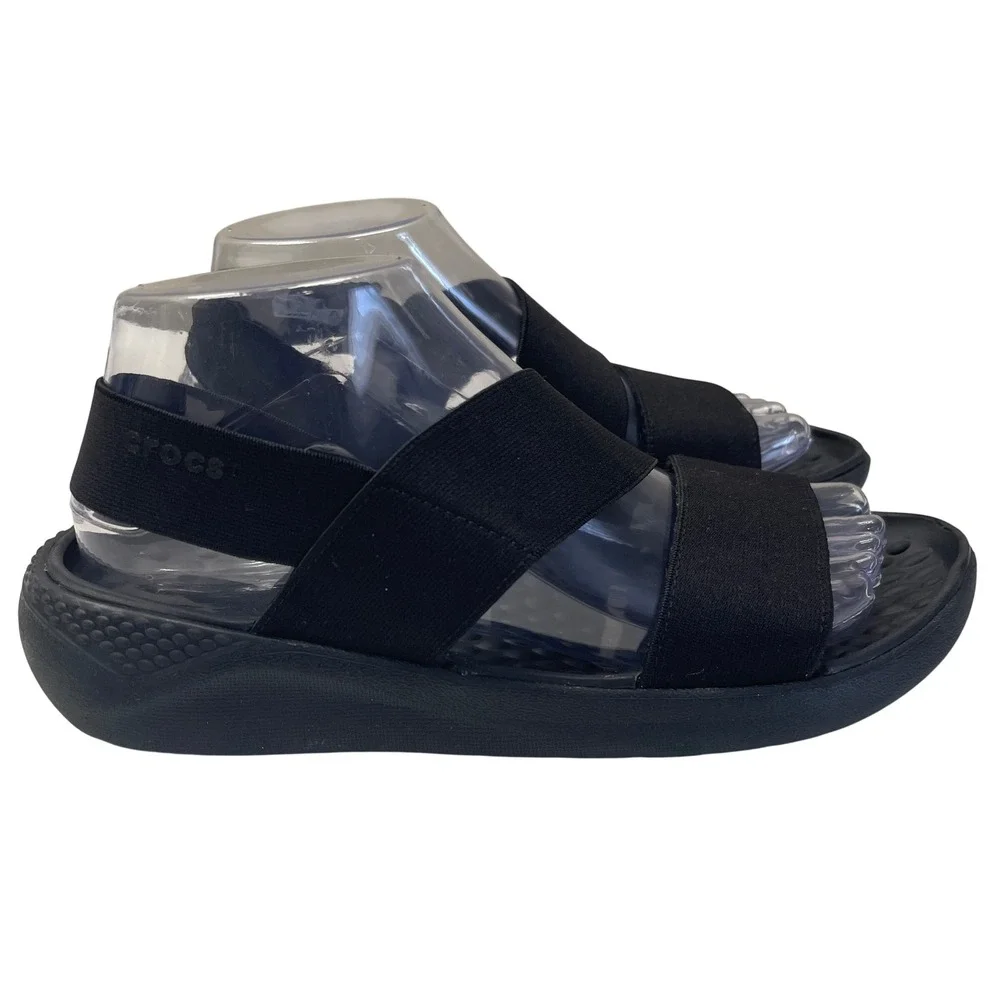
a hair dryer can target one tight spot more precisely than warm water. This method works well for a tight strap or a small area that rubs against your foot.
Safe hair dryer steps
-
Put on thick socks.
-
Place the Croc sandals on your feet. Do not fasten the strap too tightly.
-
Set the hair dryer to low or medium heat.
-
Hold it at least 6 to 8 inches away from the sandal.
-
Warm the tight area for 20 to 30 seconds.
-
Move your foot and toes while the material is warm.
-
Keep wearing the sandals for several minutes as they cool.
-
Check the fit before repeating the process.
Keep the dryer moving. Holding heat in one spot can create a shiny patch, dent, warped strap, or melted edge. Never use a heat gun, open flame, clothes dryer, or oven.
A hair dryer is best for small adjustments. If the entire sandal feels tight, warm water usually gives more even results.
 dryer”
style=”max-width: 100%; height: auto; border: 2px solid black; border-radius: 10px; display: block; margin: 0 auto;”
loading=”lazy”
/>
How to Stretch Croc Sandal Straps
Croc sandal straps may feel tight across the top of your foot. This is common with adjustable styles, molded straps, and sandals with limited openings.
To loosen a strap, warm it gently with water or a hair dryer. Then place a rolled towel, thick sock, or smooth object under the strap while it cools.
Use an object that is slightly wider than your foot. Avoid sharp items, glass, or anything with a hard corner. The goal is to create mild, even pressure.
You can also try this simple method:
• Loosen the strap as far as possible.
• Warm the strap for 20 to 30 seconds.
• Insert a thick rolled sock beneath it.
• Leave the sock in place for 10 to 20 minutes.
• Remove it and test the sandal.
Do not pull hard on the strap. Some Crocs sandals use molded parts that may crack or separate if forced. If the strap cuts into your skin even at its loosest setting, the sandal may have the wrong shape for your foot.

How to Stretch Croc Sandals for Width
If your Croc sandals feel tight on the sides, you can gently widen them with warmth and steady pressure. This method is most effective when the sandals are only slightly narrow.
Warm the sandals with water or a hair dryer. Then wear them with thick socks for 10 to 15 minutes. Walk slowly and let your feet press outward against the side walls.
You may also use a soft shoe stretcher designed for foam or synthetic footwear. Choose one with a gentle adjustment system. Turn the handle only a small amount at a time.
Check the sandals every few hours if you leave the stretcher inside. Stop when the width feels comfortable. Overstretching can make the footbed unstable and may cause your foot to slide.
Avoid using a standard wooden leather shoe tree. It may apply pressure in the wrong places and may not fit the molded shape of Croc sandals.
Width stretching works best around the forefoot. It will not always fix a sandal that is too short. Your toes should have room to move without touching the front edge.
How to Stretch Croc Sandals Lengthwise
Length is harder to change than width. You may gain a small amount of room by warming the toe area and wearing the sandals with thick socks, but the result is limited.
If your toes sit against the front edge, check these points first:
• Is the heel strap pulling your foot forward?
• Are your toes sliding because the footbed is damp or smooth?
• Does the sandal feel short only when walking downhill?
• Is the footbed curved in a way that does not match your foot?
Adjust the strap before trying to stretch the sandal. A strap that is too tight can push your foot forward and make the sandal seem too short.
Do not force the toe box forward with a hard object. This can create a bump or uneven footbed. If your toes still touch the front after careful adjustment, select a larger size or a different style.
A proper sandal should allow a small amount of space at the front and back. Your foot should remain centered when you walk.

How to Break In Croc Sandals Without Stretching Them
Sometimes Croc sandals do not need to be stretched. They simply need time to adapt to your walking pattern.
Wear them indoors for short periods. Start with 15 to 20 minutes, then increase the time over several days. This helps you find rubbing spots before they become painful.
Try these comfort steps:
• Wear thin socks during the first few sessions.
• Apply a small piece of moleskin to a rubbing area.
• Adjust the heel strap so it holds without squeezing.
• Keep your feet dry to reduce friction.
• Walk on flat surfaces while breaking them in.
I once saw someone wear new molded sandals on a full day of sightseeing. By the afternoon, the hot spots were painful and swollen. A few short indoor sessions would have revealed the problem much earlier.
Your feet also change during the day. They may swell after walking or in warm weather. Test the sandals at the time you expect to wear them most.

What Not to Do When Stretching Croc Sandals
The wrong method can permanently damage Croc sandals. Strong heat is the main risk because Croslite can shrink, warp, or change shape.
Avoid these methods:
• Do not place Croc sandals in a clothes dryer.
• Do not leave them inside a hot car.
• Do not use boiling water.
• Do not put them in an oven or microwave.
• Do not use a heat gun.
• Do not bend the sole sharply.
• Do not pull hard on the straps.
• Do not stretch them while they are on wet, slippery feet.
High heat may also cause the sandals to shrink rather than stretch. This can happen when footwear is left in direct sunlight or near a heater.
If you use a hair dryer, keep it moving and use low heat. If the sandal feels too hot to touch, stop at once.
How to Know if Your Croc Sandals Fit Correctly
A stretched sandal is not automatically a well-fitting sandal. Check the fit while standing and walking.
Your Croc sandals should meet these basic signs:
• Your toes do not hang over the front.
• Your heel does not extend beyond the back edge.
• The straps hold your foot without leaving deep marks.
• Your foot does not slide from side to side.
• The sole bends in a comfortable place under your foot.
• No area causes sharp pain or repeated rubbing.
You should be able to wiggle your toes. Your foot should also sit flat on the footbed rather than spilling over the sides.
If one foot is larger than the other, fit the sandals to the larger foot. Many people have a small difference between their left and right feet. A little extra room is usually better than constant pressure.
A sandal that feels loose may also cause blisters. Stretching should create comfort, not remove all support.
When You Should Replace or Exchange Croc Sandals
Stretching is not the right answer for every fit problem. Exchange the sandals if they are clearly too small, badly shaped, or painful after short wear.
Consider a different size or style when:
• Your toes touch the front edge.
• Your heel hangs over the back.
• The sandal causes numbness.
• The strap leaves deep marks.
• Your foot slides off the sole.
• The sandal twists while you walk.
• You need to stretch it more than one small adjustment.
Foot shape matters as much as size. A wide foot may need a roomier Crocs style, while a narrow foot may need a more secure strap or a slimmer design.
People with diabetes, reduced sensation, or circulation problems should be especially careful. A small rubbing spot can become a serious wound without much warning. Check with a qualified health professional if footwear causes ongoing pain or skin damage.
How Long Does It Take to Stretch Croc Sandals?
Most small adjustments take one to three sessions. You may notice a change after the first warm-water or hair-dryer treatment, but the final fit often develops through short periods of wear.
Use this simple schedule:
-
Test the sandals indoors for 15 minutes.
-
Stretch one tight area with mild warmth.
-
Let the sandals cool fully.
-
Wear them again the next day.
-
Stop when the pressure is gone.
Do not repeat the process several times in one day. Croslite can continue to shift as it cools, and repeated heat may weaken the shape.
Patience gives you more control. It is easier to stretch Croc sandals a little more than to repair a pair that has become misshapen.
Frequently Asked Questions About How to Stretch Croc Sandals
Can you stretch Croc sandals that are too small?
You can loosen Croc sandals slightly, but stretching will not turn a small pair into a correct-size pair. If your toes or heel extend beyond the sole, exchange them for a larger size.
Does hot water stretch Crocs?
Warm water can soften the Croslite material and help it relax around your foot. Avoid boiling water because excessive heat may warp or shrink the sandals.
Can I use a hair dryer to stretch Croc sandals?
Yes, but use low or medium heat and keep the dryer moving. Hold it several inches away and warm the tight area for short periods.
How do I stretch tight Croc sandal straps?
Warm the strap gently, then place a thick rolled sock or soft towel beneath it while it cools. Do not pull hard because molded straps can crack or lose their shape.
Can Croc sandals stretch in width?
They can widen slightly with mild heat and gradual wear. Width adjustments work best when the sandals are almost the right size and only feel snug around the forefoot.
Will wearing thick socks stretch Croc sandals?
Thick socks can help apply gentle pressure when the sandals are warm. Wear them for a short time indoors so you can stop before discomfort or excessive stretching occurs.
Can I put Crocs in the dryer to stretch them?
No. A clothes dryer can expose Croslite to damaging heat and may cause the sandals to shrink, warp, or lose their original shape.
Conclusion
The safest way to stretch Croc sandals is to use gentle warmth, thick socks, and short periods of gradual wear. Warm water works well for an overall adjustment, while a low-heat hair dryer can target a tight strap or small pressure point.
Avoid boiling water, strong heat, and forceful tools. If the sandals are clearly too short, cause pain, or make your foot spill over the edges, choose a better size or style instead of trying to reshape them.
Try one careful method at a time, check the fit as you go, and share your experience or questions in the comments.

Rubel Miah is the Senior Editor at MyStyleGrid.com, where he brings a sharp editorial eye and an unshakable love for fashion to everything he does. A true style addict, Rubel lives and breathes trends, from streetwear to high fashion, and has a knack for turning inspiration into impactful stories. With years of experience in fashion journalism and digital media, he curates content that empowers readers to express themselves through style. When he’s not editing features or forecasting the next big thing, you’ll find him hunting down vintage pieces or capturing street style moments around the city.