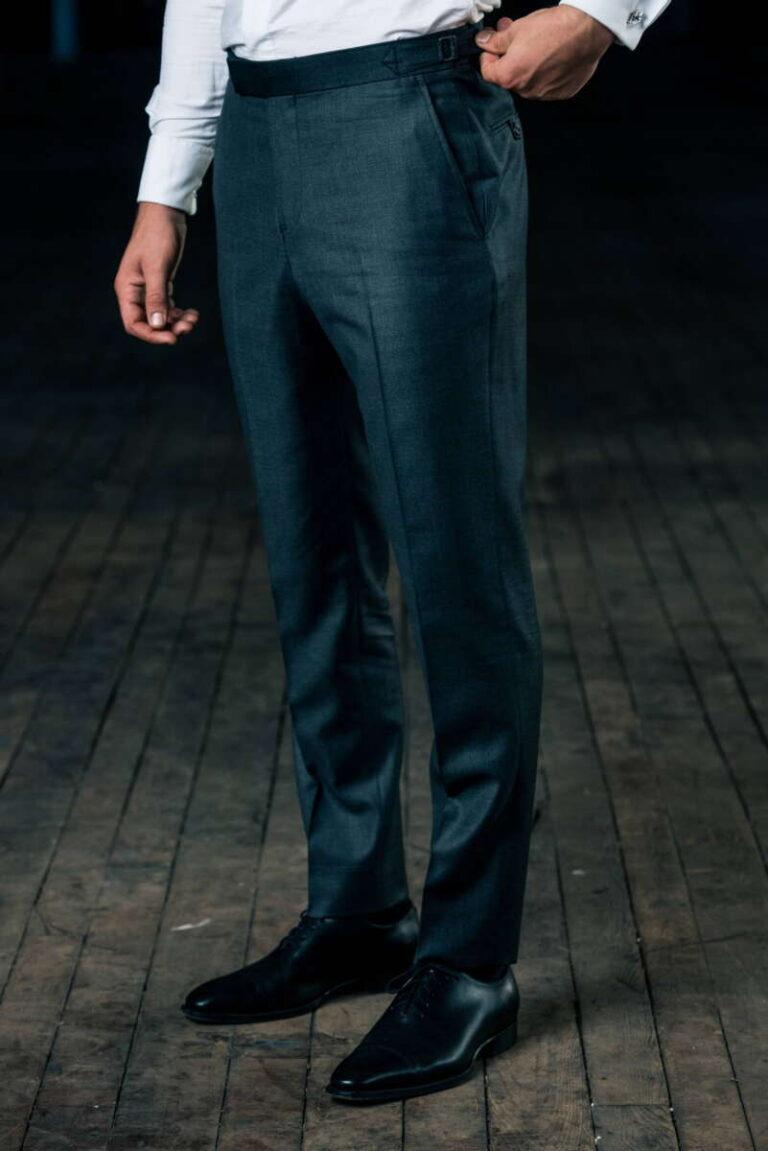
Wear suit trousers at your natural waist, keep the break clean, and match their jacket or dress them down.
Knowing how to wear suit trousers well comes down to fit, proportion, and context. As someone who has spent years studying and styling classic menswear, I see the same small mistakes often: trousers worn too low, hems that pool around the shoes, and jackets that do not match the fabric or color.
This guide explains how to wear suit trousers with confidence, whether you are dressing for a wedding, office, interview, dinner, or a relaxed weekend look. You will learn how to choose the right fit, style suit trousers without the jacket, select shoes and shirts, and avoid common errors.
What Are Suit Trousers?
Suit trousers are formal trousers made to be worn with a matching suit jacket. They usually share the same fabric, color, weave, and finish as the jacket. This matching design creates the smooth, balanced look associated with a traditional suit.
Suit trousers may have:
• A flat front or pleated front
• Belt loops, side adjusters, or waistband tabs
• A plain hem or cuff
• A slim, straight, or relaxed leg
• A low, mid, or high rise
The most important feature is not the label. It is the relationship between the trousers, your body, your shoes, and the setting. Good suit trousers should look clean when you stand and remain comfortable when you sit.
You can wear suit trousers as part of a full suit, but some pairs also work as separate trousers. This depends on their color, pattern, fabric, and condition. A shiny black pair with a matching jacket usually looks odd with a casual blazer, while gray wool suit trousers can work well with a navy jacket.
Start With the Right Fit
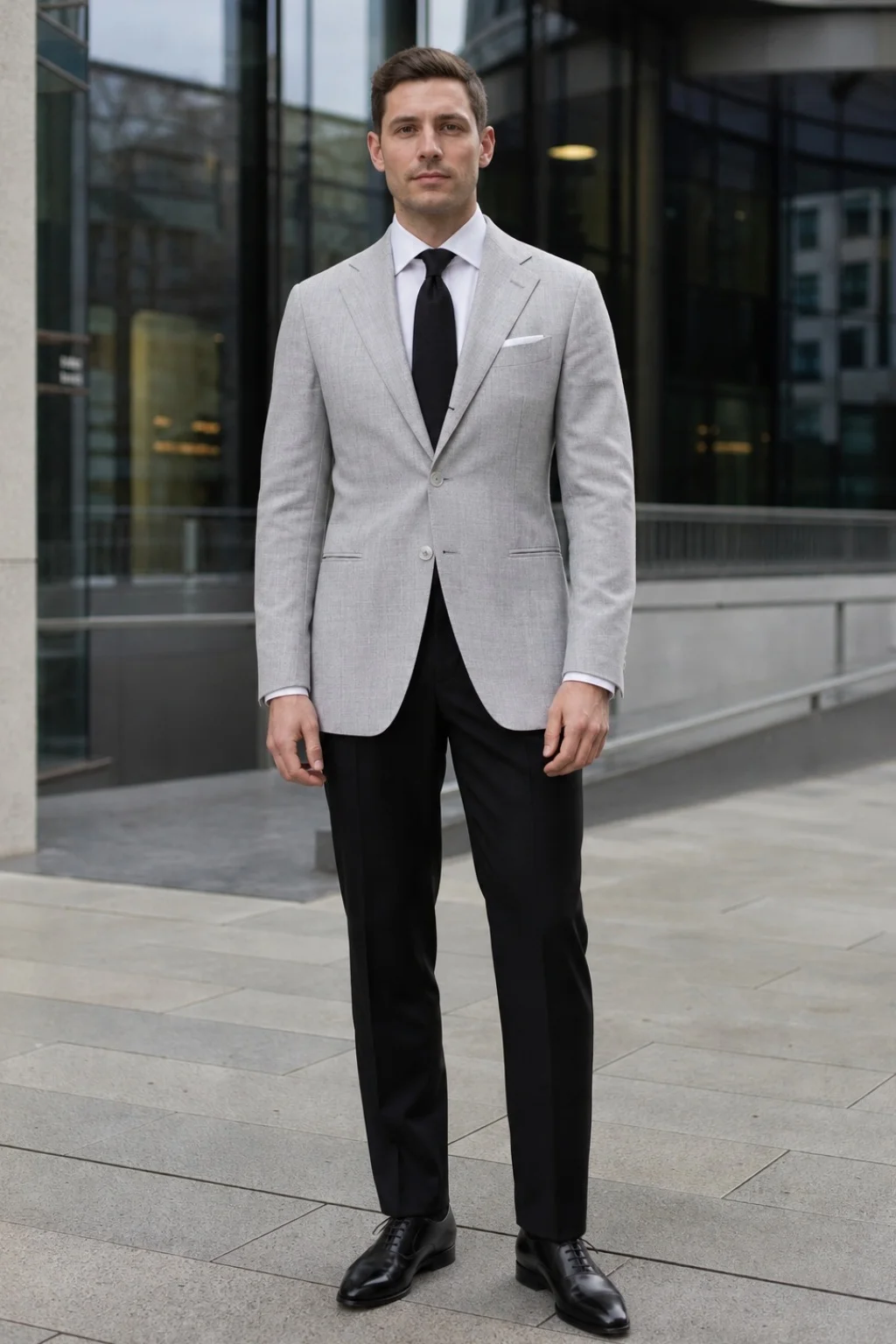
The best advice on how to wear suit trousers is simple: begin with fit. Styling cannot fully fix trousers that are too tight, too loose, too short, or too long.
Your trousers should sit securely at your natural waist or slightly below it, depending on their rise. They should not need a tight belt to stay up. If the waistband slides down during normal movement, the trousers are too large or the rise may be wrong.
Check these areas before buying or tailoring:
• Waist: The waistband should feel secure but not restrictive. You should be able to sit and breathe without pressure.
• Seat: The fabric should lie smoothly over your backside. Pulling or horizontal wrinkles often mean the seat is too tight.
• Rise: The rise should cover you comfortably from the crotch to the waistband. Too low a rise can create discomfort and a messy drape.
• Thigh: You should have enough room to walk, sit, and climb stairs. Tight fabric across the thighs is rarely elegant.
• Leg: The trouser leg should follow your shape without clinging. A clean line is more important than a very narrow opening.
• Hem: The bottom should meet your shoes neatly without creating a heavy stack of fabric.
A useful fitting test is the sit-and-walk test. Sit in a chair, stand up, walk several steps, and place your hands in your pockets. If the waistband cuts in, the pockets flare, or the fabric twists, the trousers need alteration or a different size.
In my experience, people often buy trousers by waist size alone. That is a mistake. Two pairs marked the same size can have very different rises, thigh widths, and leg shapes. Always judge the complete fit.
Choose the Correct Trouser Break
The break is the small fold where the trouser hem meets the shoe. It changes the style and visual balance of your outfit.
The main options are:
No break
The hem barely touches the shoe. This creates a sharp, modern look. It works well with slim trousers and sleek dress shoes, but it must be measured carefully. A hem that is too short can look accidental.
Quarter break
The fabric creates a small fold at the front of the shoe. This is one of the most versatile choices. It looks polished without appearing stiff or overly formal.
Half break
The trouser hem makes a clear but controlled fold. This traditional option works well for business suits and fuller trouser cuts.
Full break
The hem creates a deeper fold and may rest lower on the shoe. It suits classic, relaxed tailoring, but excess fabric can look untidy.
For most people, a quarter break or half break is the safest choice. The correct length also depends on the shoe. A low-cut loafer shows more ankle and may need a slightly shorter hem. A larger Oxford shoe can support a little more length.
When learning how to wear suit trousers, remember that the hem should not cover most of the shoe. Too much fabric creates folds that look like waves. Too little fabric may expose the sock when you stand or walk.
Wear Suit Trousers With the Matching Jacket
The easiest way to wear suit trousers is with their matching jacket. This creates a complete suit and removes most of the guesswork.
Before wearing a suit, check the following:
• The jacket and trousers have the same color and fabric tone.
• The jacket sleeves and trouser hem are properly tailored.
• The jacket buttons without pulling.
• The trousers do not show shine, fading, or heavy wear.
• The pattern lines up in a natural way.
A suit should look like one piece of clothing. Even a small difference in color can make the jacket and trousers look mismatched. This often happens when one item has been dry cleaned more often than the other or stored in strong sunlight.
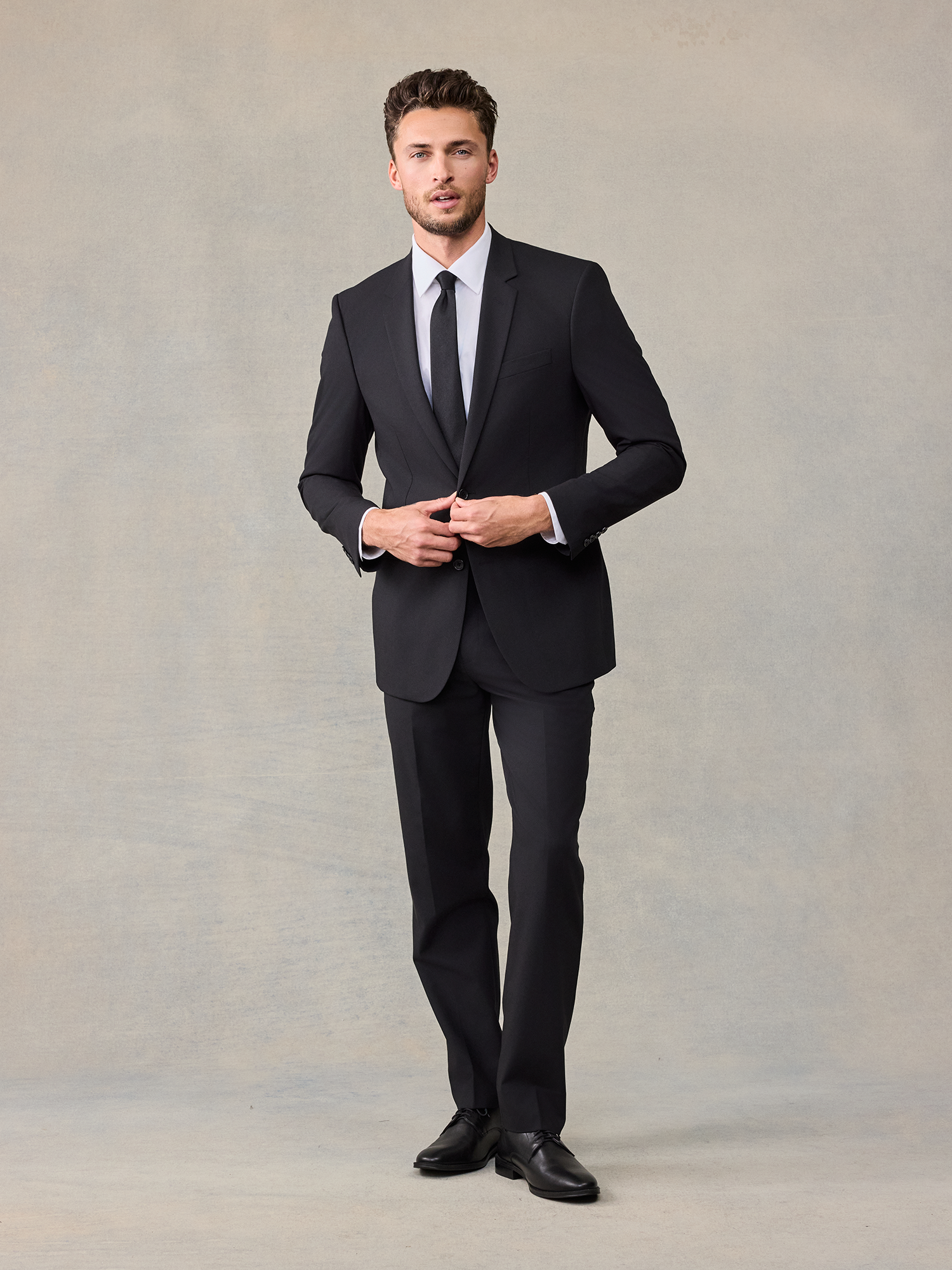
For business settings, pair the suit with a pressed dress shirt, a suitable tie, leather dress shoes, and a simple belt or suspender system. Keep the accessories quiet. The suit should lead the outfit.
For a wedding or evening event, you can add a textured tie, pocket square, or dressier shoe. Match the level of formality across the outfit. A formal wool suit with casual sneakers may work for fashion styling, but it is not right for every event.

Wear Suit Trousers Without the Jacket
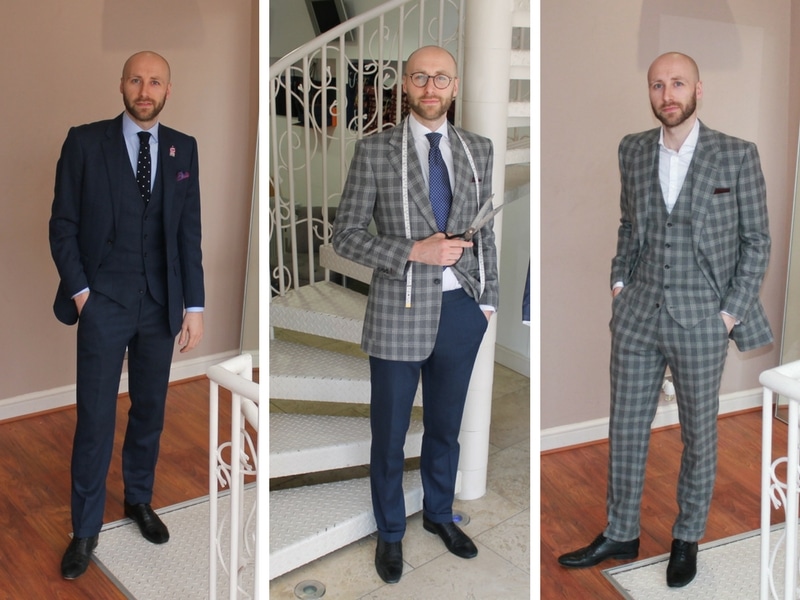
You can wear suit trousers separately, but not every pair is suited for this purpose. The best candidates have a medium or textured fabric, a neutral color, and enough visual weight to look intentional.
Good separate trouser colors include:
• Charcoal gray
• Medium gray
• Navy
• Brown
• Olive
• Tan
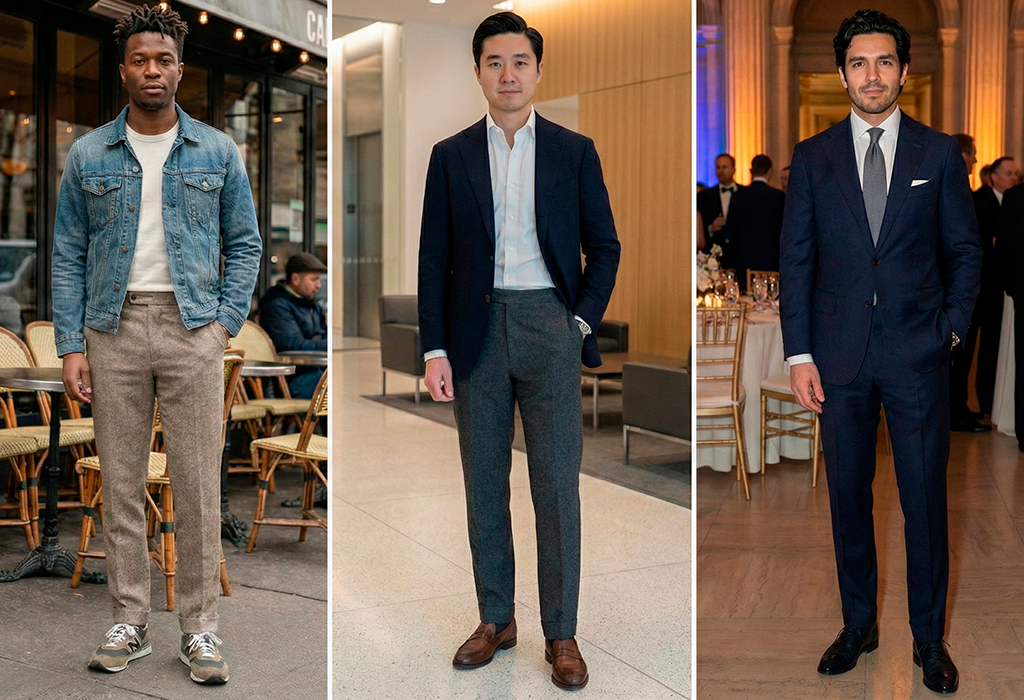
Pair gray suit trousers with a navy blazer and a light blue shirt. This is a classic combination because the colors contrast while remaining balanced.
Navy suit trousers can work with a gray sport coat, a brown jacket, or a textured blazer. Brown and olive trousers pair well with navy, cream, light blue, and soft gray.
Avoid wearing a formal black suit trouser with a random blazer. Black trousers often look too severe when separated from the matching jacket. They can work with a black or dark gray jacket, but the textures must be close.
The condition of the trousers also matters. If the jacket has been worn often but the trousers look new, or the trousers are shiny from repeated wear, the outfit may feel uneven. This is one reason many stylists recommend buying an extra pair of trousers with a frequently worn suit.
Pick the Right Shirt
Your shirt sets the tone for suit trousers. The right choice can make the outfit look sharp, relaxed, or creative.
For formal wear, choose a white or light blue dress shirt. These colors work with nearly every traditional suit and keep the outfit clean.
For business casual style, try:
• An Oxford cloth button-down shirt
• A fine-gauge knit polo
• A pale striped shirt
• A soft chambray shirt
• A simple merino wool sweater over a collared shirt
A tucked shirt usually looks best with suit trousers because it keeps the waist and pleats visible. If you wear the shirt untucked, make sure the hem is short enough to avoid covering the entire seat and pockets.
A shirt should not be so tight that buttons pull across the chest. It should also not be so loose that it creates large folds under the jacket. Small, natural folds are normal. Heavy bunching suggests a poor fit.
One practical lesson I learned from fitting formal outfits is that shirt length matters more than many people expect. A shirt that constantly comes untucked can make well-tailored trousers look messy within minutes.
Match Shoes With Suit Trousers
Shoes affect the entire shape of your outfit. They also determine how the trouser hem sits.
For traditional suit trousers, consider:
• Black Oxford shoes with charcoal, black, or dark navy suits
• Brown Oxfords or Derbies with navy, blue, or medium gray suits
• Burgundy shoes with navy, gray, or brown tailoring
• Loafers with lighter suits and relaxed business outfits
• Clean leather sneakers with casual, unstructured tailoring
The shoe should be polished and in good condition. Scuffed shoes can weaken an otherwise excellent outfit.
Your belt should usually match the color and general finish of your shoes. A black belt with brown shoes creates a visible break at the waist. If your trousers have side adjusters, you can skip the belt altogether. This often creates a cleaner line.
Be careful with sneakers. They can make suit trousers feel modern, but the trousers should have a slightly shorter, cleaner hem and a less formal fabric. Heavy athletic shoes often look too bulky with slim dress trousers.
Select the Right Socks and Undergarments
Socks are small, but they become visible when you sit or cross your legs. Choose socks that cover the lower leg and do not expose skin during normal movement.
Good options include:
• Socks that match the trousers
• Socks that coordinate with the tie or shirt
• Dark socks with dark trousers
• Subtle patterns for a relaxed outfit
Avoid very short socks with formal suit trousers. They can expose the ankle and make the outfit look unfinished.
Your undershirt should not show through a dress shirt. Choose a thin, close-fitting style in a color that blends with your skin or shirt. This helps the shirt sit smoothly under the jacket.
Comfort is part of looking polished. If your socks fall down or your undershirt bunches, you will adjust your clothes all day. The best outfit is one you can forget about after putting it on.
Understand Pleats, Cuffs, and Trouser Details
Trouser details affect both style and comfort.
Flat-front trousers create a clean, modern appearance. They are often chosen for slim or contemporary suits. Pleated trousers offer more room around the waist and thighs. They can look refined when worn at the correct rise and paired with a fuller jacket.
Pleats should lie flat when you stand. If they pull open, the trousers may be too tight. If they collapse into deep folds, the trousers may be too large or poorly pressed.
Cuffed hems add weight to the bottom of the trousers. They work well with classic tailoring and fuller legs. Plain hems often look sleeker and suit modern, narrow trousers.
Do not choose details only because they are fashionable. Consider your body and the outfit’s purpose. A classic cuff may look right in a traditional office, while a plain hem may suit a contemporary wedding suit.
How to wear suit trousers successfully is not about copying one trend. It is about creating balance from the waist down.
Dress Suit Trousers for Different Occasions
The setting should guide your choices.
Job interviews
Wear matching suit trousers with a simple jacket, white or light blue shirt, conservative shoes, and limited accessories. Charcoal and navy are safe choices because they look professional without being distracting.
Office wear
A full suit is suitable for formal offices. In a business casual workplace, wear separate gray or navy suit trousers with a blazer, button-down shirt, and leather shoes.
Weddings
Follow the dress code first. A navy, gray, or tan suit can work well for daytime events. Evening weddings often call for darker colors and more polished shoes.
Dinner or date night
Wear suit trousers with a fine knit polo, open-collar shirt, or dark blazer. Add loafers or sleek Derbies for a relaxed but refined look.
Casual weekend wear
Use only suit trousers that have a relaxed cut or textured fabric. Pair them with a knit sweater, overshirt, polo, or clean minimal sneakers.
One of the most common mistakes is dressing too far above or below the occasion. Clothes should communicate respect for the setting while still feeling like you.
Avoid These Common Mistakes
Even expensive suit trousers can look poor when worn incorrectly. Watch for these problems:
• Wearing the trousers too low: This can shorten the legs and create excess fabric near the crotch.
• Choosing a waist that is too tight: A belt cannot solve a waistband that cuts into your body.
• Letting the hem pool: Extra fabric around the ankle makes the trousers look unaltered.
• Showing too much sock: A small amount is normal when sitting, but standing should not reveal a large gap.
• Mixing different blacks: A faded black jacket and deep black trousers may look mismatched.
• Wearing an athletic shirt with formal trousers: The contrast can look careless unless the outfit is deliberately styled.
• Overloading the pockets: Phones, wallets, and keys can distort the line of the trousers.
• Skipping pressing: Wrinkled trousers make the entire outfit appear less polished.
• Using the wrong hanger: Wire hangers can create marks and damage the waistband. Use a shaped trouser hanger instead.
I once saw an otherwise strong wedding outfit fail because the trousers had been folded over the shoes in several thick layers. The wearer thought the extra length looked classic, but a simple hem adjustment would have made the suit look far more expensive.
Care for Your Suit Trousers
Proper care helps suit trousers keep their shape and color. Start by checking the care label, since fiber blends and finishes vary.
After wearing them:
• Empty the pockets.
• Hang them from the waistband or a quality clamp hanger.
• Brush away dust with a soft clothing brush.
• Let them air out before placing them in a closet.
• Remove small wrinkles with steam when the fabric allows it.
Do not dry clean suit trousers after every wear unless they are stained or the care instructions require it. Excessive cleaning can shorten the life of some fabrics. Airing, brushing, and spot cleaning are often enough for light use.
Rotate your trousers instead of wearing the same pair every day. Wool fibers benefit from rest because the fabric can recover its shape between wears.
Store the trousers in a cool, dry place away from direct sunlight. Sunlight can fade dark colors and create uneven patches.
A Simple Method for Styling Suit Trousers
Use this five-step process whenever you are unsure how to wear suit trousers:
-
Check the occasion and dress code.
-
Confirm that the trousers fit at the waist, seat, thigh, and hem.
-
Decide whether they should be worn with the matching jacket.
-
Choose shoes that match the formality and trouser color.
-
Add a shirt, belt, socks, and accessories that support the main outfit.
Stand in front of a full-length mirror before leaving. Look at the outfit from the front, side, and back. Sit down once to check that the trousers remain comfortable and the hem still looks controlled.
If one part looks wrong, fix the fit before adding more accessories. A tailored waist and clean hem will do more for your appearance than an expensive watch or designer belt.
Frequently Asked Questions About How to Wear Suit Trousers
Should suit trousers sit at the waist or hips?
Suit trousers usually look best when they sit at the natural waist or slightly below it, depending on the rise. They should stay in place without relying on a tightly pulled belt.
Can you wear suit trousers without the matching jacket?
Yes, but the trousers should have a versatile color, texture, and level of formality. Gray, navy, brown, and olive trousers are usually easier to wear separately than shiny black formal trousers.
How long should suit trousers be?
The hem should create a clean break over the shoe, usually a quarter or half break for a versatile look. There should be no large folds or fabric pooling around the ankle.
Should suit trousers have a belt?
Not always. A belt can add structure, but side adjusters or waistband tabs create a cleaner appearance and remove the need for one.
What shoes go best with suit trousers?
Oxfords, Derbies, loafers, and refined dress boots are reliable choices. Clean leather sneakers can work with relaxed suit trousers, but bulky athletic shoes often look out of balance.
Can you wear a T-shirt with suit trousers?
Yes, if the trousers are not too formal and the T-shirt is clean, fitted, and made from quality fabric. Add a casual blazer, overshirt, or minimal sneakers to make the combination look intentional.
Should socks match the trousers or shoes?
Matching the trousers creates a longer, cleaner leg line. You can also use socks that coordinate with another part of the outfit, such as the tie or shirt.
Conclusion
Learning how to wear suit trousers is mainly about fit, proportion, and purpose. Keep the waist comfortable, choose a controlled trouser break, match formal trousers with the right jacket, and select shoes that support the outfit’s level of dress.
Small details matter. A clean hem, pressed fabric, secure waistband, and balanced color scheme can transform ordinary suit trousers into a polished outfit. Try these tips with your next suit, then share your favorite styling combination or explore more guides on building a versatile wardrobe.

Rubel Miah is the Senior Editor at MyStyleGrid.com, where he brings a sharp editorial eye and an unshakable love for fashion to everything he does. A true style addict, Rubel lives and breathes trends, from streetwear to high fashion, and has a knack for turning inspiration into impactful stories. With years of experience in fashion journalism and digital media, he curates content that empowers readers to express themselves through style. When he’s not editing features or forecasting the next big thing, you’ll find him hunting down vintage pieces or capturing street style moments around the city.