“C” in shoe sizing usually refers to a width, but its meaning changes by brand, gender, and children’s sizing.
If you have ever seen a shoe marked “8C” or “C width,” you may have wondered whether it means narrow, medium, or something else. The answer depends on the sizing system and the shoe’s intended wearer. This guide explains what does c mean for shoe size, how C compares with B, D, and E widths, and how to choose a better fit with confidence.
What Does C Mean for Shoe Size?
In most US shoe charts, C is a width code. It does not usually describe the shoe’s length. Instead, it shows how wide the shoe is across the ball of the foot.
The exact meaning can change:
• In women’s shoes, C often means a medium or slightly wide width.
• In men’s shoes, C commonly means a narrow width.
• In children’s shoes, C may mean “child” rather than a width.
• In some brands, C may describe a narrow or standard fit.
This is why what does c mean for shoe size has no single answer for every shoe. A “7C” in a women’s shoe may fit very differently from a “7C” in a men’s shoe or a child’s shoe.
A shoe letter works like a small map. The number tells you the length, while the letter gives more information about the shape and width.
C Width in Women’s Shoe Sizes
For women’s shoes in the United States, C often represents a medium width or a slightly wide fit. However, many brands use B as the standard medium width, so C may be wider than average.
A common women’s width chart looks like this:
• AAA or 3A: Extra narrow
• AA or 2A: Narrow


• B: Standard or medium
• C: Medium-wide or wide
• D: Wide
• E: Extra wide
This chart is only a general guide. Some women’s shoe brands label C as wide, while others use C for a standard fit. Always check the brand’s own chart before ordering.
For example, a women’s size 8C may provide more room across the toes than an 8B. Yet it may not be as wide as an 8D. The length remains size 8, while the width changes.
C Width in Men’s Shoe Sizes
In men’s US shoe sizing, C most often means narrow. A typical men’s width chart may look like this:
• A or AA: Extra narrow
• B: Narrow
• C: Narrow
• D: Standard or medium
• E: Wide
• EE or 2E: Extra wide
• EEE or 3E: Very wide
This is one reason what does c mean for shoe size can confuse shoppers. The same letter can point to different widths in men’s and women’s footwear.


A men’s size 10C is usually narrower than a men’s size 10D. If your feet slide from side to side in standard men’s shoes, a C width may offer better support. If your toes feel squeezed, however, C is likely too narrow.
What Does C Mean in Children’s Shoe Sizes?
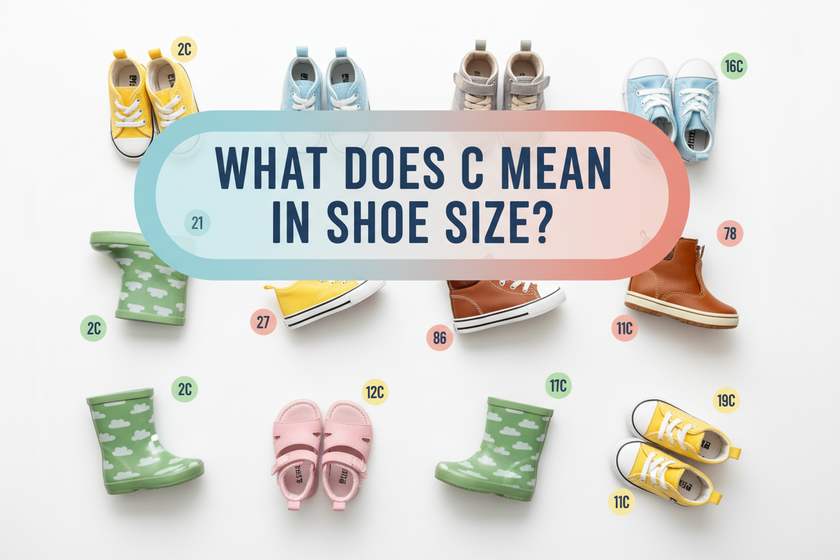
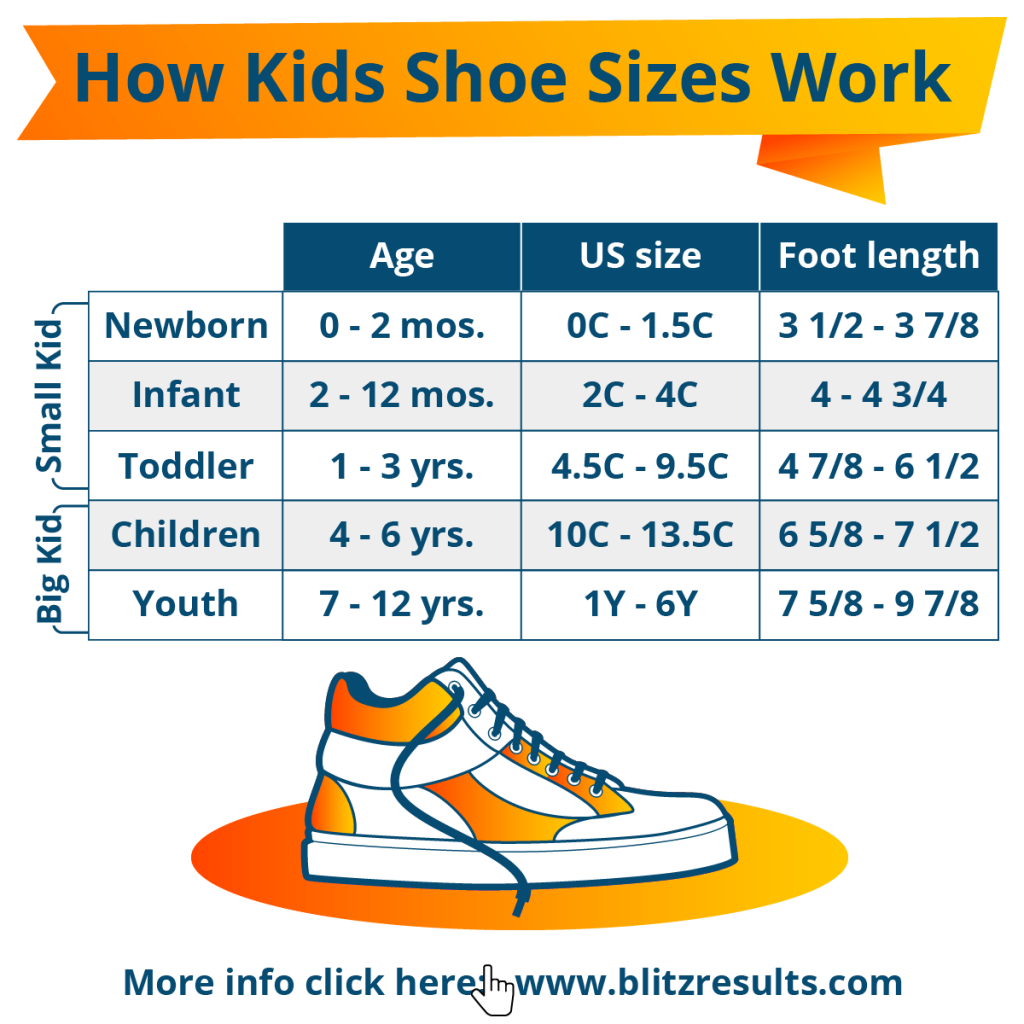
In children’s shoes, C often means child sizing. It may not refer to width at all.
Children’s sizes commonly use letters such as:
• C: Child
• Y: Youth
• K: Kid, in some brands
A label such as “10C” often means children’s size 10. It does not necessarily mean a narrow shoe. In this case, the C identifies the age group or sizing category.
After children’s sizes end, many brands move into youth sizes. For example, a child may wear 13C and then move into 1Y. The numbering restarts, so parents should check whether the label uses C or Y.
When asking what does c mean for shoe size in a child’s shoe, first decide whether the letter appears as a width code or as part of the children’s size system.

How Shoe Width Letters Work
Shoe width letters are not perfectly universal. They are based on industry sizing practices, but brands can adjust the shape of their lasts, or shoe molds.
The number shows foot length. The letter shows the general width and volume. Volume includes the amount of space over the toes, sides, and top of the foot.
Here is a simple comparison:
| Width code | Common meaning in women’s shoes | Common meaning in men’s shoes |
|---|---|---|
| AA | Narrow | Very narrow |
| B | Standard | Narrow |
| C | Medium-wide or wide | Narrow |
| D | Wide | Standard |
| E | Extra wide | Wide |
| EE | Very wide | Extra wide |
These meanings are common, not absolute. Athletic shoes, dress shoes, boots, and work shoes may all use different charts.
A shoe can also feel narrow even when its letter looks wide. This may happen when the toe box is pointed, the upper is stiff, or the sole has a curved shape. Width is only one part of fit.


C Versus B, D, and E Widths
Understanding nearby width letters makes what does c mean for shoe size easier to answer.
C Versus B
In many women’s shoes, B is medium and C is wider. In many men’s shoes, C is narrower than D.
This difference is important when buying from another section of a retailer. A women’s B and a men’s B are not equal widths. Shoe width must always be read within its gender and brand system.
C Versus D
For women, D often means wide. For men, D usually means standard or medium.
A women’s 8C may be less wide than an 8D. A men’s 10C is usually narrower than a 10D. The same letter cannot be compared without knowing the shoe category.
C Versus E
E normally indicates a wider fit than C. In men’s shoes, E is often wide or extra wide. In women’s shoes, C may already be medium-wide, but E usually gives much more room.
If your foot is broad at the ball or your little toe rubs against the side, moving from C to E may help. Still, a wider size will not fix a shoe that is too short.

How to Tell Whether C Width Will Fit
A width label is helpful, but your feet are the final test. Measure both feet near the end of the day, when feet are often slightly larger.
Follow these steps:
-
Place a sheet of paper on a hard floor.
-
Stand on the paper while wearing the socks you plan to use.
-
Trace around each foot or ask someone to mark the heel and longest toe.
-
Measure the length from heel to longest toe.
-
Measure the widest part of the foot.
-
Compare both measurements with the brand’s size chart.


Use the larger foot when choosing a size. Many people have one foot that is slightly longer or wider. That small difference can become painful after hours of walking.
When trying on a C-width shoe, check these points:
• Your longest toe should not touch the front.
• Your toes should be able to spread naturally.
• The widest part of your foot should line up with the widest part of the shoe.
• Your heel should stay in place without strong pressure.
• The sides should feel secure, not tight or numb.
A good fit should feel like a firm handshake, not a clamp.
Common Problems Caused by the Wrong Width
A shoe that is too narrow can create pressure across the ball of the foot. It may also lead to rubbing, blisters, numbness, and irritation around bunions.
A shoe that is too wide can cause your foot to slide. That movement may create heel blisters and reduce stability. It can also make your toes grip the floor to keep the shoe on.
Watch for these warning signs:
• Red marks that remain after removing the shoe
• Tingling or numbness
• Toes touching the front
• A bulge over the side of the shoe
• Heel movement with every step
• Pain that increases during the day
Some foot problems need more than a different width. People with diabetes, reduced sensation, severe swelling, or ongoing foot pain should ask a podiatrist for advice. A medical professional can assess foot shape, pressure points, and safe footwear needs.
Why Brand Charts Matter
Brands use different shoe molds. One company’s C width may feel like another company’s B or D. Materials also affect fit. Leather may soften with use, while synthetic materials often keep their original shape.
Running shoes usually offer more flexible uppers and broader toe boxes than formal shoes. Boots may have extra room for thick socks, but a pointed dress shoe may feel narrow even in a wider width.
Before buying, look for:
• The brand’s official width chart
• Customer comments about narrow or wide fitting
• The return and exchange policy
• A measurement guide
• Notes about half sizes or adjustable laces
Do not assume that a familiar number will fit the same in every brand. This is one of the most common mistakes people make when interpreting what does c mean for shoe size.
A Real-World Fitting Lesson
One fitting mistake I have seen often is choosing a longer shoe to solve a width problem. A shopper feels pressure at the sides, moves up one full size, and then finds that the heel slips and the toes still do not sit correctly.
The better approach is to keep the correct length and look for a different width or a roomier shape. In some cases, a stretchable upper, adjustable laces, or a round toe can help more than extra length.
Another useful lesson is to try on both shoes. Feet are rarely identical. Walk on a firm surface, bend your toes, and test the shoes for several minutes. If a store allows it, wear them later in the day when your feet have expanded.

C Width and Online Shoe Shopping
Online shopping makes width selection harder because you cannot feel pressure points before paying. Still, a few habits can reduce mistakes.
Use this checklist:
• Measure your feet instead of relying only on your usual size.
• Read the product page for width details.
• Check whether C means width or children’s sizing.
• Compare the brand’s chart with your measurements.
• Read reviews from shoppers with similar foot shapes.
• Confirm that returns are allowed for worn-on-carpet shoes.
• Order from a seller with a clear exchange policy.
Do not use reviews as a replacement for a size chart. Reviews can reveal patterns, but people describe fit in different ways. One shopper’s “wide” may be another shopper’s “comfortable.”
Does a C Shoe Need to Be Broken In?
A small amount of stiffness can improve with wear, especially in natural leather. However, severe pressure is not normal and should not be ignored.
A shoe should not require painful breaking in. If your toes feel cramped, your foot goes numb, or the side of your foot rubs, the shoe may be the wrong width or shape.
Never depend on stretching to fix a shoe that is clearly too short. Stretching may create a little extra room in some materials, but it cannot reliably change the shoe’s basic design.
When to Choose a Different Width
Choose a wider shoe when your foot spills over the sole, the upper presses against your little toe, or you see strong red marks along the sides. A wider toe box may also help if your toes cannot spread.
Choose a narrower shoe when your foot slides from side to side, your heel slips, or you must tighten the laces excessively. However, heel slipping can also come from poor shoe shape, so width is not always the only cause.
For bunions, hammertoes, high insteps, or swelling, look for shoes with:
• A rounded or square toe box
• Adjustable laces or straps
• Soft, flexible uppers
• A stable heel counter
• Enough depth over the toes
A podiatrist can recommend footwear if pain continues. Do not treat repeated pain as something you simply have to accept.
Frequently Asked Questions About What Does C Mean for Shoe Size
Is C a wide shoe size?
C can mean wide or medium-wide in women’s shoes, but it often means narrow in men’s shoes. In children’s shoes, C may identify the child sizing category rather than width.
Is a C width wider than a B width?
In many women’s shoe charts, C is wider than B. In men’s sizing, C may be narrower than D, so the answer depends on the shoe’s category and brand.
What does 8C mean in women’s shoes?
An 8C usually means a women’s size 8 with a C width. Depending on the brand, that width may be medium-wide or wide.
What does 10C mean in children’s shoes?
A 10C usually means children’s size 10. The C commonly stands for child and does not necessarily describe a narrow width.
Is C the same as medium width?
Not always. B is often medium in women’s shoes, while D is often medium in men’s shoes; C may be wider in women’s footwear and narrower in men’s footwear.
Can I wear a C shoe if I normally wear a D?
You may be able to, but it depends on the sizing system. If C is narrower than D in that brand, the shoe may feel tight, so compare measurements before buying.
How can I measure my shoe width at home?
Stand on paper, mark the widest part of your foot, and measure that distance. Compare the result with the shoe brand’s width chart, using the larger foot as your guide.
Conclusion
What does c mean for shoe size depends on context. In women’s shoes, C often means medium-wide or wide. In men’s shoes, it commonly means narrow. In children’s shoes, C often means child sizing rather than width.
Always check the brand’s chart, measure both feet, and judge the fit by comfort and stability. The right shoe should give your toes room, hold your heel securely, and feel comfortable from the first try. Use these tips before your next purchase, and share your experience or questions in the comments.

Madison Clark is a footwear expert and the voice behind MyStyleGrid.com. She specializes in honest shoe reviews, style tips, and practical guides to help readers find the perfect pair for any occasion. With years of experience in blogging and content creation, Madison makes footwear knowledge simple, stylish, and easy to follow.