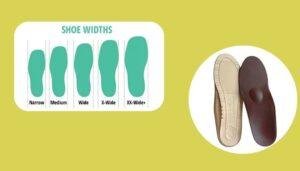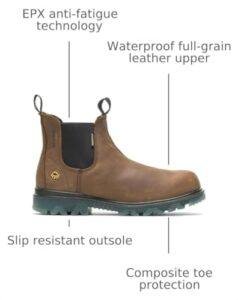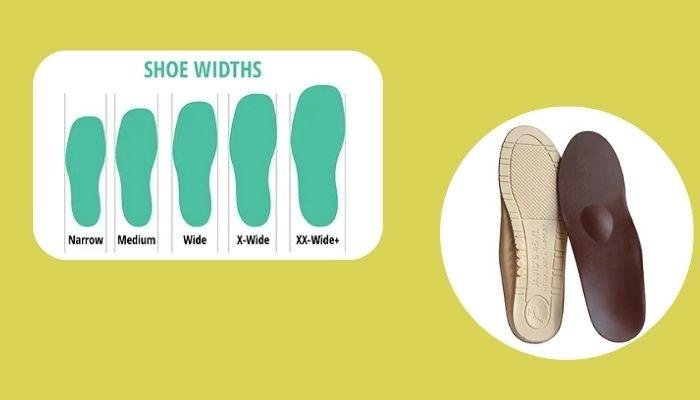
In U.S. boot sizing, W usually means “wide.” It tells you that the boot has more room across the ball of the foot and, in some cases, a roomier instep.
For example, a 10W boot is usually a men’s or women’s size 10 in a wide width. The length is still size 10. The extra space is across the foot, not from heel to toe.
The exact fit can vary by brand, boot style, and sizing system. Always check the maker’s size chart before you buy.
Quick Answer
W means wide in most U.S. boot size charts. A boot marked D, B, EE, or EEE may use a different width scale. In many men’s charts, D is standard and W may mean wide. In many women’s charts, B is standard and W means wide.

What Does W Mean on a Boot?
The letter W describes boot width. It does not normally describe boot length, height, or shaft size.
Boot width is measured around the foot’s broadest area. This area is near the ball of the foot, just behind the toes. A wide boot gives this part of the foot more room.
A size label may look like:
- 8W — size 8, wide width
- 9.5W — size 9.5, wide width
- 11 EW — size 11, extra-wide width
- 7M — size 7, medium or standard width
A wide boot may also have a roomier toe box. That is not always true, though. Some boots add width mainly through the midfoot. Others use a wider toe shape.
The boot’s last controls much of this shape. A last is the mold around which a boot is built. Two boots with the same size and width can still feel different if their lasts have different shapes.
Is W the Same for Men’s and Women’s Boots?
W usually means wide for both men’s and women’s boots, but the starting width is different.
Width letters often work like this in U.S. footwear:
| Boot category | Common standard width | Common wide width | Common extra-wide width |
|---|---|---|---|
| Men’s | D | W or 2E | 4E or wider |
| Women’s | B | W or D | 2E or wider |
This table shows common usage, not a universal rule. Each brand may use its own labels.
For example, a men’s medium boot is often marked D. A women’s medium boot is often marked B. Therefore, a women’s 8W is usually wider than a women’s 8B.
Some brands use C, D, EE, or EW instead of W. Others list widths as narrow, regular, wide, and extra wide without letters.


Why the same letter can feel different
A letter alone does not give a complete measurement. Width labels are tied to the shoe’s size and design.
A 9W boot may be wider than an 8W boot. The difference follows the brand’s sizing scale. The width can also change with:
- The foot shape used for the boot
- The height of the instep
- The shape of the toe box
- The thickness of the leather
- The type of lining
- The amount of padding
- The boot’s intended use

W Versus EE: What Is the Difference?
W and EE can both indicate a wide boot, but they do not always mean the same width.
Many men’s brands use EE or 2E for wide widths. Some brands use E for wide and EE for extra wide. Other brands use W for wide.
A typical men’s width scale may look like this:
| Letter or label | Common meaning |
|---|---|
| B | Narrow |
| D | Medium or standard |
| E | Wide |
| EE or 2E | Extra wide |
| EEE or 4E | Very wide |
This is only a guide. A brand may define these widths differently.
Women’s boots may use a different scale:
| Letter or label | Common meaning |
|---|---|
| AAA or AA | Extra narrow |
| A | Narrow |
| B | Medium or standard |
| C or D | Wide |
| EE or 2E | Extra wide |
Do not assume that a W boot equals an EE boot. Compare the brand’s chart or ask the seller for the actual width measurement.
How to Know If You Need a Wide Boot
You may need a wide boot if your toes feel squeezed or your foot spills over the edge of the sole.
Look for these signs:
- Your little toe presses against the side of the boot.
- The sides of your foot bulge over the outsole.
- Your toes cannot spread in a natural way.
- The boot leaves deep pressure marks on the sides of your foot.
- Your foot feels numb after a short walk.
- The boot feels tight even when the length seems correct.
- You need to loosen the laces across the forefoot.
- A standard boot feels tight while a longer size feels loose at the heel.
A longer boot is not a reliable fix for a width problem. Going up one length may give your toes more space, but it can also cause heel slip and poor foot control.
The right boot should hold the heel in place while giving the toes room to move. Your toes should not touch the front when you stand or walk downhill.
How Should Wide Boots Fit?
A wide boot should feel roomy, not loose.
Use these checks when trying on boots:


- Try them on late in the day. Feet often swell after hours of standing and walking.
- Wear the socks you plan to use. Thick work socks can change the fit.
- Stand up fully. Feet spread under body weight.
- Check your toes. They should not press the front or sides.
- Walk on a firm surface. The boot should flex near the ball of your foot.
- Check your heel. A small amount of movement can be normal in a new boot, but your heel should not lift excessively.
- Inspect pressure points. Pain, numbness, or sharp pressure is a warning sign.
Leather boots may soften with wear, but they do not reliably gain a full width size. Small pressure points may improve. A boot that is clearly too narrow is unlikely to become a good fit.
Do not count on a boot stretcher to solve a major width problem. Stretching can change the shape of some leather boots, but it may not work on synthetic materials, reinforced panels, rubber sections, or safety toe caps.
How to Measure Your Foot for Boot Width
You can measure your foot at home, then compare the result with the brand’s chart.
You will need:
- A sheet of paper
- A pen or pencil
- A ruler or tape measure
- The socks you plan to wear
Follow these steps:
- Put the paper on a hard floor.
- Wear your usual boot socks.
- Stand with your full weight on the paper.
- Trace around the foot, keeping the pen upright.
- Measure from the longest toe to the back of the heel.
- Measure across the widest part of the foot.
- Repeat for the other foot.
- Use the larger foot measurement.
- Compare both measurements with the boot maker’s chart.
Measure both feet because they may differ. Many people have one foot that is slightly longer or wider.
A home outline is useful for comparison, but it is not the same as a professional fitting. The drawing can change if the pen tilts or if you sit instead of stand.
The best comparison is the manufacturer’s own chart. Do not mix a width chart from one brand with a length chart from another.
Does W Mean Women’s in Boot Sizes?
Usually, no. W most often means wide.
Some retailers may use abbreviations such as:
- W — wide
- M — medium
- N — narrow
- W’s — women’s, in some product descriptions
The meaning depends on where the letter appears.
A label such as 8W usually means size 8 wide. A product category labeled Womens or W’s may refer to women’s footwear rather than width.
Check the full product description. Look for words such as:
- Women’s wide
- Men’s wide
- Wide width
- Medium width
- Extra wide
- D, EE, or 2E
If the listing is unclear, review the brand’s width chart before ordering.
Do Wide Boots Also Have a Wider Toe Box?
Not always. A wide boot can add space through the whole forefoot, or it can add most of that space near the ball of the foot.


Toe-box shape matters as much as the width code. A boot may be wide but still feel tight if its toe box is pointed or shallow.
People with broad toes may prefer a boot with:
- A rounded or anatomical toe shape
- Enough vertical room above the toes
- A sole that matches the foot’s outline
- No hard seam across the little toe
- A natural break near the ball of the foot
People with a wide forefoot and narrow heel may need a different fit from people with a wide heel and high instep. Width labels cannot describe every foot shape.
This is why customer reviews can help with fit clues, but they do not replace the brand’s measurements. Look for comments about toe-box shape, instep height, heel hold, and break-in time.
Common Mistakes When Choosing W Boots
Several common mistakes lead to a poor fit.
Assuming every W width is identical
A W boot from one brand may feel like a regular or extra-wide boot from another. Use the brand’s chart and return policy.
Buying a longer size instead of a wider size
Extra length does not solve all width problems. It may move the flex point too far forward and create heel slip.
Ignoring foot swelling
Boots that fit in the morning may feel tight after a work shift. Try them on when your feet are at their largest.
Wearing thin socks during the fitting
Thin socks can hide a width problem. Use the socks you will wear in real use.
Expecting leather to fix a bad fit
Leather can relax with use, but severe pressure, numbness, or pain should not be treated as a normal break-in stage.
Confusing width with shaft circumference
A W label usually describes the foot area. It does not necessarily mean the boot has a wider opening around the calf.
For tall boots, check shaft circumference separately. For pull-on boots, also check the opening and instep.
W Boot Size FAQs
Is a W boot wider than a regular boot?
Yes, in most U.S. sizing systems. A W boot is made with more room across the foot than the brand’s standard width.
Is W the same as 2E?
Not always. W and 2E may both describe a wide option, but brands use different width scales. Check the maker’s chart.
Is a women’s 8W the same as a men’s 8W?
No. Men’s and women’s sizing systems use different length and width standards. The two boots may not have the same internal dimensions.


Can I wear a wide boot if my foot is regular width?
You can, but the fit may be too loose. Extra space can cause your foot to slide, create rubbing, and reduce stability.
Do boots stretch wider over time?
Some leather boots may relax slightly. They should not be expected to stretch enough to correct a major width mismatch.
What does EW mean in boot sizing?
EW commonly means extra wide. Some brands use EW instead of EE or 2E. The exact width depends on the manufacturer.
What should I do if the boot length fits but the width does not?
Try the same length in a wider width first. If the heel becomes loose or the toe shape still feels wrong, look for a different boot last.
Key Takeaways
- W usually means wide in U.S. boot sizing.
- The number shows length; the letter shows width.
- Men’s standard width is often D, while women’s standard width is often B.
- W, E, EE, and EW are not universal measurements.
- A wide boot should give your forefoot room without letting your heel slide.
- A longer boot is not always a solution for a narrow fit.
- Check the manufacturer’s chart, toe-box shape, and shaft measurements before buying.
Conclusion
When you see W in a boot size, read it as wide unless the product listing clearly says otherwise. The boot should provide more room across the forefoot than the brand’s regular width.
For the best fit, measure both feet while standing, wear your normal socks, and compare your measurements with the brand’s chart. If the boot still causes pain, numbness, or strong pressure, choose another width or boot shape rather than relying on break-in.

Madison Clark is a footwear expert and the voice behind MyStyleGrid.com. She specializes in honest shoe reviews, style tips, and practical guides to help readers find the perfect pair for any occasion. With years of experience in blogging and content creation, Madison makes footwear knowledge simple, stylish, and easy to follow.