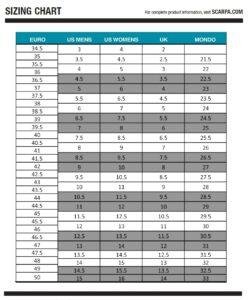
A 25.5 ski boot size is a Mondopoint size for a foot about 25.5 centimeters long. In the United States, it usually matches about a US men’s 7.5–8 or a US women’s 8.5–9. The exact match can vary by brand, boot model, and fit.
Mondopoint measures foot length in centimeters. It is not the same as a regular US shoe size. A 25.5 ski boot may fit differently from a size 8 street shoe because ski boots use a firm shell, liner, and a close performance fit.

What does 25.5 mean in ski boots?
The number 25.5 refers to foot length, measured in centimeters from the heel to the longest toe. A skier with a foot close to 25.5 cm long may begin by trying a 25.5 ski boot.


Ski boot sizes use the Mondopoint system, often written as Mondopoint, Mondo, or MP. Unlike US shoe sizing, Mondopoint is based on a physical measurement.
For example:
- 25.5 Mondo means approximately 25.5 cm of foot length.
- 25.0 Mondo means approximately 25.0 cm.
- 26.0 Mondo means approximately 26.0 cm.
A 25.5 shell may be suitable for someone whose feet measure between roughly 25.0 and 25.5 cm, depending on the intended fit and the brand’s shell design. A snug race or performance fit may use a smaller shell, while a comfort fit may require more room.
The number does not describe the boot’s outside length. The shell may be much longer than 25.5 cm because it must contain the liner, foot, heel pocket, and structural parts of the boot.
Is 25.5 a medium ski boot size?
Yes. In adult ski boots, 25.5 is a common medium-range size. It is often found in men’s, women’s, and unisex boot lines.
Some brands use the same shell for two adjacent sizes. For instance, a 25.5 and 26.0 may share one shell, while the liner or internal padding changes. This is called a shell-size grouping or shared shell.
The exact shell break depends on the manufacturer. Check the product’s technical chart rather than assuming that every 25.5 and 26.0 boot uses the same shell.
What US shoe size is a 25.5 ski boot?
A 25.5 ski boot usually converts to approximately:
| Ski boot size | Approximate US men’s size | Approximate US women’s size |
|---|---|---|
| 25.5 Mondo | 7.5–8 | 8.5–9 |
| 25.0 Mondo | 7–7.5 | 8–8.5 |
| 26.0 Mondo | 8–8.5 | 9–9.5 |
These are starting estimates, not guaranteed conversions. US shoe sizes differ between brands and shoe types. A running shoe, work boot, and ski boot may all use different lasts and internal shapes.
Ski boot makers also build models with different lengths, widths, heel pockets, and toe shapes. A 25.5 boot from one brand may feel longer or tighter than a 25.5 boot from another.


For that reason, use your measured foot length first. Use the US conversion only to narrow your search.
Why does the conversion vary?
The conversion varies because ski boot sizing has two separate parts:
- Length: Usually represented by the Mondopoint number.
- Shape and volume: Determined by the boot’s last, width, heel pocket, instep height, and liner.
A 25.5 boot with a 98 mm last may feel much tighter than a 25.5 boot with a 102 mm last. The last is the approximate width of the boot shell at its widest point, though brands may measure it differently.
The official size charts from manufacturers such as Tecnica and Salomon should take priority over a general US conversion table.
What if I wear a US men’s size 8?
If you wear a US men’s size 8, a 25.5 Mondo boot is a reasonable size to try first. However, do not buy it based on the shoe size alone.
Measure both feet. Then try the boot with a thin ski sock and your heel placed firmly in the rear of the shell. Your toes may lightly touch the front when you stand upright. When you flex forward into a skiing stance, your toes should pull back slightly.
If your toes remain crushed, numb, or sharply bent, the boot is too short or has the wrong shape. If your heel lifts heavily or your foot slides inside, the boot may be too large or too wide.
How to measure your foot for a 25.5 ski boot
Measure your feet at home before trying on ski boots. You need a sheet of paper, a pencil, a ruler or tape measure, and the ski socks you plan to wear.
Follow these steps:
- Put the paper on a hard floor with one edge against a wall.
- Stand on the paper with your heel lightly touching the wall.
- Keep your weight evenly spread across both feet.
- Mark the end of your longest toe.
- Measure from the wall edge to the toe mark.
- Repeat the process for the other foot.
- Use the measurement of the longer foot.
Do not measure while sitting. Your foot can become slightly longer and wider when standing under normal body weight.
If the longer foot measures close to 25.5 cm, a 25.5 ski boot may be the correct starting size. If it measures 26.0 cm, a 26.0 boot may be more appropriate, although the correct choice still depends on the boot’s fit and your skiing goals.
A simple measurement example
Suppose your feet measure:
- Left foot: 25.3 cm
- Right foot: 25.6 cm
Your right foot is longer, so you should begin by trying a 25.5 Mondo boot. You should not automatically choose 25.0 just because the smaller foot measures near that size.
A boot fitter may adjust the fit for the smaller foot with a footbed, liner work, or other fit changes. It is usually easier to manage a small difference between feet than to tolerate a boot that is too short for the longer foot.


Should you round up to 26.5?
Usually, no. Do not round up by a full size simply to gain comfort. A boot that is too large can cause:
- Heel lift
- Delayed control
- Foot movement inside the shell
- Cold feet from poor circulation
- More pressure when tightening buckles
If a 25.5 boot feels tight in width but correct in length, the solution may be a wider model or professional shell work. Moving to 26.5 increases length and volume and may create new problems.
How should a 25.5 ski boot fit?
A correctly fitted 25.5 ski boot should feel snug, secure, and supportive, not loose like a casual shoe. Ski boots need close contact so movements from your legs reach the skis without excessive delay.
Use this basic fit check:
- Your toes may lightly touch the front when standing straight.
- Your toes should move back slightly when you bend your knees.
- Your heel should stay mostly in place when you flex forward.
- Your arch should feel supported, not sharply compressed.
- Your foot should not lose feeling after a short try-on.
- You should be able to flex the boot without extreme pain.
Keep the boot buckled for about 10 to 15 minutes while standing and flexing. New liners can feel firm at first, but severe pain or numbness is not a normal break-in goal.
The shell-fit check
A shell-fit check can help show whether the boot is too long or too short. A qualified boot fitter normally removes the liner and places your foot inside the empty shell.
With your toes lightly touching the front, the fitter checks the space behind your heel. The ideal space depends on the skier and the boot type:
- A close performance fit generally allows less space.
- A recreational fit generally allows more space.
- Junior and comfort-focused boots may use different targets.
There is no single gap that works for every skier. The shell shape, flex, foot volume, skiing ability, and intended use all matter.
Do not perform aggressive shell modifications at home. Shell work can affect the boot’s structure and should be handled by a trained ski boot fitter.
How much room should be in the toe box?
Your toes should not be curled or crushed. They also should not have enough room to slide forward during turns.
A useful test is to stand upright, then bend your knees as if skiing. In the upright position, light toe contact is common. In the flexed position, your heel should settle back and your toes should gain a little room.
If your toes remain hard against the front while flexed, the boot may be too short. If your foot slides forward and back, the boot may be too large or lack the right shape.
Do 25.5 and 26.0 ski boots use the same shell?
Sometimes, but not always. Many ski boot companies group adjacent half sizes in one shell. A common example is a shell shared by 25.5 and 26.0, with different liners or footbeds.


This design can affect the fit in several ways:
- The outer shell length may remain the same.
- The liner may provide a different internal fit.
- A larger size may use less padding.
- The shell may have a different internal volume.
- The boot may feel different even if the shell looks identical.
Check the manufacturer’s specifications or ask a boot fitter before assuming that changing from 25.5 to 26.0 will add a full centimeter of length. It may add more internal space without changing the shell itself.
Is a 25.5 ski boot the same for men and women?
The length reference is similar, but the boot shape may differ. Women’s models often use changes in calf height, cuff design, flex, heel shape, or internal volume. These are design choices, not universal rules.
A skier should choose the model that fits the foot and lower leg. A men’s 25.5 and women’s 25.5 may not feel the same even though both use the same Mondopoint number.
Fit the boot by the actual shape of your foot, ankle, and calf rather than by the label alone.
What width should you choose in a 25.5 ski boot?
Choose width based on how your foot fits the shell, not only on your measured foot length. Ski boots commonly come in narrow, medium, and wide lasts.
Approximate categories include:
| Fit category | Typical design purpose |
|---|---|
| Narrow | Low-volume feet and close performance fit |
| Medium | Average foot volume |
| Wide | Higher-volume feet or more room across the forefoot |
Exact width numbers vary by brand and model. A “100 mm” last from one company may not feel identical to a 100 mm last from another.
A 25.5 boot that is too narrow may cause pressure at the little toe, big toe joint, or forefoot. A boot that is too wide may allow heel movement and make it hard to control the ski.
If the length feels right but the width feels wrong, try another last before changing the size.
Can a boot fitter make a 25.5 boot wider?
Often, yes. Ski boot fitters may use methods such as:
- Shell punching
- Shell grinding
- Liner molding
- Footbed fitting
- Buckle or strap adjustments
The available changes depend on the boot shell, the pressure point, and the amount of room needed. These adjustments should be made by a qualified professional.
Do not size up just to solve one pressure point without checking the shell. A larger boot may fix the width problem but create excess length and heel movement.


Common mistakes when choosing a 25.5 ski boot
The most common mistake is treating a ski boot like a street shoe. Street shoes often leave extra space for comfort. Ski boots need a closer fit to transfer movement to the ski.
Avoid these errors:
- Buying only from a US shoe-size conversion chart
- Measuring while seated
- Measuring only one foot
- Wearing thick socks to hide a poor fit
- Choosing a larger boot because the first try-on feels snug
- Ignoring heel lift
- Buckling too tightly to compensate for excess volume
- Judging fit before standing and flexing
- Assuming every 25.5 boot has the same shell shape
Thick socks do not reliably make a large boot fit better. They can also create pressure and reduce warmth by restricting circulation. A thin, ski-specific sock usually gives a clearer fit assessment.
If you feel numbness, tingling, sharp pain, or loss of circulation, loosen the boot and stop the fitting session. Persistent problems call for help from a qualified boot fitter or medical professional.
25.5 ski boot size: quick decision guide
Use this sequence when deciding whether to try a 25.5 boot:
- Measure both feet while standing.
- Use the longer foot as your starting point.
- Try a 25.5 boot if the longer foot is near 25.5 cm.
- Wear thin ski socks.
- Buckle the boot lightly, then flex forward.
- Check toe room, heel hold, pressure points, and circulation.
- Compare the boot’s width and volume with your foot.
- Ask a boot fitter to confirm the shell fit before buying.
A 25.5 boot is likely a good starting point when your longer foot measures near 25.5 cm, your toes are not curled, your heel stays secure, and the boot remains comfortable after several minutes of flexing.
Frequently asked questions
Is 25.5 the same as a US men’s 8?
Usually, 25.5 Mondo is close to a US men’s 7.5 or 8. The conversion is approximate. Measure your foot and check the boot maker’s own chart.
Is 25.5 the same as a US women’s 9?
Often, yes. A 25.5 ski boot commonly falls near a US women’s 8.5 or 9. Women’s and men’s boot shapes can differ, so the label does not guarantee the same fit.
Is a 25.5 ski boot too small for a 26 cm foot?
It may be too short if your foot truly measures 26.0 cm. However, shell shape and fit style matter. Try both sizes with a proper shell check rather than choosing by number alone.
Can I wear thick socks with a 25.5 ski boot?
You can, but thick socks are usually not the best fix for a tight or loose boot. A thin ski sock helps preserve circulation and gives a more accurate fit.
Should ski boots feel tight at first?
They should feel snug, but not painfully tight. Light toe contact while standing can be normal. Numbness, sharp pain, curled toes, or severe pressure indicate a fit problem.
Final answer
A 25.5 ski boot size means a Mondopoint foot length of about 25.5 centimeters. It generally converts to about a US men’s 7.5–8 or a US women’s 8.5–9, but those conversions are only a starting point.
Measure both feet, use the longer measurement, and judge the boot by its shell fit, width, heel hold, and comfort while flexing. If the length is right but the boot feels too narrow or too roomy, try a different last or see a professional boot fitter before changing sizes.


Madison Clark is a footwear expert and the voice behind MyStyleGrid.com. She specializes in honest shoe reviews, style tips, and practical guides to help readers find the perfect pair for any occasion. With years of experience in blogging and content creation, Madison makes footwear knowledge simple, stylish, and easy to follow.