Pronation in shoes describes how your foot naturally rolls inward after it hits the ground while you walk or run.
Understanding what is pronation in shoes can make buying footwear much easier. Pronation is a normal part of movement, but too much or too little rolling may affect comfort, balance, and how your shoes wear. This guide explains the science, the main shoe types, common mistakes, and simple ways to choose a better fit.

What Is Pronation in Shoes?
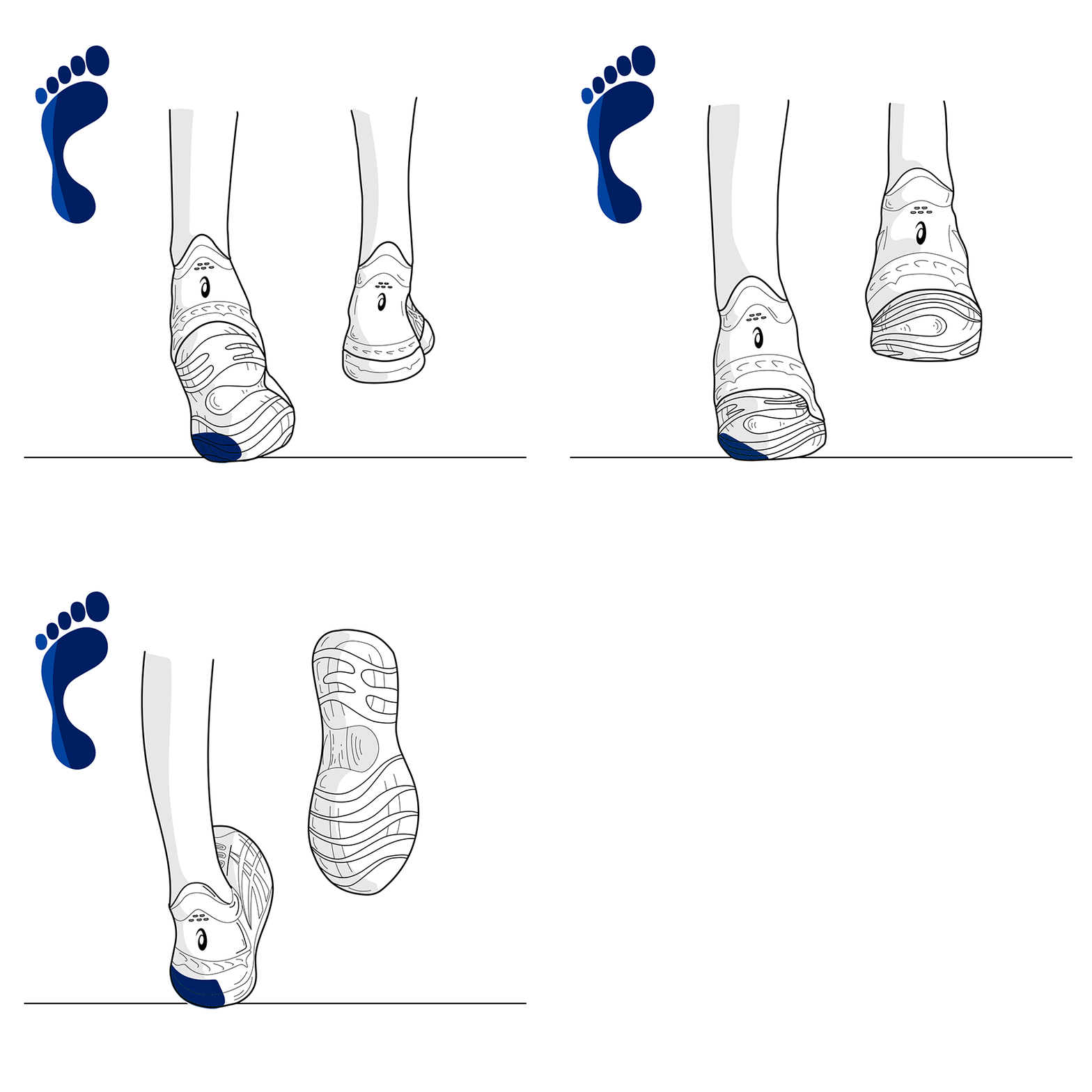
Pronation is the natural inward movement of your foot as it lands and supports your body. When you take a step, your heel usually strikes first or near the outside of the heel. Your foot then rolls slightly inward to help absorb shock and spread pressure.
This movement is not automatically a problem. In fact, a moderate amount of pronation helps your body move smoothly. It works like a spring that softens impact before your muscles, joints, and bones take the full load.
When people ask what is pronation in shoes, they are often asking whether their feet roll too far inward. That condition is commonly called overpronation. The opposite pattern, when the foot rolls very little, is often called underpronation or supination.
Pronation can vary from person to person. It may also change with walking speed, running form, fatigue, body weight, injury history, and shoe design.
Normal pronation
Normal pronation allows the foot to flatten and adapt to the ground. It can help the body move forward with less strain.
A neutral foot does not remain perfectly straight during every step. Small inward movement is expected. The goal is not to stop pronation completely but to support comfortable, efficient movement.
Overpronation
Overpronation happens when the foot rolls inward more than expected. The arch may collapse too much, and the ankle may move inward with it.
Some people with overpronation have no pain at all. Others may notice discomfort in the feet, ankles, knees, hips, or lower back. Foot movement is only one possible factor, so it should not be treated as a diagnosis by itself.
Underpronation and supination
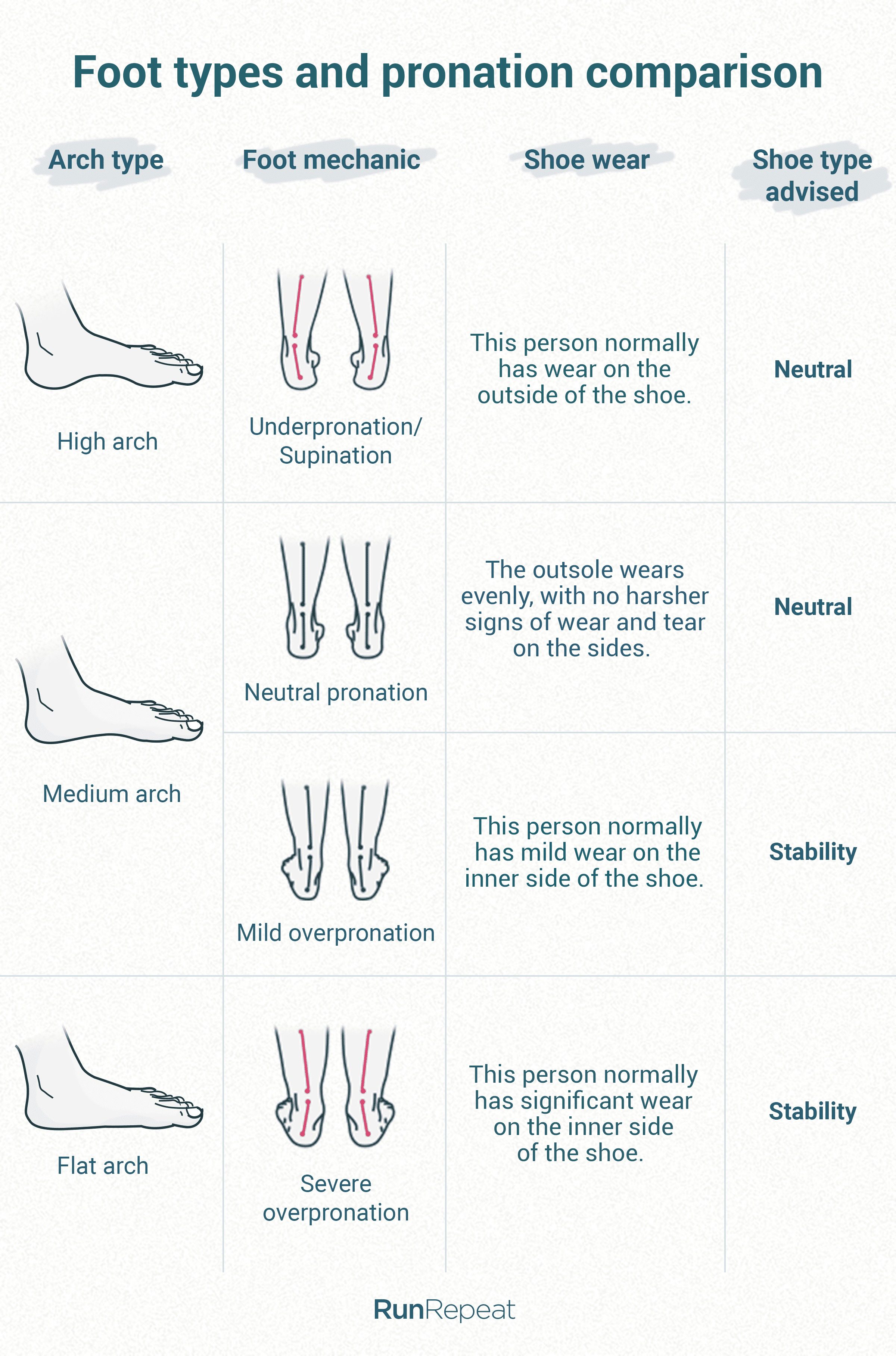
Underpronation occurs when the foot does not roll inward enough. The outside edge of the foot may receive more pressure, and the foot may feel less able to absorb impact.
People with high arches are more likely to show this pattern, but arch height alone does not tell the whole story. A person can have high arches and still move comfortably in a neutral shoe.

Why Does Pronation Matter?
Pronation matters because it affects how force travels through your body. Every step creates impact, and your feet help manage that force before it moves through your ankles, knees, hips, and spine.
A shoe cannot completely change the way your body moves. However, the right shoe can improve comfort, provide a stable platform, and match the demands of your activity.
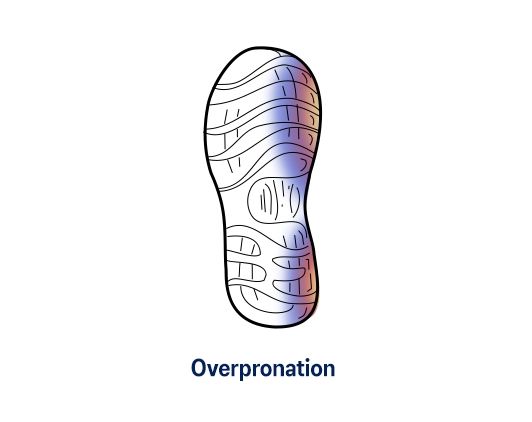
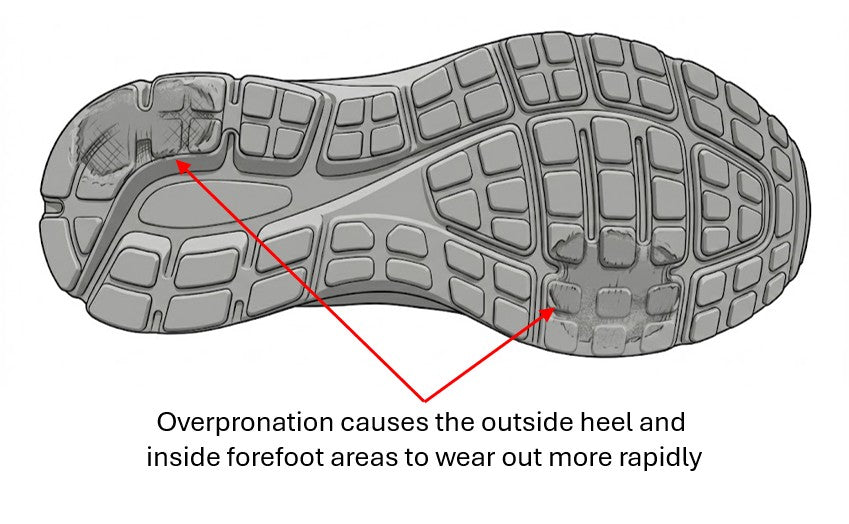
What is pronation in shoes also relates to pressure distribution. A person who rolls inward may wear the inner side of the sole faster. A person who rolls outward may wear the outer heel and forefoot more quickly.
Still, shoe wear is not a perfect test. Many factors affect it, including walking habits, road shape, shoe softness, body alignment, and how long the shoes have been used.
Pronation becomes more important when it appears with symptoms such as:
• Repeated foot or ankle pain
• Blisters caused by unwanted foot movement
• Uneven and rapid shoe wear
• A feeling that the ankle or arch collapses
• Pain that increases during walking or running
• Frequent lower leg or knee discomfort
Pain deserves attention even if your shoes appear to match your gait. A medical professional or qualified physical therapist can check the wider picture.
How Pronation Affects Walking and Running
Walking and running place different demands on the feet. During running, the body handles greater force and moves at a faster rate. This can make small comfort problems more noticeable.
During a running gait, the foot usually lands, accepts weight, and then helps push the body forward. Pronation happens during the weight bearing phase. A healthy movement pattern allows the foot to adapt without excessive strain.
Running form also matters. Cadence, stride length, terrain, training volume, and muscle strength can influence symptoms. For example, increasing your mileage too quickly may cause pain even when your shoes are suitable.
Pronation is not the only cause of running injuries. Research in sports medicine shows that injuries often result from several factors working together. Training errors, sudden changes in activity, poor recovery, and previous injuries may be just as important as foot motion.
A useful approach is to view pronation as one part of the picture. It can guide shoe selection, but it should not control every decision.

Types of Shoes for Different Pronation Patterns
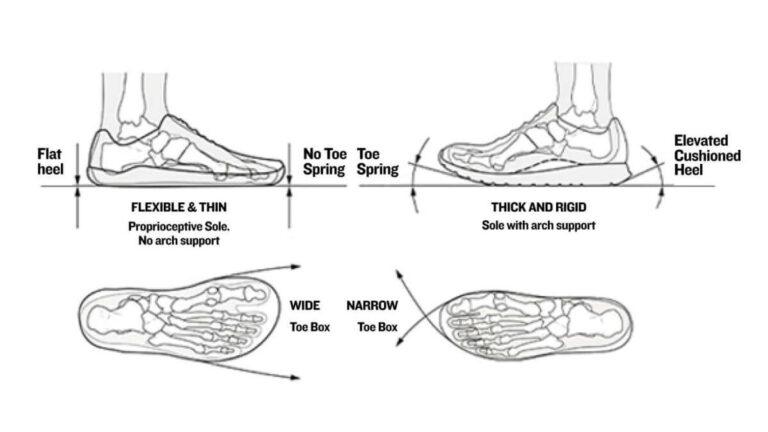
Shoe companies often group running shoes into three broad categories: neutral, stability, and motion control. These labels can help, but they are not medical terms and may differ between brands.
Neutral shoes
Neutral shoes are designed to allow the foot to move without strong corrective features. They often suit people with a comfortable, balanced gait or those who prefer a flexible, natural feel.
Neutral shoes may work for many foot shapes. They can also suit runners with mild overpronation if the shoes feel stable and pain free.
Stability shoes
Stability shoes usually provide extra structure on the inner side of the shoe. Modern designs may use firmer foam, wider bases, sidewalls, or guiding geometry instead of a hard post.
These features aim to reduce unwanted movement or make the foot feel more supported. They do not force every step into one exact position.
Motion control shoes
Motion control shoes are built with more support and structure than most stability shoes. They may suit people who need a firm, supportive platform for comfort during extended walking.
They can feel heavy or stiff to some users. A stronger shoe is not always a better shoe, especially if it feels uncomfortable or changes your natural movement in a distracting way.
Cushioned shoes
Cushioning and pronation control are different features. A cushioned shoe focuses on softness and impact comfort, while a stability shoe focuses more on guidance and support.
A soft shoe may feel comfortable at first but may not provide the stable base you prefer. A firm shoe may feel secure but uncomfortable over long distances. The best choice depends on your foot, activity, fit, and personal response.
How to Tell What Type of Pronation You Have
You can learn useful clues at home, but a home test cannot diagnose a foot or movement problem. The most reliable approach combines your comfort, shoe wear, movement, and symptoms.
Try these simple checks:
-
Look at the soles of an older pair of shoes. Wear that is slightly greater along the inner side may suggest inward rolling. Wear along the outside may suggest underpronation.
-
Stand barefoot and look at your arches. Notice whether they flatten when you stand, but do not assume arch shape proves your gait pattern.
-
Ask someone to record you walking or running from behind. Look for obvious ankle movement, but remember that a short video has limits.
-
Pay attention to comfort. A shoe that feels stable, secure, and pain free may be a better choice than one selected only because of a label.
-
Visit a specialty running store or licensed professional for a gait assessment if you have repeated pain or uncertainty.
A treadmill assessment can offer helpful information, but it is not perfect. Foot movement may differ outdoors, on hills, or when you are tired. A good assessment should consider your history and symptoms rather than focus only on a single visual test.
How to Choose Shoes Based on Pronation
The answer to what is pronation in shoes should lead to a practical decision, not fear. You do not need to buy the most corrective shoe on the shelf.
Use these steps when shopping:
• Start with the activity. Walking shoes, running shoes, work shoes, and court shoes have different goals.
• Measure both feet. One foot is often slightly larger than the other.
• Shop later in the day. Feet may swell after hours of standing or walking.
• Wear the socks you normally use. Thick socks can change the fit.
• Leave about a thumb’s width between your longest toe and the front of the shoe.
• Check the heel. It should feel secure without rubbing or pinching.
• Bend the shoe near the toes. It should flex in a natural place rather than fold in the middle.
• Walk for several minutes. The shoe should feel comfortable right away.
• Compare neutral and stability models if you are unsure. Comfort is useful evidence.
Do not choose shoes only because a salesperson says you have flat feet. Flat feet, flexible arches, and overpronation are related concepts, but they are not identical.
The same advice applies when replacing shoes. If an old pair worked well and your activity has not changed, a similar model may be a sensible starting point. However, brands can change their designs, so always test the current version.

Common Mistakes When Buying Pronation Shoes
Many shoppers make the same errors when they try to solve a gait concern. Avoiding these mistakes can save money and reduce discomfort.
Treating pronation as a disease
Pronation is usually a normal movement. The problem is not the word itself. The concern is whether the movement is linked to pain, poor function, or repeated injury.
Choosing the most supportive shoe
More support is not always better. A shoe that feels too rigid may create pressure in another area or make walking feel unnatural.
Trusting a wet foot test alone
A wet footprint may show the shape of your arch, but it cannot show how your foot moves while walking or running. Use it as a rough clue, not a final answer.
Ignoring the shoe’s fit
A well designed stability shoe will not help if it is too narrow, too short, or loose at the heel. Fit comes before most technical features.
Changing shoes too quickly
If you move from a flexible neutral shoe to a stiff support shoe overnight, your legs may need time to adjust. Introduce a new pair gradually, especially if you use it for long runs or work shifts.
Blaming every injury on pronation
Pain can come from training load, muscle weakness, poor sleep, hard surfaces, or an existing condition. A shoe change may help, but it may not solve the main cause.
When to See a Medical Professional
Most people can choose comfortable shoes without medical testing. You should seek professional advice when symptoms persist, worsen, or limit normal activity.
Consider seeing a podiatrist, physical therapist, sports medicine physician, or other qualified clinician if you have:
• Pain that lasts more than a few days after reducing activity
• Swelling, numbness, or tingling
• A recent fall or sudden injury
• Repeated ankle sprains
• Pain that changes your walking pattern
• Diabetes or reduced sensation in your feet
• Severe discomfort in only one foot
A professional may examine your strength, joint movement, balance, footwear, and walking pattern. They may also suggest exercises, training changes, orthotics, or different shoes.
Orthotics are not automatically needed for overpronation. They can help some people, but they should match the person and the problem. Store bought inserts may improve comfort, while custom devices may be useful in selected cases.

A Practical Example of Pronation in Shoes
Imagine two walkers who each cover three miles a day. One has mild inward rolling but feels comfortable in a neutral shoe. The other has similar foot movement but develops arch and ankle pain after twenty minutes.
The first walker may not need a corrective shoe. The second may benefit from a fitting assessment, a wider base, a stability shoe, or a review of walking volume.
This example shows why what is pronation in shoes cannot be answered by arch shape alone. The best choice depends on movement, symptoms, fit, and use.
A common lesson from footwear fitting is simple: comfort is information. It is not the only factor, but it is often more useful than a label printed on the box.
Frequently Asked Questions About What Is Pronation in Shoes
Is pronation in shoes good or bad?
Pronation is usually a normal part of walking and running. It becomes a concern mainly when excessive movement is linked to pain, instability, or reduced function.
How do I know if I overpronate?
You may notice extra wear on the inner sole, inward ankle movement, or discomfort in the feet and legs. These signs are not conclusive, so a gait assessment can provide better guidance.
Do I need stability shoes if I overpronate?
Not always. Some people with overpronation feel comfortable in neutral shoes, while others prefer the support of a stability model.
Can shoes fix overpronation?
Shoes can improve comfort and provide support, but they do not permanently change your foot structure. Strength work, training changes, physical therapy, or orthotics may also help when symptoms are present.
Is overpronation the same as flat feet?
No. Flat feet describe the shape or height of the arch, while overpronation describes how the foot moves during weight bearing. A person can have flat feet without pain or excessive movement.
How often should I replace pronation shoes?
Replace shoes when the cushioning, support, or fit has clearly declined. Mileage is only a rough guide because body weight, surfaces, shoe quality, and activity type all affect wear.
Are expensive stability shoes better?
Not necessarily. Price does not guarantee a better fit or better support. A reasonably priced shoe that fits well and feels comfortable may be the better choice.
Conclusion
Pronation is the natural inward roll of the foot during walking and running. A small amount is normal, while overpronation or underpronation may matter when they cause pain, instability, or unusual shoe wear.
The best footwear choice depends on more than your arch shape. Consider your activity, fit, comfort, shoe wear, and symptoms before choosing a neutral, stability, or motion control shoe.
Try on several pairs, walk in them, and replace labels with real comfort and useful evidence. If pain continues, speak with a qualified health professional. Explore more footwear guides, share your experience, or leave a comment about which shoes work best for you.

Madison Clark is a footwear expert and the voice behind MyStyleGrid.com. She specializes in honest shoe reviews, style tips, and practical guides to help readers find the perfect pair for any occasion. With years of experience in blogging and content creation, Madison makes footwear knowledge simple, stylish, and easy to follow.