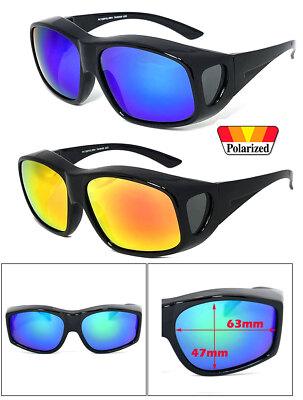
Yes, you can get prescription polarized sunglasses made with your exact vision prescription.
Can you get prescription polarized sunglasses for driving, fishing, hiking, or daily use? Yes. An eye doctor or optical professional can fit polarized lenses with single-vision, bifocal, or progressive prescriptions. The right pair can reduce glare, improve comfort, and protect your eyes from ultraviolet light when the lenses include proper UV protection.
What Are Prescription Polarized Sunglasses?
Prescription polarized sunglasses combine two features: vision correction and glare control. The lenses are made with your prescription, then treated with a polarizing filter that blocks much of the reflected light that reaches your eyes from flat surfaces.
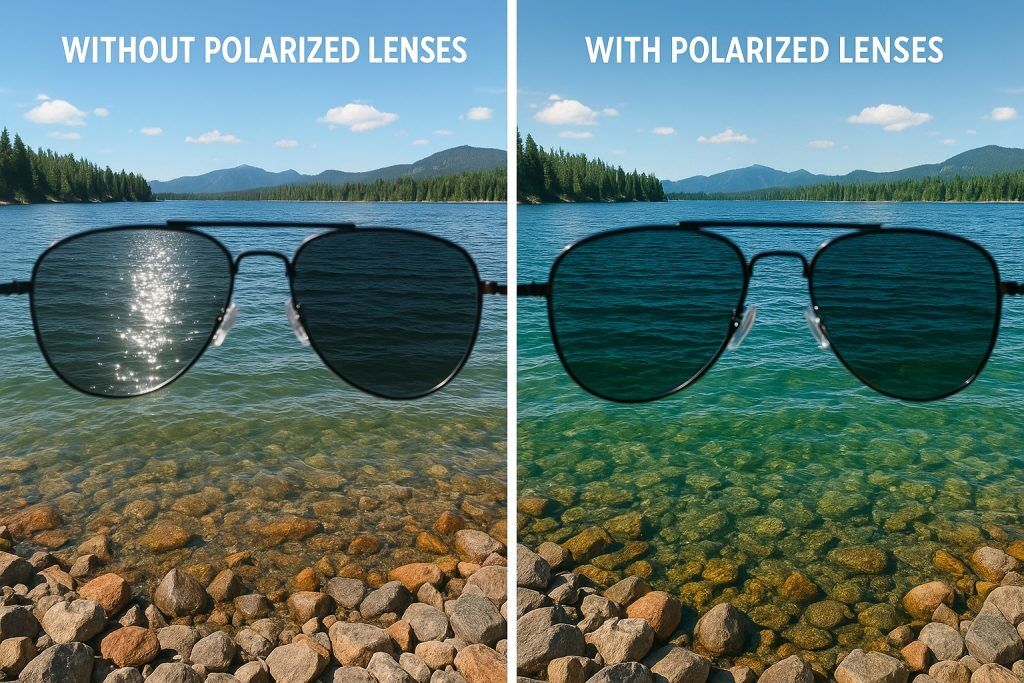
Reflected light often comes from roads, water, snow, windows, and car hoods. It can create harsh glare and make it harder to see details. Polarized lenses work like a window blind for light, allowing useful light through while reducing much of the scattered glare.
Can you get prescription polarized sunglasses in the same lens types as regular prescription glasses? In most cases, yes. They may be available as:
• Single-vision lenses for distance, reading, or computer use
• Bifocal lenses with distance and near zones
• Progressive lenses with several vision ranges
• High-index lenses for stronger prescriptions
• Polycarbonate or Trivex lenses for impact resistance
• Photochromic lenses in some prescription and frame designs
Polarization is different from prescription correction. Your prescription helps you see clearly. Polarization mainly helps control glare. You may need both if you have blurry vision and strong outdoor glare.

Can You Get Prescription Polarized Sunglasses?
Yes, you can get prescription polarized sunglasses through an optometrist, ophthalmologist, optical store, or reputable online eyewear seller. You will need a current prescription, a frame that can hold prescription lenses, and a lens design that works with your prescription.
The simplest process looks like this:
- Get a current eye exam and prescription.
- Choose a frame that fits your face and prescription needs.
- Select polarized lenses in a suitable material.
- Add UV protection and any needed coatings.
- Confirm the pupillary distance and fitting measurements.
- Have the lenses made and checked by an optical professional.
Most prescriptions can be made into polarized sunglasses. However, very strong prescriptions, unusual lens shapes, rimless frames, and some progressive designs may require special materials or limits on frame choice.
A licensed optician can tell you if a certain frame will produce thick edges, visual distortion, or poor lens alignment. This step matters because the best-looking frame is not always the best frame for your prescription.

How Do Prescription Polarized Lenses Work?
Light normally travels in many directions. When it reflects from a smooth surface, much of that light becomes horizontally oriented. This creates the bright, blinding glare you may notice on a wet road or lake.
A polarized filter blocks much of this horizontal light. The result is often less glare and better visual comfort. You may also notice stronger contrast and clearer colors, although the exact effect depends on the lens tint, lighting, and your eyes.
Polarization does not make every scene clearer. It reduces glare, but it does not correct an outdated prescription, poor lighting, eye disease, or problems caused by dirty or scratched lenses.
It also does not replace UV protection. Look for lenses labeled 100% UVA and UVB protection or UV400. A dark lens without UV protection can reduce visible brightness while still allowing harmful ultraviolet rays to enter the eye.
Benefits of Prescription Polarized Sunglasses
Can you get prescription polarized sunglasses that are useful for more than comfort? Yes. They can offer several practical benefits when matched to your needs.
Less glare while driving
Glare from traffic, wet pavement, and bright cars can make driving tiring. Polarized lenses may reduce this reflected light and help you see road details more comfortably.
They are especially useful during daytime driving. Still, some drivers prefer nonpolarized lenses because polarized filters can make certain digital displays harder to read.
Better comfort near water and snow
Water and snow reflect large amounts of light. Boaters, anglers, skiers, and beach visitors often notice a major comfort difference with polarized lenses.
Prescription polarized sunglasses can make outdoor activities more pleasant because your eyes do not need to work as hard against bright reflections. They cannot remove every reflection, but they can lower the intensity of many common glare sources.
Improved contrast
Some lens colors may improve contrast in certain conditions. Gray lenses usually preserve natural color. Brown, amber, or copper lenses may make contrast feel stronger in changing light.
Lens color is a personal choice. Polarization controls glare, while tint affects brightness and color balance. These features work together but serve different purposes.
Reduced squinting and eye strain
Strong glare can cause squinting, watery eyes, and facial tension. Prescription polarized sunglasses may make bright outdoor conditions feel easier on your eyes.
They do not treat eye disease or chronic eye strain. If you have frequent pain, headaches, flashes, or vision changes, schedule an eye exam instead of relying on sunglasses alone.

Limitations of Prescription Polarized Sunglasses
Can you get prescription polarized sunglasses for every activity? Not always. Polarized lenses have limits that are worth knowing before you buy.
• Some liquid-crystal displays may look dark or blank through polarized lenses. This can affect phones, car dashboards, gas pumps, and ATM screens.
• Polarization does not block all glare from every angle. Light can still enter around the frame or reflect from curved surfaces.
• Very strong prescriptions may limit your choice of frame shape, lens material, or lens thickness.
• Progressive polarized lenses may require careful measurements for comfortable near and distance vision.
• Polarized lenses are not ideal for night driving because they reduce light and are designed for bright conditions.
• Some inexpensive lenses may have uneven polarization, poor coatings, or weak optical quality.
• Polarization does not replace a proper eye exam or treatment for vision problems.
One practical lesson is to test your phone and car display before buying. Hold a sample polarized lens over the screen and rotate it. If the display becomes difficult to read, consider keeping a nonpolarized backup pair.

Prescription Polarized Sunglasses for Different Prescriptions
The answer to “can you get prescription polarized sunglasses” may depend on your lens design and prescription strength.
Nearsighted prescriptions
People with myopia can usually get polarized sunglasses without difficulty. High-index lenses may help reduce thickness and weight when the prescription is strong.
A smaller, rounder frame often helps reduce edge thickness. Large, oversized frames can make strong nearsighted lenses thicker and heavier.
Farsighted prescriptions
People with hyperopia may need lenses that are thicker in the center. A well-fitted frame can improve appearance, comfort, and lens stability.
An optician may recommend a smaller frame and a lens material suited to your prescription. Proper measurements are important because lens position can affect clarity.
Astigmatism prescriptions
Astigmatism correction can usually be included in polarized lenses. The lens must be positioned correctly so the cylinder axis lines up with your eyes.
If the frame slips or sits unevenly, vision may feel distorted. Adjustable nose pads and a professional fitting can help.
Bifocal and progressive prescriptions
Can you get prescription polarized sunglasses with bifocals or progressives? Yes, but the fitting must be accurate. Progressive lenses need measurements for pupil position, fitting height, frame angle, and how the frame sits on your face.
For first-time progressive wearers, an optical shop may provide more fitting support than a basic online order. This is especially true if your prescription has changed or you have had trouble adapting to progressives before.
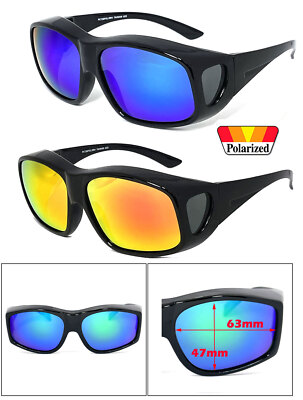
Choosing the Best Prescription Polarized Sunglasses
When comparing prescription polarized sunglasses, focus on optical quality and fit rather than appearance alone.
Check the prescription date
Use a current prescription. Many adults benefit from an eye exam every one to two years, but the correct schedule depends on age, health, symptoms, and risk factors.
People with diabetes, glaucoma, macular degeneration, or other eye conditions may need more frequent care. Follow the schedule recommended by your eye doctor.
Choose the right lens material
Common options include:
• Polycarbonate: light and impact resistant, but it may show more chromatic distortion
• Trivex: light, impact resistant, and often known for good optical performance
• High-index plastic: thinner for many stronger prescriptions
• Standard plastic: often affordable and optically clear, but less impact resistant
Your optician can recommend a material based on your prescription, lifestyle, and budget.
Select useful coatings
Useful options may include:
• Scratch-resistant coating
• Anti-reflective coating on the back surface
• Water and oil resistant coating
• UV protection
• Mirror coating for extra brightness control
A back-surface anti-reflective coating can reduce reflections that enter from behind the lens. This may improve comfort when the sun is behind you.
Pick a practical frame
A good frame should sit securely without pinching your nose or temples. It should cover your eyes well and remain stable when you move.
Wraparound frames can provide more side coverage, but they may be difficult for some prescriptions. Very curved frames may require special lenses and may cost more.
Confirm the return policy
Before ordering online, check whether the seller accepts returns for prescription lenses. Also check whether it offers lens replacement, warranty service, and customer support from trained optical staff.
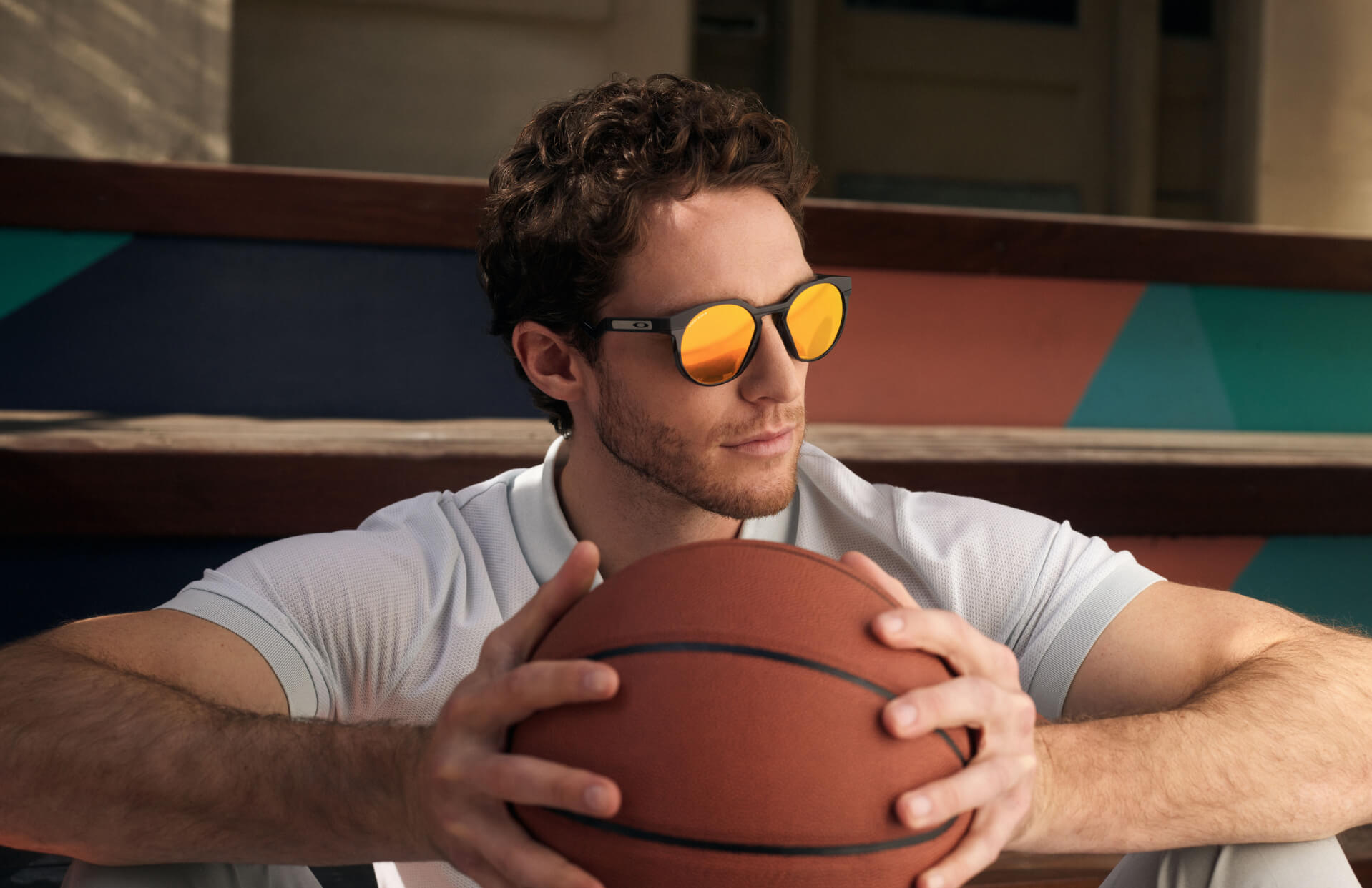
How Much Do Prescription Polarized Sunglasses Cost?
Prescription polarized sunglasses often cost more than ordinary prescription glasses because they combine prescription lenses, tint, polarization, coatings, and a frame. Prices vary widely based on the brand, lens material, prescription strength, and whether you buy online or in person.
Your total cost may include:
• Eye examination
• Frame
• Prescription lenses
• Polarization
• UV protection
• Lens coatings
• High-index or impact-resistant material
• Progressive or specialty lens design
• Shipping and fitting
Insurance may cover part of the eye exam or prescription eyewear, but coverage for polarized sunglasses varies. Flexible spending accounts or health savings accounts may cover eligible prescription eyewear, depending on plan rules.
A low price is not always a problem, but inspect the details. Confirm that the lenses are truly prescription, polarized, UV protective, and made to your measurements.
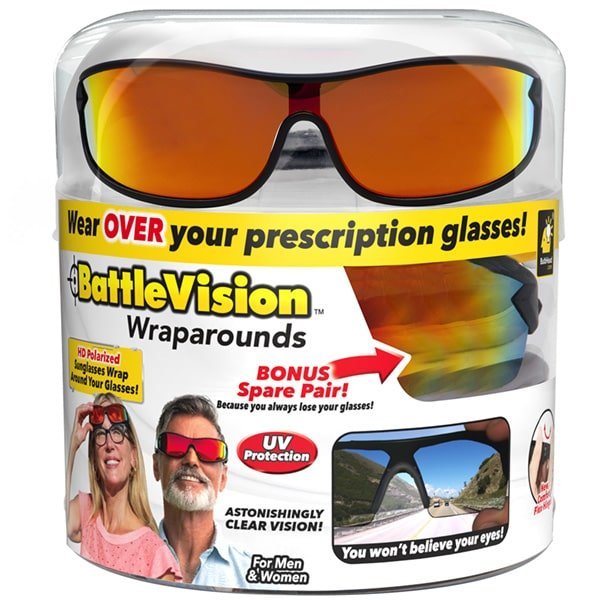
Where to Buy Prescription Polarized Sunglasses
You can buy prescription polarized sunglasses from several types of providers.
Local optical stores
A local optical store offers hands-on frame fitting and lens measurements. This can be helpful for strong prescriptions, progressive lenses, unusual frames, or people who want support after delivery.
Eye doctors
Many optometry and ophthalmology offices sell prescription sunglasses or can send your prescription to an optical laboratory. This option may be convenient if you already trust the office and want your eye health and eyewear needs managed together.
Online eyewear stores
Online sellers may offer lower prices and a wider range of frames. You must enter your prescription and measurements carefully, and you may need to measure your pupillary distance.
Online ordering can work well for simple prescriptions. For complex prescriptions, professional fitting often reduces the risk of discomfort or poor vision.
Sports and specialty optical providers
Fishing, skiing, cycling, and boating stores may offer specialty frames and lens tints. Ask whether the lenses are made for your prescription and whether the frame supports your lens design.
Common Mistakes to Avoid
When people ask, “can you get prescription polarized sunglasses,” they often focus only on polarization. These common mistakes can affect the final result more than the lens feature itself.
- Buying dark lenses without confirmed UV protection
- Using an old prescription
- Choosing a very large frame for a strong prescription
- Forgetting to check digital screen compatibility
- Ordering progressives without accurate fitting measurements
- Assuming all polarized lenses have the same optical quality
- Using sunglasses indoors or at night
- Ignoring scratches, loose frames, or poor lens alignment
In real-world use, fit is often the difference between sunglasses you wear every day and sunglasses that stay in a drawer. A slightly less fashionable frame that stays centered can provide better vision than a large frame that slides down your nose.
Clean the lenses with water and a microfiber cloth. Avoid paper towels, clothing, and household glass cleaner. These can create fine scratches or damage lens coatings over time.
Safety and Eye Health Tips
Prescription polarized sunglasses can improve comfort, but they are not a substitute for eye care. Schedule an eye exam if you notice sudden blurry vision, flashes of light, new floaters, eye pain, or a loss of peripheral vision.
Wear sunglasses outdoors during the day, especially near water, snow, sand, and high elevations. A wide-brimmed hat can provide extra protection from direct sunlight.
Children also need well-fitting sunglasses with UV protection. Choose durable frames that stay on during play, and avoid lenses that are so dark they make it hard to see in shaded areas.
People who take medicines that increase light sensitivity should ask a health professional whether they need special eye protection. Certain medical conditions may also require specific lens tints or treatments.
Frequently Asked Questions About Prescription Polarized Sunglasses
Can you get prescription polarized sunglasses with any prescription?
Most common prescriptions can be made into polarized sunglasses, including nearsightedness, farsightedness, astigmatism, bifocals, and progressives. Very strong prescriptions or highly curved frames may require special lens materials or designs.
Are prescription polarized sunglasses good for driving?
They can reduce glare from roads, wet pavement, and other vehicles during the day. However, they are not suitable for night driving, and some polarized lenses can make digital dashboards or screens harder to read.
Do prescription polarized sunglasses protect against UV rays?
Polarization and UV protection are different features. Choose lenses labeled 100% UVA and UVB protection or UV400 to help protect your eyes from ultraviolet radiation.
Can you get prescription polarized sunglasses online?
Yes, many online eyewear retailers offer them. You need an accurate prescription, pupillary distance, frame measurements, and a clear return policy, while complex prescriptions may be better handled by an optician.
Are polarized sunglasses better than nonpolarized sunglasses?
Polarized sunglasses are often better for reducing reflected glare, especially near water, snow, and roads. Nonpolarized lenses may work better when you need to read many digital screens or when you want a lower-cost option.
Can prescription polarized sunglasses be progressive?
Yes, progressive polarized sunglasses are available. They require accurate measurements and a stable frame, so professional fitting is especially helpful for first-time progressive wearers.
Conclusion
Can you get prescription polarized sunglasses? Yes. They can combine clear vision correction, glare reduction, and UV protection in one practical pair.
Choose a current prescription, a suitable lens material, a secure frame, and confirmed UV protection. Test digital screens if you drive or use electronic displays often, and seek professional fitting for strong prescriptions or progressive lenses.
With the right pair, bright outdoor light feels less like a spotlight and more like a comfortable view. Compare your options with an eye-care professional or trusted optical seller, then choose prescription polarized sunglasses that fit your eyes, routine, and budget.

Rubel Miah is the Senior Editor at MyStyleGrid.com, where he brings a sharp editorial eye and an unshakable love for fashion to everything he does. A true style addict, Rubel lives and breathes trends, from streetwear to high fashion, and has a knack for turning inspiration into impactful stories. With years of experience in fashion journalism and digital media, he curates content that empowers readers to express themselves through style. When he’s not editing features or forecasting the next big thing, you’ll find him hunting down vintage pieces or capturing street style moments around the city.