The best places to buy children’s sunglasses are optical stores, trusted retailers, sporting-goods shops, and reputable online stores.
Knowing where to buy childrens sunglasses is about more than finding a cute frame. The right pair should block harmful UV rays, fit securely, feel comfortable, and match your child’s daily activities. This guide explains how to compare stores, lenses, fit, safety ratings, and prices so you can shop with confidence.
Where to Buy Childrens Sunglasses
You can find children’s sunglasses in many places, but not every seller offers the same quality. When deciding where to buy childrens sunglasses, focus on lens protection, fit, return policies, and product details rather than color or price alone.
The best shopping options include:
• Local optometrists and optical stores
• Children’s clothing and shoe stores
• Sporting-goods retailers
• Outdoor and travel stores
• Large department stores
• Pharmacy chains
• Brand websites
• Trusted online marketplaces
• Specialty children’s eyewear shops
An optical store is often the safest choice when your child needs prescription sunglasses or has trouble keeping glasses on. Staff can check the fit and help you choose frames that suit your child’s face.
Online stores may offer more styles and lower prices. However, you must read the product description carefully. Look for clear details about UV protection, lens material, frame size, and returns.

Best Places to Shop for Children’s Sunglasses
Local optical stores
Optical stores are one of the best answers to where to buy childrens sunglasses when fit and eye health matter most. A trained professional can measure your child’s face, adjust the temples, and help select prescription or nonprescription lenses.
This option is useful for children who:
• Wear prescription glasses
• Have sensitive eyes
• Need sports eyewear
• Break or lose glasses often
• Refuse to wear poorly fitting frames
The main drawback is price. Optical stores may cost more than discount retailers, but the personal fitting service can prevent wasted money on glasses your child will not wear.
Sporting-goods stores
Sporting-goods stores are a strong choice for active children. They often sell sunglasses made for biking, hiking, swimming, skiing, and team sports.
Look for frames with:
• Impact-resistant polycarbonate lenses
• Flexible or rubber-coated frames
• Secure nose pads
• Wraparound coverage
• Adjustable straps for younger children


Do not assume every sports frame offers equal protection. Confirm that the label states 100% UVA and UVB protection or UV400 protection.
Outdoor and travel stores
Outdoor retailers often carry sunglasses designed for bright sun, water, snow, and long periods outside. These stores can be a good answer to where to buy childrens sunglasses for family vacations and outdoor trips.
Polarized lenses may reduce glare from roads, lakes, pools, and snow. They can make outdoor play more comfortable, but polarization does not automatically mean better UV protection. Check for both features.
Department stores and pharmacies
Department stores and pharmacies offer convenience and low-cost choices. They can work well for backup sunglasses, especially if your child often misplaces items.
Still, inspect the glasses before buying. Avoid frames with rough edges, loose hinges, cloudy lenses, or vague labels such as “sun protection.” A low price is helpful only when the glasses still meet basic safety standards.
Reputable online stores
Online shopping gives you access to many colors, sizes, and designs. It is also a useful option when local stores have limited stock.
When choosing where to buy childrens sunglasses online, select a seller that provides:
• Clear lens specifications
• Accurate frame measurements
• Customer reviews with photos
• A simple return policy
• Secure payment options
• Contact information
• Product support
Avoid listings that make big claims without details. A product described only as “UV sunglasses” may not explain how much UVA and UVB protection it provides.

What to Look for Before You Buy
Finding where to buy childrens sunglasses is only the first step. You also need to know what makes a pair safe and useful.
UV protection
Choose sunglasses labeled “100% UVA and UVB protection” or “UV400.” These labels mean the lenses are designed to block ultraviolet light across the relevant range.
Tint alone does not prove UV protection. Very dark lenses without proper UV filtering may cause the pupils to open wider, allowing more unfiltered light to enter the eye. That is why lens protection matters more than darkness.
Children spend a lot of time outdoors, and their eyes receive substantial exposure to sunlight. Pediatric eye-care guidance supports using sunglasses and wide-brimmed hats to reduce exposure to ultraviolet rays.
Lens material
Polycarbonate lenses are a popular choice for children because they are light and more impact resistant than ordinary glass. They can be helpful for sports, playground use, and active travel.


Plastic lenses may also work well for daily use. Glass lenses are usually less suitable for young children because they are heavier and can break.
Lens color
Gray, brown, and green lenses can provide comfortable vision in bright light. The best color depends on your child’s activities and personal comfort.
Avoid choosing a pair only because the lens is dark. A medium tint with reliable UV protection is safer than a very dark lens with no clear safety information.
Frame strength
Children drop, bend, sit on, and forget about their sunglasses. Flexible frames can handle everyday accidents better than stiff, brittle frames.
Check for:
• Smooth edges
• Strong hinges
• Flexible temples
• A comfortable bridge
• No loose screws
• No sharp decorative parts
For toddlers, soft frames can reduce pressure and make the glasses easier to wear.

How to Find the Right Fit
A poor fit is one of the main reasons children stop wearing sunglasses. Even the best answer to where to buy childrens sunglasses will not help if the frame slides down or pinches the nose.
The frame should sit comfortably on the bridge of the nose. It should not press against the cheeks or touch the eyelashes. The temples should rest gently along the sides of the head without squeezing.
Use these simple checks:
- Have your child look up, down, and from side to side.
- Ask whether the frame feels tight or painful.
- Check that the glasses do not slide when your child moves.
- Make sure the lenses cover the eyes without blocking vision.
- Look for gaps that allow bright light around the sides.
A strap can help toddlers and active children keep their sunglasses in place. It should be comfortable and easy to release. Never use a strap so tight that it pulls the frame against the face.
Online listings often show measurements in millimeters. Compare the listed lens width, bridge width, and temple length with a pair that already fits your child. This is one of the most useful tips for parents deciding where to buy childrens sunglasses online.

Prescription Sunglasses for Children
Children who need vision correction may benefit from prescription sunglasses. You can buy them through an optometrist, optical chain, or prescription eyewear website.


Prescription sunglasses can provide:
• Correct vision outdoors
• UV protection
• Reduced squinting
• Better comfort in bright light
• Protection from wind and dust
Do not place ordinary clip-on sunglasses over frames unless they fit properly and do not scratch the prescription lenses. Poorly fitted clip-ons can fall off or create gaps around the eyes.
Photochromic lenses may darken outdoors and become clear indoors. They are convenient, but they may not become as dark inside a car because many windshields block some ultraviolet light. For driving or very bright conditions, dedicated prescription sunglasses may work better.
Ask your eye-care professional which option suits your child’s prescription, age, and activities. This is especially important if your child has an eye condition or has recently had eye surgery.

Polarized Versus Nonpolarized Sunglasses
Polarized sunglasses reduce reflected glare. This makes them useful near water, snow, sand, and bright pavement.
They may help children see more comfortably during:
• Beach trips
• Boat rides
• Fishing
• Skiing
• Long car rides
• Outdoor sports
Polarization does not replace UV protection. A polarized lens can still be unsafe if it does not block UVA and UVB rays.
Some digital screens may look darker or show rainbow patterns through polarized lenses. This is not usually harmful, but it can annoy children who use tablets or phones outdoors. For most outdoor play, polarized sunglasses are an optional comfort feature rather than a requirement.

How Much Should Children’s Sunglasses Cost?
The price depends on the brand, lens material, prescription, frame design, and seller. Basic nonprescription sunglasses may cost less than premium sports or prescription models.
A useful shopping plan is:
• Buy a durable primary pair for daily use
• Keep a lower-cost backup pair in the car or backpack
• Spend more on prescription or sports eyewear when needed
• Check warranties before paying a premium price


The cheapest option is not always the best value. If the hinges break after a week or the lenses scratch quickly, you may spend more replacing them.
At the same time, expensive designer sunglasses are not automatically safer. Check the protection label and fit first. When deciding where to buy childrens sunglasses, verified specifications matter more than a famous logo.

Common Mistakes Parents Make
Parents often focus on style because children are more willing to wear glasses they like. Style does matter, but it should come after safety and fit.
Avoid these mistakes:
• Buying glasses with no clear UV protection label
• Choosing a frame that is too large to “grow into”
• Assuming dark lenses are safer
• Ignoring scratches or cracks
• Buying glass lenses for rough play
• Forgetting a backup pair
• Ordering online without checking measurements
• Choosing a strap that is too tight
• Letting children share glasses without cleaning them
One practical lesson is to let your child choose between two or three safe options. This gives them control without turning safety into a debate. A pair that your child enjoys wearing is far more useful than a perfect pair left in a drawer.

How to Care for Children’s Sunglasses
Proper care helps sunglasses last longer. Teach your child to use both hands when removing the glasses. This puts less stress on the hinges.
Keep the glasses in a hard case when they are not being worn. Do not leave them on a hot car dashboard, where heat can damage coatings or warp plastic frames.
Clean the lenses with clean water and a soft microfiber cloth. Avoid paper towels, clothing, and household glass cleaner. These can scratch lenses or damage protective coatings.
Replace sunglasses if they have:
• Deep scratches
• Cracked lenses
• Broken hinges
• Loose parts
• Warped frames
• Peeling lens coatings
Scratches may interfere with clear vision and encourage a child to look around the lenses. Regularly inspect the glasses, especially after outdoor trips or sports activities.
Where to Buy Childrens Sunglasses by Age
Babies and toddlers
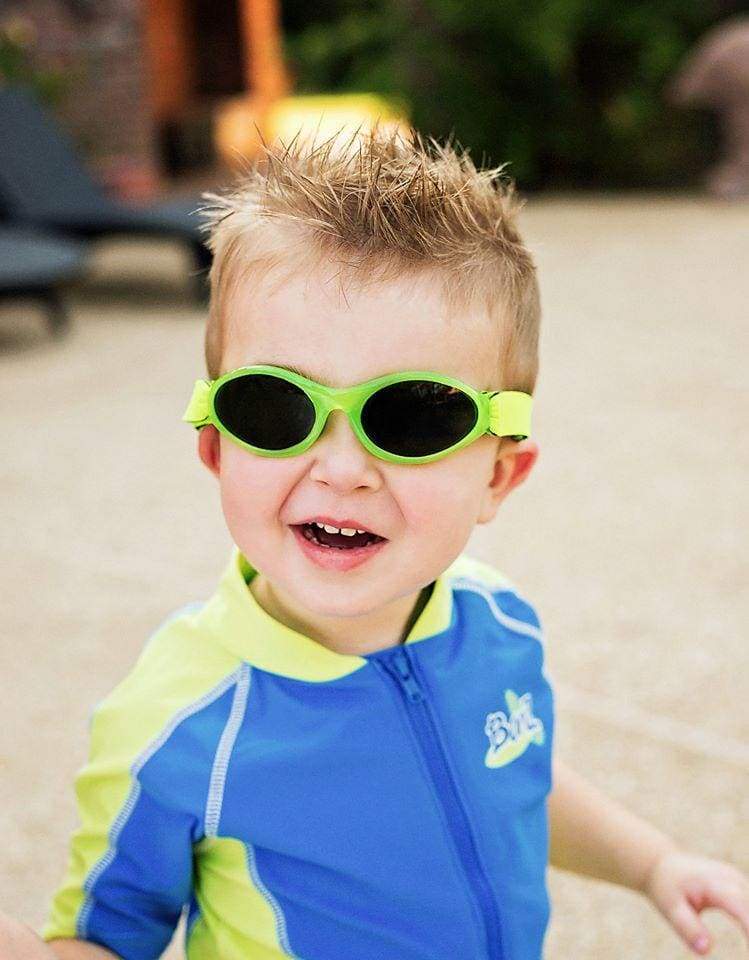
For very young children, choose soft, lightweight frames with flexible temples. A comfortable strap can help, but it should not be tight.
Toddlers may remove sunglasses often. Keep the experience positive and start with short periods in bright outdoor settings. Hats with wide brims can provide extra shade.
School-age children
School-age children may prefer colorful frames, mirrored lenses, or sporty designs. Let them help choose the style, but check the safety details yourself.
This age group benefits from durable frames because playground use and active games can be hard on eyewear.
Tweens and teens
Older children may care more about brand, fashion, and social style. Explain that a stylish frame can also protect their eyes.
Sport-specific sunglasses may be useful for biking, skiing, running, or water sports. Make sure the design does not limit side vision.
A Simple Buying Checklist
Before completing your purchase, use this checklist:
- Confirm 100% UVA and UVB protection or UV400 labeling.
- Choose impact-resistant lenses for active children.
- Check the frame measurements.
- Look for smooth edges and strong hinges.
- Confirm the return or exchange policy.
- Select a design your child will actually wear.
- Buy a case and microfiber cleaning cloth.
- Consider a backup pair for travel or school.
- Ask an optometrist about prescription needs.
- Inspect the glasses when they arrive.
This checklist makes it easier to compare where to buy childrens sunglasses without getting distracted by color or brand claims.
Frequently Asked Questions About Where to Buy Childrens Sunglasses
Where is the best place to buy children’s sunglasses?
A local optical store is often best for prescription needs, difficult fits, or professional advice. For nonprescription pairs, a reputable online store or sporting-goods retailer can offer good choices if the product lists reliable UV protection and sizing details.
What should I look for when buying children’s sunglasses?
Look for 100% UVA and UVB protection, a comfortable fit, impact-resistant lenses, and durable frames. Avoid products with unclear safety information or sharp, poorly finished edges.
Are expensive children’s sunglasses safer?
Not always. Price does not guarantee better UV protection, so check the lens specifications, construction, and fit before choosing a premium product.
Are polarized sunglasses better for children?
Polarized lenses reduce glare from water, snow, and roads, which can improve comfort outdoors. They are not automatically safer unless they also provide full UVA and UVB protection.
Can children wear adult sunglasses?
Some older children may fit small adult frames, but many adult sunglasses are too wide or heavy. A frame made for children usually offers a better fit and stays in place more easily.
Do babies need sunglasses?
Babies can benefit from sunglasses that provide full UV protection, especially during long periods outdoors. A wide-brimmed hat, shade, and avoiding intense midday sun are also important.
How often should children’s sunglasses be replaced?
Replace them when the lenses are deeply scratched, the frame is damaged, or the fit becomes too small. Children who grow quickly may need new frames even when the lenses still look clear.
Conclusion
The best place to buy childrens sunglasses depends on your child’s needs. Optical stores offer expert fitting and prescription support, while sporting-goods shops, outdoor retailers, department stores, and trusted online sellers provide useful choices for everyday wear.
Always prioritize full UV protection, impact-resistant lenses, a secure fit, and a return policy. Let your child help choose the style so the glasses feel like something fun rather than a chore. Use the checklist above, compare trusted sellers, and choose a pair your child will wear every time they step into bright sunlight.

Rubel Miah is the Senior Editor at MyStyleGrid.com, where he brings a sharp editorial eye and an unshakable love for fashion to everything he does. A true style addict, Rubel lives and breathes trends, from streetwear to high fashion, and has a knack for turning inspiration into impactful stories. With years of experience in fashion journalism and digital media, he curates content that empowers readers to express themselves through style. When he’s not editing features or forecasting the next big thing, you’ll find him hunting down vintage pieces or capturing street style moments around the city.