Most men need four to six pairs of dress pants for a practical, flexible wardrobe.
The right number depends on your work dress code, lifestyle, laundry habits, and personal style. After helping men build work wardrobes, I have found that four well-fitting pairs often cover most needs, while six or more make sense for frequent office wear, travel, or formal events. This guide explains how many dress pants should a man own and how to choose the best mix.

The Simple Answer: Own Four to Six Pairs
For most men, four to six pairs of dress pants offer the best balance between variety, comfort, and cost. This range gives you enough options for work, dinners, weddings, interviews, and other smart occasions.
A basic collection could include:
• Two pairs in charcoal or dark gray
• One pair in navy
• One pair in medium gray or tan
• One pair in a seasonal fabric or color
• One extra pair for travel, busy workweeks, or formal events
If you wear dress pants only once or twice a month, three pairs may be enough. If you wear them five days a week, owning six to eight pairs can help each pair last longer.
The key is not to count pants for the sake of having more. Each pair should serve a clear purpose and fit well with the shirts, shoes, and jackets you already own.

How Many Dress Pants Should a Man Own for Work?
A man who wears dress pants to work most days should own five to seven pairs. This allows you to rotate your clothing without wearing the same pair too often.
A five-day office rotation might look like this:


-
Navy pants on Monday
-
Charcoal pants on Tuesday
-
Medium gray pants on Wednesday
-
Dark brown or tan pants on Thursday
-
A second charcoal or navy pair on Friday
Rotating your pants gives the fabric time to rest. It also helps reduce wrinkles, odor, and wear around the seat, knees, and pockets.
For a business professional dress code, choose wool or wool-blend trousers in dark, simple colors. For a business casual office, cotton chinos, textured trousers, and lighter colors may work well.
Your workplace matters more than a general clothing rule. A man in a law office may need several pairs of tailored wool pants, while a man in a creative office may need only two pairs of dress pants and several chinos.

How Many Dress Pants Should a Man Own for Occasional Wear?
If you wear dress pants for weddings, dinners, religious services, or special events, three to four pairs are usually enough. You do not need a large collection if your daily clothes are jeans, shorts, or casual chinos.
A strong occasional-wear set includes:
• One pair of charcoal dress pants
• One pair of navy dress pants
• One pair of medium gray pants
• One pair of tan or brown pants


Charcoal and navy are the most useful colors. They work with white, blue, pink, gray, and patterned dress shirts. They also pair well with black, brown, and burgundy shoes.
For occasional wear, fabric care becomes especially important. Store pants on a proper trouser hanger, brush off dust after use, and avoid leaving them crumpled on a chair. Good care can keep a small wardrobe looking fresh for years.

How Many Dress Pants Should a Man Own by Lifestyle?
The best number of dress pants changes with your daily routine. Think about how often you wear them, how quickly they get dirty, and how often you do laundry.
Minimalist lifestyle
A minimalist may need three pairs:
• One dark gray pair
• One navy pair
• One lighter gray, tan, or brown pair
This small collection works when you have a relaxed office, wash clothes often, and do not attend many formal events.
Standard office lifestyle
Most office workers will be comfortable with four to six pairs. This range creates enough variety for a normal workweek without filling the closet with clothes that rarely get worn.
Frequent business traveler
A frequent traveler may benefit from six to eight pairs. Travel can cause wrinkles, spills, and extra wear, so having backups makes packing easier.
Choose wrinkle-resistant wool blends or high-quality technical fabrics. A travel-friendly pair should recover well after sitting and should not require careful ironing in every hotel room.
Formal and event-heavy lifestyle
If you attend many weddings, conferences, dinners, or ceremonies, six or more pairs can make sense. Add different textures and seasonal weights rather than buying several nearly identical pairs.

The Best Dress Pants Colors for a Man’s Wardrobe
Color variety makes a small collection feel larger. However, not every color deserves a place in your closet.


Charcoal gray
Charcoal is one of the most useful dress pant colors. It looks professional and works with nearly every classic shirt color.
Wear charcoal pants with:
• White shirts
• Light blue shirts
• Black shoes
• Brown shoes
• Navy blazers
Navy
Navy pants offer a clean and modern look. They pair especially well with white, pale pink, light blue, and striped shirts.
Navy dress pants also work with gray, tan, and patterned sport coats. They are a good choice for business casual events.
Medium gray
Medium gray adds a lighter option without becoming hard to match. It works well in spring and summer, but it can be worn all year.
Medium gray pants look sharp with brown loafers, dark blue jackets, white shirts, and soft pastel colors.
Tan and khaki
Tan pants are useful for warm weather, relaxed offices, and outdoor events. They are less formal than charcoal or navy, so they may not suit conservative workplaces.
Brown and olive
Brown and olive trousers can add personality. They work best when your wardrobe already includes neutral shirts, brown shoes, and textured jackets.
Start with charcoal, navy, and gray before adding more unusual colors. A useful wardrobe is built like a house: strong basics come before decoration.


Dress Pants Versus Suit Trousers
Dress pants and suit trousers may look similar, but they are not always interchangeable. Suit trousers are made to match a specific jacket, often from the same fabric and color.
Wearing suit trousers as separate pants can create problems. The jacket may fade at a different rate, or the trousers may look incomplete without their matching coat.
Dress pants are designed to be worn with separate shirts, blazers, sweaters, and sport coats. They often have more flexible colors, patterns, and textures.
A useful wardrobe may include both:
• Three to five pairs of dress pants for separate outfits
• One or two complete suits for interviews, formal meetings, and ceremonies
Do not count the trousers from every suit as part of your everyday dress pant collection. They serve a different purpose.

How Fabric Affects the Number of Pants You Need
Fabric affects comfort, durability, cleaning, and seasonal use. The more often you wear dress pants, the more useful it is to own different fabrics.
Wool
Wool is a classic choice for professional dress pants. It breathes well, resists wrinkles, and drapes neatly.
Lightweight wool works well in warmer months. Medium-weight wool is more versatile for year-round wear.
Cotton
Cotton trousers are comfortable and easy to wear in business casual settings. They may wrinkle more than wool, but they are often easier to wash and maintain.
Linen
Linen is cool and breathable in hot weather. It wrinkles easily, which gives it a relaxed look but may not suit formal offices.
Wool blends and performance fabrics
Blended fabrics can offer stretch, wrinkle resistance, and easy care. These features are helpful for commuting and travel.
Still, performance fabric is not always the best choice for a formal event. Consider the setting before choosing comfort-focused trousers.
How Often Should You Wear the Same Pair?
Most dress pants should not be worn on consecutive days. Give them at least one day of rest when possible.
Rest allows the fibers to recover and lets moisture evaporate. This is especially helpful with wool trousers, which often need airing rather than frequent washing.
A simple rotation might include:
• Wear each pair once per week
• Hang each pair after use
• Brush away lint and dust
• Air the pants before placing them in the closet
• Clean them according to the care label
In my experience, men often damage good pants by cleaning them too often. Dry cleaning can help with stains and deep cleaning, but repeated cleaning may shorten the life of some fabrics. Spot clean small marks and follow the manufacturer’s instructions.
How Fit Changes the Number You Should Own
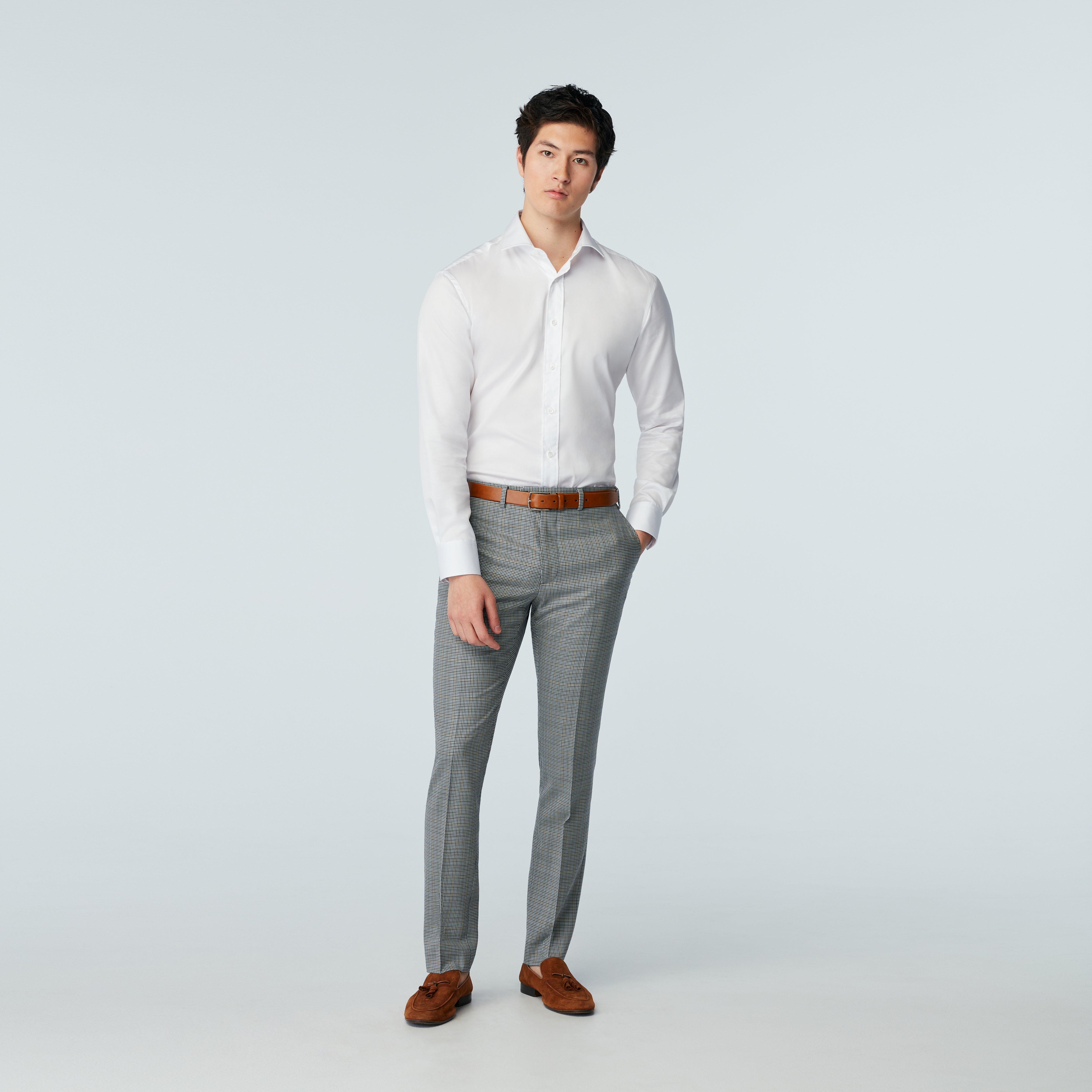
A perfect fit can make three pairs look better than ten poor-fitting pairs. Before buying more dress pants, make sure your current pairs fit through the waist, seat, thigh, and leg.
Check these areas:
• The waistband should sit securely without squeezing
• The seat should lie smoothly without pulling
• The front pockets should remain flat
• The trouser break should suit your style
• The hem should not bunch heavily around the shoe
• The rise should allow comfortable sitting and movement
Small alterations can make a large difference. A tailor can adjust the waist, hem, and sometimes the seat. However, major changes to the rise or overall shape may not be practical.
One mistake I have seen many men make is buying extra pants before fixing the fit of the pairs they already own. Buy fewer pants first, then improve the fit. This usually creates a sharper wardrobe and saves money.
A Practical Dress Pant Capsule Wardrobe
A capsule wardrobe uses a small number of items that work together. For many men, a six-pair dress pant capsule is enough for work and social events.
Try this combination:
-
Charcoal wool trousers
-
Navy wool trousers
-
Medium gray trousers
-
Tan cotton trousers
-
Dark brown or olive trousers
-
A second charcoal or navy pair
This collection gives you formal, business casual, warm-weather, and travel options. It also works with common wardrobe items such as white shirts, blue shirts, navy blazers, gray sweaters, and brown leather shoes.
If your style is more traditional, replace the olive pair with dark gray. If your office is relaxed, replace the second formal pair with chinos or textured cotton trousers.
The goal is outfit flexibility. A pair should work with at least three shirts and two pairs of shoes before it earns space in your closet.
When You Should Buy More Dress Pants
You may need more dress pants when your current rotation creates stress or limits your outfits.
Consider adding another pair if:
• You wear the same pants more than twice per week
• Your pants show shine, thinning, or stretched knees
• You often travel for work
• Your job requires a different outfit every day
• You lack pants for warm or cold weather
• You have several jackets but few trousers that match them
• You regularly attend formal or semi-formal events
Buy slowly and with a plan. Before purchasing, check your closet and identify the exact gap. This avoids ending up with five pairs of nearly identical navy pants.
When You Own Too Many Dress Pants
More clothing does not always create a better wardrobe. You may own too many dress pants if several pairs are rarely worn, do not fit, or match only one shirt.
Look for these signs:
• You forget that certain pairs exist
• Several pants have the same color and purpose
• You avoid wearing them because they are uncomfortable
• Your closet is crowded and hard to organize
• You keep items only because they were expensive
• You cannot remember the last time you wore a pair
A simple test is the one-year rule. If you have not worn a pair in a year and it does not serve a special purpose, consider altering, donating, selling, or recycling it.
Keep exceptions for formalwear, seasonal clothing, and sentimental pieces. Not every item must be worn often to have value.
Common Mistakes to Avoid
Building a dress pant wardrobe is easier when you avoid a few common errors.
• Buying poor fit because the color seems useful
• Choosing only black pants for every occasion
• Ignoring seasonal fabrics
• Wearing suit trousers as everyday separates
• Cleaning pants too often
• Storing trousers folded over a chair
• Buying trendy colors before basic neutrals
• Forgetting to match the pants with your shoes
Black dress pants are useful, but they can look severe outside formal settings. Charcoal and navy often provide more outfit options.
Another common mistake is ignoring the jacket. A pair of pants may look good alone but fail to work with your navy blazer, gray sport coat, or favorite sweater. Build complete outfits, not isolated purchases.
How Much Should You Spend on Dress Pants?
You do not need to buy the most expensive dress pants available. Focus on fit, fabric, construction, and value.
A lower-priced pair may be a good choice when:
• You are testing a new color
• You rarely wear dress pants
• The fabric is comfortable and durable
• The fit can be altered
A higher-priced pair may be worthwhile when:
• You wear it every week
• The fabric is breathable and durable
• The construction holds its shape
• The style works across many settings
• The pants are comfortable for long days
Cost per wear is a useful way to think about value. A $150 pair worn 50 times may be a better purchase than a $60 pair worn twice because it wrinkles, fits poorly, or feels uncomfortable.
Frequently Asked Questions About How Many Dress Pants Should a Man Own
Is four pairs of dress pants enough for a man?
Four pairs are enough for many men who wear dress pants occasionally or work in a business casual office. Choose versatile colors such as charcoal, navy, medium gray, and tan.
How many dress pants should a man own for a five-day workweek?
A man who wears dress pants every workday should usually own five to seven pairs. This allows regular rotation and reduces wear on each pair.
Should dress pants match a suit jacket?
Separate dress pants do not need to match a suit jacket. Suit trousers usually should stay with their matching jacket because differences in fading, texture, and color can become noticeable.
What are the most versatile dress pant colors?
Charcoal, navy, and medium gray are the most versatile choices. Tan, brown, and olive can add variety, especially in business casual or warm-weather wardrobes.
How often should dress pants be washed or dry cleaned?
Follow the care label and clean pants when they are stained, soiled, or noticeably unclean. Many wool trousers can be aired and brushed between cleanings instead of being cleaned after every wear.
How many pairs of dress pants should a minimalist own?
A minimalist can often manage with three pairs. One dark gray pair, one navy pair, and one lighter neutral pair can cover many work and social situations.
Are black dress pants essential?
Black dress pants are useful but not essential for every man. Charcoal often looks softer and offers more combinations with shirts, jackets, and shoes.
Conclusion
For most men, four to six pairs of dress pants provide a strong and practical wardrobe. Start with charcoal, navy, and gray, then add tan, brown, or seasonal fabrics based on your work and lifestyle.
Fit, fabric, rotation, and care matter more than the exact number. Choose pants that work with the clothes you already own, and buy only when a real gap exists in your wardrobe. Review your closet today, keep your best-fitting pairs, and build the rest with purpose.

Rubel Miah is the Senior Editor at MyStyleGrid.com, where he brings a sharp editorial eye and an unshakable love for fashion to everything he does. A true style addict, Rubel lives and breathes trends, from streetwear to high fashion, and has a knack for turning inspiration into impactful stories. With years of experience in fashion journalism and digital media, he curates content that empowers readers to express themselves through style. When he’s not editing features or forecasting the next big thing, you’ll find him hunting down vintage pieces or capturing street style moments around the city.