Men’s sandals should fit snugly at the heel and straps, with room for toes to move.
Knowing how should sandals fit men can prevent sore feet, blisters, and poor balance. The right fit should feel secure without squeezing, rubbing, or forcing your toes over the edge. This guide explains the key fit checks, common mistakes, sandal types, and simple ways to find comfortable support.

How Should Sandals Fit Men?
Men’s sandals should follow the natural shape of the foot. Your heel should sit inside the back of the sandal, while your toes should rest flat on the footbed. No part of your foot should hang over the front, sides, or back.
A good sandal feels stable when you walk. It should not slide around, twist under your foot, or make your toes grip the footbed. Think of the sandal as a light frame around your foot. It should guide your step without holding you too tightly.
When asking how should sandals fit men, check these five areas:
• Heel: Your heel should stay inside the rear edge without rubbing.
• Toe room: Leave about ⅜ to ½ inch of space in front of your longest toe.
• Width: Your foot should sit fully on the footbed, with no side overhang.
• Straps: Straps should hold your foot in place without leaving deep marks.
• Arch position: The raised support should sit under your arch, not behind it or in front of it.
Feet often swell during the day, especially in hot weather or after long periods of standing. For this reason, try sandals in the afternoon or evening. A pair that feels perfect early in the morning may feel too tight later.
Why Proper Sandal Fit Matters
Poorly fitting sandals can change how you walk. When a sandal slips, your toes may curl to keep it in place. This can make your feet tired and may cause pain in the toes, arches, heels, or ankles.
A sandal that is too tight can create pressure points. These may lead to blisters, red marks, numbness, or irritation. A sandal that is too loose can increase sliding and make it easier to trip.
The correct fit also helps spread pressure across the foot. This matters when you wear sandals for travel, outdoor work, walking, or long summer days. Good support does not remove every foot problem, but it can reduce needless strain.
People with diabetes, reduced foot sensation, arthritis, or circulation problems should take extra care. Small areas of rubbing may become serious before they are noticed. A podiatrist can offer personal advice when foot health is a concern.
In my own sandal fitting checks, the most common mistake is choosing a size based only on length. Width, strap placement, foot shape, and arch support often matter just as much. A sandal can have the right size number and still fit poorly.
:max_bytes(150000):strip_icc()/peo-flip-flops-test-rainbow-sandals-mens-leather-single-layer-dylan-thompson-02-c460cf505e0f4aa3aaf15e7288d58cec.jpg)
How Much Room Should Men’s Sandals Have?
The front of the sandal should give your longest toe enough space to move. Aim for roughly ⅜ to ½ inch between the end of the longest toe and the sandal edge.
Do not judge this space by your big toe alone. Some people have a second toe that is longer than the big toe. Stand normally and check the longest toe while your weight rests on both feet.
You also need room on both sides. The widest part of your foot should stay on the footbed. If your little toe hangs over the edge, the sandal is too narrow, even if the length seems correct.
Too much extra space is not ideal either. If the sandal extends far beyond your toes or heel, your foot may slide forward. This can make walking less stable and may increase the chance of catching the front edge.
Use this simple test:
-
Put on both sandals while standing.
-
Walk across a firm floor.
-
Check the space in front of your longest toe.
-
Look for side overhang.
-
Make sure your heel does not move beyond the rear edge.
-
Bend your foot and take several normal steps.
Your feet may not be the same size. Fit both feet to the larger foot, and avoid buying a pair that fits only the smaller one.
How Should Sandal Straps Fit?
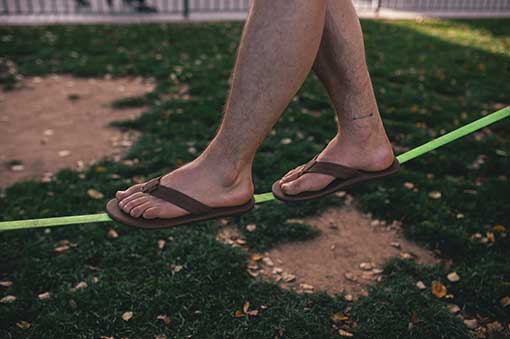
Sandal straps should hold your foot gently in place. They should not cut into the skin, create deep lines, or make your toes feel trapped.
A strap across the toes should sit over the foot without pressing on the joints. A middle strap should support the foot near the instep. An ankle or heel strap should reduce sliding without squeezing the ankle.
Adjustable straps are useful because feet change during the day. They also help when one foot is slightly wider than the other. Fasten each strap firmly, then check whether you can slide one finger under it.
A strap that is too loose allows your foot to move inside the sandal. You may hear slapping sounds, feel your heel lift, or notice your toes gripping the footbed. A strap that is too tight may cause numbness or tingling.
When learning how should sandals fit men, pay attention to movement rather than appearance. A sandal can look neat while still being unstable. Walk up stairs, turn corners, and stand on one foot for a moment if the store allows it.
Avoid relying on a strap to fix a poor shape. If your toes hang over the edge or your foot spills over the sides, tightening the straps will not solve the problem. You likely need a different size, width, or design.

How Should Different Types of Men’s Sandals Fit?
Different sandal styles need slightly different fit checks. The basic rules remain the same, but the straps and support work in different ways.
Slide sandals
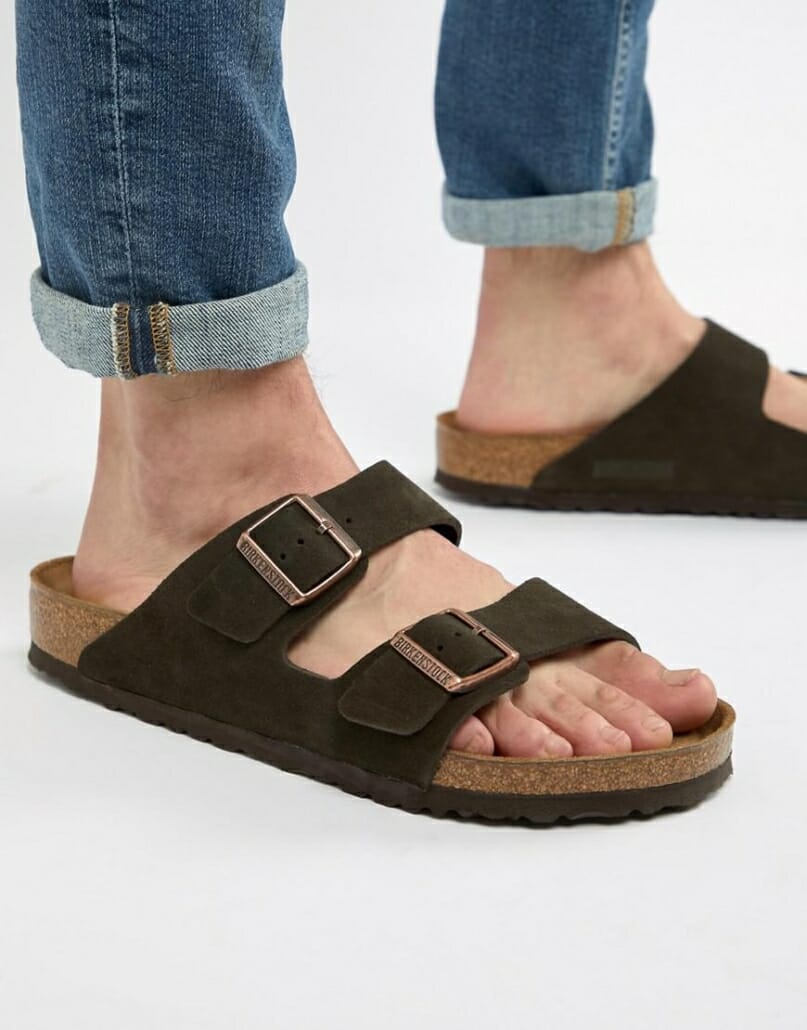
Slides should sit securely across the widest part of your foot. They should not pinch the toes or allow your foot to move forward with each step.
Because slides often lack a heel strap, they need a secure upper and a well-shaped footbed. If you must curl your toes to keep them on, they are not fitting correctly.
Flip-flops
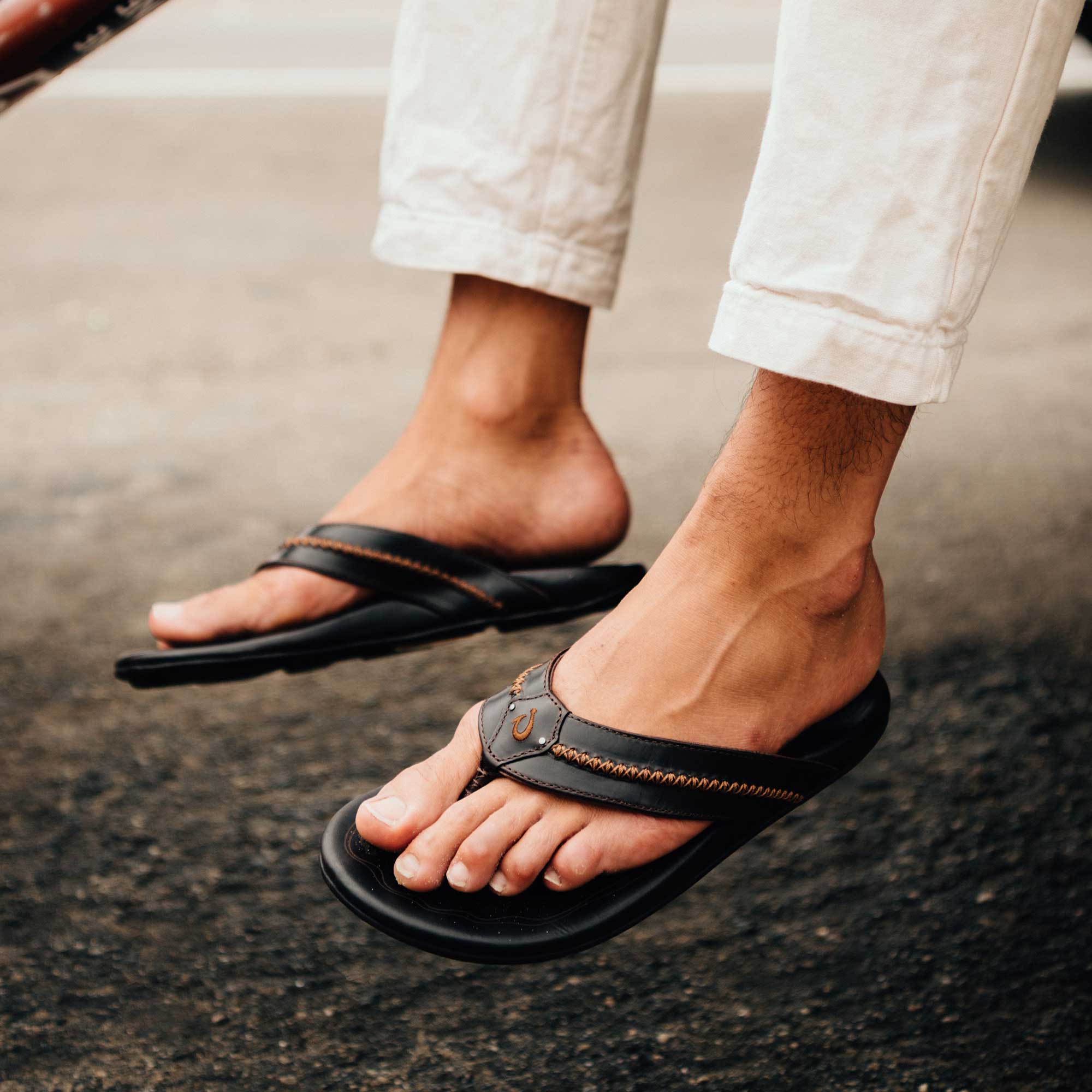
Flip-flops should have enough length and width to keep your entire foot on the sole. Your heel and toes should not extend past the edges.
The toe post should sit comfortably between the first and second toes. It should not rub, twist, or force the toes apart. Flip-flops are usually better for short, casual use than long walks because they offer limited support and heel control.
Sport sandals
Sport sandals should fit more securely than casual slides. Look for adjustable straps around the toes, midfoot, and heel.
Your foot should not shift when you walk over uneven ground. The sole should bend near the front of the foot, not in the middle. Sport sandals should also have enough traction for the surfaces where you plan to wear them.
Fisherman sandals
Fisherman sandals cover more of the foot and may feel more secure. Check that the front straps do not press against your toes or create hot spots.
They should offer space for natural toe movement. Since these sandals may feel stiff at first, wear them for short periods before using them on a full day out.
Recovery sandals
Recovery sandals often have a soft footbed and raised arch support. The arch should feel supportive, not sharp or painful.
Do not assume a softer sandal will fit better. Your heel still needs control, and your toes still need enough space. Comfort should remain steady after several minutes of walking.
:max_bytes(150000):strip_icc()/tal-dockers-mens-newpage-brendan-harkness-1-fa4dc8fbdcbc4219adfa89dd9334bd11.jpeg)
How to Measure Your Feet for Sandals
Foot measurements can make online sandal shopping much easier. Measure both feet because length and width often differ slightly.
Follow these steps:
-
Place a sheet of paper on a hard floor.
-
Stand on the paper with your full weight on the foot.
-
Trace around the foot, or mark the back of the heel and the tip of the longest toe.
-
Measure the distance between those marks.
-
Measure the widest part of the foot.
-
Repeat the process for the other foot.
Measure while wearing the socks you plan to use. If you will wear the sandals barefoot, measure without socks. Keep in mind that foot size can change over time due to age, weight changes, injury, pregnancy, or swelling.
Compare your measurements with the brand’s size chart. Do not assume that every size 10 fits the same. One brand’s regular width may feel like another brand’s wide width.
If you are between sizes, look at the sandal design. A sandal with adjustable straps may work better in the larger size. A sandal with a fixed upper may fit better in the smaller size if there is still enough toe room.
This is one area where careful measurement saves time. I have seen people order several pairs based on their usual size, only to discover that the footbed shape was the real issue.
Common Men’s Sandal Fit Mistakes
Many sandal problems come from small choices made during shopping. Avoid these common errors.
• Choosing by size number alone: A number does not show the full shape of a sandal.
• Buying too short: Toes should not touch or extend beyond the front edge.
• Ignoring width: Side overhang can cause rubbing and reduce balance.
• Testing while sitting: Your foot spreads when you stand, so always check fit while upright.
• Wearing only one sandal: Test both feet because they may differ.
• Tightening straps too much: Tight straps can create pressure and numbness.
• Wearing new sandals all day: Break them in with short sessions first.
• Ignoring the sole: A thin, flat sole may not suit long walks or hard surfaces.
• Expecting sandals to stretch everywhere: Leather may soften, but length rarely increases enough to fix a short sandal.
• Keeping a painful pair: Pain is a warning, not a normal part of breaking in footwear.
The best answer to how should sandals fit men is not “as tight as possible.” The sandal should stay on through normal movement while allowing the foot to spread and flex.
How to Break In New Men’s Sandals
Even a well-fitting pair may need a short break-in period. Start by wearing the sandals indoors for 20 to 30 minutes.
Check your skin afterward. Look for red spots, rubbing, heat, or areas that feel sore. Mild awareness is common with new footwear, but sharp pain or repeated rubbing means the fit may be wrong.
Increase wear time slowly. Try short walks before using the sandals for travel, hiking, or a full workday. If the sandal has leather straps, a little softening may occur, but do not count on major stretching.
You can reduce rubbing with a small amount of foot balm or a protective patch. Do not use products that make the footbed slippery. Slipping can create a different safety problem.
If the foot moves forward, adjust the straps if possible. If adjustment does not help, change the sandal. A break-in period should improve comfort, not disguise a poor fit.
:max_bytes(150000):strip_icc()/tal-hiking-shoes-test-dream-pairs-sandals-zachary-pietryla-02-f0cec8479e9f420aa87510c3d75a2fba.jpeg)
Signs Your Sandals Do Not Fit
Your feet provide useful feedback. Pay attention to these warning signs:
• Your toes hang over the front.
• Your heel sits beyond the rear edge.
• Your foot spills over either side.
• You need to curl your toes to keep the sandal secure.
• Straps leave deep marks.
• You feel numbness, tingling, or burning.
• Your heel lifts with every step.
• You develop repeated blisters.
• Your ankle feels unstable.
• Your feet hurt after a short walk.
Some people mistake a loose fit for comfort. In reality, constant sliding can make the foot work harder. Others mistake tightness for support. True support should guide the foot without causing pressure.
If pain continues after changing size or style, consider a professional foot assessment. Sandal fit can help, but it cannot correct every condition, including plantar fasciitis, bunions, or nerve problems.
How to Choose Supportive Men’s Sandals
Support needs depend on your feet and your planned activity. A sandal for the pool does not need the same structure as a sandal for city walking.
For daily walking, look for:
• A stable heel area
• A shaped footbed
• Moderate arch support
• A sole that bends near the toes
• Secure and adjustable straps
• Reliable traction
For water use, quick drainage and grip may matter more than arch support. For hiking, choose a sandal with a protected toe area, firm heel control, and a sole designed for uneven ground.
Arch support should feel natural. If a support point feels sharp or forces your foot into an unusual position, the sandal may not suit your arch. More support is not always better support.
A good sandal should also match your walking habits. If you take long walks, avoid thin flip-flops. If you stand at work, prioritize cushioning and stability. If you need a quick shoe for errands, a secure slide may be enough.
How should sandals fit men who have wide feet? They should offer a wide enough footbed without relying on tight straps to hold the foot in place. Look for wide sizing or adjustable designs rather than simply sizing up, which may create too much length.
Frequently Asked Questions About How Should Sandals Fit Men
Should men’s sandals be tight or loose?
Men’s sandals should feel secure but not tight. Your foot should not slide around, and the straps should not cause pain, numbness, or deep marks.
Should toes touch the end of men’s sandals?
Your toes should not touch the front edge. Leave about ⅜ to ½ inch of space beyond your longest toe so your foot can move naturally while walking.
Should my heel hang off sandals?
No. Your heel should rest fully on the footbed with a small amount of space behind it. A heel that hangs off can reduce stability and increase the chance of slipping.
How should sandals fit men with wide feet?
Wide feet need a footbed that supports the full width of the foot. Choose wide sizes or adjustable straps, and do not simply buy a longer size to gain width.
How do I know if sandal straps are too tight?
Straps are too tight if they cause pain, numbness, tingling, swelling, or deep skin marks. You should be able to place one finger under a strap without forcing it.
Are sandals supposed to slip when walking?
A small amount of movement may be normal in open sandals, but your foot should not slide forward or sideways with each step. Repeated slipping often means the sandal is too loose or lacks enough support.
Can men wear sandals for long walks?
Yes, if the sandals have enough cushioning, traction, heel control, and a secure fit. Break them in first, and avoid using thin flip-flops for long-distance walking.
Conclusion
The answer to how should sandals fit men is simple: your foot should feel secure, supported, and free to move. Keep your heel and toes inside the sandal, allow room around the longest toe, choose the correct width, and adjust the straps without squeezing.
Try sandals while standing and walking, preferably later in the day when feet are slightly larger. Check both feet, watch for rubbing, and choose a design that matches your activity. Use these steps the next time you shop, then explore more footwear guides or share your best sandal fit tip in the comments.

Madison Clark is a footwear expert and the voice behind MyStyleGrid.com. She specializes in honest shoe reviews, style tips, and practical guides to help readers find the perfect pair for any occasion. With years of experience in blogging and content creation, Madison makes footwear knowledge simple, stylish, and easy to follow.