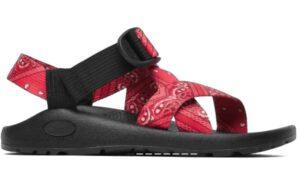
Sandals should fit snugly at the heel and midfoot, with enough toe room for natural movement and balance.
Knowing how sandals are supposed to fit can save you from blisters, sore arches, and unstable steps. A good pair should feel secure without squeezing your foot, and it should support your stride without forcing your toes to grip. This guide explains the fit checks used by footwear specialists, along with simple tips you can use at home.

What Does a Proper Sandal Fit Feel Like?
The best sandals feel secure from the first step. Your foot should not slide forward, sideways, or out of the back. At the same time, the straps should not leave deep marks or make your toes feel cramped.
A sandal should work with your foot, not against it. Think of the footbed as a small platform. Your whole foot should rest on it, much like a book sitting flat on a table.
When learning how sandals are supposed to fit, check these key areas:
- Your heel stays inside the rear edge of the footbed.
- Your toes do not hang over the front.
- Your foot does not spill over either side.
- The straps hold your foot gently in place.
- Your toes can relax instead of gripping the sole.
- The sole bends near the ball of your foot.
- Your arch feels supported, not sharply pressed.
A sandal can feel comfortable in a store and still fit poorly after ten minutes of walking. Walk, turn, and stand in the sandals before you decide. Feet often spread slightly under body weight, so standing gives a more accurate fit than sitting.
How Sandals Are Supposed to Fit in Each Area
Toe room
Your toes should sit fully on the footbed. Ideally, there should be a small amount of space in front of the longest toe. About one-eighth to one-quarter inch is often enough for casual sandals.
Do not judge fit by your largest toe alone. Some people have a second toe that is longer. Others have a wide forefoot or a bunion. The longest part of your foot should have room without touching the edge.
Your toes should also point forward in a natural position. If they curl, overlap, or press against a strap, the sandals may be too short or too narrow.
Heel placement
Your heel should rest inside the back edge of the sandal. It should not hang off the sole, even slightly. A heel that extends beyond the footbed can make your ankle unstable and increase the risk of stepping off the sole.
A small gap behind the heel is usually less concerning than a heel that hangs over the edge. Still, a large gap may mean the sandal is too long or the heel strap is not holding your foot well.
Width
Your foot should sit within the borders of the footbed. It should not bulge over the sides. This matters because side overhang can increase pressure on the little toe, bunion area, and outer edge of the foot.
Wide feet often need sandals marked wide, extra-wide, or adjustable. Simply buying a longer size does not solve a width problem. It may give you extra space in front while leaving the middle of the foot loose.
Straps
Straps should be firm enough to stop unwanted movement. They should not cut into the skin, pinch the toes, or leave deep red marks after a short walk.
A useful test is the fingertip check. You should usually be able to slide one finger under a strap, but the strap should not move freely from side to side. Adjustable straps are helpful because foot size can change during the day.
Arch area
The arch support should meet the natural curve of your foot. It may feel noticeable, but it should not feel like a hard lump pressing into one small spot.
People have different arch shapes. A sandal that feels supportive to one person may feel uncomfortable to another. Comfort, even pressure, and stable walking matter more than choosing the sandal with the tallest arch.
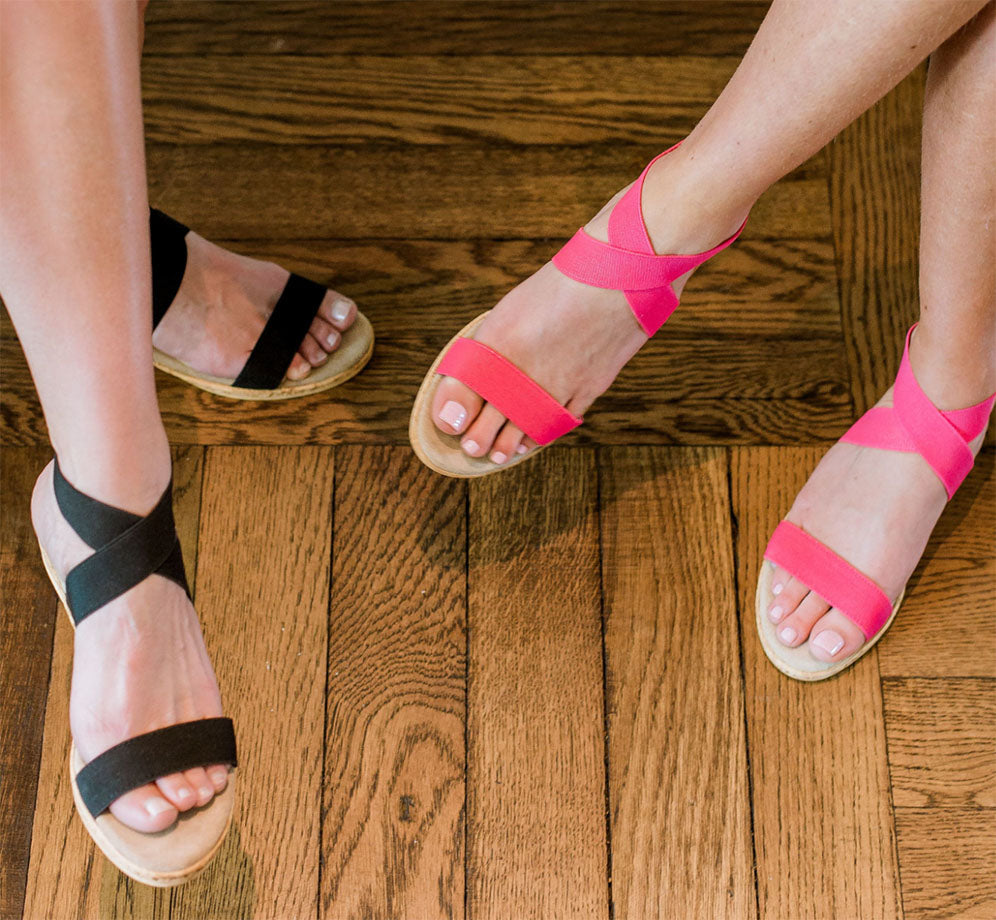
How to Check Sandal Fit at Home
You can learn how sandals are supposed to fit with a simple home test. Try this in the afternoon or evening, when feet may be slightly larger than they are in the morning.
Use these five steps
-
Place the sandals on a flat floor.
-
Stand in them with your full weight on both feet.
-
Check the front, back, and sides of each foot.
-
Walk across the room for several minutes.
-
Bend, turn, and climb a few steps if possible.
Look for movement during the walk. If your foot slides forward, your toes may begin gripping the sole. If the sandal twists under your foot, the sole may lack enough structure.
Try the sandals with the socks you plan to wear. Thick socks can change the fit of casual slides, hiking sandals, and recovery sandals. Bare feet may need a different strap setting than socks.
A paper outline can also help. Stand on a sheet of paper and trace around your foot. Compare the outline with the footbed. If your toes or heel reach beyond the sole, the sandals are not providing enough length.
How to Know If Sandals Are Too Small
Small sandals often reveal themselves quickly. You may feel pressure at the front, sides, or straps. Some signs appear only after walking for a while.
Sandals are likely too small if:
- Your toes hang over the front edge.
- Your heel extends past the back.
- Your little toe rests on the side rim.
- A strap presses on a bunion or toe joint.
- Your toes curl to keep the sandal attached.
- Your foot feels numb or hot.
- You develop rubbing within a few minutes.
Do not expect sandals to stretch enough to fix a major size problem. Leather may soften, but it usually will not add meaningful length. Synthetic materials may soften even less.
One mistake I see often is buying a smaller size because the sandal feels more secure at first. That tight feeling may come from pressure, not support. A proper sandal keeps your foot stable through design, straps, and a suitable footbed.
How to Know If Sandals Are Too Big
Oversized sandals can look comfortable but feel unsafe. Your foot may slide with each step, especially on smooth or hard surfaces.
Sandals are likely too big if:
- Your foot moves forward when you walk.
- Your heel lifts far away from the footbed.
- You must tighten the straps to their smallest setting.
- Your toes grip the sole to stop slipping.
- The sandal bends in front of your toes.
- You trip or feel unstable when turning.
- The sole extends far beyond your heel or toes.
A little extra space is not always a problem. The concern is uncontrolled movement. Slides and flip-flops need especially careful sizing because they have fewer straps to hold the foot.
If a sandal is only slightly loose, an adjustable strap or a different footbed shape may help. Do not add thick inserts if they make your foot sit too high under the straps. This can create more slipping and pressure.
How Different Sandal Styles Should Fit
Flip-flops
Flip-flops should sit flat under the entire foot. The thong should rest comfortably between the toes without rubbing. Your heel and toes should remain on the sole as you walk.
Flip-flops offer limited support and stability. They may work for short trips, pools, and locker rooms, but they are not usually the best choice for long walks or active days.
Slides
Slides should hold the midfoot without squeezing it. Your toes should not need to grip the sole to keep the sandal on.
A slide that is too loose may fly off during stairs or quick turns. A slide that is too tight may create pressure across the top of the foot. Look for an adjustable upper when your foot is wide, swollen, or between sizes.
Strappy sandals
Strappy sandals should hold the heel, midfoot, or ankle in place. Each strap should share the pressure. One tight strap should not do all the work.
Check for rubbing around the ankle bone and between the toes. Walk on both smooth and uneven surfaces if you plan to use the sandals outdoors.
Sport and hiking sandals
Sport sandals should feel more secure than fashion sandals. The heel strap should prevent lifting, and the sole should provide traction. Your toes need room, but your foot should not shift inside the sandal.
For trails, check that the sole bends in a controlled way and does not twist too easily. A stable sandal can reduce unwanted movement, but it cannot replace proper care on steep or slippery ground.
Wedge and platform sandals
Wedges and platforms should feel stable from heel to toe. The base should be wide enough for your foot and your walking style.
A high platform can make a sandal feel secure while still increasing the chance of a misstep. Walk slowly at first. Pay attention to side-to-side movement and whether your ankle feels supported.
How to Measure Your Feet for Sandals
Foot length and width can change with age, activity, pregnancy, weight changes, and swelling. Measure both feet because they are rarely identical.
Simple measuring method
- Place a sheet of paper on a hard floor.
- Stand on it while wearing the socks you plan to use.
- Trace around each foot with the pencil held upright.
- Measure from the back of the heel to the longest toe.
- Measure the widest part of each foot.
- Compare both measurements with the brand’s size chart.
Use the larger foot when choosing a size. If one foot is longer or wider, select sandals that can adjust around the smaller foot.
Brand sizes are not fully consistent. A size 8 in one brand may not match a size 8 in another. The shape of the footbed, the strap design, and the material can matter as much as the printed size.
Avoid measuring while seated. Your foot spreads under body weight, so a standing measurement is more useful.
Sandal Fit for Wide Feet, Bunions, and Swollen Feet
People with wide feet need room across the forefoot and midfoot. A longer sandal is not always a wider sandal. Look for a broad footbed, soft straps, and several adjustment points.
For bunions, avoid straps that cross the most sensitive joint. A soft, flexible upper may reduce pressure, but it should not press directly on the bump.
Swollen feet may change size during the day. Adjustable sandals are often more practical than fixed straps. A removable footbed can also help if you need extra depth.
If you have diabetes, reduced sensation, poor circulation, or a history of foot ulcers, fit is especially important. Check your feet after wearing new sandals and speak with a qualified health professional about suitable footwear. Do not rely on pain as a warning if sensation is reduced.
Children also need regular fit checks. Their feet grow quickly, and they may not describe pressure well. Check the fit every few months and after growth spurts.

Common Sandal-Fitting Mistakes to Avoid
Many fit problems come from small habits rather than a lack of effort. The most common mistake is treating sandals like decorative accessories instead of footwear that must support movement.
Avoid these errors:
- Buying based only on the printed size.
- Trying sandals while sitting down.
- Ignoring a heel that hangs over the edge.
- Assuming painful sandals will “break in.”
- Wearing a narrow style on a wide foot.
- Tightening straps until the foot feels numb.
- Testing only one sandal.
- Walking only on a soft store carpet.
- Choosing fashion over traction for long walks.
- Wearing worn soles with poor grip.
I once learned this lesson with a pair of attractive leather sandals that felt fine for ten minutes. After a full afternoon, the narrow front strap caused a hot spot near the little toe. The sandals were not badly made; they simply did not match the shape of my foot. Now I always walk, turn, and check the widest part of the foot before keeping a pair.
How Sandal Fit Affects Comfort and Foot Health
A good fit can reduce rubbing, pressure, and unnecessary movement. It may also help you maintain a more natural stride. When sandals slide, your toes may grip the sole, and your ankle may work harder to keep the shoe attached.
Poor fit can contribute to blisters, calluses, corns, nail pressure, and sore arches. It does not mean that every foot problem comes from footwear. Activity, skin health, foot structure, injury, and medical conditions also matter.
Support is useful, but more support is not always better. A rigid footbed may help one person and irritate another. The best choice depends on your foot shape, activity, walking surface, and comfort.
Replace sandals when the sole is worn smooth, the footbed is compressed, or straps no longer hold well. A sandal can still look attractive while its traction and support have declined.
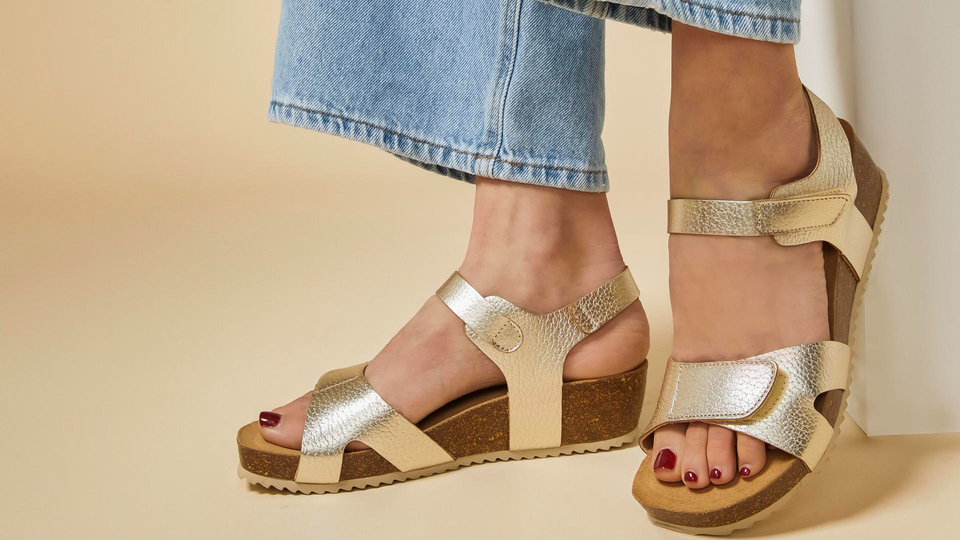
How to Break In New Sandals Safely
New sandals should not require a painful break-in period. Some materials become softer with use, but sharp pressure and serious rubbing are warning signs.
Start by wearing the sandals at home for 15 to 30 minutes. Check your skin after removing them. If you see redness that lasts, a blister, or a sore spot, adjust the sandal before wearing it outside.
Helpful steps include:
- Adjust straps while standing.
- Use blister protection on known hot spots.
- Increase wear time slowly.
- Keep feet clean and dry.
- Stop if you feel numbness or sharp pain.
- Do not use pain as proof that the sandal is becoming comfortable.
A properly fitted sandal should feel better as you move, not worse. If pain increases with each step, reconsider the size, shape, or style.
Frequently Asked Questions About How Sandals Are Supposed to Fit
Should my toes touch the end of my sandals?
Your toes should not press against or hang over the front edge. Leave a small amount of space beyond the longest toe so your foot can move naturally during walking.
Should sandals be tight or loose?
Sandals should be snug enough to prevent sliding but loose enough to avoid pressure, numbness, or deep strap marks. Adjustable straps can help create a secure fit without squeezing the foot.
Should my heel hang off sandals?
No. Your heel should rest fully on the footbed. A heel that hangs over the back can reduce stability and increase the chance of stepping off the sole.
How much room should be in the front of sandals?
About one-eighth to one-quarter inch beyond the longest toe is a useful starting point. The exact amount depends on the sandal style, foot shape, and how securely the upper holds your foot.
Should sandals hurt when you first wear them?
They should not cause sharp pain, numbness, or strong rubbing when new. Mild material stiffness may improve, but ongoing pain usually means the sandal has the wrong size or shape.
Is it better to size up or down in sandals?
Choose the size that keeps your entire foot on the footbed without excessive movement. If you are between sizes, compare the brand’s measurements and consider an adjustable style rather than sizing up or down automatically.