Men’s dress pants are commonly called slacks, trousers, suit pants, or dress trousers.
If you have wondered what are men's dress pants called, the answer depends on their fabric, fit, and setting. “Slacks” is common in the United States, while “trousers” is more common in formal or British English. This guide explains the differences so you can shop, dress, and speak about men’s pants with confidence.
What Are Men’s Dress Pants Called?
Men’s dress pants have several names. The most common term in the United States is “dress pants” or “slacks.” In more formal clothing language, they may be called “dress trousers” or simply “trousers.”
The right name often depends on the outfit:
• Suit pants match a suit jacket and usually come as part of a matching set.
• Slacks are dressy pants worn with a separate shirt, blazer, sweater, or sport coat.
• Trousers is a broad term for tailored pants, especially in formal clothing guides.
• Suit trousers are the pants made from the same fabric and color as a suit jacket.
• Dress chinos are less formal than wool dress pants but still look neat and polished.
So, what are men's dress pants called in everyday American speech? Most people say “slacks” or “dress pants.” In a clothing store, either term will usually lead you to the same general category.

The Difference Between Slacks, Trousers, and Suit Pants
These terms overlap, but they are not always identical. Knowing the difference helps you choose the right garment for work, weddings, interviews, and formal events.
Slacks
Slacks are tailored pants that are usually worn without a matching jacket. They can be made from wool, cotton blends, polyester, linen, or performance fabrics.
A pair of navy slacks may work with a light blue dress shirt and brown loafers. You could also wear them with a gray blazer for a business-casual outfit.
Trousers
“Trousers” is a general term for tailored pants. It is used often in the United Kingdom, but American menswear brands and formal style guides use it too.
Trousers can include suit pants, pleated pants, flat-front pants, and formal wool pants. In simple terms, all suit pants are trousers, but not all trousers are part of a suit.
Suit Pants
Suit pants are designed to match a suit jacket. The fabric, color, weave, and finish should be the same as the jacket.
A major mistake is wearing suit pants as separate pants after the jacket becomes damaged or lost. They may look too formal or slightly odd with a different jacket because their fabric was designed as part of a complete suit.
Dress Pants
“Dress pants” is the clearest general term in the United States. It usually means pants that look more polished than jeans, cargo pants, or casual five-pocket pants.
When someone asks what are men's dress pants called, “dress pants” is the safest phrase. It is easy to understand and works in stores, online searches, and everyday conversation.
Common Types of Men’s Dress Pants
Men’s dress pants come in many fabrics and styles. The best choice depends on the event, season, comfort needs, and level of formality.
Wool Dress pants
wool is a classic choice for men’s dress pants. It resists wrinkles, hangs well, and works in many seasons.
Lightweight wool is useful in warm offices and spring events. Heavier wool works well in cold weather. Worsted wool has a smooth finish and often appears in business suits.
Cotton Dress Pants
Cotton dress pants are softer and more relaxed than wool trousers. They are often used for business-casual outfits.
Cotton can wrinkle more easily than wool. Look for a small amount of stretch if you want easier movement and better comfort during long days.
Linen Dress Pants
Linen pants are light and breathable. They are excellent for summer weddings, vacations, and warm climates.
Their main weakness is wrinkling. That relaxed texture is part of linen’s charm, but linen pants may not suit a strict business office or a formal evening event.
Chinos
Chinos are usually made from cotton twill. They are less formal than traditional dress pants but more polished than jeans.
A clean pair of navy, tan, gray, or olive chinos can work for business-casual offices. Chinos are not usually the best choice for black-tie events, formal weddings, or conservative interviews.
Pleated Dress Pants
Pleated pants have folds of fabric at the front waist. They can provide extra room and a classic appearance.
Pleats are not automatically old-fashioned. A well-cut, single-pleat trouser can look modern and elegant. The key is proper tailoring and a clean line through the hip and thigh.
Flat-Front Dress Pants
Flat-front pants have no folds at the waist. They create a simple, streamlined look.
They are popular for office wear and modern business-casual outfits. However, a flat front may feel less comfortable if the pants are too slim or too tight across the hips.

How Dress Pants Should Fit
Good fit matters more than the label. Even expensive men’s dress pants can look poor when the waist, seat, or length is wrong.
Check these areas before buying:
• Waist: The waistband should stay in place without digging into your skin. You should be able to slide one or two fingers inside it.
• Seat: The back should lie smoothly. Wrinkles under the seat may signal a poor fit or a rise that is too short.
• Thigh: The fabric should allow you to sit and walk without pulling tightly across the legs.
• Rise: The rise is the distance from the crotch to the top of the waistband. A very short rise can feel restrictive.
• Break: The break is the small fold where the pant leg meets the shoe. No break looks sharp and modern, while a slight break is more traditional.
• Hem: The hem should not cover most of the shoe. Excess fabric can make the entire outfit look untidy.
A useful fitting lesson is to sit down in the pants before buying them. Standing in front of a mirror can hide tightness at the waist, hips, and thighs. Many shoppers focus on the waist size and forget that the rise and seat are just as important.

Dress Pant Fits and Cuts
Fit names vary by brand, so treat them as guides rather than fixed rules. One brand’s slim fit may feel like another brand’s modern fit.
Slim Fit
Slim-fit pants have a narrower leg and a closer shape through the seat and thigh. They can look clean with a fitted shirt or modern blazer.
They should not feel painted on. If the pockets flare or the fabric pulls across your thighs, choose a larger size or a different cut.
Modern or Tailored Fit
Modern-fit pants offer a balance between slim and classic cuts. They usually provide some room while keeping a neat leg shape.
This is often a safe choice for work because it looks current without becoming uncomfortable.
Classic Fit
Classic-fit pants have more room through the seat, thigh, and leg. They can be comfortable and flattering, especially for people with stronger legs or a fuller build.
Classic fit does not mean sloppy. A skilled tailor can adjust the waist and hem while preserving the intended shape.
Relaxed Fit
Relaxed-fit pants provide the most room. They are useful for comfort, travel, and casual workplaces.
Avoid choosing a very loose size to hide a poor fit. Extra fabric can create folds that make the pants look larger than they are.

How Formal Are Different Dress Pants?
Not all dress pants have the same level of formality. Fabric, color, pattern, and construction all affect how formal they look.
Formal Dress Pants
Formal pants often have a smooth wool fabric, dark color, and clean finish. Black, charcoal, and deep navy are common choices.
These pants work well for formal business settings, evening events, and dressier ceremonies. A matching jacket raises the formality even more.
Business Dress Pants
Business dress pants are often gray, navy, charcoal, or subtle patterned wool trousers. They pair well with a dress shirt, leather belt, and polished shoes.
For a conservative office, avoid loud checks, bright colors, and very tight cuts. Simple clothing is often the most versatile.
Business-Casual Dress Pants
Business-casual pants may include chinos, cotton trousers, textured wool pants, and corduroy in some workplaces.
The dress code matters. A technology office may accept clean dark jeans, while a law office may expect wool trousers and a collared shirt.
Casual Dress Pants
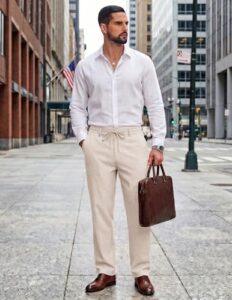
Casual dress pants may have a softer fabric, visible texture, lighter color, or more relaxed cut. Examples include linen trousers, cotton twill pants, and some drawstring trousers.
They can look refined without appearing formal. Pair them with loafers, clean sneakers, knit polos, or casual button-down shirts.

How to Choose Men’s Dress Pants for Any Occasion
Choosing the right pants becomes easier when you start with the event rather than the product label.
-
Check the dress code. Look for terms such as black tie, cocktail, business formal, business casual, or casual.
-
Consider the jacket. A matching jacket calls for suit pants. A separate blazer works better with odd trousers or slacks.
-
Choose the fabric. Wool suits formal needs, cotton works for business casual, and linen is ideal for warm weather.
-
Select a safe color. Gray and navy are the most useful starting colors. Khaki, olive, brown, and cream add variety.
-
Match the shoes. Black shoes work with charcoal and black pants. Brown shoes pair well with navy, tan, olive, and medium gray.
-
Check the condition. Clean, pressed pants look more polished than wrinkled or faded pants, even when the fabric is expensive.
For a job interview, charcoal or navy dress pants are usually dependable. For a summer wedding, linen or lightweight wool may feel better. For a business-casual office, chinos or cotton slacks may be enough.

What Shoes and Shirts Go With Dress Pants?
Dress pants are flexible because they can move from formal to casual with a few changes.
Shirt Pairings
White and light blue dress shirts are classic with gray or navy pants. A patterned shirt can add interest, but keep the pattern small when the pants already have stripes or checks.
For a relaxed look, try a knit polo, Oxford shirt, or fine-gauge sweater. Avoid pairing very formal pants with a heavily printed T-shirt unless the outfit is intentionally fashion-forward.
Shoe Pairings
Oxford and derby shoes are strong choices for formal dress pants. Loafers offer a slightly more relaxed look while remaining polished.
Clean leather sneakers can work with modern trousers in casual settings. Athletic shoes, work boots, and worn sneakers usually lower the formality of the outfit.
Belt Pairings
Match the belt color to the shoes as closely as possible. A black belt with brown shoes can make the outfit look disconnected.
If the pants have belt loops, wear a belt or choose a shirt and jacket combination that makes the missing belt look intentional. Suspenders are another option, but they should not be worn with a belt at the same time.

Common Mistakes to Avoid
Understanding what are men's dress pants called is useful, but knowing what to avoid is just as important.
• Wearing suit pants with a jacket from another suit: Slight differences in color and shine can be easy to notice.
• Choosing a waist that is too tight: A tight waist creates discomfort and pulls the front of the pants out of shape.
• Ignoring the hem: Pants that are too long bunch around the ankle. Pants that are too short may look accidental unless the style is clearly cropped.
• Overlooking pockets: Flared pockets often show that the pants are too tight across the hips or thighs.
• Mixing formal and casual pieces without balance: A formal wool trouser may look strange with a graphic T-shirt and running shoes.
• Buying only one pair: Rotating pants gives fabric time to recover and can help reduce wear.
• Skipping alterations: Small changes to the waist, hem, or seat can make affordable pants look far better.
One of the most practical lessons in menswear is that tailoring often gives more value than a higher price tag. A modest pair with a clean hem and correct waist can look better than luxury pants with poor fit.

How to Care for Men’s Dress Pants
Proper care helps dress pants keep their shape and color.
Hang trousers from the waistband or use a clamp hanger with a protective cloth. This allows wrinkles to fall out and prevents sharp creases in the wrong places.
Read the care label before washing. Wool pants often need professional cleaning, while cotton pants may be washable. Do not assume that every pair marked “dress pants” needs the same care.
Use a steamer for light wrinkles when the fabric allows it. If you iron wool, place a thin cloth between the iron and the pants to reduce the risk of shine or heat damage.
Avoid wearing the same pair several days in a row. Resting the fabric helps preserve the crease, shape, and overall finish.
Frequently Asked Questions About What Are Men’s Dress Pants Called
What are men’s dress pants called in the United States?
They are most often called dress pants or slacks. “Trousers” is also correct, especially in formal clothing language.
Are slacks and dress pants the same thing?
In everyday American English, slacks and dress pants usually mean nearly the same thing. Slacks often suggest pants worn separately from a matching suit jacket.
Are suit pants the same as dress pants?
Suit pants are a type of dress pants designed to match a specific suit jacket. Dress pants can also include separate trousers that were never made as part of a suit.
What are formal men’s pants called?
Formal men’s pants may be called dress trousers, suit trousers, or tuxedo trousers. The correct term depends on the event and the type of jacket worn.
Can men wear chinos as dress pants?
Chinos can work as dress pants in casual or business-casual settings. They are usually too casual for formal business events, weddings with strict dress codes, and black-tie occasions.
Should men’s dress pants have pleats?
Pleats are optional. They can add comfort and room, while flat-front pants offer a simpler and more streamlined look.
What color dress pants should every man own?
A versatile starting set includes charcoal gray, navy, and medium gray pants. Add khaki, brown, or olive after you have covered your most common work and event needs.
Conclusion
Men’s dress pants are commonly called dress pants, slacks, trousers, or suit pants. The terms overlap, but suit pants match a jacket, while slacks and separate trousers are made to work with different shirts and jackets.
Focus on fit, fabric, color, and the dress code. Start with charcoal or navy, have the hem adjusted, and choose shoes that match the level of formality. Once you know what are men's dress pants called, shopping becomes much easier and your outfits become more intentional.
Try these tips with your next pair, and share your favorite fit or style in the comments.

Madison Clark is a footwear expert and the voice behind MyStyleGrid.com. She specializes in honest shoe reviews, style tips, and practical guides to help readers find the perfect pair for any occasion. With years of experience in blogging and content creation, Madison makes footwear knowledge simple, stylish, and easy to follow.