Yes, you can get prescription blue light glasses made with your personal vision correction prescription.
If you spend hours on a computer, tablet, or phone, prescription blue light glasses may seem like a simple way to improve comfort. As an optical writer who has reviewed lens options and helped people compare eyewear, I know the choice is less about marketing claims and more about your prescription, screen habits, lens quality, and eye health. This guide explains how they work, what they can and cannot do, and how to choose a pair wisely.
Can I get prescription blue light glasses?
Yes, you can get prescription blue light glasses from an eye doctor, optical store, or online eyewear retailer. The lenses combine your vision prescription with a coating, tint, or material designed to reduce some blue-violet light transmission.
You may order them with prescriptions for:
• Nearsightedness
• Farsightedness
• Astigmatism
• Bifocals
• Progressive lenses
• Reading glasses
You usually need a current eyeglass prescription. In the United States, your eye doctor must give you a copy of your prescription after an eye exam. You do not have to buy glasses from the same office that performed the exam.
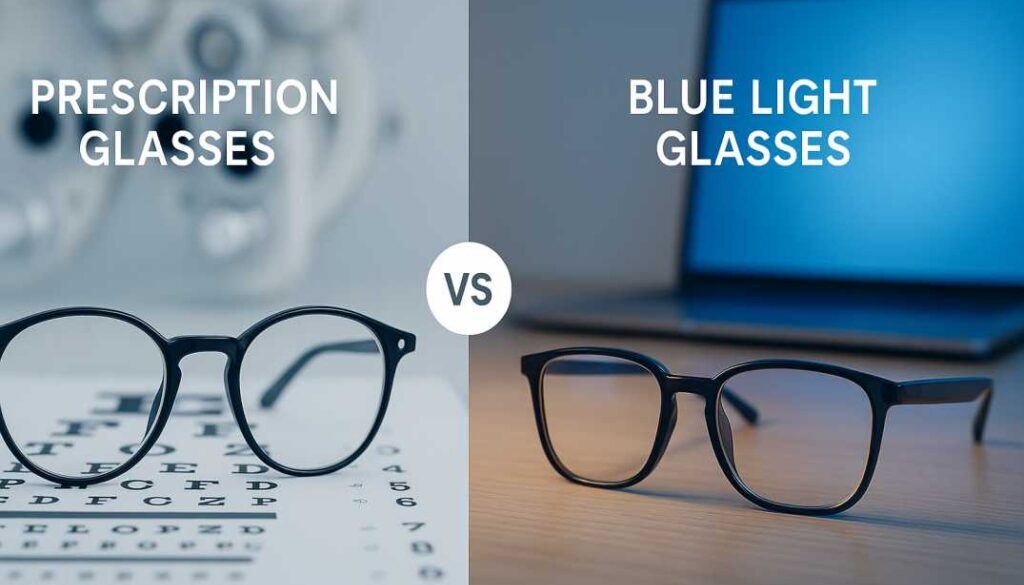
It is also important to know that “blue light glasses” can mean different things. Some lenses have a clear filter. Others have a mild yellow tint. Some use an anti-reflective coating that reduces glare but does not block a large amount of blue light.
How prescription blue light glasses work
Prescription lenses correct the way light enters your eyes. The lens power helps your eyes focus clearly at a certain distance. A blue light filter is an added feature that changes how much light in selected wavelengths reaches the eye.
Blue light is part of the visible light spectrum. The sun produces far more blue light than digital screens. Screens can still contribute to eye discomfort, especially when you stare at them for long periods without blinking or taking breaks.
Most blue light lenses target part of the blue-violet range. They do not block all blue light, and they should not. Blue light plays a role in daytime alertness and the body’s sleep cycle.
Prescription blue light glasses may help by:
• Reducing some screen glare
• Making long screen sessions feel more comfortable
• Supporting clearer vision when your prescription is accurate
• Limiting selected blue-violet wavelengths
• Helping some people feel less bothered by bright screens
However, the filter itself is not a cure for digital eye strain. The main causes of screen discomfort often include dry eyes, poor lighting, an outdated prescription, glare, and focusing at one distance for too long.
A useful way to think about these glasses is to compare them with sunglasses. Sunglasses reduce bright visible light and ultraviolet exposure outdoors. Blue light lenses target only certain wavelengths and are not a substitute for sunglasses or UV protection.

Do blue light glasses need a prescription?
No. Blue light glasses do not always need a prescription. You can buy nonprescription blue light glasses with zero-power lenses, even if you have normal distance vision.
You may want prescription blue light glasses if you:
• Already wear glasses for clear vision
• Need reading correction
• Use progressive lenses
• Have astigmatism
• Notice blurry text on a screen
• Get headaches when using an old pair of glasses
Nonprescription blue light glasses will not correct nearsightedness, farsightedness, or astigmatism. They may still offer a filter or glare control, but they cannot replace prescription lenses.
In my experience helping people compare eyewear, one common mistake is buying a fashionable blue light frame and expecting it to fix blurry vision. If the text looks unclear, the issue may be your prescription rather than blue light. A proper eye exam is the safest first step.
What are the benefits of prescription blue light glasses?
The biggest benefit is that one pair can provide both vision correction and a blue light filter. This may be convenient if you work on a computer and need clear vision throughout the day.
Better vision at screen distance
An accurate prescription can make text and images easier to see. This may reduce squinting and the effort needed to focus. Some people need a separate computer prescription because their regular distance glasses are not ideal for a monitor.
Glare control
Many prescription blue light glasses include an anti-reflective coating. This coating can reduce reflections from office lights, windows, and screens. Less glare may make the screen more comfortable, even when the blue light filter itself provides limited benefit.
Possible evening comfort
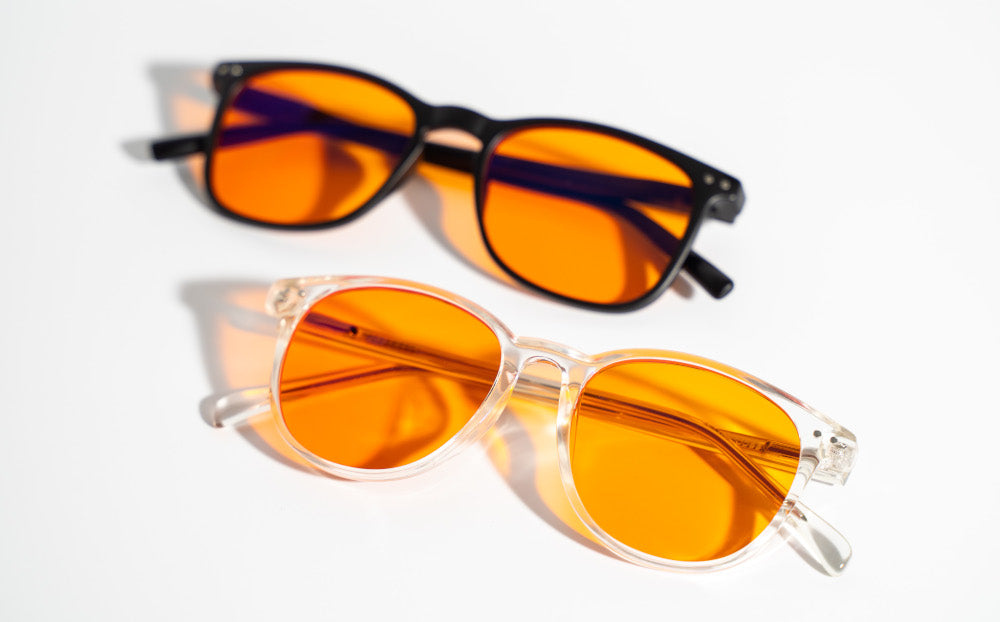
Some blue light lenses have a noticeable warm tint. This may feel more comfortable at night, especially when your screen looks harsh. Still, sleep depends on many factors, including screen brightness, content, stress, and bedtime habits.
Convenience
A single pair may serve as your everyday glasses and computer glasses. This can be helpful when you move between work, errands, and home.
Clinical reviews have not shown strong evidence that blue light filtering lenses prevent eye disease or reliably reduce digital eye strain for everyone. Their value often comes from a combination of proper prescription, glare control, fit, and personal comfort.
Can prescription blue light glasses reduce eye strain?
They may help some people feel more comfortable, but research does not prove that blue light filters alone reduce digital eye strain. Eye strain has many causes, and the best solution depends on the cause.
Common symptoms include:
• Dry or watery eyes
• Burning or irritation
• Blurred vision
• Headaches
• Neck and shoulder pain
• Difficulty refocusing after screen use
• Increased sensitivity to light
The 20-20-20 rule is a simple tool. Every 20 minutes, look at something about 20 feet away for at least 20 seconds. This gives your focusing system a short rest.
You can also try these steps:
- Keep your screen about an arm’s length away.
- Place the top of the monitor near eye level.
- Reduce glare from windows and overhead lights.
- Increase text size instead of leaning closer.
- Blink often, especially during intense tasks.
- Use artificial tears if an eye care professional recommends them.
- Keep your screen clean and adjust its brightness to match the room.
If symptoms continue, do not assume blue light is the only cause. An eye exam can check your prescription, eye surface, focusing ability, and overall eye health.
Are prescription blue light glasses worth it?
Prescription blue light glasses may be worth it if you want clear vision, glare control, and a filter in one pair. They are less likely to feel worthwhile if you expect them to prevent eye disease, eliminate headaches, or solve every screen problem.
Consider them if:
• You use screens for many hours each day
• Your regular glasses cause reflections
• You need a new prescription anyway
• You prefer a mild lens tint
• You often work under bright office lights
• You want computer eyewear with your exact prescription
You may not need them if:
• You rarely use digital screens
• Your current glasses already have a good anti-reflective coating
• You expect a blue filter to treat dry eye
• You have frequent headaches that have not been evaluated
• You mainly need sunglasses or strong UV protection
A quality anti-reflective coating, correct frame fit, and a fresh prescription may matter more than the blue filter. Ask the optical professional what percentage of blue-violet light the lens filters and whether the lens has a visible tint.

How to order prescription blue light glasses
Ordering is usually simple, but accuracy matters. Follow these steps.
1. Schedule an eye exam
Use a current prescription. An eye exam is especially important if your glasses are more than one or two years old, your vision has changed, or you have pain or sudden vision problems.
2. Get your prescription details
Check that the prescription includes the sphere, cylinder, axis, and pupillary distance when required. Progressive lenses may also require measurements for fitting height.
3. Choose the right lens type
Tell the optician how you use screens. A person who works at a desktop monitor may need a computer-distance lens. A person who switches between driving and reading may prefer progressives.
4. Select the blue light feature
Ask whether the lens uses:
• A clear blue light coating
• A yellow or amber tint
• A lens material that filters selected wavelengths
• An anti-reflective coating
• UV protection
These features are not identical. A seller should explain what the lens does instead of using a vague “blue blocking” label.
5. Confirm measurements and return terms
Poor measurements can make even a good prescription uncomfortable. Check the retailer’s remake and return policy before ordering online.
6. Wear them in the right setting
If the lenses have a yellow tint, colors may look warmer. This is normal. Do not use tinted computer glasses for tasks that require accurate color judgment unless the lens is designed for that purpose.
Prescription blue light glasses versus computer glasses
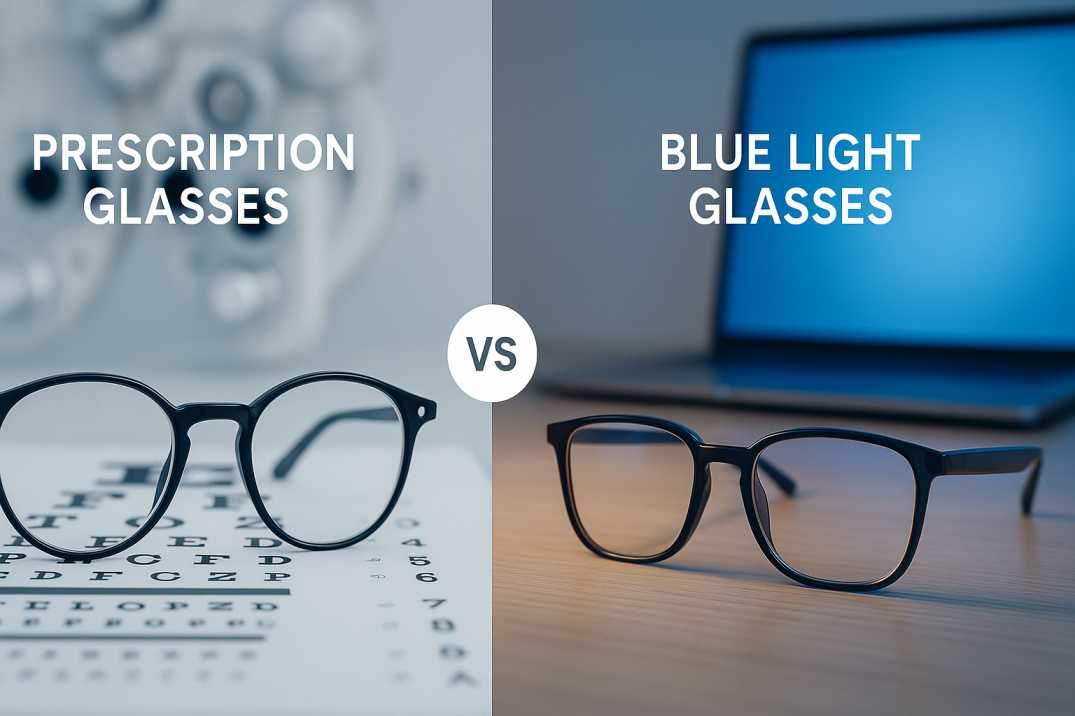
Prescription blue light glasses and computer glasses are not always the same. Blue light glasses focus on filtering selected wavelengths. Computer glasses focus on the viewing distance and visual demands of a screen.
For example, someone with a strong distance prescription may see a monitor clearly through regular glasses but still feel strain after several hours. A computer prescription may provide a more comfortable focus range.
Computer glasses may include:
• A single-vision prescription for monitor distance
• An occupational progressive lens
• An anti-reflective coating
• A mild near boost
• Optional blue light filtering
If you spend most of your workday at a desktop, ask about computer-specific prescription lenses. If you need one pair for many distances, ask about everyday prescription blue light glasses with an appropriate lens design.

How much do prescription blue light glasses cost?
The price varies by prescription strength, frame, lens material, lens design, coating, and retailer. Basic single-vision prescription blue light glasses may cost less than progressive or high-index lenses.
Your total cost may include:
• Eye examination
• Frame
• Prescription lenses
• Blue light treatment
• Anti-reflective coating
• High-index material
• Progressive lens design
• Shipping or fitting fees
Vision insurance may cover part of the frame or prescription lens cost. Blue light filtering is often an optional upgrade, so coverage can differ by plan.
Be careful with very low prices that do not clearly explain lens quality, measurements, warranty terms, or return policies. A cheaper pair can become expensive if the prescription is made incorrectly or the frame cannot be adjusted.
Mistakes to avoid when buying prescription blue light glasses
The most common mistake is focusing on the filter while ignoring the prescription and fit. A blue light lens cannot make an incorrect prescription comfortable.
Avoid these errors:
• Buying without checking your current prescription
• Assuming all blue light lenses block the same wavelengths
• Confusing anti-glare coating with full blue light blocking
• Choosing a frame that slips or presses behind your ears
• Forgetting to measure pupillary distance when ordering online
• Wearing yellow-tinted lenses for color-sensitive work
• Using computer glasses while driving
• Ignoring persistent headaches or eye pain
• Expecting blue light glasses to replace sleep habits
One lesson I often share is to test the whole setup, not just the glasses. A comfortable chair, correct monitor height, soft room lighting, and regular breaks can make a greater difference than a premium lens feature.
Are blue light glasses safe?
Prescription blue light glasses are generally safe when they are made correctly and used for the right task. They should not cause permanent eye damage or weaken your eyes.
A strong yellow or amber tint may change how colors appear. This can matter for graphic design, photography, medicine, aviation, or other work that depends on accurate color.
Do not wear computer glasses for driving unless they provide clear vision at driving distance. Also, seek prompt medical care for sudden vision loss, flashes, a sudden increase in floaters, severe eye pain, or a curtain-like shadow in your vision. These symptoms are not normal screen strain.
How to improve sleep while using screens
Blue light exposure in the evening may affect the body’s natural sleep timing. The amount and effect differ from person to person. A pair of glasses may help, but it should not be your only strategy.