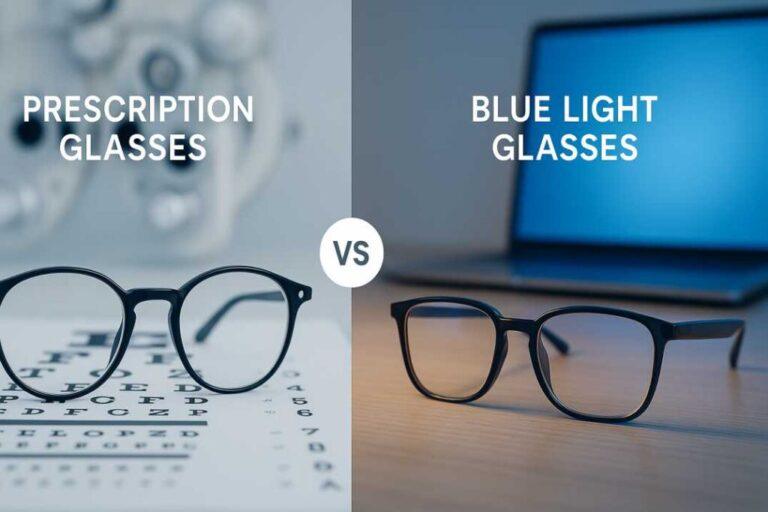
Yes, you can add blue light protection to prescription glasses by ordering a special coating or replacing the lenses.
If you already wear glasses, you usually do not need a second pair. An optician can add a blue light filter when making new prescription lenses, and some retailers may offer lens replacement for an existing frame. The best choice depends on your prescription, lens material, coating options, screen habits, and budget.
Can you add blue light to prescription glasses?
Yes, blue light protection can be added to prescription glasses in several ways. The most common option is a blue light filtering coating applied during the lens manufacturing process. Some lenses also use a built-in filter rather than a surface coating.
If your current lenses are old, scratched, or made with a material that cannot accept a new coating, the optician will usually recommend replacing the lenses. In most cases, you cannot simply brush or attach a reliable blue light filter to finished lenses at home.
Here are the main options:
• Blue light coating: A thin treatment added to prescription lenses.
• Blue light filtering lens material: A filter built into the lens itself.
• Blue light tint: A slight yellow, amber, or clear tint that reduces some blue wavelengths.
• Clip-on filter: A removable filter that fits over your prescription glasses.
The exact amount of blue light blocked varies by product. Some lenses filter a small range of wavelengths, while others block more. Ask the optical provider for the product’s wavelength range and transmission data instead of relying only on the phrase “blue light protection.”
How do blue light prescription glasses work?
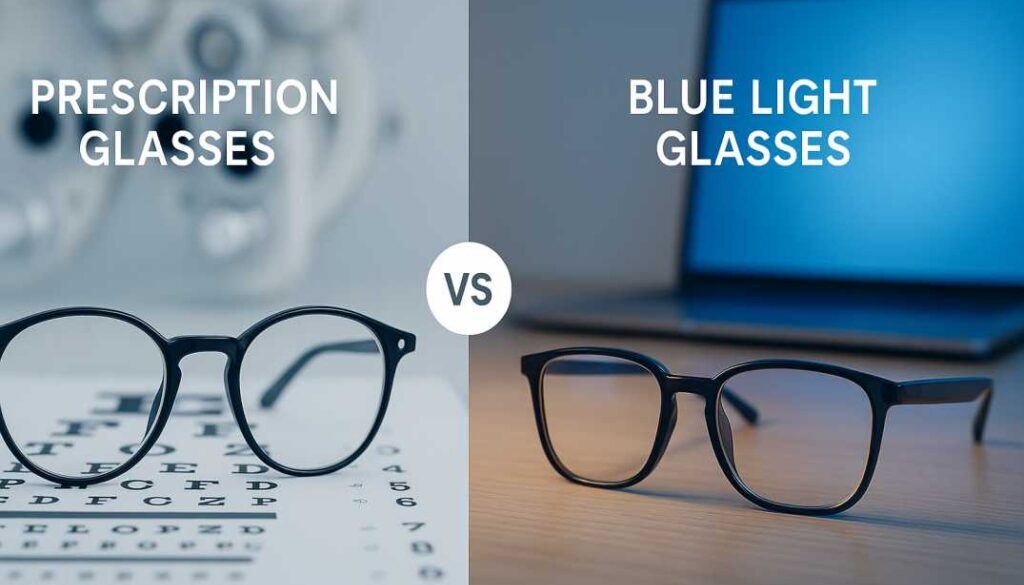
Blue light is part of the visible light spectrum. It has a short wavelength and relatively high energy compared with colors such as red or orange. The sun is the largest natural source, but LED bulbs, phones, tablets, computers, and televisions also produce blue light.
Blue light lenses reduce the amount of selected blue wavelengths that pass through the lens. They do not block all blue light, and they should not. Blue light plays a role in daytime alertness and the body’s sleep-wake rhythm.
A blue light filter may work in one of two ways:
-
A clear coating reflects or absorbs a portion of blue-violet light.
-
A tinted lens changes the amount of blue light that reaches the eye.
The filter is not the same as an anti-reflective coating. Anti-reflective treatment reduces reflections from the front and back of the lens. It can make screens look clearer and reduce glare, but it does not necessarily block blue light.
This difference matters when you ask, “Can you add blue light to prescription glasses?” You can add both features, but they serve different purposes.
Can blue light be added to glasses you already own?
Usually, an optician cannot add a high-quality blue light coating to lenses that are already in your frame. Lens coatings are generally applied under controlled factory conditions. Applying a coating after purchase can lead to poor adhesion, uneven filtering, or damage to the prescription lens.
There are three practical choices for an existing pair:
• Replace the prescription lenses with new lenses that include blue light filtering.
• Use a clip-on blue light filter over the current glasses.
• Buy a separate pair of prescription computer glasses with the desired filter.
Replacing the lenses is often the cleanest option. The optician can check whether your frame is safe to reuse and whether its shape is still supported by the manufacturer. Older, brittle, rimless, or heavily worn frames may break during lens replacement.
A clip-on can cost less, but it may add weight and glare. It can also change the appearance of colors on the screen. Test the clip-on in the same lighting where you work before buying it.
What are the possible benefits?
The benefits of blue light prescription glasses depend on what you expect them to do. They may reduce certain reflections or make some people feel more comfortable during long screen sessions. However, they are not a complete treatment for digital eye strain.
Digital eye strain often comes from several causes:
• Focusing on a close object for a long time.
• Blinking less while reading or using a screen.
• Dry air, fans, heating, or air conditioning.
• Glare from windows or overhead lights.
• Poor screen distance or viewing angle.
• An outdated or incorrect prescription.
Some people report that blue light lenses feel more comfortable at night. Others dislike the yellow cast or notice no difference. Both experiences are possible because comfort is personal and products vary.
Research has not shown that ordinary screen exposure causes permanent eye damage in healthy adults. Major eye-care groups have also stated that there is not enough evidence to recommend blue light glasses for preventing eye disease or routine digital eye strain.
The strongest practical benefit may come from reducing glare, improving contrast, or encouraging better screen habits. In other words, the lens can be one small tool, not a magic shield.
Do blue light glasses reduce eye strain?
Blue light prescription glasses may help some users feel less glare, but evidence that they directly reduce eye strain is limited. Eye strain usually improves more from good habits than from a special filter.
Try these steps first:
-
Follow the 20-20-20 rule. Every 20 minutes, look at something about 20 feet away for at least 20 seconds.
-
Blink often. Consider preservative-free artificial tears if an eye-care professional recommends them.
-
Keep the screen about an arm’s length away.
-
Place the top of the monitor near eye level.
-
Reduce glare by changing the screen angle or using softer room lighting.
-
Increase text size instead of leaning toward the screen.
-
Keep your prescription current.
If these changes do not help, schedule an eye exam. Burning, pain, headaches, blurred vision, or frequent squinting may come from dry eye, uncorrected astigmatism, focusing problems, or another condition.
A common mistake is to buy blue light lenses before checking the prescription. A filter cannot correct blurry vision caused by the wrong lens power.

Can blue light glasses help with sleep?
Blue light in the evening can affect melatonin release and the body’s internal clock. This is one reason bright screens and LED lights close to bedtime may make it harder for some people to feel sleepy.
Blue light glasses may help in certain evening settings, but the result depends on the lens. Clear lenses often filter less blue light than dark amber lenses. A lens that looks nearly clear may not provide enough filtering to produce a noticeable sleep effect.
Better evening habits include:
• Dim screens and room lights one to two hours before bed.
• Turn on night mode or a warmer display setting.
• Avoid using bright screens in a dark room.
• Keep a regular sleep schedule.
• Choose a low-light activity before bed.
Prescription blue light glasses can be useful if they make it easier for you to manage evening light. Still, they should not replace sleep habits or medical care for insomnia.
What should you ask an optician?
When discussing whether you can add blue light to prescription glasses, ask specific questions. Product labels can sound similar even when the actual filters differ.
Use this checklist:
• Is the filter a coating, a lens material, or a tint?
• Which wavelengths does it filter?
• What percentage of light does it block?
• Does it include anti-reflective protection?
• Will the lenses have a visible yellow or amber color?
• Does the coating include scratch resistance?
• Is there a warranty for peeling or crazing?
• Can the filter be added to my existing frame?
• Will it affect color accuracy?
• Is UV protection included?
UV protection and blue light filtering are not the same. Outdoor prescription glasses should provide strong ultraviolet protection, while blue light filtering is mainly discussed for indoor screens and evening light.
A good optician should explain the trade-offs without promising that the lenses will cure headaches or prevent eye disease.