Rubber boots are made by molding natural or synthetic rubber around a shaped foot form, then curing and finishing it.
Knowing how are rubber boots made helps you understand why some pairs stay flexible for years while others crack after one season. The process combines rubber chemistry, mold design, heat, pressure, and careful quality checks. This guide explains each stage in simple terms, from raw materials to the finished boots on your feet.
What Are Rubber Boots Made Of?
Rubber boots use a waterproof elastomer, which is a material that can stretch and return to its original shape. Manufacturers may use natural rubber, synthetic rubber, or a blend of both.
Natural rubber comes from latex collected from rubber trees. It offers strong flexibility, good grip, and a soft feel. However, it can age faster when exposed to sunlight, ozone, oils, and extreme heat.
Synthetic rubber comes from petroleum-based chemicals. Common types include neoprene, nitrile rubber, and PVC-based compounds. These materials can improve resistance to oil, chemicals, cold, or wear, depending on the formula.
A typical rubber boot may also contain:
• Sulfur or another curing agent to strengthen the rubber
• Carbon black or mineral fillers to improve durability
• Plasticizers to keep the material soft
• Pigments to create color
• Antioxidants to slow aging
• Textile, foam, or rubber liners for comfort
• Reinforcing layers around the heel, toe, and ankle
The exact recipe varies by brand and purpose. A farm boot, fishing boot, rain boot, and industrial safety boot do not need the same compound.


How Are Rubber Boots Made Step by Step?
The answer to how are rubber boots made begins with a carefully controlled production process. Each stage affects waterproofing, comfort, strength, and service life.
1. Rubber Compounds Are Mixed
The factory first weighs the rubber and other ingredients. Large mixing machines blend these materials into an even compound.
The mixing stage must be precise. Too much sulfur can make rubber hard and brittle. Too little may prevent proper curing. Poor mixing can also create weak spots that later leak or split.
Factories often test the compound for:
• Hardness
• Stretch
• Tear strength
• Resistance to cold
• Resistance to oils or chemicals
• Curing behavior
This testing gives the production team a reliable starting point before molding begins.
2. The Rubber Is Shaped Into Sheets or Strips
After mixing, the warm rubber passes through rollers. These rollers turn the compound into sheets with a set thickness.
Some factories cut the sheets into parts. These parts may form the boot shaft, toe, heel, instep, and side panels. Other factories use injection or compression molding to shape the boot more directly.
Thickness matters. A thin shaft feels light and flexible, but it may wear faster. A thick sole gives better protection but can feel heavy. Good boot design balances both needs.
3. A Foot Form Sets the Shape
A foot-shaped mold, often called a last, gives the boot its size and shape. The last copies the space around the foot, ankle, heel, and calf.


The design of the last affects:
• Toe room
• Heel fit
• Arch shape
• Calf width
• Ankle movement
• Overall comfort
This explains why two boots with the same size label can feel very different. Their lasts may have different shapes.
4. Rubber Layers Are Placed Around the Last
Workers or automated systems wrap rubber sheets around the last. They overlap seams with care because seams are common areas for leaks.
Many high-quality boots use several rubber layers. The inner layer may provide comfort, while the outer layer protects against water and abrasion. Extra rubber often covers the toe, heel, sole, and flex points.
In hand-built boots, skilled workers inspect and smooth each layer. In automated production, machines apply consistent pressure and placement. Both methods can produce strong boots when quality control is good.
5. The Sole and Tread Are Added
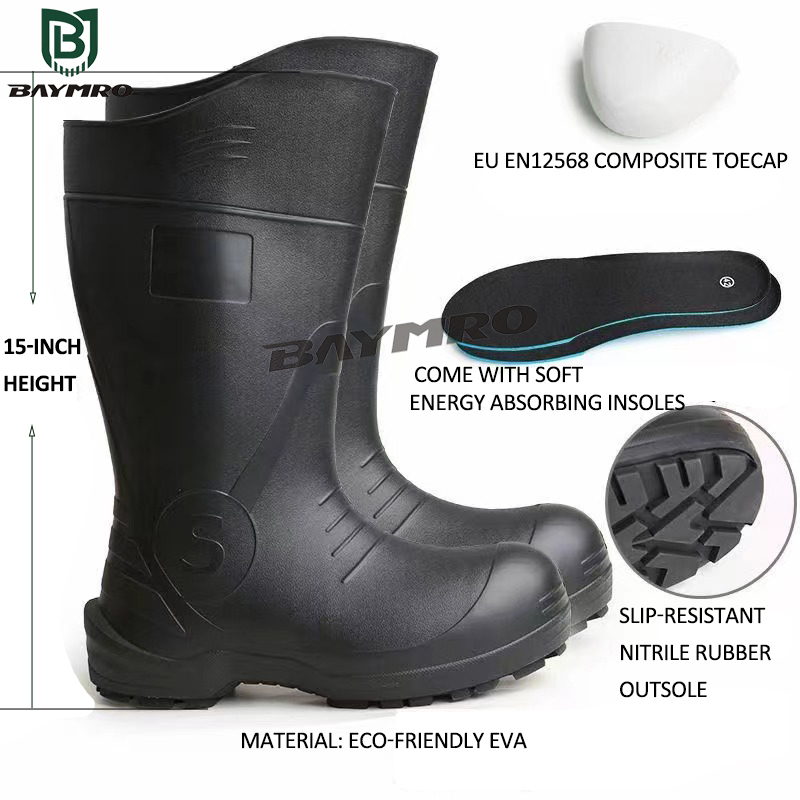
The sole is a key part of how are rubber boots made. It affects grip, walking comfort, and wear.
Manufacturers may attach a separate rubber sole or mold the outsole directly onto the boot. The tread pattern includes channels and raised blocks that push water and mud away from the contact area.
Common tread designs include:
• Deep lugs for mud and soft ground


• Fine patterns for sidewalks and light rain
• Wide channels for water drainage
• Reinforced heels for long wear
• Self-cleaning shapes that release mud as you walk
A deep tread does not always mean better traction. On smooth indoor floors, an aggressive lug can feel less stable. The best tread matches the surface where the boot will be used.
6. The Boot Is Cured With Heat
Curing, also called vulcanization in many rubber products, changes soft rubber into a strong, elastic material. Heat activates the curing system and creates links between rubber molecules.
Think of curing as baking bread. Before baking, dough is soft and weak. After baking, it holds its shape. Rubber curing works differently, but the basic idea is similar: controlled heat transforms the material.
During curing, the boot stays on the last or inside a mold. This helps it keep its shape. Time, temperature, and pressure must remain within a narrow range.
Under-curing may produce a weak or sticky boot. Over-curing can reduce flexibility and create a hard, brittle feel. Experienced manufacturers monitor this stage closely.
7. The Boots Are Cooled and Removed
After curing, the boots cool while they retain their shape. Workers then remove the last and inspect the inside.
Removal must be done carefully. A boot that is still too warm may distort. A boot that cools too quickly may develop stress or lose some flexibility.
At this stage, workers may add:
• Removable insoles
• Textile liners
• Foam insulation


• Pull tabs
• Buckles
• Reflective strips
• Safety toes or midsoles
The final construction depends on whether the boot is made for casual rain, work, hunting, cold weather, or industrial use.
8. The Boots Are Trimmed and Finished
Small pieces of extra rubber may remain around seams or mold edges. Workers trim these pieces and smooth the surface.
The factory may also add logos, size marks, protective coatings, or a polished finish. Some boots receive a matte surface, while others have a glossy appearance.
Color is usually mixed into the rubber before molding. Surface paint may be used for special details, but the main color normally runs through the material. This helps reduce visible scratches.
9. The Finished Boots Are Tested
The last stage in how are rubber boots made is quality control. A factory should test both the materials and the finished product.
Common checks include:
• Visual inspection for cracks, bubbles, wrinkles, and thin areas
• Water leak testing
• Sole adhesion testing
• Flex testing
• Abrasion testing
• Cold-temperature testing
• Slip resistance testing
• Size and shape checks
Safety boots may also require impact, compression, puncture, or electrical resistance tests. In the United States, protective footwear is commonly evaluated under relevant ASTM requirements. Specific standards depend on the type of protection claimed.

How Are Handmade Rubber Boots Different?
Handmade rubber boots often use cut rubber sheets that workers assemble around a last. The boot may pass through several skilled hands before it reaches the curing press.
This method can provide:
• Careful seam control
• Small production runs
• Custom shapes
• Detailed finishing
• Easy design changes
The tradeoff is a higher cost and greater variation between pairs. Skilled work is valuable, but it does not automatically guarantee perfection. A handmade boot still needs proper curing and testing.
Mass-produced boots rely more on automated machines and fixed molds. This approach gives consistent sizing and lower prices. It also works well for large orders.
A useful lesson from inspecting different boot types is that construction method matters less than execution. A well-made molded boot can outperform a poorly assembled handmade boot. Look at the rubber quality, seams, tread, and fit rather than the marketing label alone.
How Are Rubber Boots Made Waterproof?
Rubber itself is naturally water resistant, but the entire boot must be sealed. Even a waterproof rubber shell can leak through a poorly joined seam, damaged sole, or loose gusset.
Manufacturers improve waterproofing by:
• Overlapping rubber panels
• Welding or bonding seams
• Molding the sole as one piece
• Adding sealed gussets
• Using waterproof zippers or closures
• Testing the boot in water or with air pressure
One-piece molded boots usually have fewer seams. That can reduce leak points. However, a one-piece design may feel less flexible or offer less repairability than a layered boot.
The boot opening also matters. Water can enter from the top if the shaft is too short or loose. In wet grass, a tall boot with a snug but comfortable opening offers better protection than a low rain shoe.

How Are Rubber Boots Made Comfortable?
Waterproofing alone does not make a boot comfortable. Comfort depends on the last, rubber flexibility, weight, lining, insole, and foot shape.
Manufacturers improve comfort by shaping the toe box and adding cushioning. Some use neoprene or textile liners to reduce friction. Others add insulation for cold weather.
When choosing rubber boots, check these details:
• Your toes should move freely
• Your heel should not lift excessively
• The instep should feel secure, not tight
• The calf opening should allow normal movement
• The sole should bend near the ball of your foot
• The boot should not pinch when you squat
Try boots with the socks you expect to wear. Thick winter socks can change the fit by half a size or more.
One common mistake is buying rubber boots too large. Extra space can cause heel slip, blisters, and poor control. A little room is helpful, but the heel should remain reasonably stable.

Natural Rubber vs. Synthetic Rubber Boots
Natural rubber boots often feel soft and flexible. They can provide a comfortable walking experience and strong grip. With proper care, premium natural rubber can last a long time.
Synthetic rubber boots may offer better resistance to oil, fuel, chemicals, or extreme temperatures. They can also cost less and provide more consistent performance in large-scale production.
Here is a simple comparison:
| Feature | Natural rubber | Synthetic rubber |
|---|---|---|
| Flexibility | Usually very good | Depends on the formula |
| Oil resistance | Often limited | Can be strong |
| Cold performance | Varies by blend | Varies by material |
| Environmental source | Plant-based latex | Usually petroleum-based |
| Cost | Often higher | Often lower |
| Aging | Sensitive to ozone and sunlight | Depends on the polymer |
Neither material is best for every task. A garden boot may benefit from soft natural rubber. An industrial boot may need nitrile or another oil-resistant compound.
Manufacturers sometimes blend materials to balance comfort, cost, and protection. Read the product specifications instead of assuming that “rubber” describes one standard material.

Common Problems in Rubber Boot Manufacturing
Even advanced factories can produce defects. Understanding these problems helps you judge boot quality.
Cracking
Cracks may result from poor rubber formulation, under-curing, age, sunlight, ozone, or repeated bending. Small surface marks can become leaks if ignored.
Blisters and Bubbles
Air trapped during molding can create bubbles. These weak areas may burst under pressure or repeated flexing.
Seam Leaks
A seam may leak when panels overlap poorly or bonding fails. Flex points near the ankle and instep need special attention.
Sole Separation
If the sole does not bond correctly, it may peel away from the upper. Excessive heat, oil, or poor storage can also weaken the bond.
Uneven Thickness
Thin spots reduce protection and may wear through early. They can result from poor sheet control or uneven pressure during molding.
Shape Problems
A boot may twist, lean, or fit unevenly if the last shifts during curing. This can cause discomfort even when the size is correct.
When shopping, bend each boot gently, inspect the seams, and look for bubbles or wrinkles. Do not use a damaged boot for work that requires certified protection.

How to Care for Rubber Boots
Good care protects the material and extends boot life. After use, rinse away mud, salt, and chemicals with clean water.
Follow these simple steps:
-
Remove dirt with a soft brush or cloth.
-
Wash the surface with mild soap if needed.
-
Let the boots dry at room temperature.
-
Keep them away from radiators, fires, and direct high heat.
-
Store them upright in a cool, dark place.
-
Use a rubber conditioner made for the boot material when recommended.
Do not use gasoline, harsh solvents, or strong household cleaners. These chemicals can attack the rubber and weaken the surface.
Avoid leaving rubber boots in a hot car. Heat can distort the shape and speed up aging. Also avoid folding tall boots for long periods, since sharp creases may become permanent.

Environmental Considerations
Rubber boot production has environmental costs. Natural rubber comes from trees, but plantations can affect land use and biodiversity. Synthetic rubber relies mainly on fossil-based feedstocks.
Factories also use energy for mixing, molding, curing, and transport. Some manufacturers reduce waste by reusing clean rubber scraps or improving mold efficiency.
Recycling rubber boots can be difficult because a single boot may contain rubber, fabric, foam, metal, adhesives, and plastic. This mixed construction makes separation costly.
You can reduce impact by:
• Choosing durable boots
• Repairing small defects when safe
• Buying the right boot for the task
• Cleaning and storing boots properly
• Following local recycling guidance
Durability is an important part of sustainability. A boot that lasts five years may create less waste than three cheap pairs that fail quickly.
Frequently Asked Questions About How Are Rubber Boots Made
Are rubber boots made from real rubber?
Some rubber boots are made from natural rubber collected from latex-producing trees. Others use synthetic rubber or a blend, so the material depends on the product and its intended use.
How are rubber boots made waterproof?
Manufacturers create a sealed shell by molding rubber, bonding overlapping panels, and sealing seams. They also test the finished boots for leaks before shipment.
Are rubber boots vulcanized?
Many rubber boots are vulcanized, which means heat creates chemical links that strengthen the rubber. Some boots use other curing systems or thermoplastic materials instead.
Why do rubber boots crack?
Cracking can result from age, sunlight, ozone, heat, harsh chemicals, poor storage, or repeated bending. Keeping boots clean, cool, and away from direct sunlight can slow this damage.
How long do rubber boots last?
Service life varies widely. Quality, use, storage, climate, and maintenance all matter, but well-cared-for boots can last several years.
Can rubber boots be repaired?
Small surface damage may be repairable with a product designed for the boot material. Do not rely on a repair for safety-critical work unless the manufacturer or a qualified professional confirms that the boot remains protective.
Are rubber boots safe for work?
Some are made for work and tested to safety standards, while ordinary rain boots are not. Check for specific ratings such as toe protection, puncture resistance, slip resistance, or electrical protection.
Conclusion
Rubber boots are made through a careful chain of material mixing, shaping, molding, curing, trimming, and testing. Natural and synthetic rubber each offer useful benefits, while the boot’s last, seams, sole, and curing process determine much of its comfort and durability.
Understanding how are rubber boots made makes it easier to choose the right pair. Inspect the construction, match the material to your environment, and care for the boots properly after each use. Explore product specifications carefully, and share your own boot-wearing experience in the comments.

Madison Clark is a footwear expert and the voice behind MyStyleGrid.com. She specializes in honest shoe reviews, style tips, and practical guides to help readers find the perfect pair for any occasion. With years of experience in blogging and content creation, Madison makes footwear knowledge simple, stylish, and easy to follow.