The best glasses for your face balance your natural features, fit comfortably, and match your personal style.
Choosing what shape glasses for my face can feel harder than it should. A frame may look great online but feel too wide, too sharp, or too small when you try it on. The good news is that face shape offers a useful starting point, not a strict rule. With a few simple checks for width, proportion, bridge fit, and style, you can find glasses that look balanced and feel natural.
How to find your face shape
Before deciding what shape glasses for my face, identify your face shape. You do not need special tools. A mirror, a hair tie, and a phone camera are enough.
Pull your hair away from your face and look straight into a mirror. Keep your head level and relax your expression. You can also take a front-facing photo with the camera at eye level.
Compare these four areas:
• Forehead width: Measure or estimate the widest part of your forehead.
• Cheekbone width: Notice the widest point across your cheeks.
• Jawline width: Look at the width and shape of your lower face.
• Face length: Compare the distance from your hairline to your chin with your face width.
Most people have one of five common face shapes:
• Oval: The face is longer than it is wide, with a gently curved jaw.
• Round: The face has similar width and length, with soft cheeks and a curved jaw.
• Square: The forehead, cheeks, and jaw have similar widths, with a strong jawline.
• Heart: The forehead is wider, while the chin is narrower or pointed.
• Oblong: The face is noticeably longer than it is wide, often with a straighter cheek line.
Many people have a blend of shapes. For example, you may have an oval face with a square jaw or a heart-shaped face with fuller cheeks. This is why face shape should guide your choice rather than control it.

What shape glasses for my face based on face shape
The right frame usually creates balance. This does not mean your glasses must contrast your face in a dramatic way. It means the frame should support your features without hiding them.
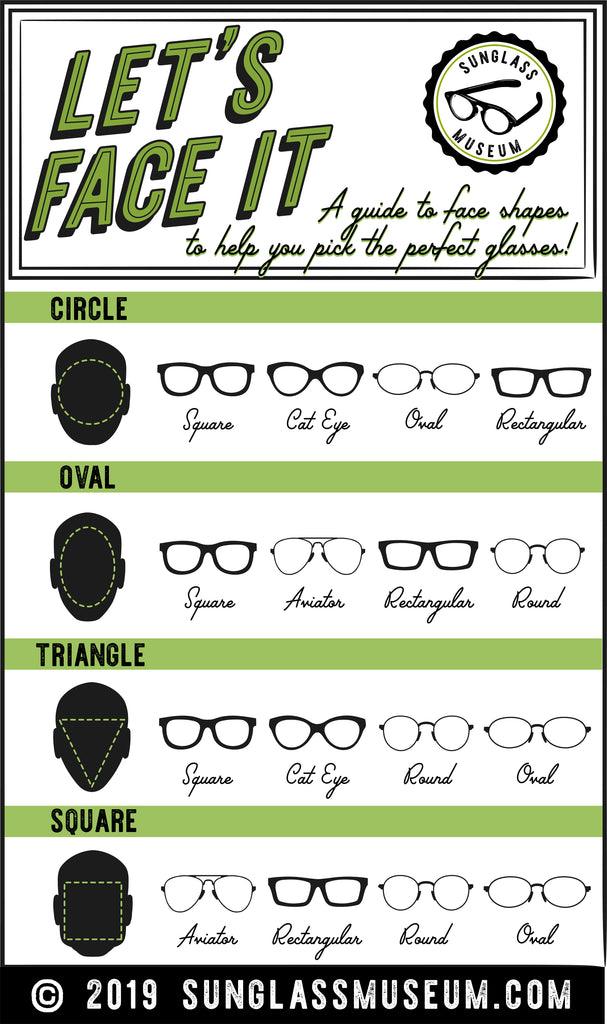
Glasses for an oval face
An oval face often has balanced proportions and a softly curved jaw. Most frame shapes can work well, including rectangular, square, round, cat-eye, and aviator styles.
For the best fit, choose frames that are at least as wide as the broadest part of your face. Very narrow frames can make the face look longer. Oversized glasses may also cover too much of your natural balance.
Good choices include:
• Soft square frames
• Classic rectangles
• Rounded geometric frames
• Medium-size cat-eye glasses
• Browline frames
If you are asking what shape glasses for my face and you have an oval face, focus less on correction and more on size, comfort, and personal style.
Glasses for a round face
A round face usually has soft curves, fuller cheeks, and similar width and length. Angular frames can add structure and make the face appear longer.
Try:
• Rectangular frames
• Square frames
• Browline glasses
• Geometric frames
• Narrower cat-eye styles
Avoid frames that are very small, very round, or low on the cheeks. These can make the face look wider or shorter. A frame with a clear top line can also draw the eye upward.
When choosing what shape glasses for my face with round features, look for corners and clean lines. Even a slightly squared frame can create a more balanced look.
Glasses for a square face
A square face often has a broad forehead, strong cheekbones, and a defined jaw. Round or oval frames can soften these angles.
Consider:
• Round frames
• Oval frames
• Thin metal frames
• Soft cat-eye glasses
• Curved aviator styles
You do not need to avoid all angular glasses. A rectangular frame with rounded corners can look polished without making the face seem too sharp. The key is to avoid a frame that repeats the exact width and hard angles of your jaw.
If you are searching what shape glasses for my face and your face is square, curved details can add contrast and visual ease.
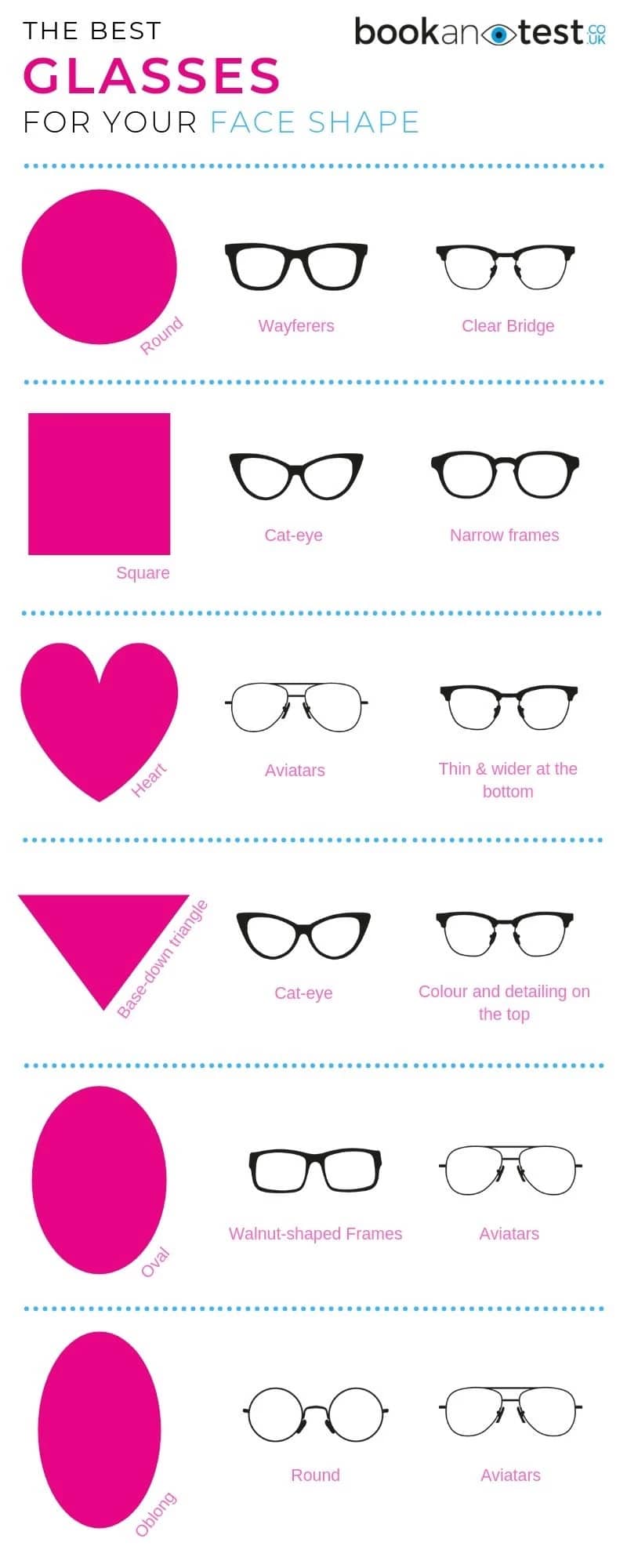
Glasses for a heart-shaped face
A heart-shaped face is often wider at the forehead and narrower toward the chin. The goal is to balance the upper and lower parts of the face.
Useful options include:
• Light-colored frames
• Thin metal frames
• Oval glasses
• Round glasses
• Bottom-heavy frames
• Soft cat-eye frames
Very bold, heavy frames at the top may make the forehead look wider. However, personal style still matters. If you love a strong browline frame, try one with a lighter color or a thinner rim.
For what shape glasses for my face with a heart shape, check how the frame weight sits. A balanced frame should not make your upper face appear much wider than your chin.
Glasses for an oblong face
An oblong face is longer than it is wide. Frames with more depth can help the face look balanced. Decorative temples, a strong bridge, or a taller lens can also add visual width.
Good choices include:
• Deep rectangular frames
• Oversized round glasses
• Aviators
• Wayfarer-style frames
• Bold browline frames
Avoid very narrow frames with short lenses. They may make the face look even longer. Look for frames that sit comfortably across the cheeks without sliding down.
When considering what shape glasses for my face with an oblong shape, frame depth is often more important than the exact outline.
How your features affect frame choice
Face shape is useful, but it is only one part of the answer to what shape glasses for my face. Your eyebrows, nose, eyes, cheekbones, and hairstyle also affect how a frame looks.
Match the frame to your eyebrows
Your eyebrows help define the upper part of your face. A frame that follows their line can look natural and well balanced.
• If your brows are straight, try a frame with a clean top edge.
• If your brows are curved, rounded or softly lifted frames may work well.
• If your brows are low, choose a frame that does not cover them completely.
The frame should support your brow area without making your eyes look crowded.
Consider your nose and bridge
A frame can be attractive but still feel wrong if the bridge does not fit. The bridge is the part that rests across your nose.
If your glasses slide down, pinch, or leave deep marks, the issue may be the bridge rather than the frame shape. Adjustable nose pads can improve the fit, especially on metal frames. Low-bridge-fit designs may help people whose glasses often slide or touch their cheeks.
Your glasses should sit evenly on your nose. They should not need constant pushing back into place.
Check your eye position
Your eyes should sit near the center of each lens. If your eyes sit too close to the inner edge or too far toward the outer edge, the frame may not fit your face well.